
Operational workstations for companies and private offices
Operational workstations are the daily core of office work: they must support concentration, order and continuity of use without weighing down the space. For companies and private offices, the right choice is not only about the desk, but about how the workstation fits into the layout, supports team growth and makes the environment clearer, more professional and easier to manage.Operational workstations for companies and private offices are furniture configurations designed to organise daily work in an efficient, orderly way consistent with the available space. They can be single, shared, modular, compact or more structured, and are used to improve comfort, layout readability and operational continuity. The choice depends on the number of users, type of activity, desired image and level of investment.
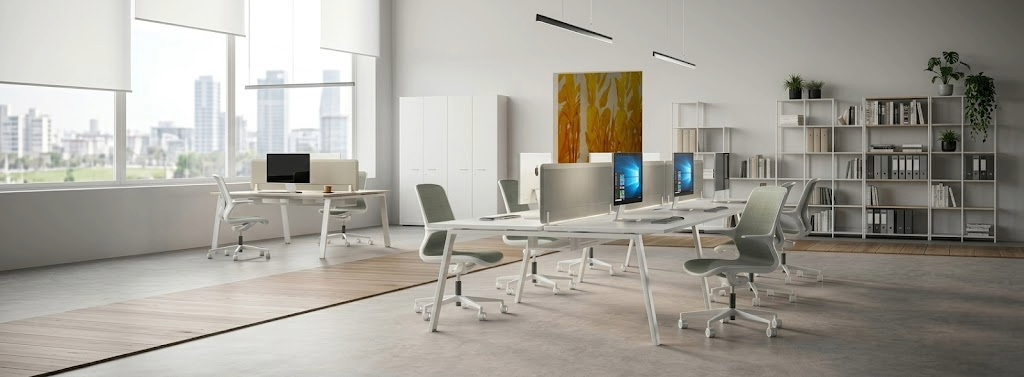
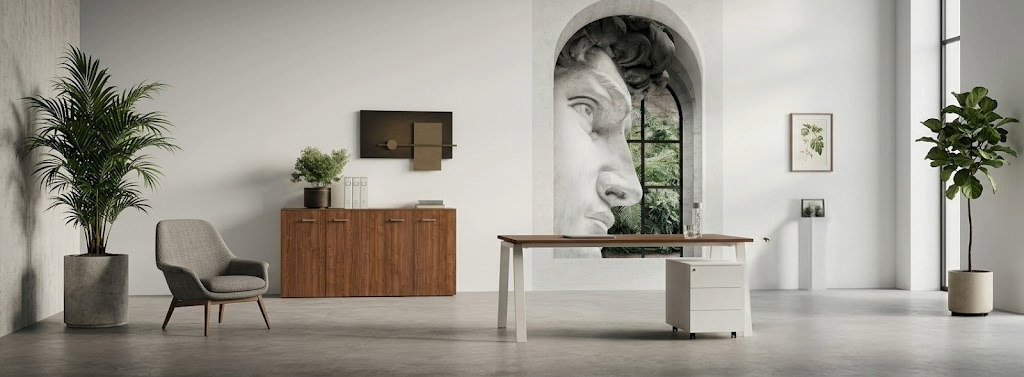
Single workstations
The right solution when every metre needs to work well.
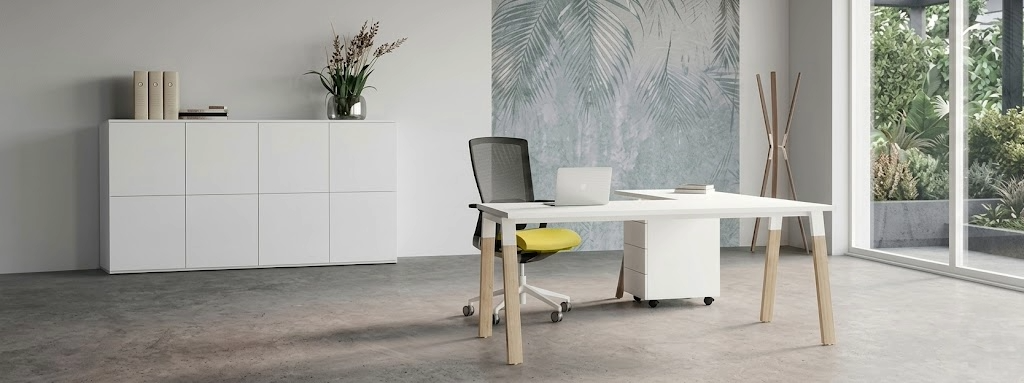
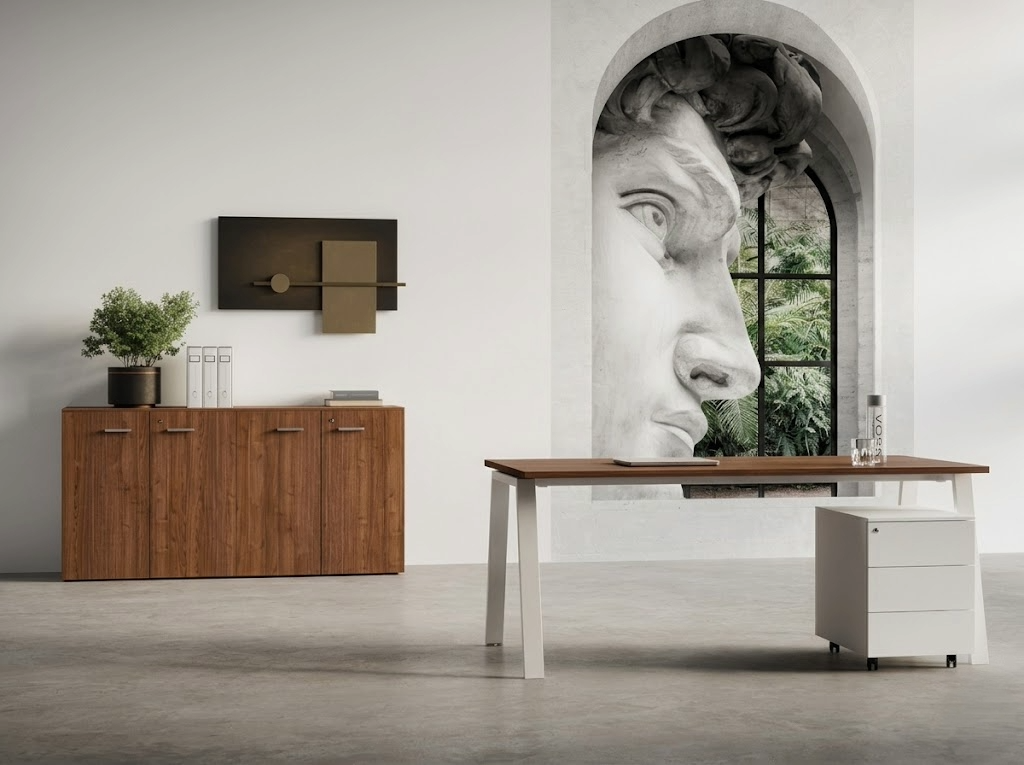
Single operational workstations are ideal for professional studios, private offices and small companies looking for an essential yet credible configuration, capable of offering order and comfort without saturating the space. A well-proportioned desk, a few well-integrated service elements and a compact but ergonomic operational chair, with a lightweight backrest and intuitive adjustments, make it possible to create a clean, easy-to-read environment suitable for continuous work. It is the most effective choice when the goal is to create compact but professional offices, maintaining good usability even in smaller floor areas.
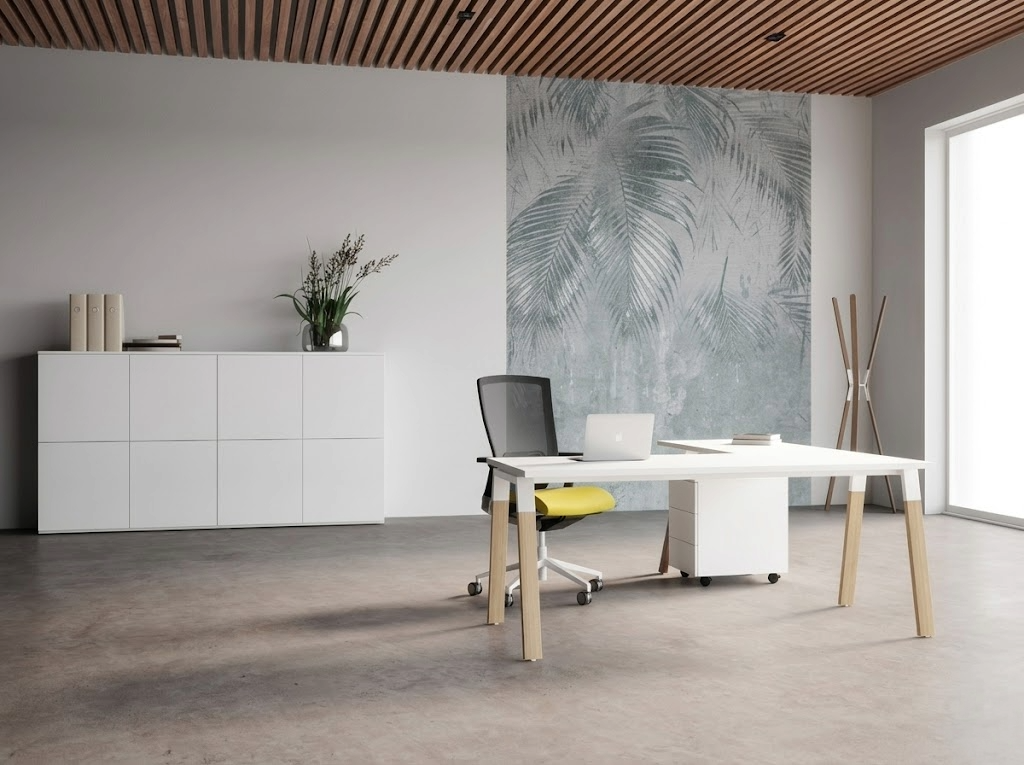
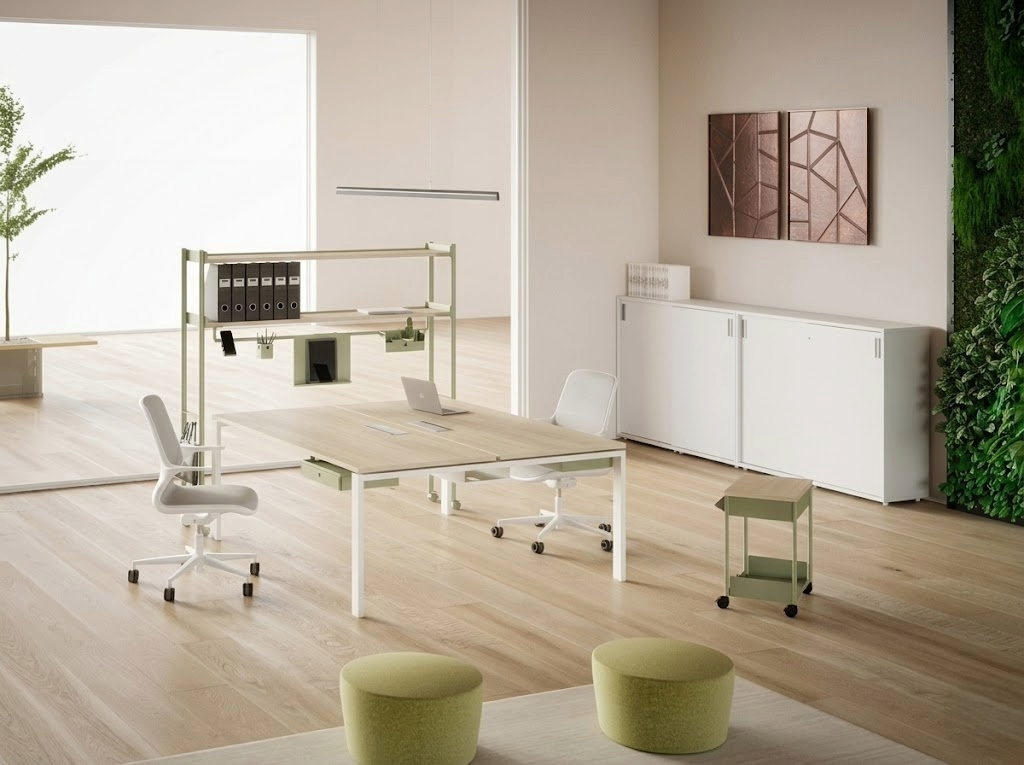
2-person operational bench systems
Close collaboration, with a still-light layout.
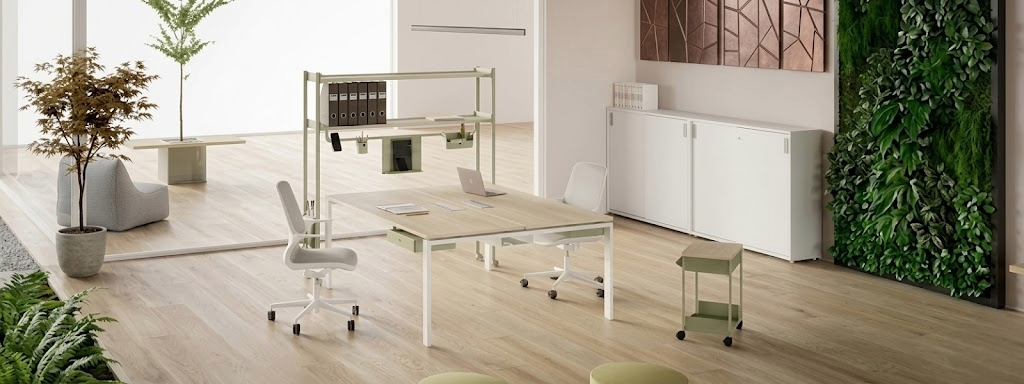
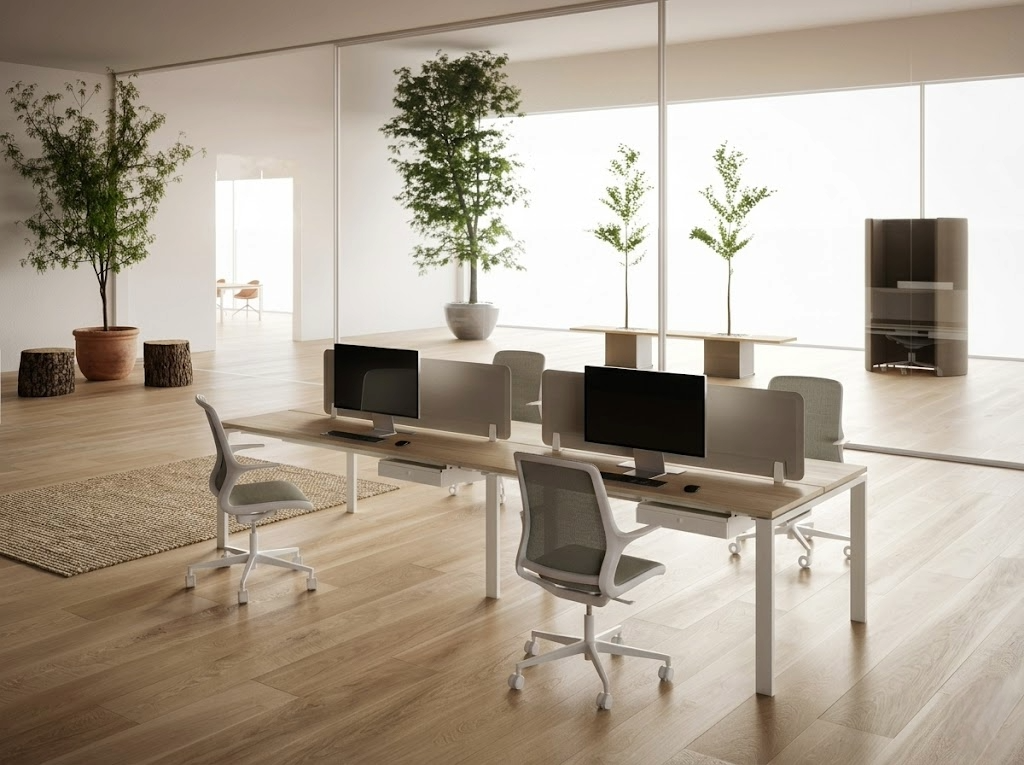
2-person operational bench systems work very well in companies and private offices where people work in pairs or small teams and want to maintain a good balance between operational proximity and visual order. This configuration helps share space more effectively, makes workstation alignment easier and creates a more coherent structure than desks placed together randomly. In this type of environment, mesh operational chairs are particularly suitable: visually light and comfortable in daily use, they help avoid weighing down the layout and keep the work area more airy, contemporary and well proportioned.
Modular bench systems for departments
When the team grows, a system that remains clear is needed.
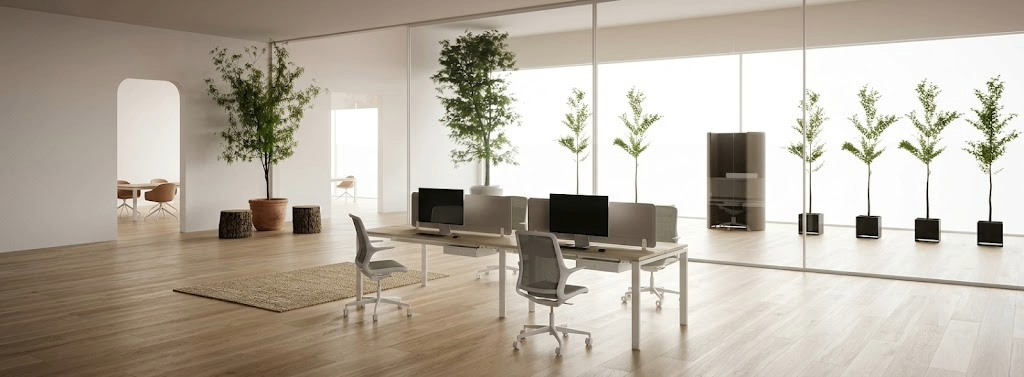
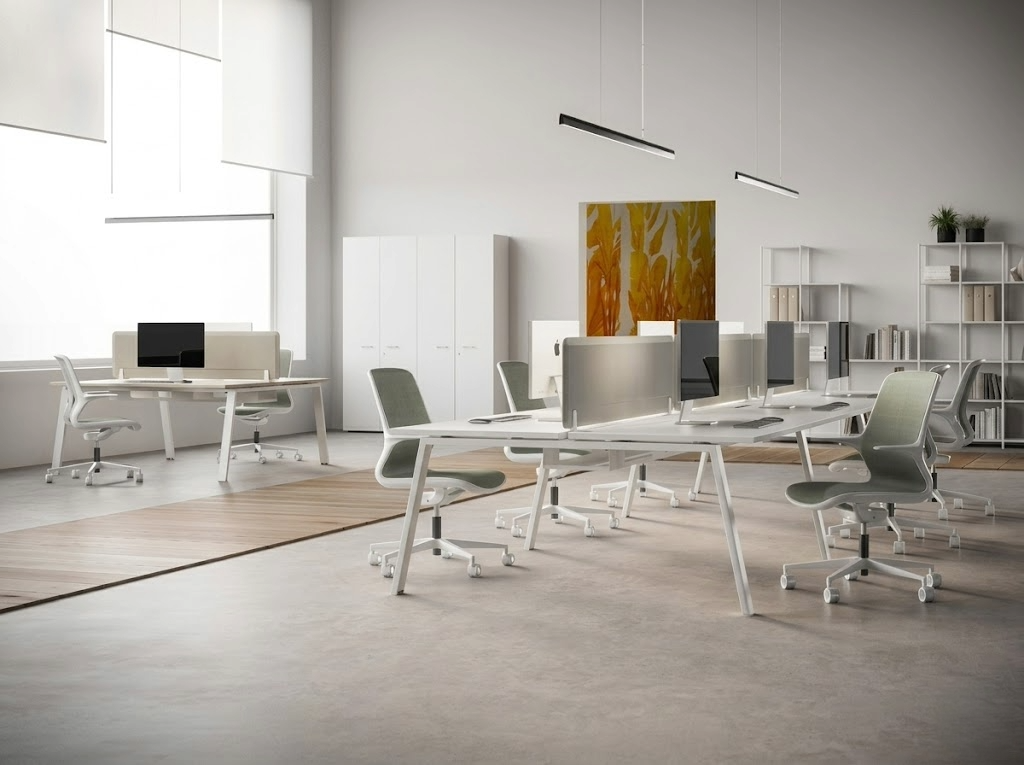
Modular bench systems for departments are designed for companies that need to organise multiple people in a shared space without sacrificing readability, uniformity and the possibility of future expansion. Their strength lies in their ability to create orderly operational rows, easy to replicate and simpler to manage over time than independent workstations. In these configurations, synchro operational chairs or ergonomic task chairs for intensive use work very well, supporting continuous work and providing consistent comfort for multiple users. The advantage is twofold: the environment appears more coherent and the department maintains a higher level of wellbeing even when many hours are spent at the workstation.
Operational corner workstations
More usable surface for those working across multiple tasks.
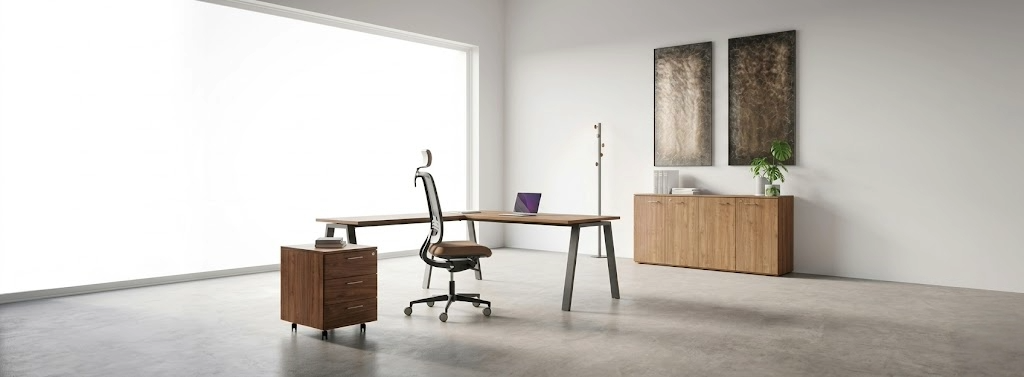
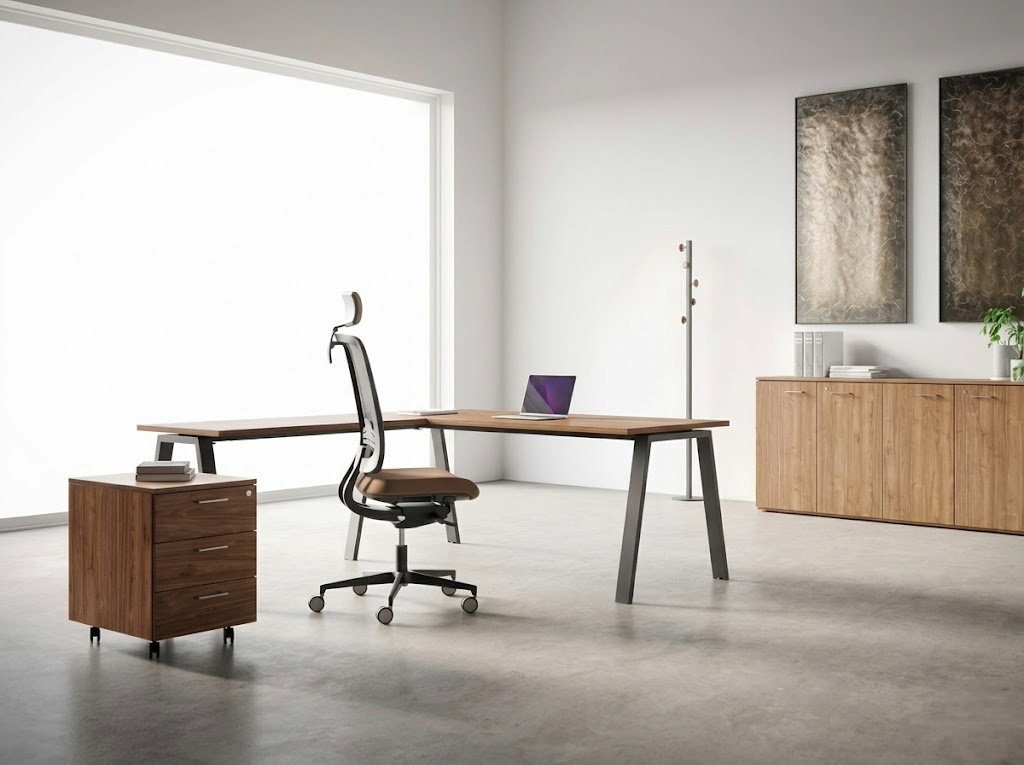
Corner workstations are a highly effective response for administrative, technical or professional roles that require a larger operational surface and better distribution between digital activities, document consultation and continuous work. In companies and private offices, they make it possible to create a more structured workstation without moving into executive systems, offering a greater sense of control over the worktop. In this context, it is important to pair them with ergonomic operational chairs with more advanced adjustments, suitable for supporting prolonged sitting and frequent posture changes. The combination of a larger top and a well-configured chair makes the workstation much more effective in managing daily activities.
Screened operational workstations
More concentration without closing off the office.
Operational workstations with lightweight screening are ideal when the buyer wants to improve focus, perceptual order and work quality without turning the office into a sequence of enclosed micro-boxes. Desk-mounted divider panels or lightweight separation solutions help better define the workplace, reduce nearby distractions and make the layout more readable. In these settings, operational chairs with a clean and professional design are particularly coherent, perhaps with a mesh backrest or compact profile, because they maintain visual lightness and do not clash with the balance of the screened workstation. The result is a more contained, orderly space that is easier to use throughout the day.
Budget operational workstations
A credible office even with a measured investment.
Operational workstations with controlled budget are the most suitable solution for SMEs, new offices, professional studios and companies that want to furnish professionally without pushing the project into overly high spending levels. A well-selected composition can still offer order, visual presence and everyday functionality, especially when desks, storage and seating follow a coherent logic. In this case, it is advisable to focus on essential but ergonomic operational chairs, with good build quality and well-resolved core adjustments, in order to maintain comfort and credibility without compromising budget control. The result is a serious, clean and scalable operational space.
FAQ
The choice depends on four main factors: number of people, type of work performed, available space and the image you want to give the environment. An effective operational workstation must support daily work without creating disorder or overcrowding. For this reason, it is advisable to think in terms of the overall configuration, not just the single desk, assessing whether single solutions, shared bench systems, more structured workstations or more flexible layouts are needed.
It depends on how the team works. Single workstations are more suitable for studios, private offices or roles that require greater autonomy and more personal space management. Shared bench systems, on the other hand, work better when several people work in proximity and the goal is to achieve a more uniform, collaborative and easily expandable layout. The correct choice is the one that makes work more fluid and the space easier to read.
It is worth choosing one when work requires more usable surface and better desktop organisation. Corner workstations are particularly suitable for administrative, technical or professional activities where computer use, documents and reference materials alternate. They offer a more structured workstation than a linear desk and help maintain operational continuity throughout the day.
Yes, especially when people work in shared spaces and the main problem is not lack of space, but excessive visual interference and difficulty maintaining concentration. Lightweight screens help better define each workstation, improve layout readability and give a greater sense of order without closing the office in a rigid way. They are very useful in operational environments where finding a balance between collaboration and individual focus is important.
It is very important, especially for growing companies or offices that may change over time. A modular configuration makes it easier to add or reconfigure workstations, while maintaining visual and organisational continuity. For the buyer, this means making a smarter investment, because the office remains adaptable without having to be redesigned from scratch every time the team changes or the way of working evolves.