Waiting areas and public welcoming spaces: resistance, order and comfort for Public Administration
Public Administration waiting areas are very high-traffic environments and represent a strategic point in the citizen experience. Durability, safety, route readability and comfort must coexist in a space that withstands intensive use, variable footfall and the need to maintain visual order. Vandal-resistant seating, digital information systems and flow management solutions transform waiting times into clearer, more organised moments that support public service.
Technical specifications
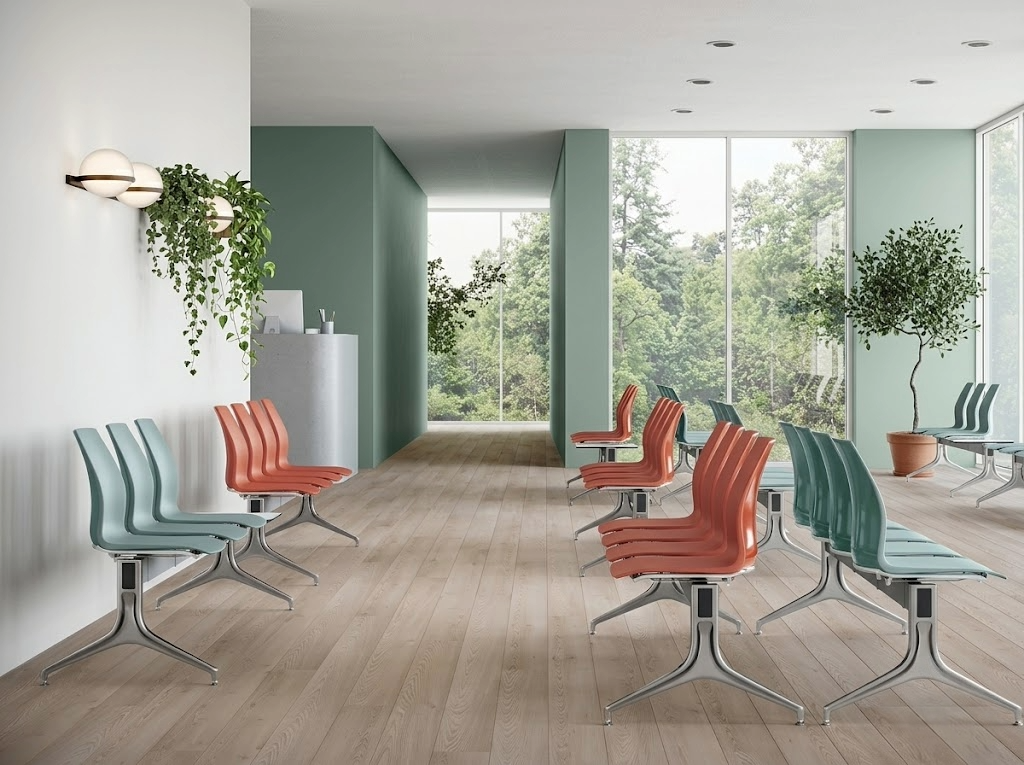
- Beam seating and vandal-resistant metal benches designed for intensive use in high-footfall environments such as registry offices, public relations offices and public service counters.
- Powder-coated metal structures, scratch-resistant surfaces, fire-retardant and sanitizable versions compliant with Public Administration requirements.
- Possibility of floor fixing to increase safety, flow control and prevention of unauthorised movement.
- Digital totems and information monitors with vandal-resistant shells, high-brightness displays and remote update systems connected to the institution’s platforms.
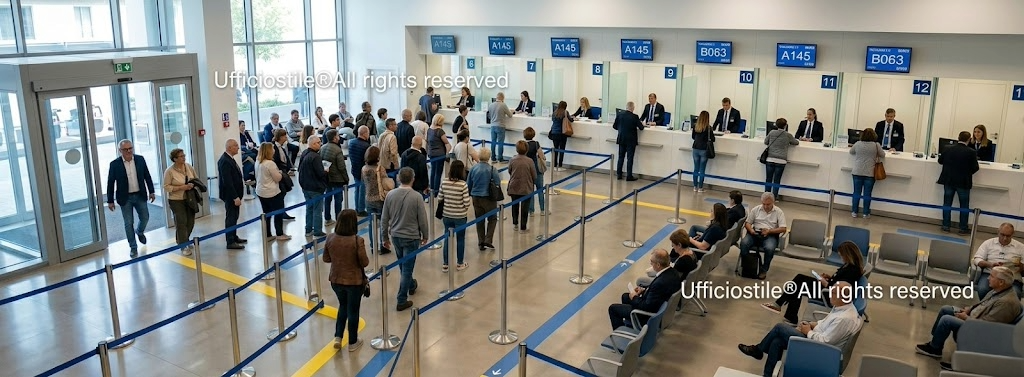
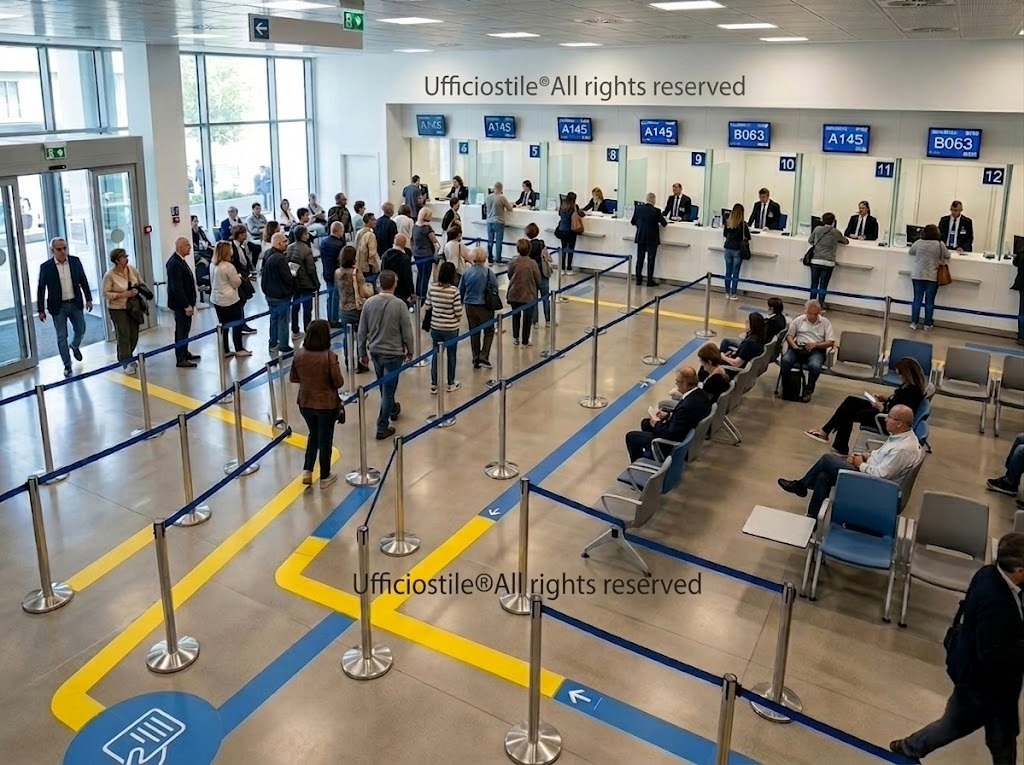
- Flow management systems: belt barrier posts, floor and wall signage, guided routes and dedicated waiting areas for different types of services.
- Easy-clean materials for seating and contact surfaces, designed for frequent cleaning cycles and intensive use, with technical upholstery resistant to wear and detergents.
- Elements for privacy and comfort: lightweight screens, spacers, service tables and calibrated lighting solutions to reduce stress and perceived crowding.
Typical configurations
Linear waiting areas with beam seating
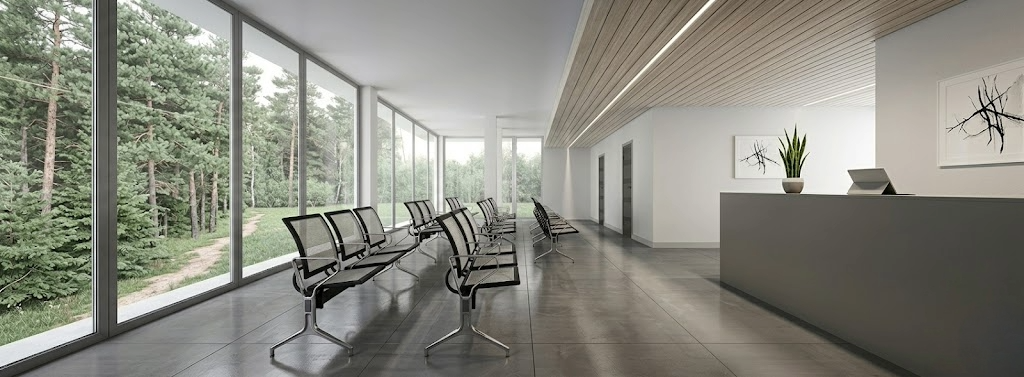
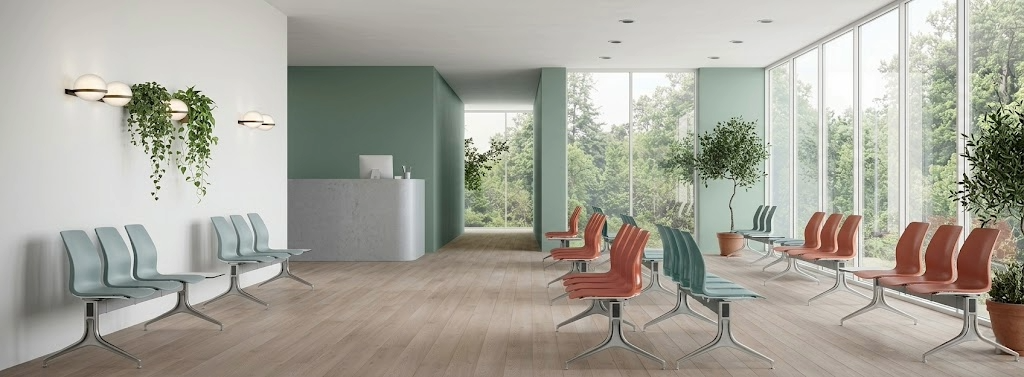
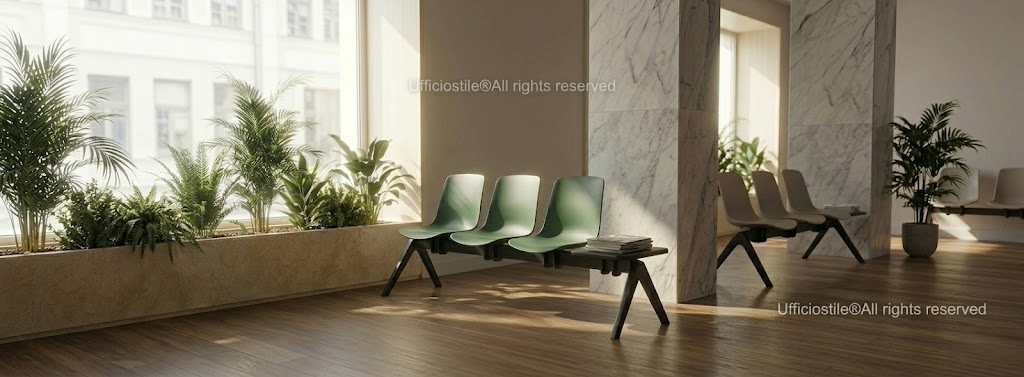
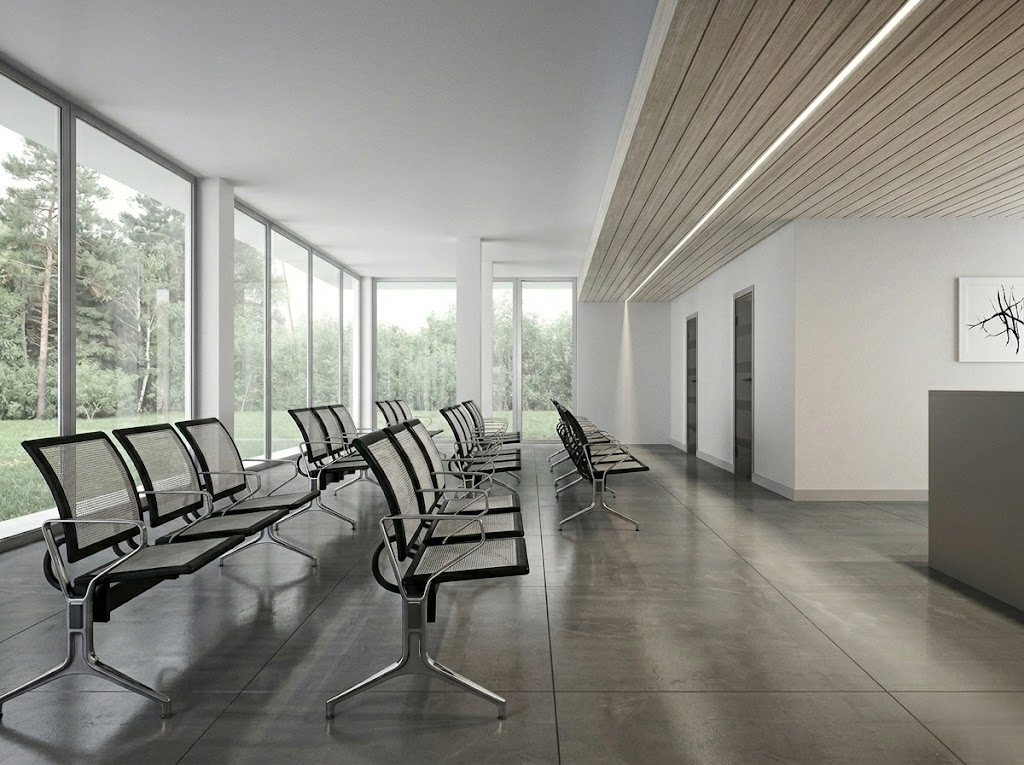
Rows of beam seating or metal benches aligned along walls and glazed surfaces, sized to support large numbers of users throughout the day. Ideal for registry offices, demographic services and healthcare booking counters, with floor-fixed options and easy-to-sanitize fire-retardant materials.
Welcoming areas with digital totems and call systems
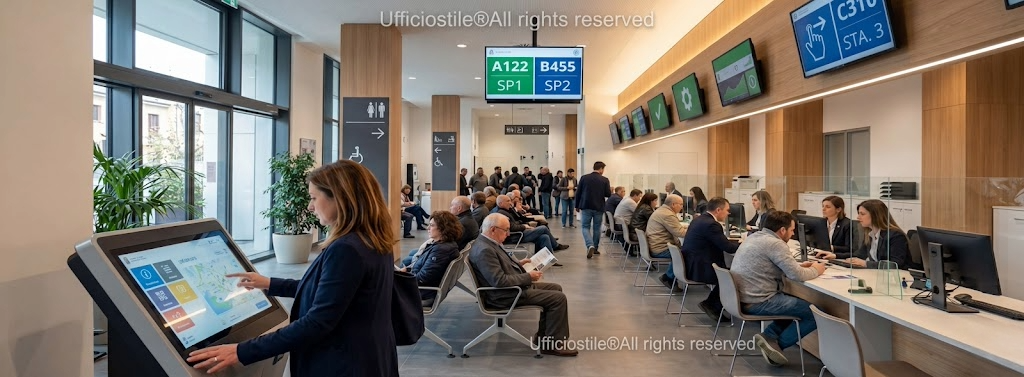
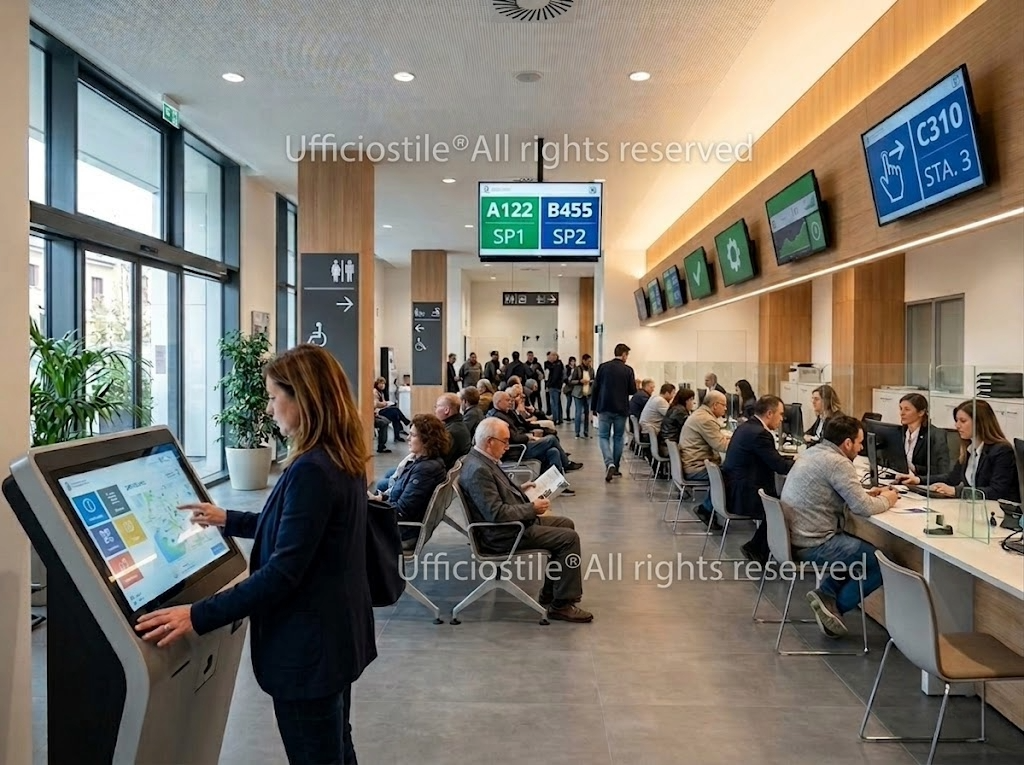
Central or front-office areas equipped with digital totems, queue management monitors and clear signage. Perfect for public relations offices, outpatient facilities and multi-counter offices, where it is essential to communicate call numbers, waiting times and route information in an immediate and readable way from a distance.
Protected waiting areas for sensitive services
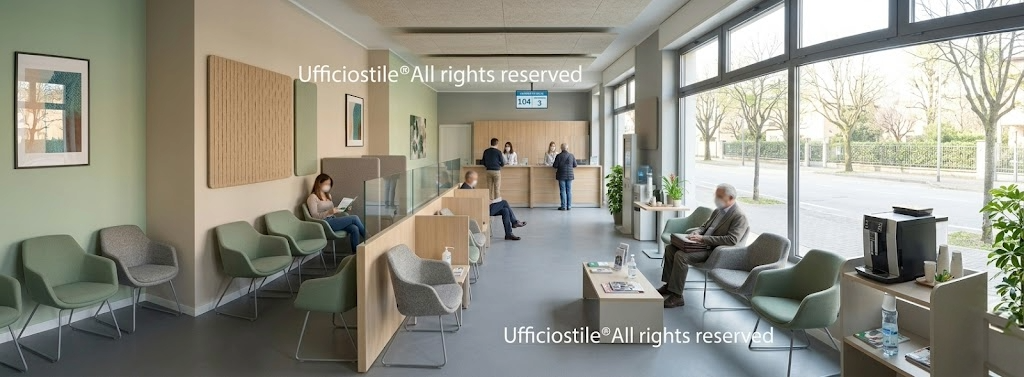
Spaces dedicated to services that require greater privacy protection, such as social services, tax offices and interview areas. They include comfortable seating, spacers, lightweight screens and layouts designed to limit visual exposure and ensure a less stressful experience during long waits.
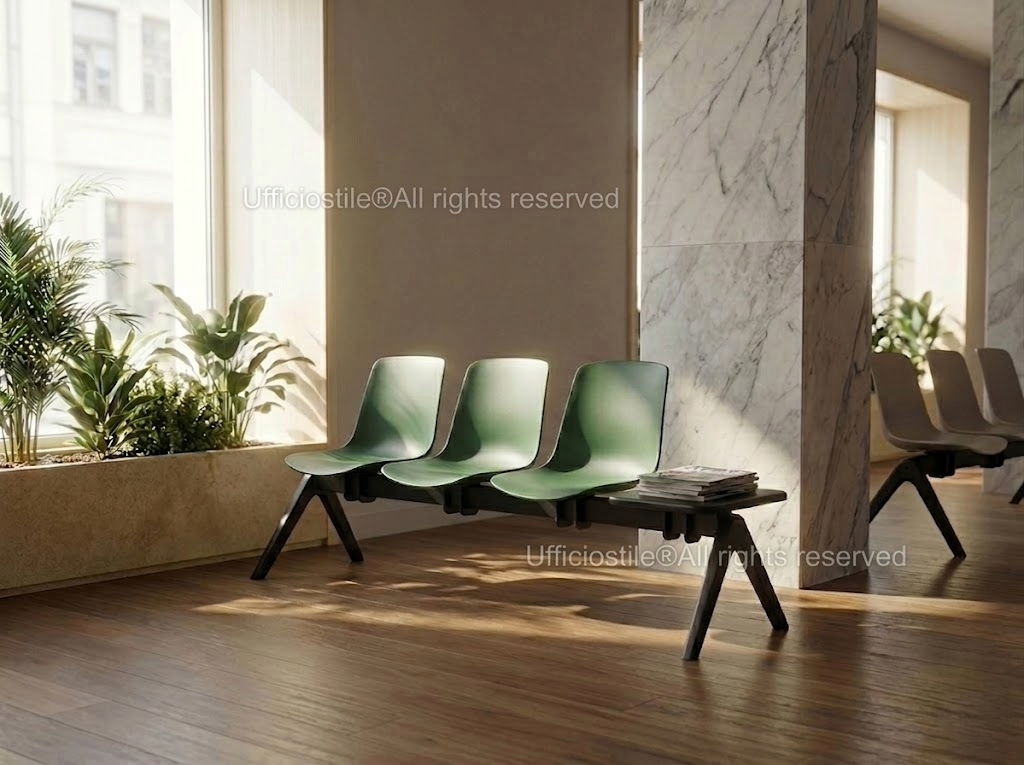
Row seating and vandal-resistant metal benches for intensive use
Seating designed for public environments must ensure superior resistance, structural stability and ease of maintenance. Metal benches or beam seating represent the most effective solution in high-footfall contexts, thanks to their ability to withstand continuous use without deterioration. Powder-coated surfaces and scratch-resistant materials ensure a consistent aesthetic over time, while floor-fixable versions provide greater safety and control in critical places. Choosing fire-retardant and sanitizable models contributes to regulatory compliance and the daily cleaning required by public bodies.
Digital totems and information systems to guide citizens
The digitalisation of public services has made the use of information totems, dynamic monitors and digital noticeboards essential. These tools communicate updates, queue turns, urgent notices and route information, improving orientation and reducing doubts and slowdowns in the most crowded areas. Totems for Public Administration must be robust, vandal-resistant and equipped with high-brightness displays, as well as easily updateable through the institution’s internal systems. Positioned at strategic points, they help make waiting clearer, more orderly and consistent with the institution’s image.
Solutions for flow management and furniture for high footfall
Flow management is decisive in public environments. Belt barrier posts, floor signage and guided routes help citizens understand where to go without creating confusion. Furniture must be distributed so as not to obstruct passages, maintaining wide corridors and clear junction points. In contexts such as registry offices, public relations offices or social services, layout clarity directly affects the perceived quality of the service: an intuitive route reduces cognitive load and makes waiting more manageable, even during peak footfall.
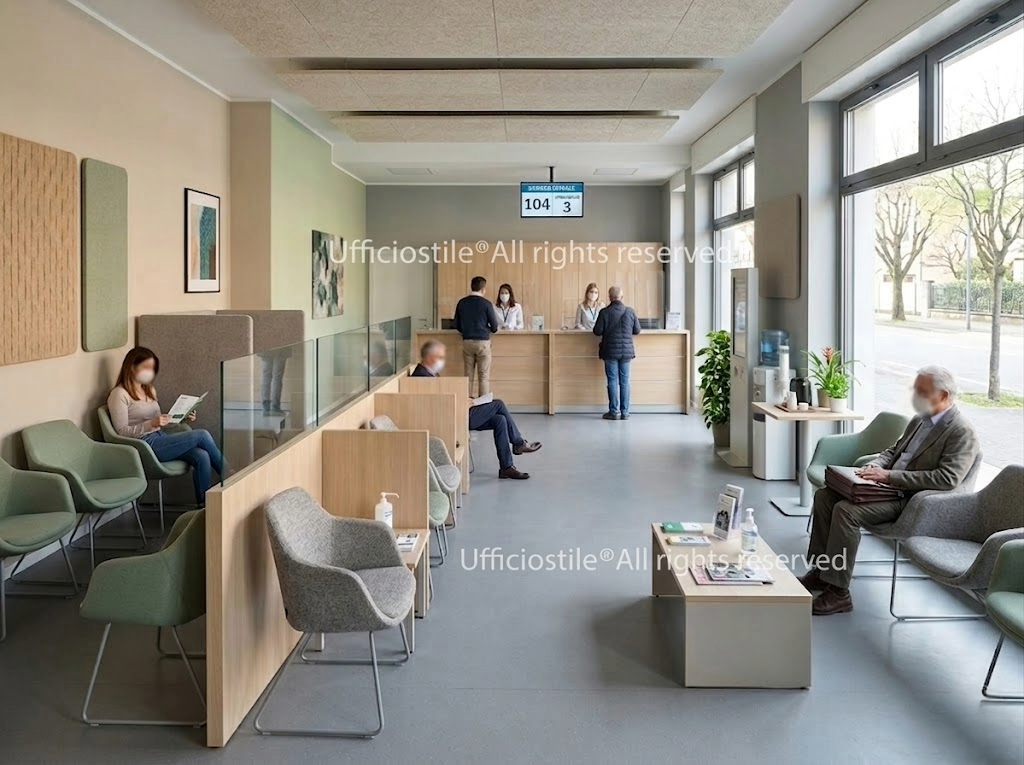
Privacy and comfort during long waits
Waiting times in public offices can be long and variable. It is important to offer a welcoming environment with comfortable seating, easy-to-clean technical upholstery and, where possible, elements that ensure privacy, such as lightweight screens or spacers. The use of coordinated colours and materials that reduce noise helps create a less stressful and more orderly environment. Service tables, information points and spaces dedicated to different user types complete the experience, improving the perception of the institution’s efficiency and the overall wellbeing of citizens waiting.
FAQ
The most suitable solutions are beam seating and powder-coated metal benches, designed for intensive use, fire-retardant, easy to clean and, where necessary, fixable to the floor. These models ensure resistance, safety and simplified maintenance over time.
Yes. Digital totems and information monitors improve citizen orientation, clearly communicate call numbers, opening hours, notices and routes, reduce disorderly queues and increase the perceived efficiency of the service provided by the institution.
It is essential to design guided routes, use clear signage (on floors, walls and monitors) and distribute furniture so as to avoid bottlenecks. Queue management systems, readable layouts and waiting points dedicated to different services help prevent congestion and improve the overall user experience.
Yes, especially in offices handling personal data or delicate situations, such as social services, tax offices and dedicated counters. Lightweight screens, spacers and layouts that avoid excessive visual exposure help protect privacy and reduce perceived stress during waiting and conversations with operators.
Powder-coated metal, easy-clean technical laminates, scratch-resistant surfaces and upholstery resistant to detergents are the safest choices for high-traffic environments. These materials maintain aesthetic and functional performance over time, reducing extraordinary maintenance work and furniture replacement costs.