Vertical acoustic dividers for privacy, concentration and cognitive comfort
Vertical acoustic dividers are an essential solution for improving privacy, concentration and cognitive comfort in open spaces. Thanks to their ability to absorb mid-high frequencies and interrupt the propagation of direct sound, they create more stable and less dispersive micro-environments. The versatility of shapes and configurations makes them adaptable to every operational context.
Technical specifications
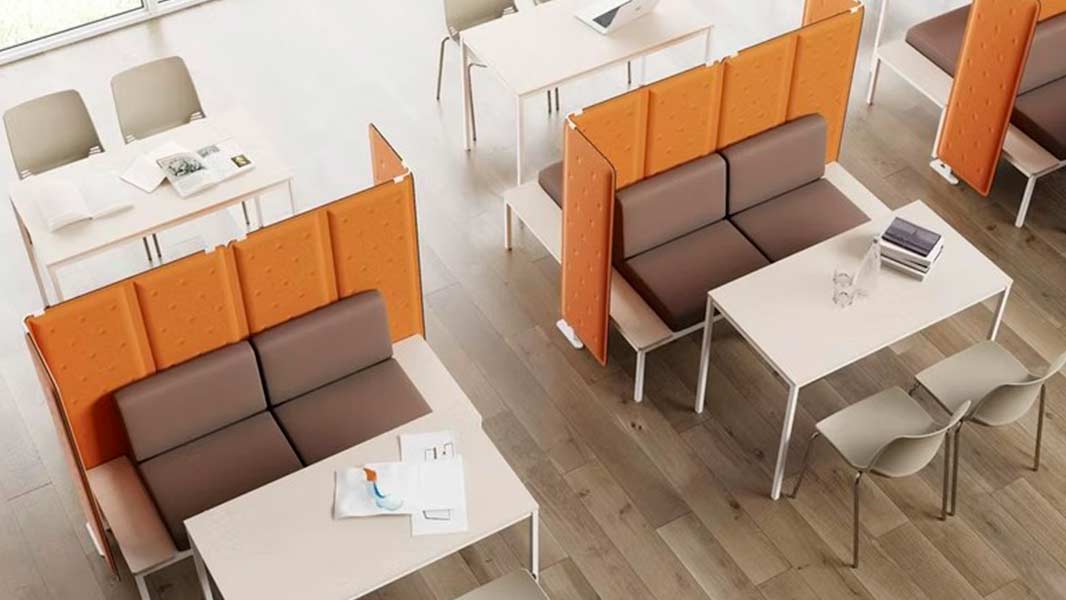
- Dividers made with UNI EN ISO certified sound-absorbing materials for noise control.
- Freestanding or fixed structures, with adjustable feet and stable yet easily reconfigurable systems.
- Variable heights to ensure visual and acoustic privacy according to the different operational areas.
- Fire-retardant technical coverings and textile finishes available in a wide range of colours.
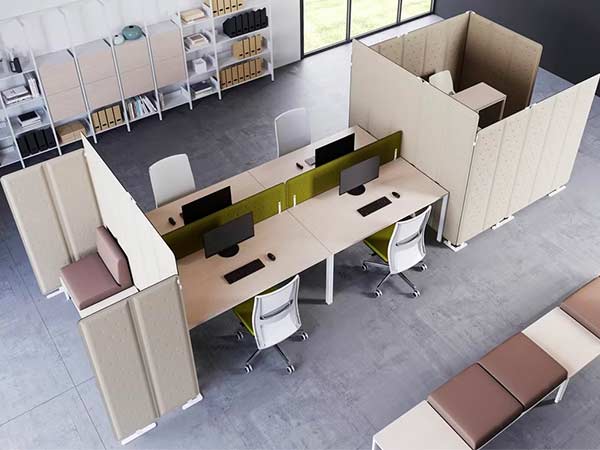
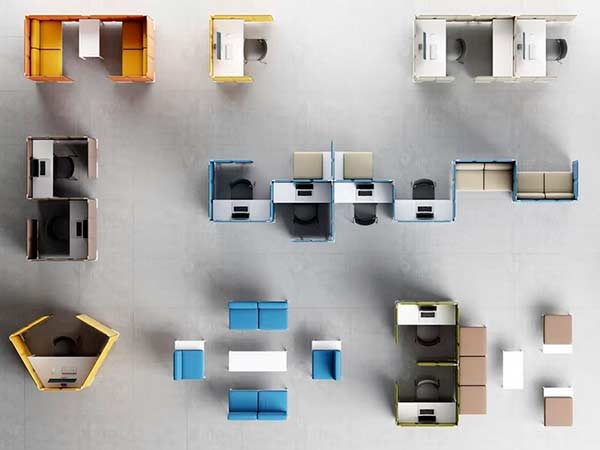
Typical configurations
Operational open spaces
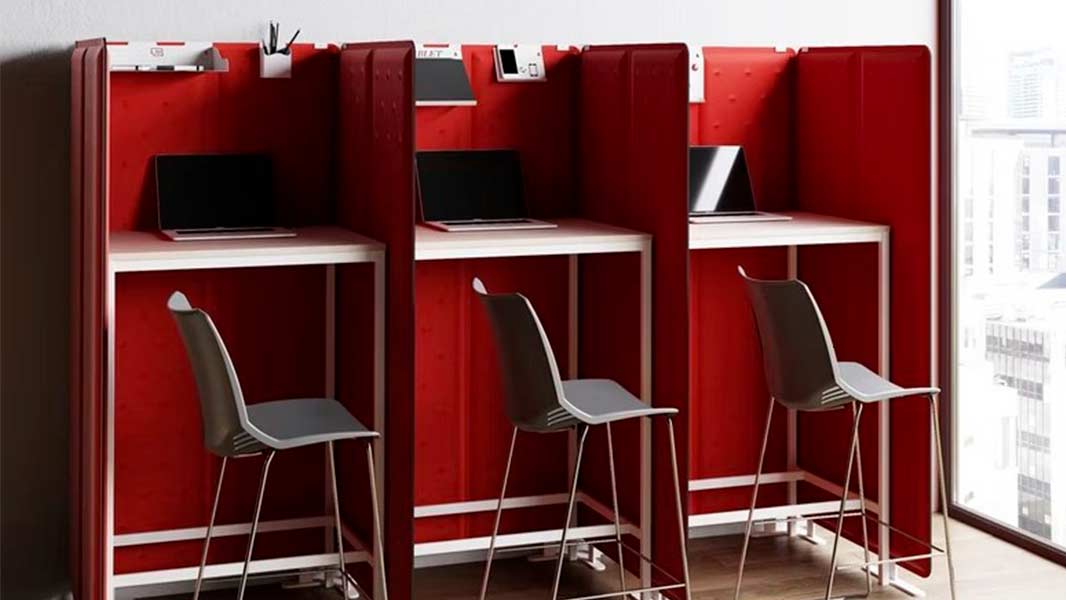
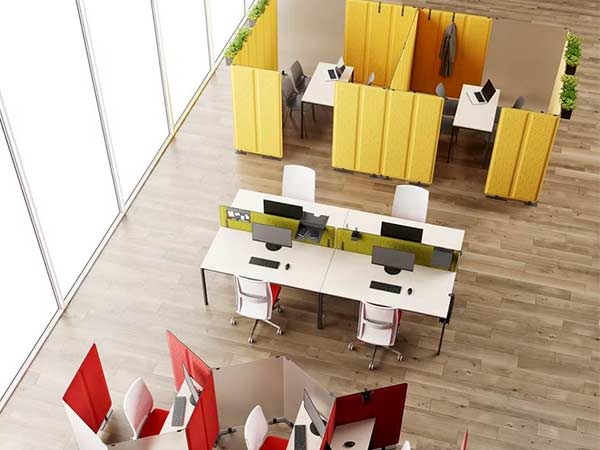
Dividers positioned between operational workstations to protect against lateral noise, define work lines and create orderly passage routes without completely closing the space.
Reception areas and waiting zones
Vertical screens to separate the reception desk from waiting seating, improving privacy and acoustic comfort without compromising welcome and visibility.
Coworking zones and light collaborative workstations
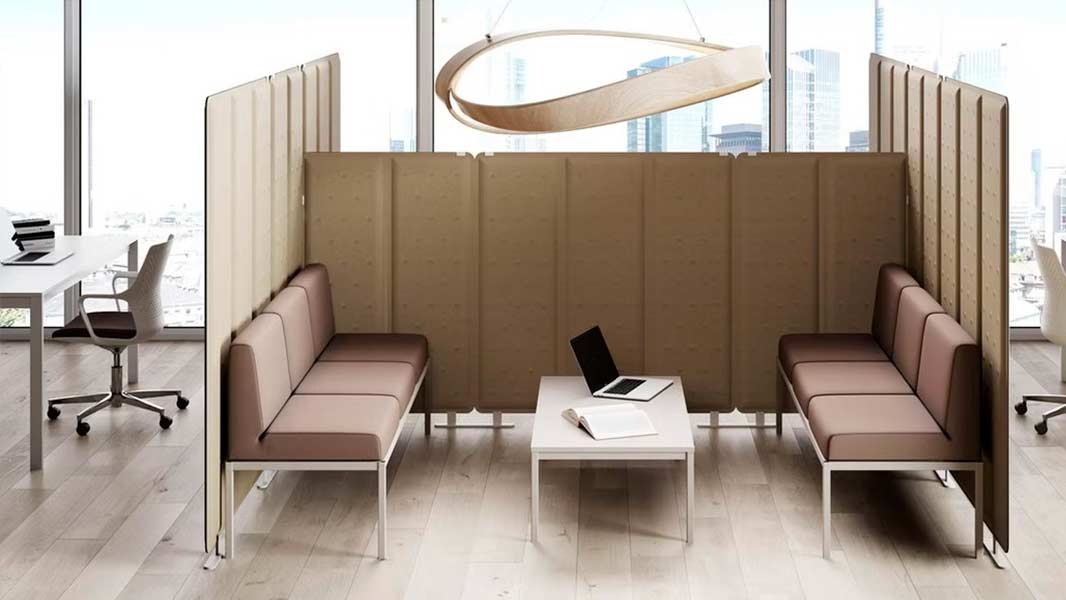
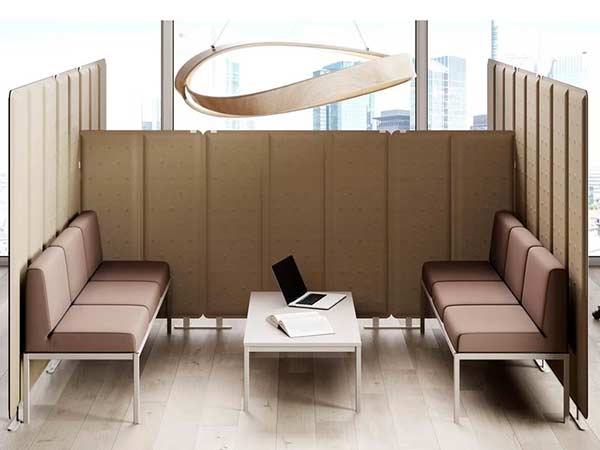
Modular configurations to create areas dedicated to focus, light collaboration or short meetings, maintaining a good balance between openness, privacy and acoustic quality.
Functional micro-environments
Island or linear compositions that make it possible to define micro-environments with differentiated privacy levels according to operational needs and the required degree of concentration.
Sound privacy and protection from lateral distractions
Vertical acoustic dividers offer an effective barrier against lateral noise, protecting the workstation from conversations and sound stimuli coming from the surrounding environment. This controlled screening supports concentration and operational continuity, reducing direct interference without completely isolating the user. The result is an optimal balance between privacy and connection with the workspace.
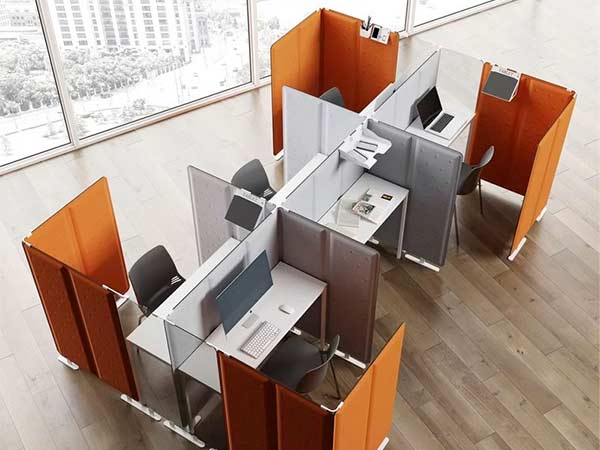
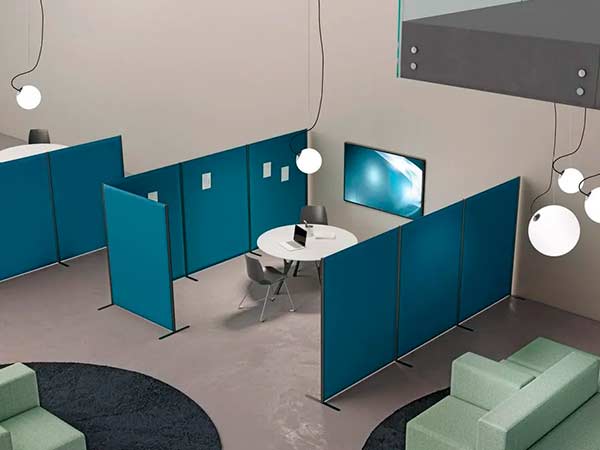
Defined work zones and functional micro-environments
The use of acoustic dividers makes it possible to divide open spaces into micro-environments consistent with different activities. This organisation improves the perception of spaces and facilitates the management of operational flows. Areas dedicated to focus, light collaboration or reception can be created, ensuring a balance between acoustic ergonomics and functionality without sacrificing overall visual continuity.
Absorption of mid-high frequencies for cognitive comfort
Acoustic dividers are designed to effectively absorb the typical frequencies of speech, reducing echo, resonances and annoying noise. This targeted intervention improves the sound quality of the space, supporting cognitive comfort and reducing the mental fatigue caused by prolonged exposure to noise.
In high-density environments, absorption focused on mid-high frequencies helps stabilise the acoustic environment, supporting more balanced, productive and sustainable work over time.
Modular and reconfigurable solutions for dynamic offices
The modularity of acoustic dividers enables rapid reconfigurations and continuous adaptations to operational needs. Lightweight structures, adjustable bases and freestanding systems make it possible to modify space layouts without invasive interventions. This flexibility is fundamental in dynamic offices that require frequent layout updates.
Key aspects to consider include the desired level of privacy, the predominant frequencies to attenuate, the required degree of flexibility and aesthetic and colour coordination with furniture and space architecture. A dedicated acoustic consultation helps correctly size the intervention.
FAQ
Yes, they attenuate lateral noise and screen conversations coming from nearby workstations, improving sound privacy without completely closing the space.
No, vertical dividers are often sufficient to improve acoustic comfort, especially in smaller open spaces or where absorbent furniture is already present.
They require only ordinary cleaning, with periodic vacuuming or dusting of the coverings and, if necessary, minimal maintenance of the supports and adjustable feet.
Freestanding models can: they are designed to be moved and reconfigured quickly, adapting to evolving layout needs without structural interventions.
Very much: they help better define spaces, reduce acoustic distractions and create clear routes, without visually weighing down the environment or excessively reducing brightness.