Technical acoustic materials and UNI EN ISO certifications
Technical acoustic materials are the core of sound-absorbing performance in modern offices. Recycled PET, mineral fibres, technical foams and acoustic fabrics determine the quality of absorption and the effectiveness of interventions on diffuse noise. UNI EN ISO certifications guarantee traceable performance, measured values and long-term reliability.
Technical specifications
- Materials certified according to UNI EN ISO 354 / 11654 standards, with laboratory-measured sound-absorbing performance.
- Complete range of recycled PET, mineral fibres, technical foams and acoustic fabrics for different types of intervention.
- Absorption classes A–E, selected according to critical frequencies and the acoustic comfort objectives of the space.
- Controlled VOC emissions to guarantee indoor air healthiness and compliance with environmental sustainability requirements.
Typical configurations
Sound-absorbing panels
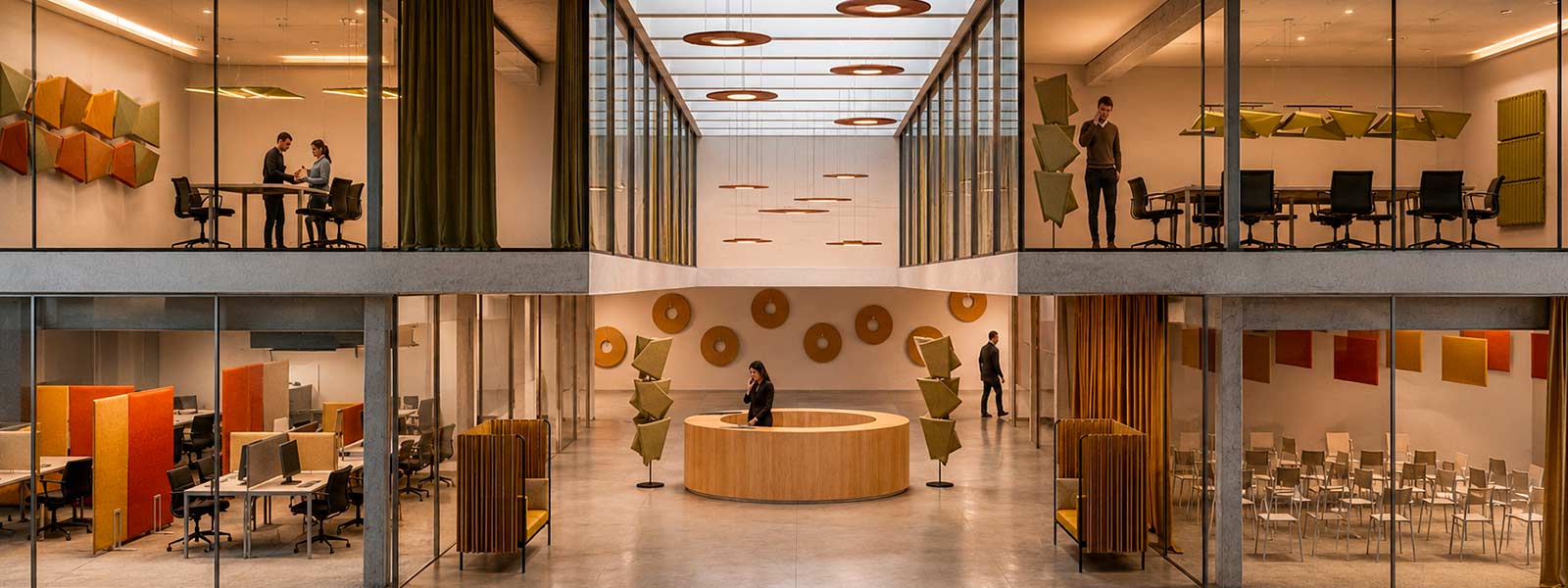
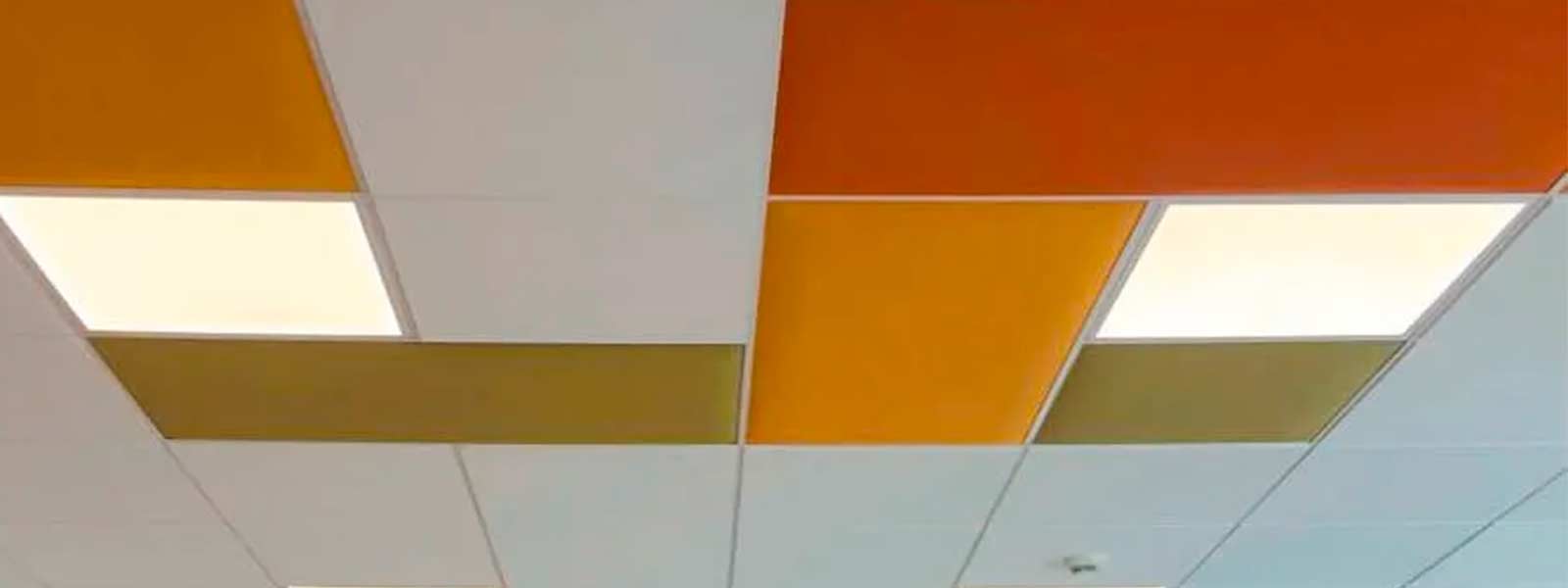
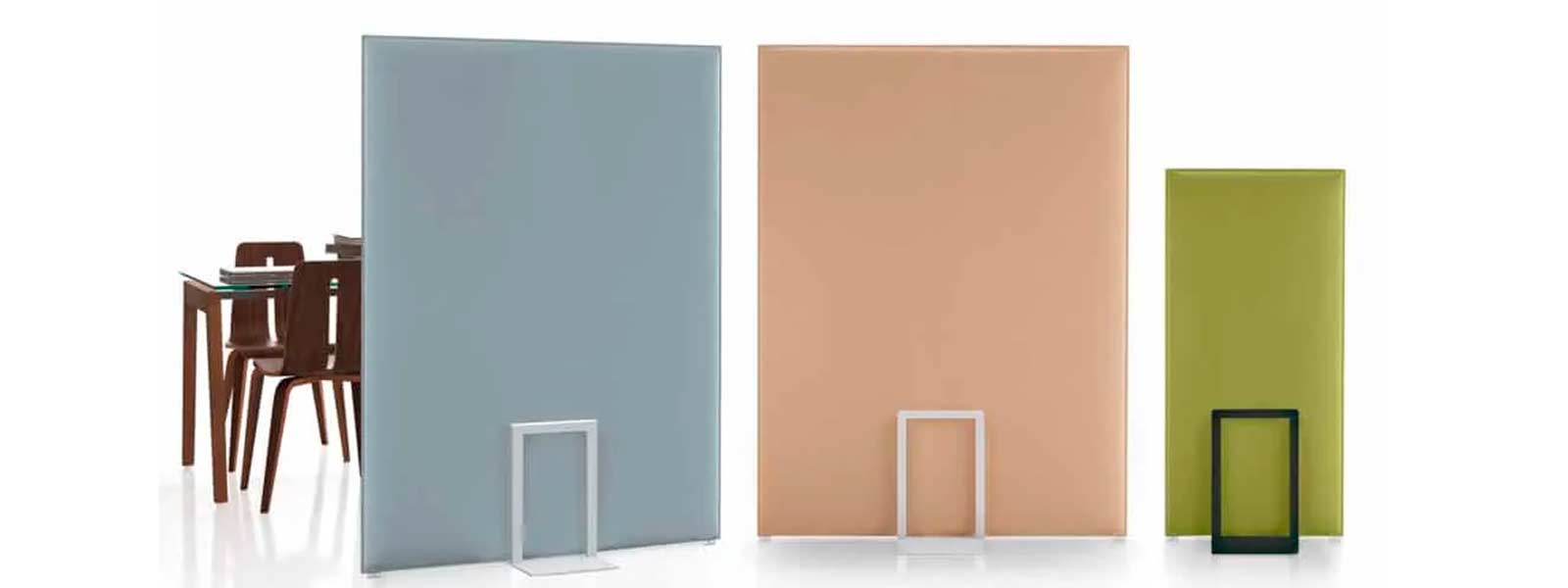
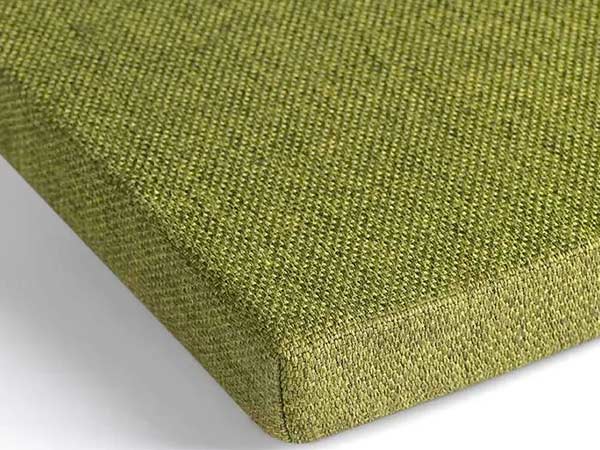
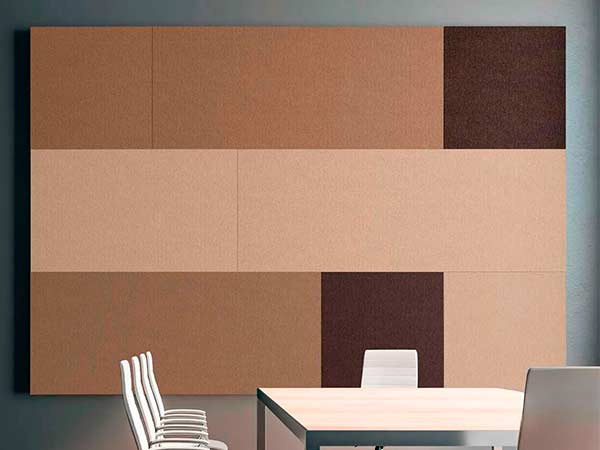
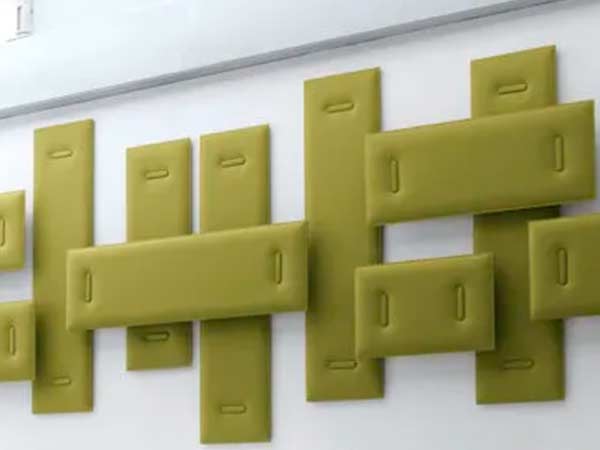
Wall, ceiling or freestanding panels made of recycled PET, mineral fibres or technical foams, ideal for quickly addressing reverberation in open-space offices, corridors and meeting rooms.
Suspended acoustic islands
Sound-absorbing islands and ceilings in UNI EN ISO certified materials, designed for high environments or spaces with many reflective surfaces, where absorption at height is fundamental to stabilising reverberation time.
Vertical dividers
Screens and vertical baffles in recycled PET and acoustic fabrics, combining spatial organisation, sound privacy and diffuse-noise control along routes and high-density open spaces.
Continuous acoustic coverings
Continuous wall and suspended-ceiling covering solutions, with high-performance materials and customisable finishes, for projects where acoustics become an integral part of the architectural concept.
High-performance sound-absorbing materials for modern offices
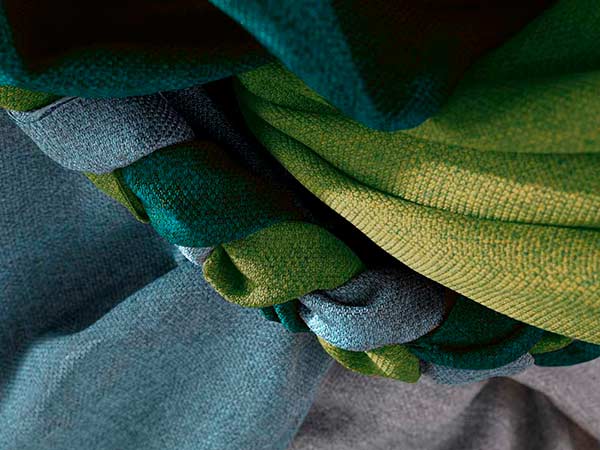
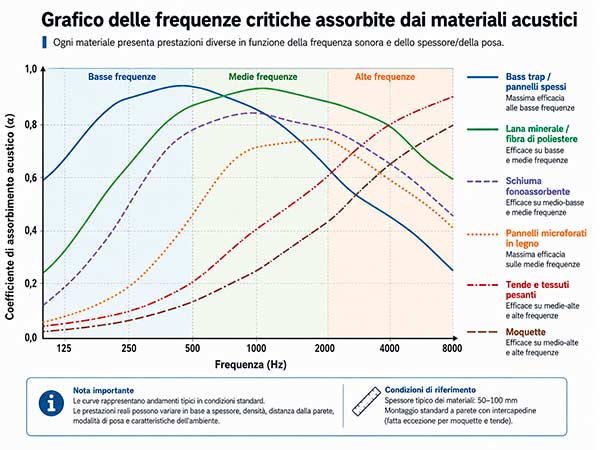
The technical sound-absorbing materials used in offices today include recycled PET, high-density foams, mineral fibres and acoustic fabrics. Each of them ensures effective absorption in medium-high frequencies, improving cognitive comfort and reducing reverberation. The choice of material influences durability, sound performance and the overall sustainability of the intervention, making it possible to adapt the solution to the specific use and design requirements of the space.
UNI EN ISO certifications for verifiable performance
UNI EN ISO certifications, such as standards 354 and 11654, guarantee objective measurement of sound-absorbing performance. Through reverberation chamber tests, these standards define the absorption class (A–E) and make it possible to compare different solutions using uniform criteria. Certification is an essential requirement in professional interventions, because it makes declared values transparent and allows acoustic treatment to be correctly dimensioned according to project objectives.
Absorption of critical frequencies to improve intelligibility and comfort
Certified materials are designed to act on the critical frequencies of speech and diffuse noise, reducing echo and improving sound clarity. This targeted absorption creates a more balanced environment, reduces cognitive interference and supports operational performance, especially in high-density open spaces. Focusing on the frequencies where the human voice is concentrated means improving speech comprehension, reducing listening fatigue and creating more stable working conditions over time.
Choosing materials according to context, aesthetics and sustainability
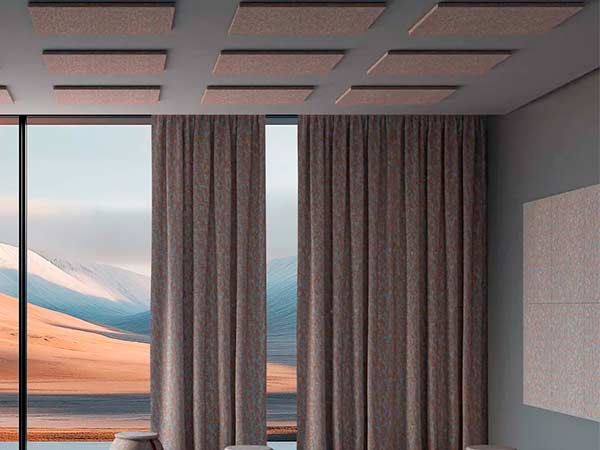
The selection of acoustic material must consider not only performance, but also aesthetics, layout constraints and sustainability requirements. Recycled PET and low-emission technical fabrics are ideal for modern environments oriented towards environmental wellbeing, while mineral fibres guarantee excellent performance in high-performance ceiling installations. The correct choice makes it possible to harmonise design and functionality, ensuring visual coherence with the interior design project and compliance with the company’s ESG guidelines.
FAQ
Because they guarantee measured and comparable performance. Reverberation chamber tests make it possible to verify the real sound-absorbing capacity of materials and compare different solutions using objective and transparent criteria.
Yes, recycled PET offers excellent absorption in the critical frequencies of speech and is a sustainable choice. It is lightweight, versatile and suitable for panels, dividers and suspended islands in modern environments.
Yes, mineral fibres are widely used, especially in high-performance ceilings where high absorption levels and effective management of reverberation time over large surfaces are required.
Yes, when selected from certified, low-emission products. Technical foams used in professional contexts comply with regulations on fire reaction and VOCs, contributing to acoustic comfort without compromising indoor air quality.
It is essential to start from the critical frequencies of the space, the acoustic objectives and the context of use. Based on these elements, the required absorption class, material sustainability and aesthetic coherence with the project are evaluated. Dedicated acoustic consultancy helps define the most effective combination of panels, islands and coverings.