
Sustainable design and Life Cycle Assessment (LCA) in modern offices
Sustainable design applied to modern offices integrates environmental criteria, resource efficiency and scientific life cycle assessments (LCA). This approach makes it possible to estimate environmental impact from raw material extraction through to product end of life, guiding informed choices, design optimisations and corporate strategies aligned with ESG objectives.
Technical specifications
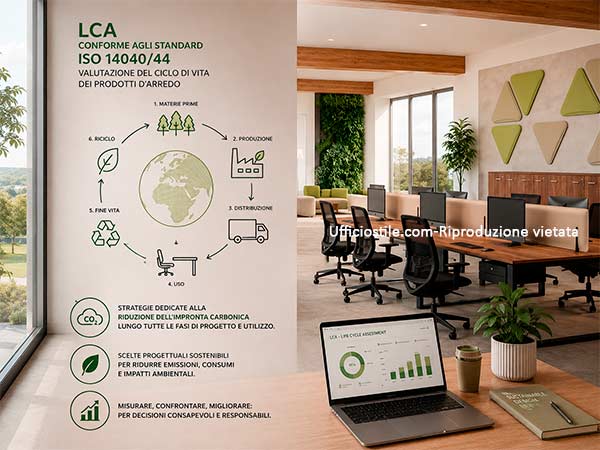
- LCA methodology compliant with ISO 14040/44 standards for the life cycle assessment of furniture products.
- Strategies dedicated to reducing the carbon footprint across all project and use phases.
- Supply chain analysis according to ESG criteria, with attention to environmental and social impacts.
- Optimisation of energy resources during production, management and end-of-life phases of furniture.
Typical configurations
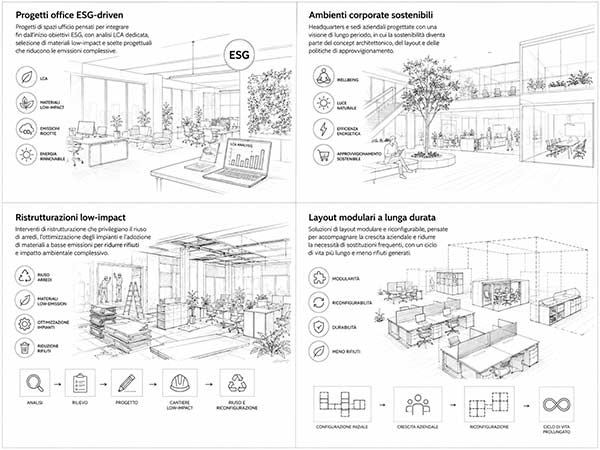
ESG-driven office projects
Office space projects designed to integrate ESG objectives from the start, with dedicated LCA analysis, selection of low-impact materials and design choices that reduce overall emissions.
Sustainable corporate environments
Headquarters and corporate sites designed with a long-term vision, where sustainability becomes part of the architectural concept, layout and procurement policies.
Low-impact renovations
Renovation projects that prioritise furniture reuse, system optimisation and the adoption of low-emission materials to reduce waste and overall environmental impact.
Long-lasting modular layouts
Modular and reconfigurable layout solutions designed to support business growth and reduce the need for frequent replacements, with a longer life cycle and less waste generated.
LCA as a tool to measure impact throughout the life cycle
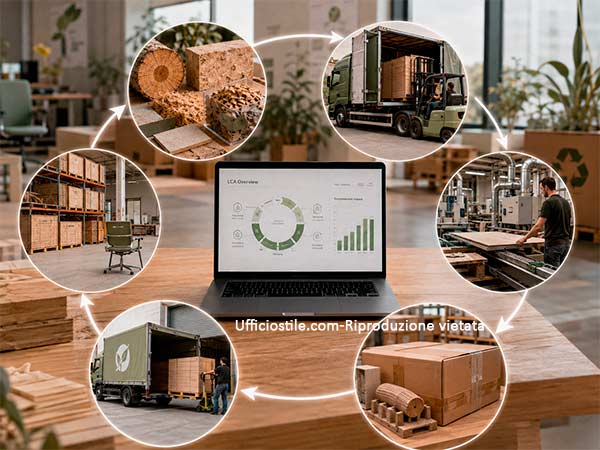
Life Cycle Assessment makes it possible to scientifically evaluate the environmental impact of furniture products throughout their entire life cycle. It analyses raw material extraction, production, transport, use phase and end of life, offering an objective basis for comparing design alternatives. In this way, it becomes an essential standard for reducing waste, emissions and energy consumption, supporting more informed decisions at every stage of the project.
Design focused on reducing consumption, emissions and waste
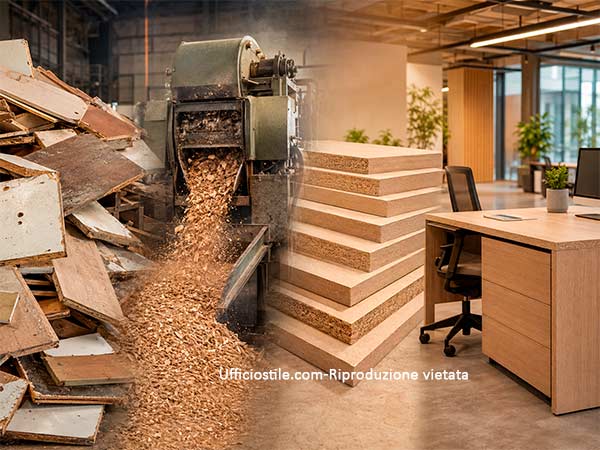
Sustainable design aims to minimise the use of virgin materials and reduce energy consumption and waste throughout the entire life cycle. The choice of recycled and recyclable materials, modular design and the rationalisation of production processes contribute to lowering the project’s carbon footprint. This approach improves the environmental performance of furniture, extends its durability and increases its ability to adapt to future space reconfigurations.
Supply chain optimisation and social responsibility according to ESG criteria
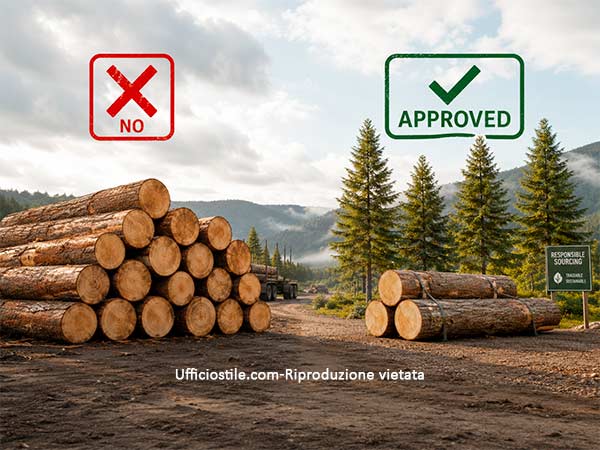
ESG strategies require a transparent supply chain and accurate analysis of social and environmental impacts. Sustainable design makes it possible to identify critical points along the supply chain, support the use of certified materials and improve processing and procurement conditions. Integrating these criteria into the office project generates added value in terms of reputation, risk reduction and coherence with corporate social responsibility objectives.
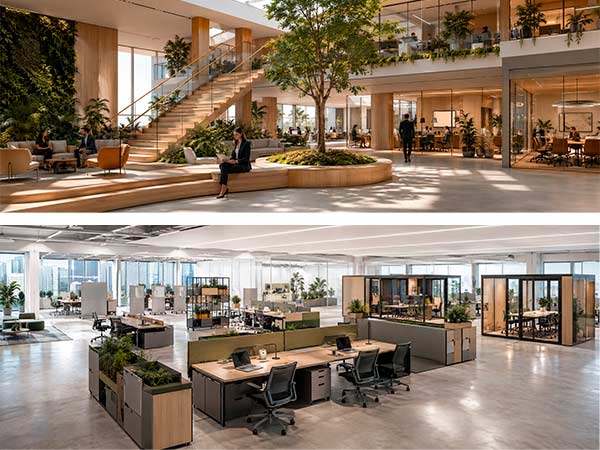
Integration between design, efficiency and long-term environmental objectives
Sustainable design is not limited to reducing environmental impact, but aims to create functional, durable and efficient environments. Integrating aesthetic requirements, technical performance and long-term environmental objectives makes it possible to design resilient spaces, capable of responding to changes in work and organisation. A strategic vision of the furniture life cycle helps use resources better, reduce future interventions and maintain the project’s value over time.
FAQ
Because it provides an objective measurement of environmental impact throughout the entire life cycle, making it possible to compare alternatives and make more informed decisions on materials, layouts and production processes.
LCA analyses all phases: raw material extraction, production, distribution, use and disposal or recycling phase, offering a complete view of the product’s environmental impact.
By reducing the use of virgin materials, optimising energy consumption and minimising waste production, sustainable design directly contributes to lowering the carbon footprint of the office as a whole.
ESG criteria guide responsible choices related to the environment, governance and social impact, influencing the selection of suppliers, materials and design solutions consistent with corporate sustainability strategies.
Yes, because it extends the useful life of furniture, facilitates maintenance and reconfiguration and reduces waste and the need for complete replacement, contributing to more efficient resource use over the long term.