Shared tables and collaborative workstations
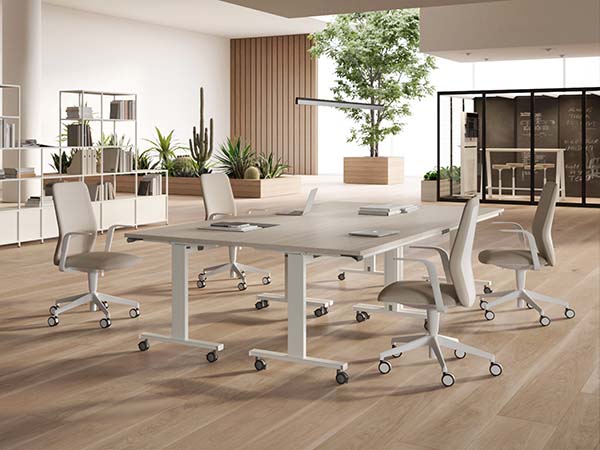
Shared tables and collaborative workstations for dynamic workspaces: modular solutions that combine ergonomics, integrated technology and sustainable materials to support collaboration, flexibility and team productivity.Shared tables for team working are “bench” workstations designed for collaborative work: they allow several people to work together while maintaining order, comfort and efficiency. They integrate cable management, electrification and accessories, such as screens, dividers and storage, and support modular and reconfigurable layouts for projects and hybrid offices, reducing pressure on meeting rooms and fixed workstations.
Bench tables for team operations
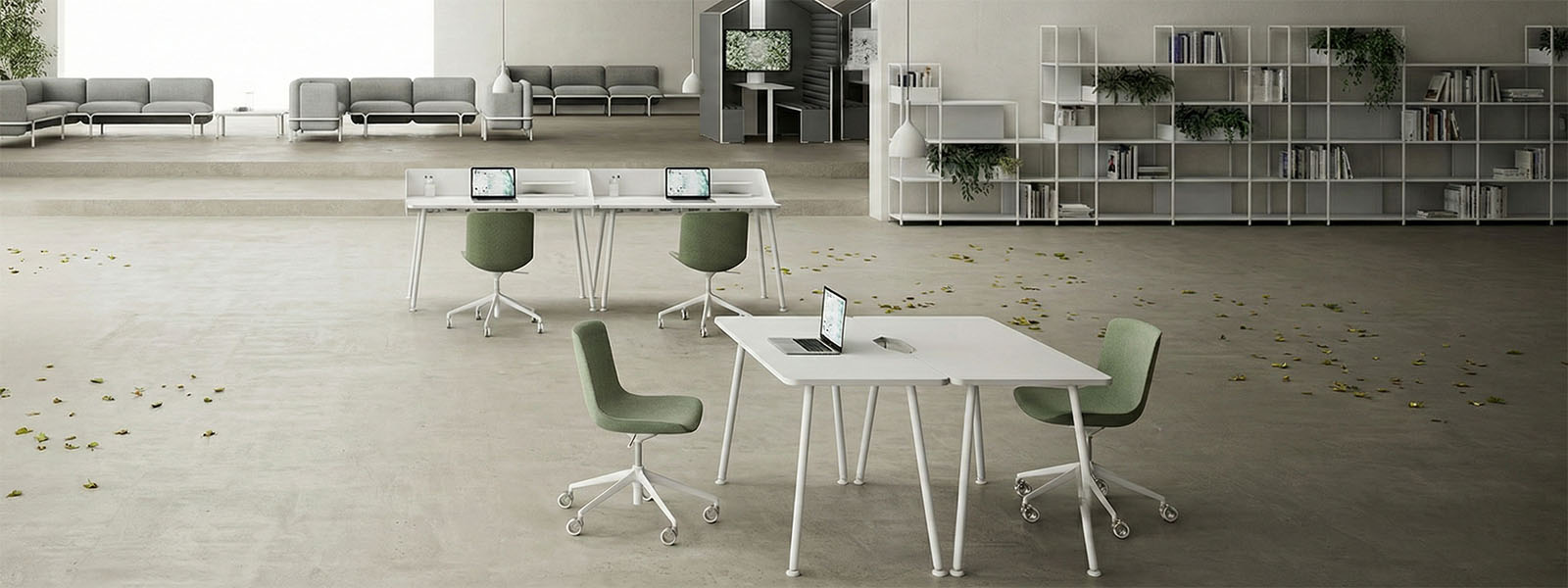
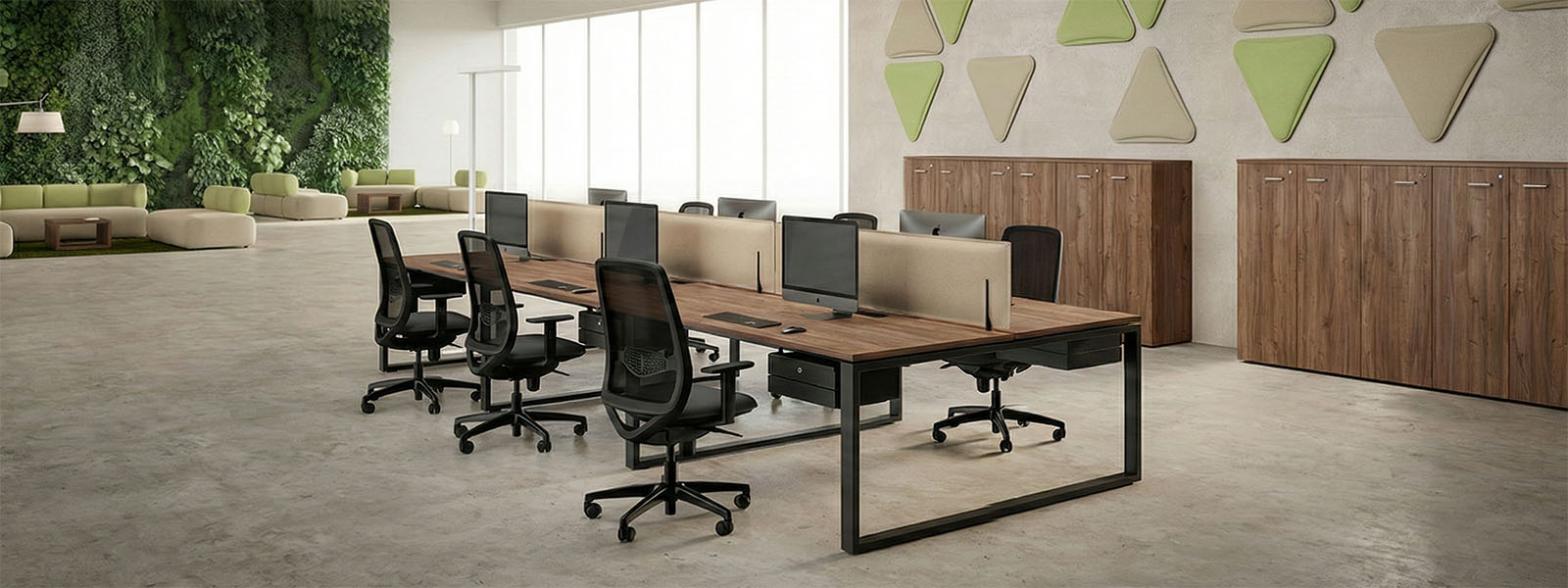
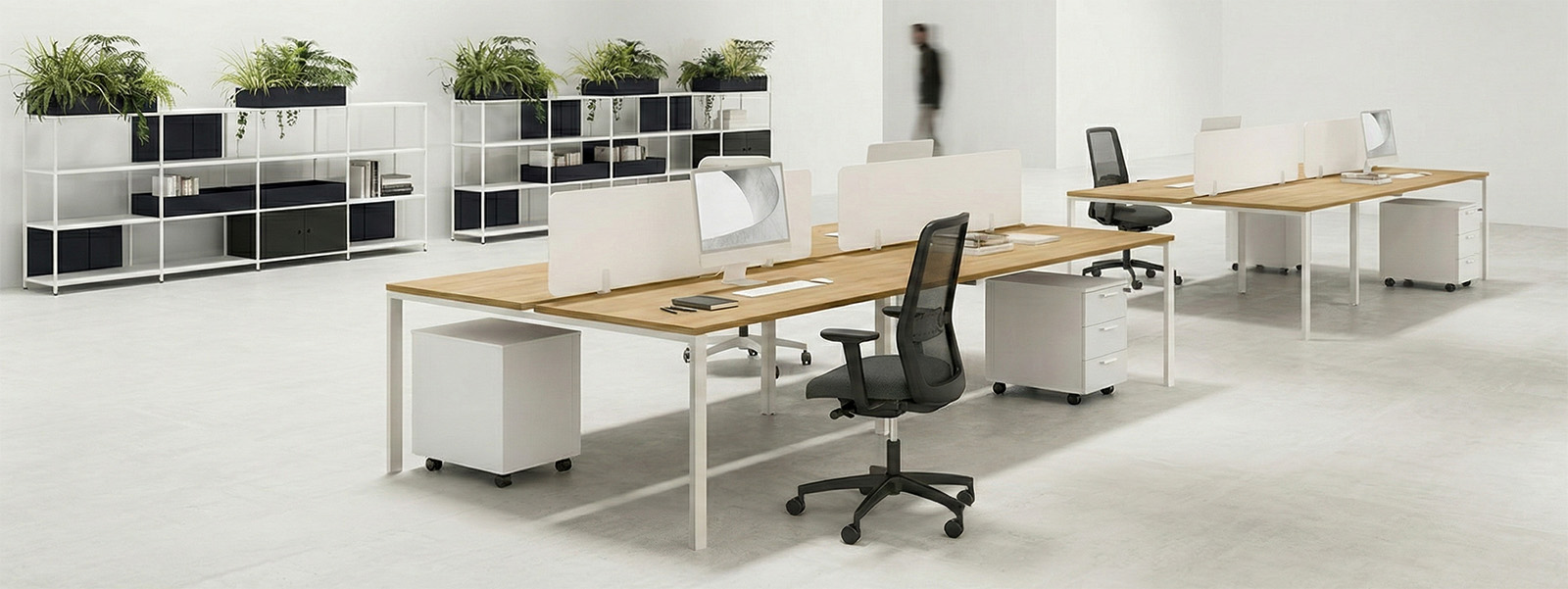
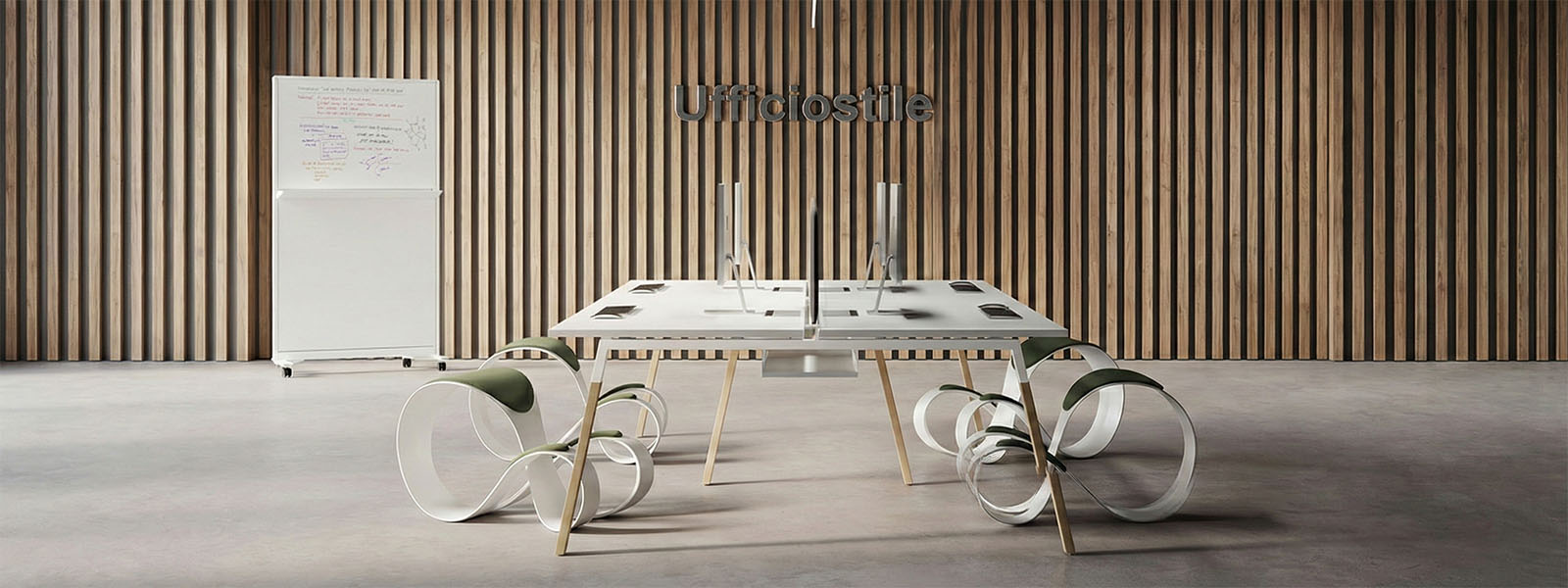
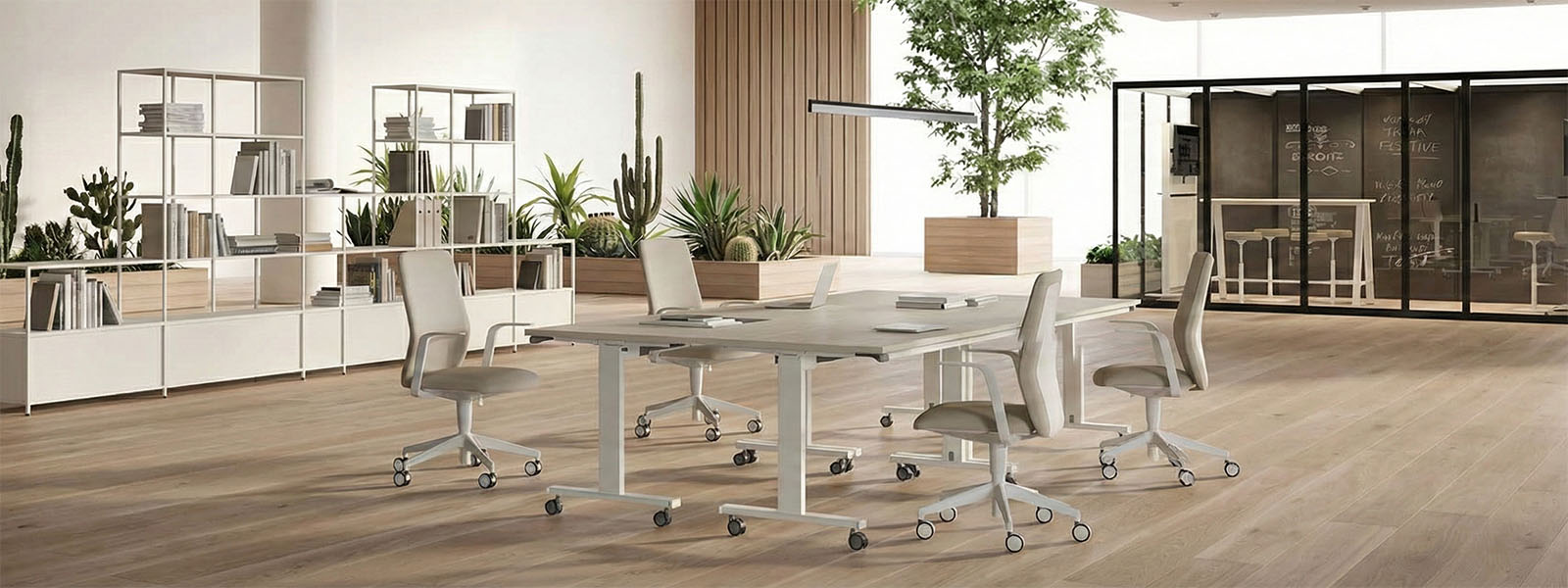
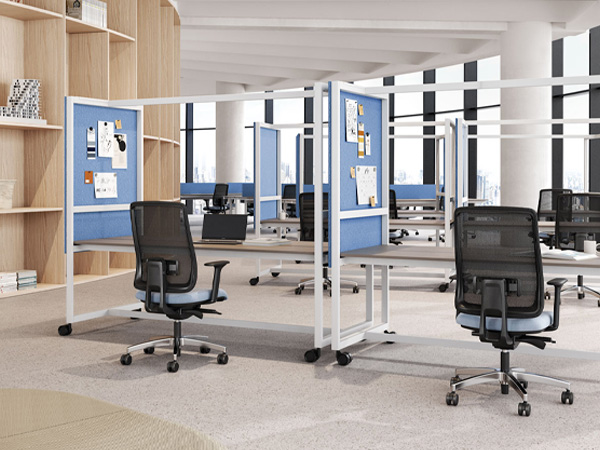
The classic shared table is designed to let several people work along the same axis in an orderly way: the same design language, the same level of access to tools and connections, less fragmentation between workstations. It is the most effective solution when the team needs operational continuity and speed, because it reduces micro-movements and makes collaboration immediate without “invading” meeting rooms.
Project tables for workshops and sprints
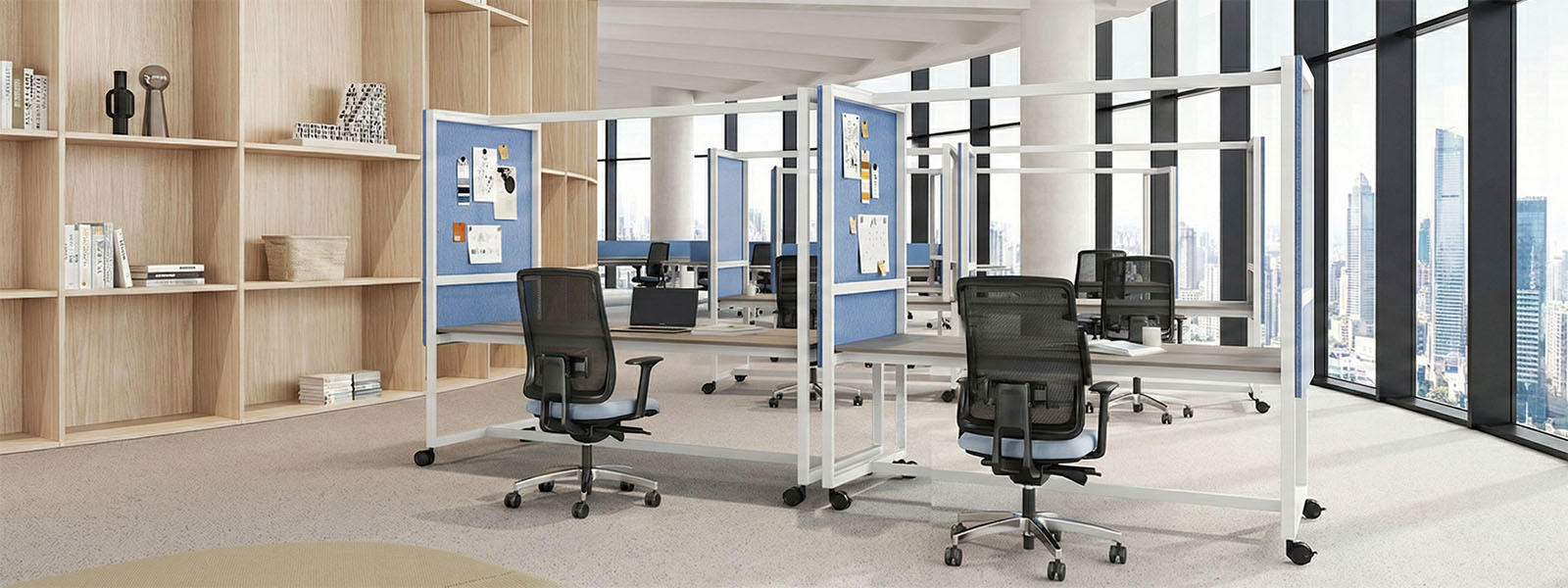
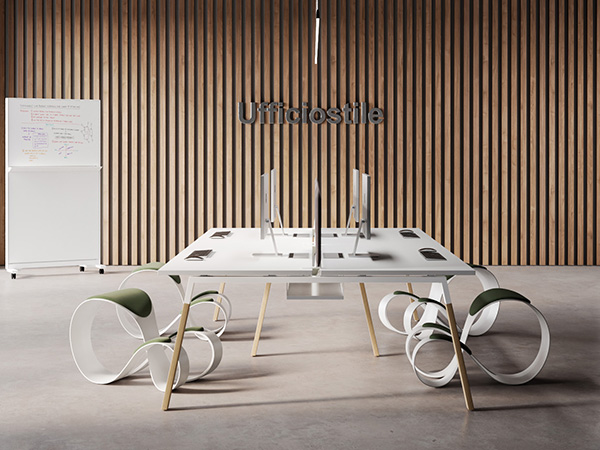
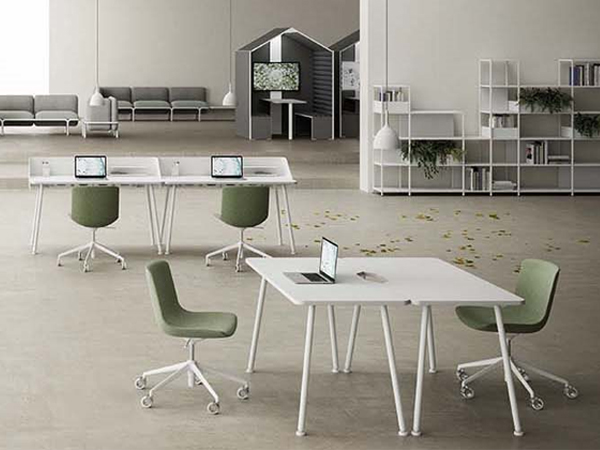
When work is organised by phases, the table must become a project surface: support for materials, prototypes, documentation, post-its and quick review moments. Here, the value lies in usable surface and freedom to reconfigure: a project table well integrated into the team-working area creates a recognisable place for “doing”, separate from individual work but close enough to be truly used every day.
Shared tables for hybrid offices and hot desking
In hybrid contexts, the workstation is not always “mine”, but work must remain continuous. Shared tables work because they facilitate rotation: arrive, connect, work, clear the space. If the space is designed with the right accessories, such as orderly power points, support surfaces and small management rules, team working remains clean and credible even with variable attendance and people changing frequently.
“Invisible” electrification and cabling
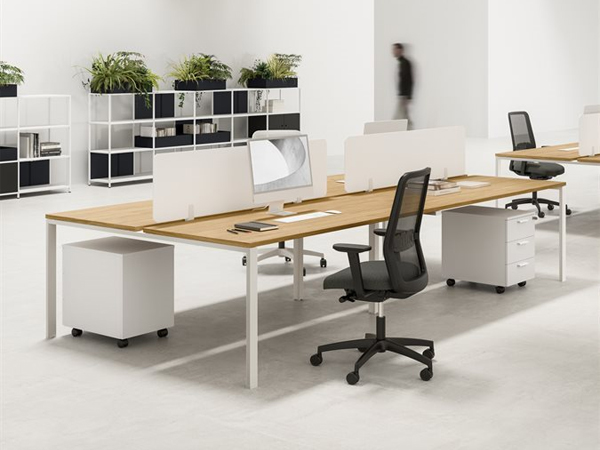
A shared table fails when cables win: power lines crossing tops, improvised power strips, adapters always in sight. What makes the difference is a clean technical setup, with cable routes and power points designed for the real number of users and devices. When electrification is well integrated, the table remains orderly, maintenance is simpler and the user experience becomes immediate for everyone.
Light separation: screens, privacy and acoustic comfort
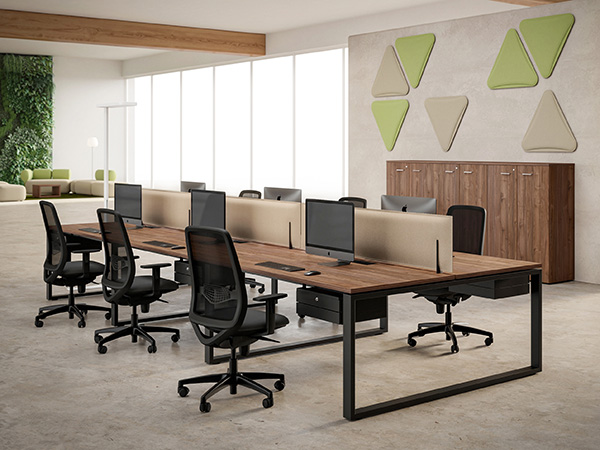
Collaborating does not mean always working “exposed”. In shared tables, a lightweight separation is often useful to protect sightlines and reduce distractions without turning the bench into a series of boxes. Discreet screens and coherent accessories help maintain a balance between openness and concentration, especially in large teams or in open spaces where transit is continuous.
Modularity and reconfiguration over time
Team working changes: projects start and end, departments grow, new ways of working emerge. A shared table designed with a modular logic makes it possible to lengthen, shorten and rotate compositions, adapting layouts without redoing everything. It is a strategic advantage: the space remains current, the investment lasts longer and the office can evolve without “emotional construction sites” every time the organisation changes.
FAQ
The layout directly affects communication. Circular or island configurations support brainstorming and inclusion, while linear solutions optimise workflows between different departments or functions. Ufficiostile offers layout consultancy to adapt shape, dimensions and number of workstations to the team’s specific objectives and the type of activity carried out.
Yes. Every shared table can include electrical sockets, pop-up towers, LAN or USB-C modules for plug & play connections. Cabling systems are integrated into concealed trays or ducts, CE-certified and designed for intensive use in professional environments.
A shared table is convenient when you want immediate collaboration, team continuity and better space management. Single desks are more suitable when the work is mainly individual and privacy is a priority. Often the best mix is: benches for teams + a few “quiet” workstations for high-concentration activities.
Absolutely. Shared tables can be made to measure, with modular units and customised tops according to the available space and the number of required workstations. It is possible to integrate accessories, divider elements and cabling according to project needs.
Yes. Ufficiostile systems are designed to integrate with operational, executive and reception furniture already present in the company. Colour palettes, finishes and materials can be coordinated to achieve a homogeneous result, without invasive interventions on existing environments.