
Room-in-room: acoustic micro-architectures for concentration and meetings
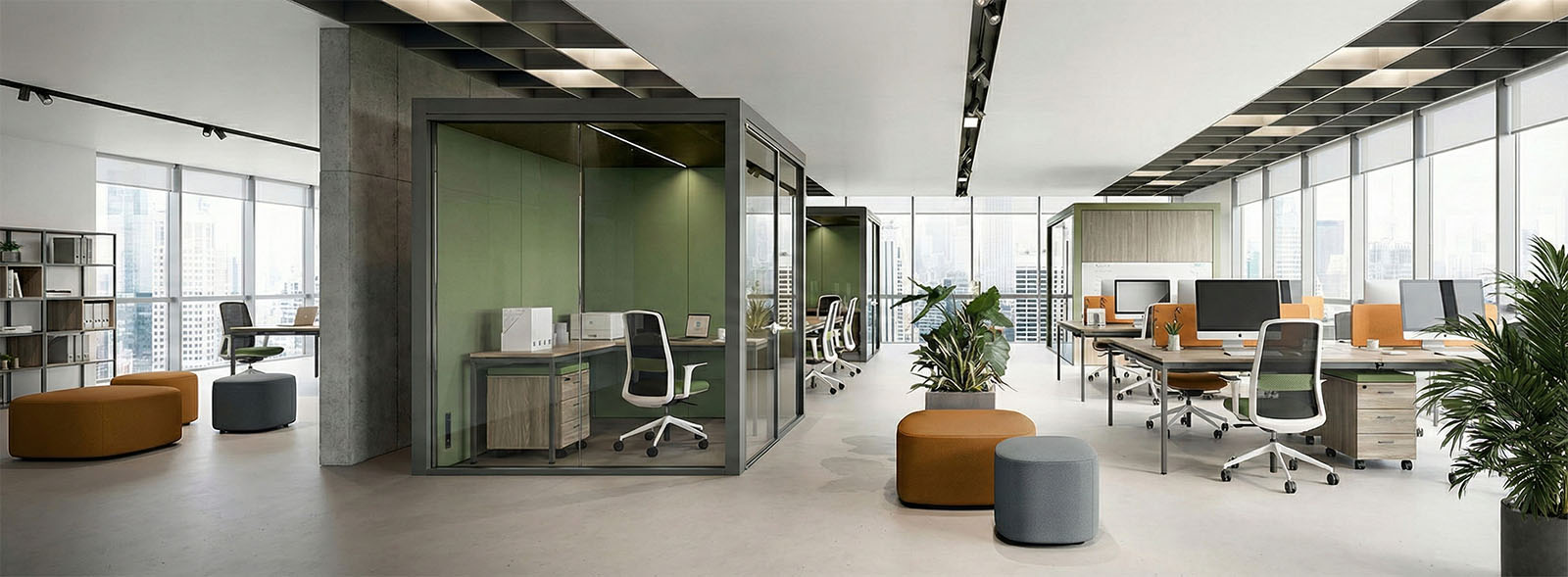
In transit areas — wide corridors, transition spaces, zones between departments, open-space edges — the places that are often missing are precisely the ones most needed: a confidential call, a micro-meeting, a moment of concentration. Room-in-room solutions create complete rooms “inside” the building, without invasive building works, keeping routes clear and adding acoustic privacy, order and functionality where previously there was only passage.Room-in-room solutions are independent modules installed inside the office to create enclosed spaces, phone booths, meeting pods and focus rooms, in transit areas or at the edges of open spaces. They offer visual and acoustic privacy, integrated ventilation and lighting, power and data provisions, and make it possible to add quick rooms without structural works, with the possibility of reconfiguration over time.
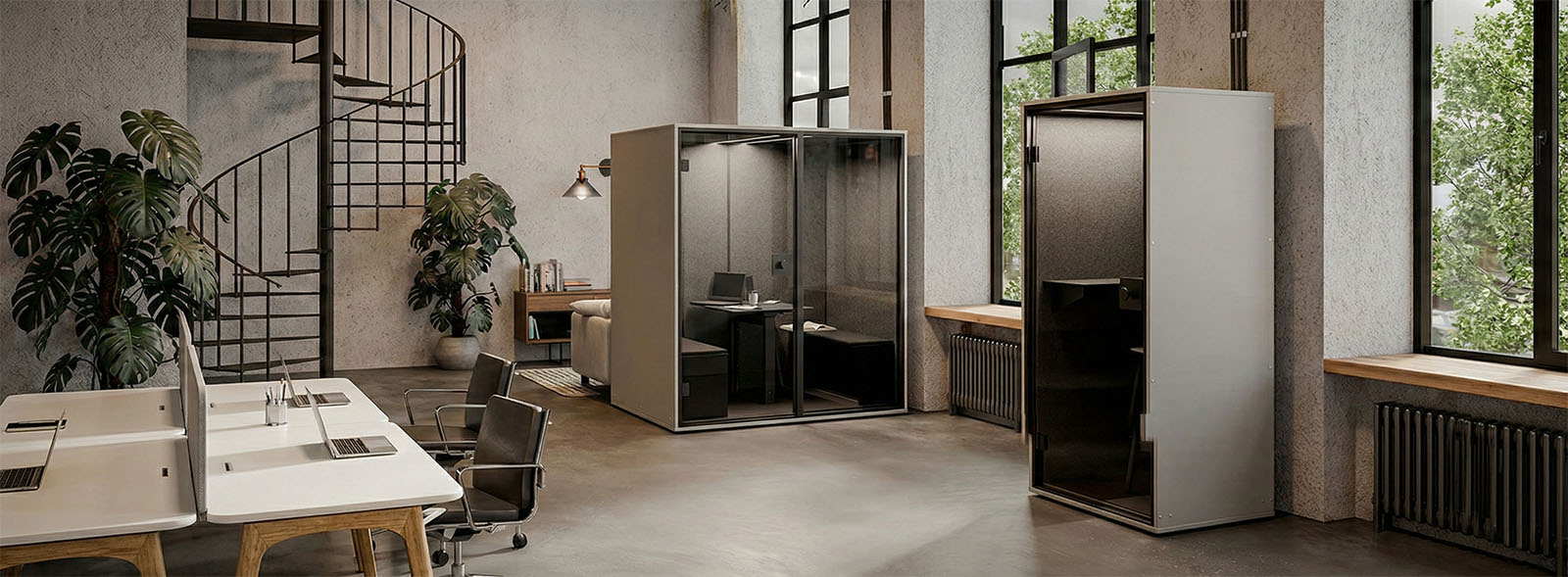
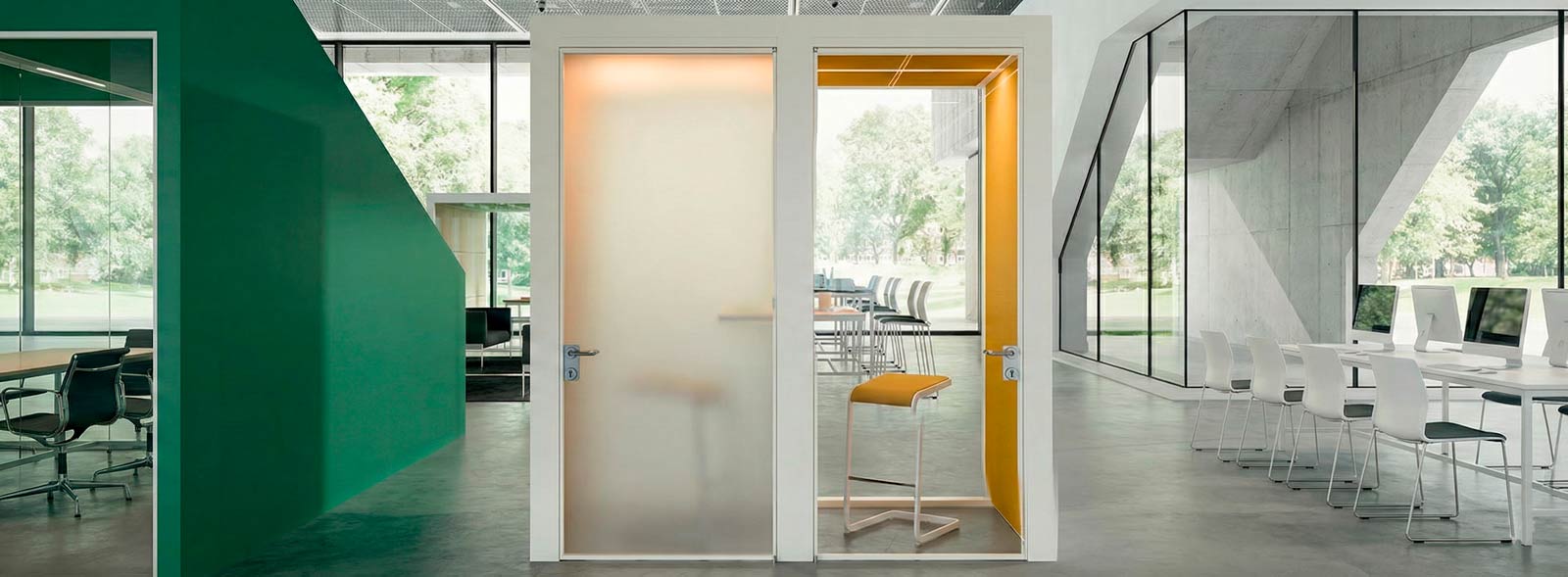
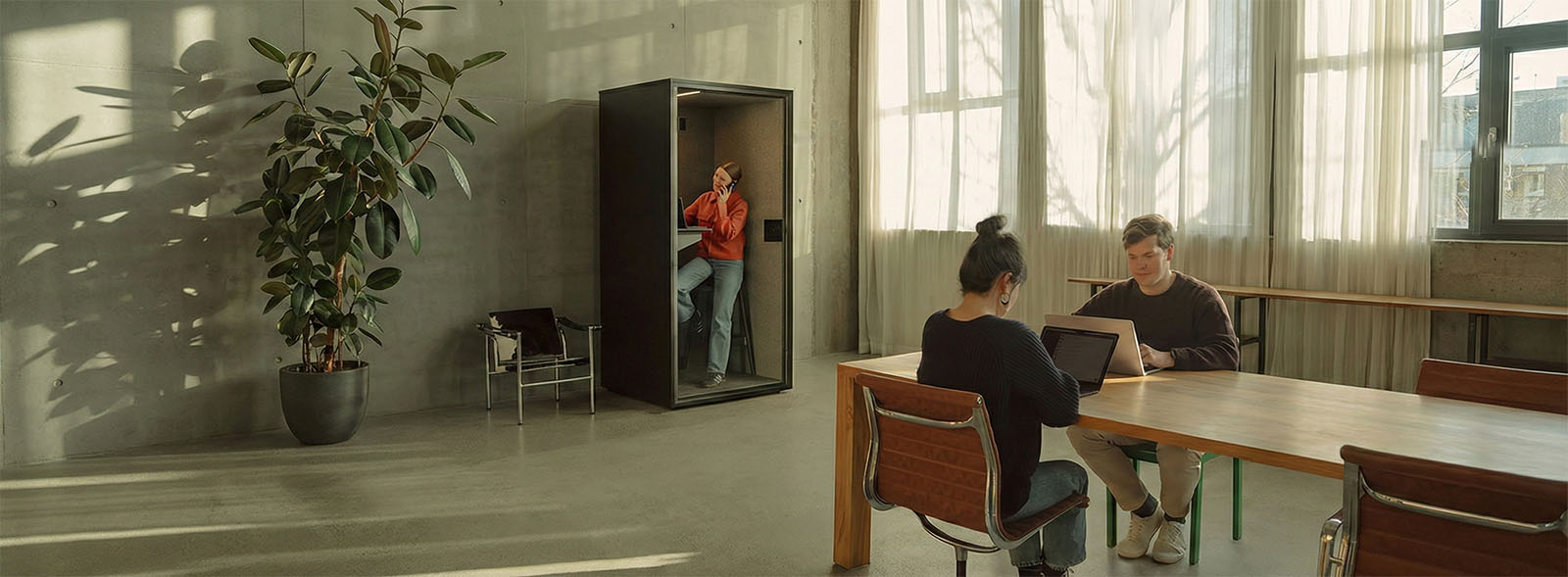
Phone booths for calls and quick focus
In a passage area, the problem is not “finding a room”, but finding one immediately. Phone booths solve calls and short activities that require confidentiality, without occupying a meeting room. They are perfect near corridors and operational hubs because they intercept real use: enter, close, work for 10–20 minutes, leave. The goal is to reduce noise and interruptions, improving work quality without changing the overall layout.
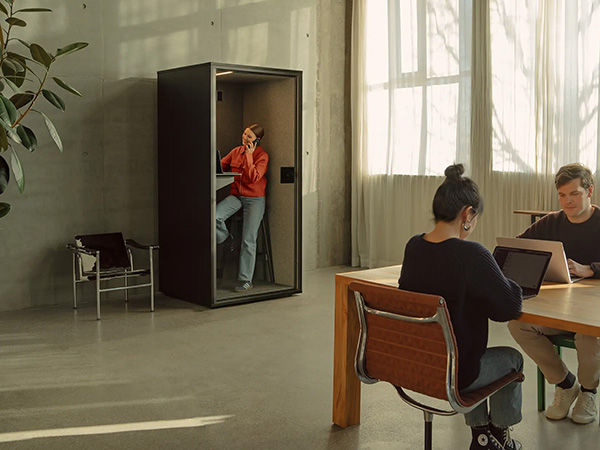
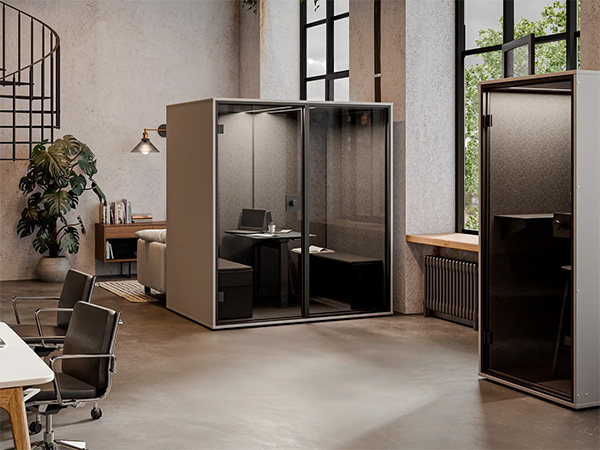
Meeting pods for quick alignments
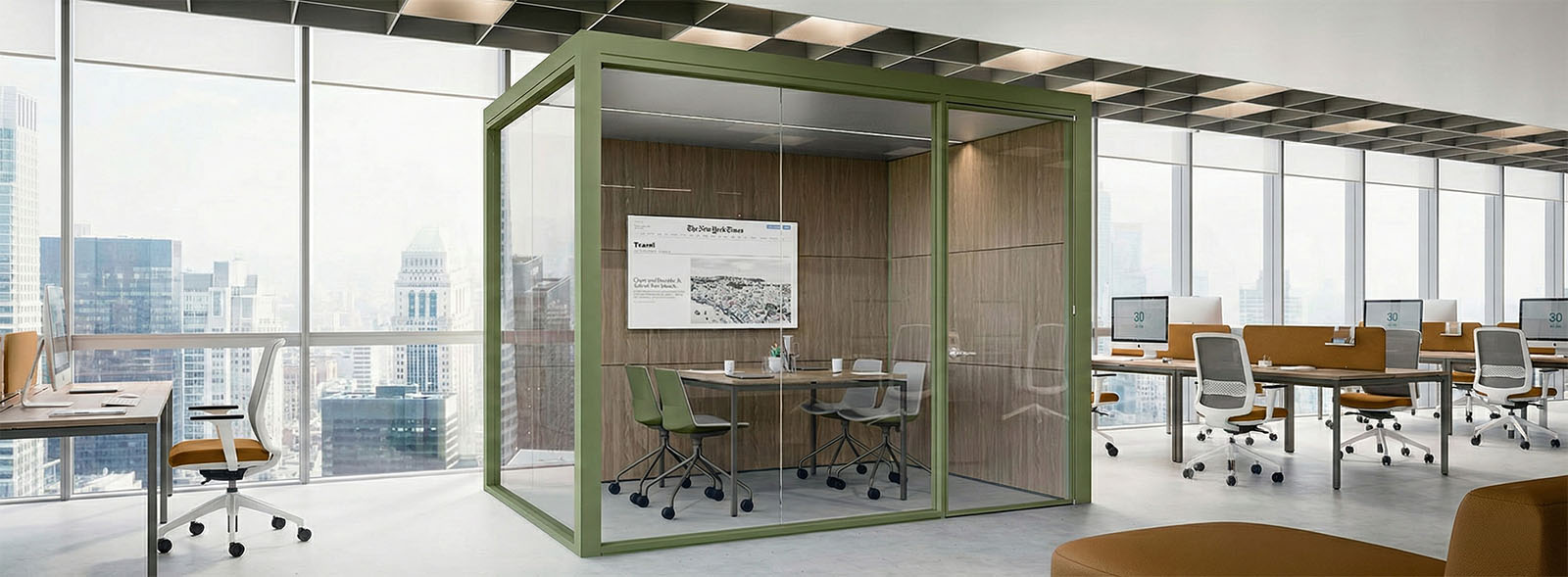
Many meetings do not need a room: they need 15 minutes, a support surface, good voice intelligibility and an environment that does not “disturb” the rest of the office. Meeting pods are ideal in transition zones between departments or along wide routes: they create a recognisable room, with privacy and comfort, without taking important surfaces away from workstations. In hybrid contexts, they reduce pressure on traditional meeting rooms and make the day more fluid.
Glazed room-in-room solutions for transparency and flow safety
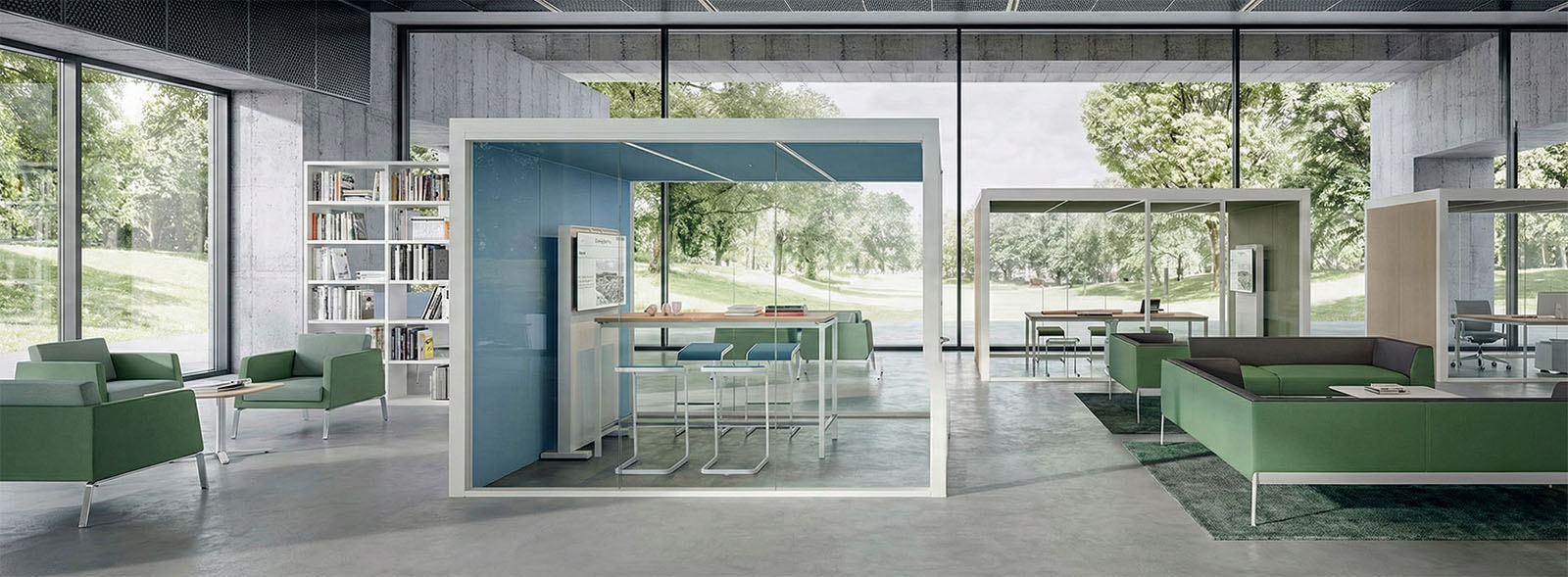
In transit areas, readability is fundamental: the module must be present without becoming a visual obstacle. Glazed solutions, or solutions with large transparent surfaces, maintain light and control, improve perceived safety and support wayfinding: it is immediately clear where to pass and where to enter. This is a particularly coherent choice when the transit area is also a representative space and you do not want opaque “blocks” that weigh it down.
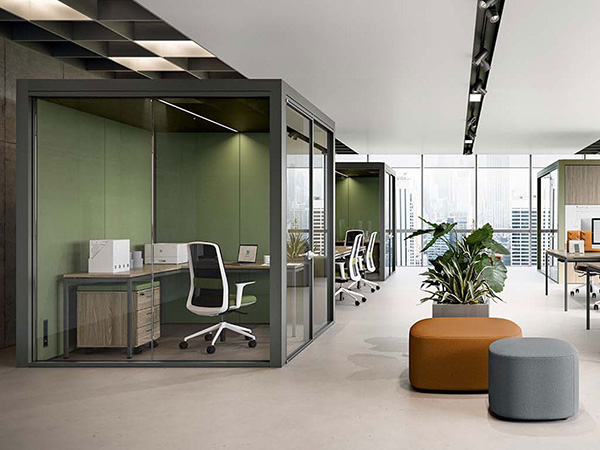
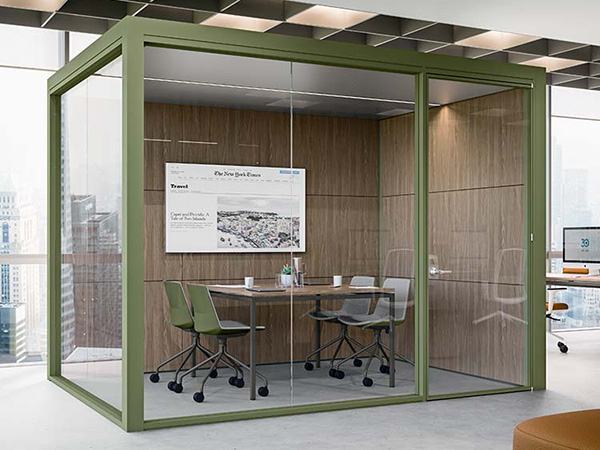
Modules for “real” confidentiality: HR, legal and governance
Some conversations cannot take place in an open space, but often do not justify a permanent dedicated room. A higher-performance room-in-room allows HR interviews, negotiations, confidential meetings and moments of deep concentration, fitting into transit areas without turning the office into a maze of walls. Here, the value is not only acoustic: it is the possibility of creating a “place of responsibility” close to the functions that use it, with an orderly and professional image.
Room-in-room with integrated technology: power, data and AV
When the room is also used for video calls and quick sharing sessions, integration makes the difference: tidy sockets and cabling, suitable lighting, correct ventilation and, where necessary, provisions for screens and AV accessories. Installed in transit areas, these modules avoid the “loose cables” effect typical of improvised solutions and make the space immediately usable by anyone, without setup every time.
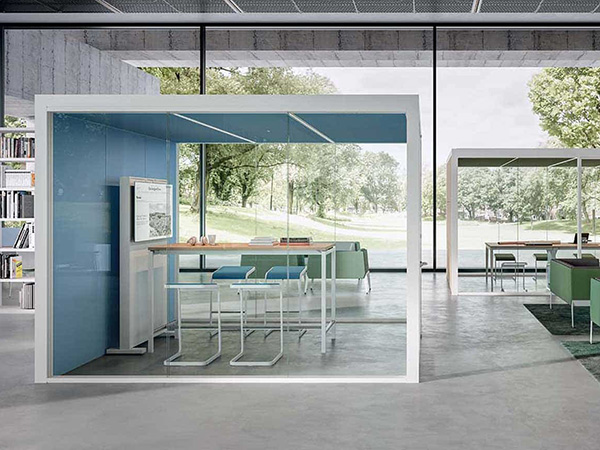
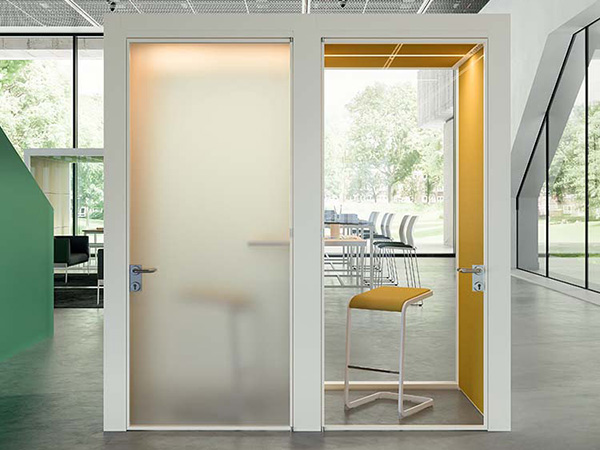
Reconfigurable solutions for evolving offices
Transit areas often change: new teams, new flows, reorganisations, growth. The strategic advantage of room-in-room solutions is precisely reversibility: add a room today where it is needed, reposition it tomorrow if the function changes. It is an intelligent way to increase the supply of enclosed spaces without “crystallising” the layout and without committing to heavy building works, especially in multi-site headquarters or offices that undergo frequent transformation cycles.
FAQ
Yes. Thanks to sound-insulating walls, laminated glass and acoustic seals, pods guarantee a quiet environment isolated from open-space background noise, improving comfort and conversation quality inside.
No. Lighting, ventilation and power supply are integrated into the room-in-room modules and work in plug&play mode. A normal power supply is sufficient, without modifying existing systems or carrying out invasive works.
Yes. The structures are modular and removable: they can be repositioned in another point of the office or transferred to a new site, following the company’s evolution and any team growth without losing the initial investment.
Configurations range from pods for quick phone calls to micro-rooms equipped for longer meetings with 4–6 or 6–8 people. Continuous ventilation and suitable lighting make use comfortable even beyond the occasional phone call.
Finishes are available in painted metal, melamine, acoustic fabrics, transparent or opaline glass, as well as different LED lighting solutions, including dimmable options. This makes it possible to integrate pods with the office’s visual identity and existing furniture, while maintaining the required acoustic performance.