
Recycled and recyclable materials for high-performance office furniture
The use of recycled and recyclable materials is a pillar of sustainability in work environments. Recycled PET, low-emission panels, recyclable metals and non-toxic paints reduce environmental impact throughout the entire furniture life cycle and support circular design strategies and international certifications.

Technical specifications
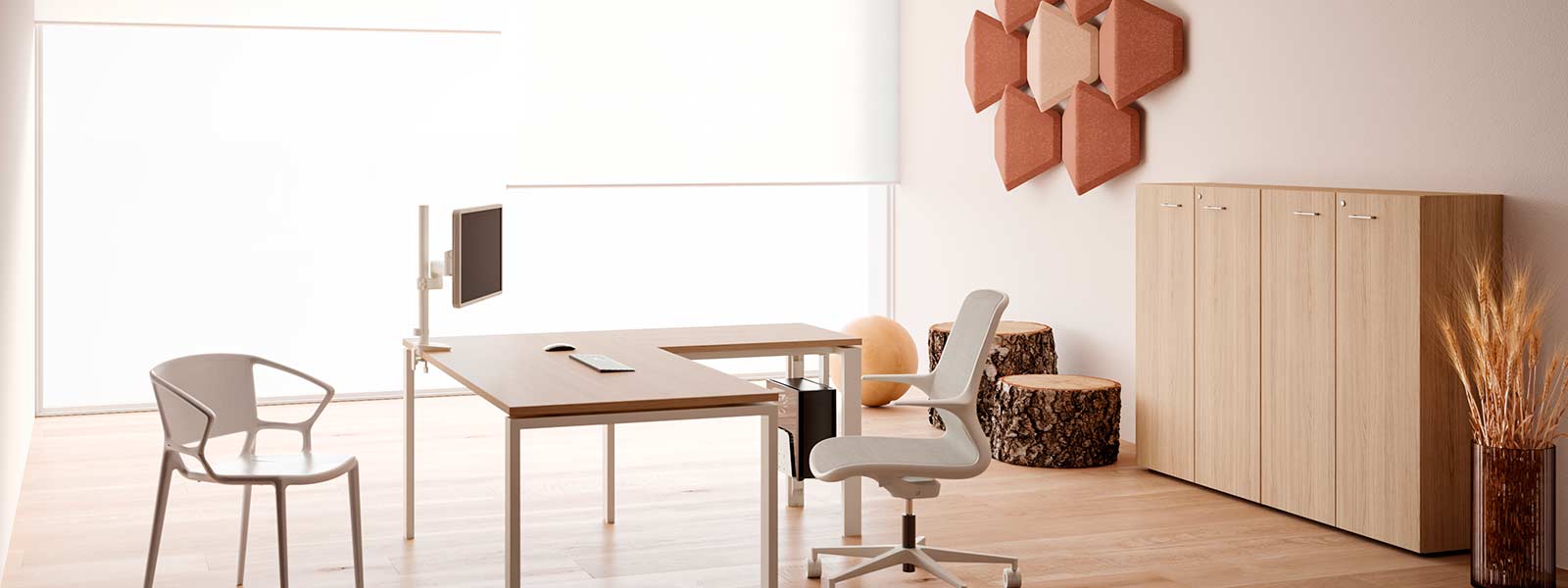
- High-density recycled PET for acoustic panels, coverings and structural components.
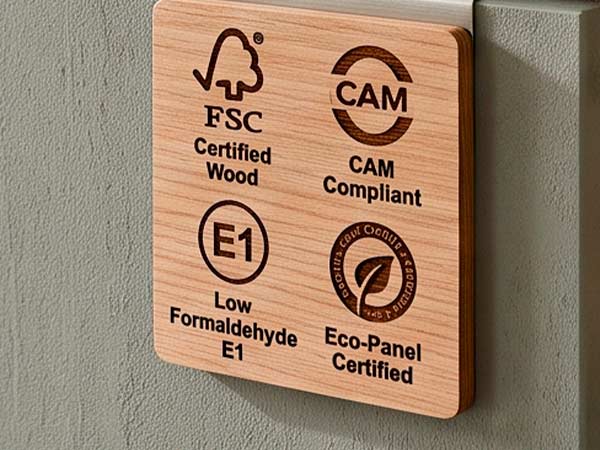
- Certified low-emission panels, with low formaldehyde emissions for improved indoor air quality.
- Recyclable components designed for disassembly and resource recovery at end of life.
- Non-toxic paints and glues, with low solvent and VOC content, compliant with CAM and the most rigorous environmental protocols.
Typical configurations
Sound-absorbing panels
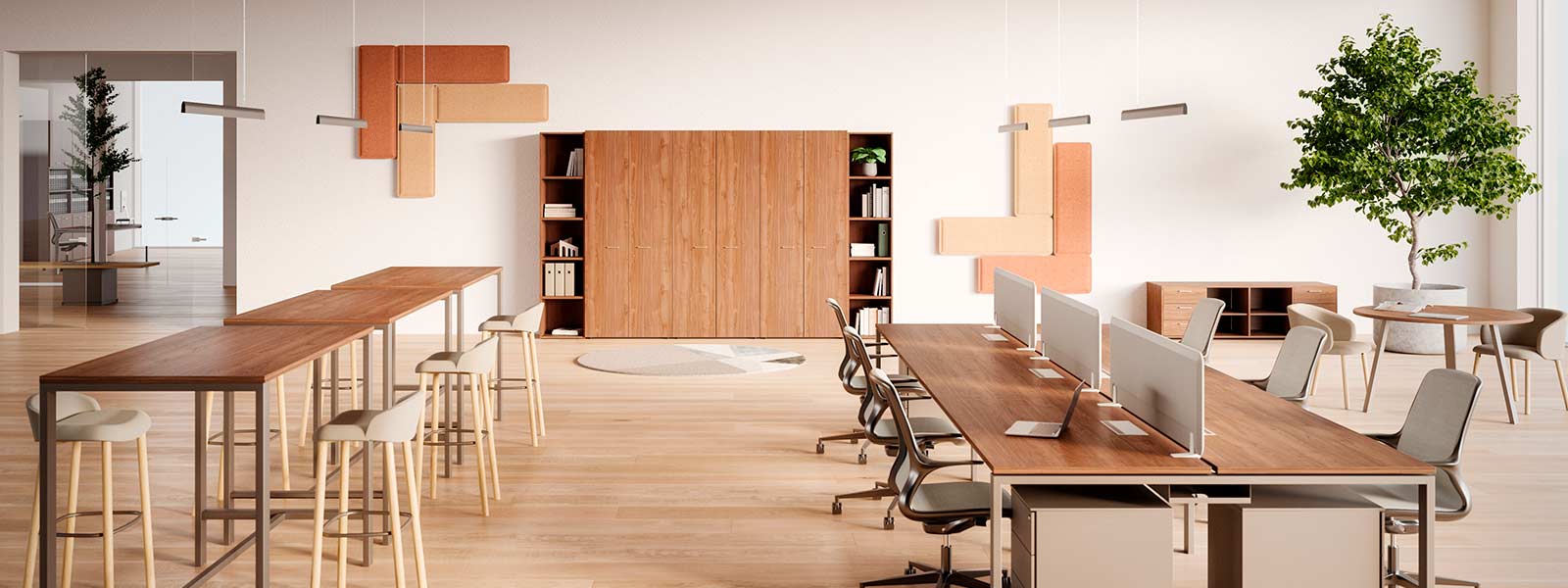
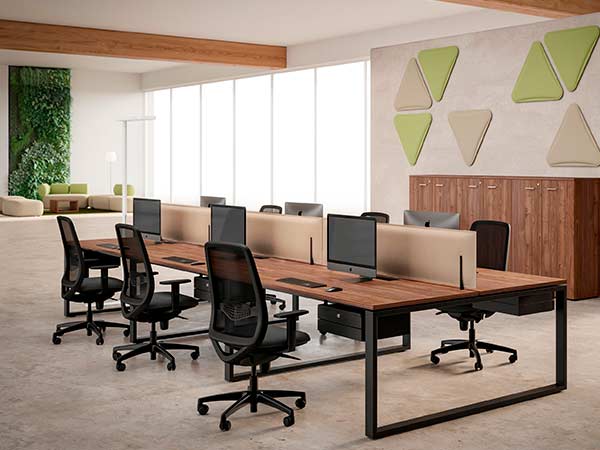
Acoustic panels in recycled PET and low-emission panels to reduce reverberation in open spaces, corridors and meeting rooms, improving cognitive comfort and speech quality.
Modular furniture
Desks, storage units and boiserie made with recycled-content panels and easily separable components, designed for flexible configurations and evolving layouts.
Metal structures
Frames and structures in recyclable metal, designed to be reused or recovered at end of life, in line with circular economy logic and waste reduction.
Technical coverings
Technical coverings for walls and suspended ceilings with low-emission materials and sustainable finishes, integrated into the architectural concept and the company’s ESG strategies.
Recycled PET, reusable metals and low-emission panels
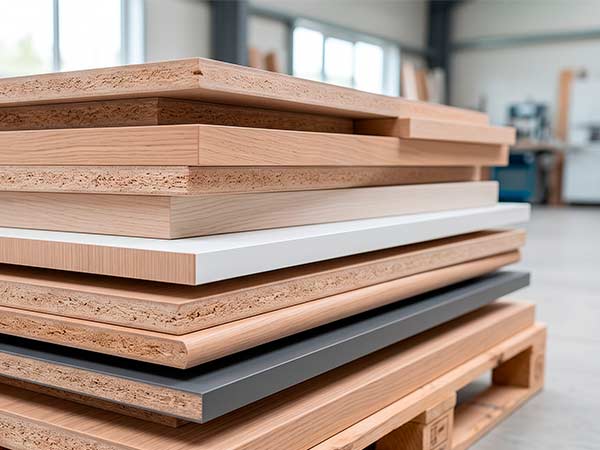
Recycled materials such as PET and reusable metals offer excellent structural and acoustic performance while maintaining a reduced environmental footprint. Low-formaldehyde, low-emission panels improve indoor air quality and support WELL and LEED standards. These solutions integrate perfectly into a circular design approach, where materials, processes and products are designed to last and to be reintroduced into the production cycle.
Component recyclability to extend the life cycle
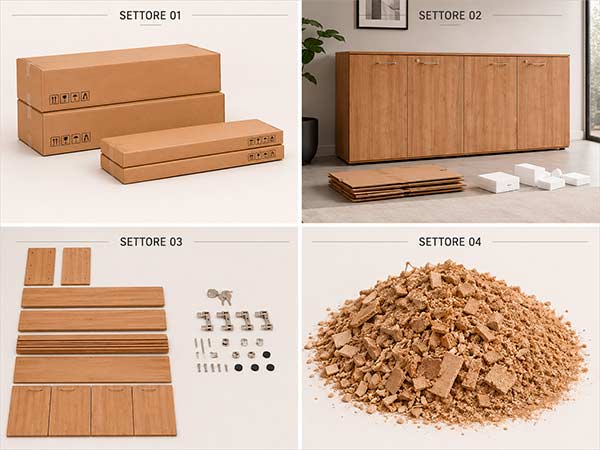
Material recyclability makes it possible to extend the furniture life cycle and simplify disassembly operations. Separable components, mono-material elements and modular structures facilitate resource recovery at end of use, transforming potential waste into new raw material.
This approach significantly reduces waste and disposal costs and allows companies to adopt more effective circular economy policies, enhancing the initial investment over time.
VOC emission reduction and indoor air quality
Sustainable materials include non-toxic paints, low-solvent glues and panels with reduced VOC emissions. These solutions improve indoor air quality (IAQ), reduce health risks and meet CAM standards and the most rigorous environmental protocols.
Choosing low-emission materials means protecting the people who use the office every day, reducing exposure to harmful compounds and creating healthier work environments, in line with WELL and LEED requirements.


Circular design and responsible material selection
Circular design promotes the use of low-impact materials from certified supply chains with full traceability. Responsible material selection supports environmental sustainability, supports ESG strategies focused on emission reduction and becomes a distinctive element in modern office design.
Evaluating the percentage of recycled material, VOC emissions, certifications and end-of-life recycling possibilities makes it possible to set up projects consistent with corporate environmental policies and with the expectations of users who are increasingly attentive to sustainability.
FAQ
New-generation recycled materials, such as high-density PET and regenerated metal alloys, guarantee mechanical stability, durability and performance comparable to virgin materials, while also contributing to the reduction of overall environmental impact.
VOC emissions directly affect indoor air quality. Low-emission materials, compliant with CAM and international standards such as GREENGUARD, reduce exposure to harmful compounds and support protocols such as WELL and LEED, improving the wellbeing of people working in the office.
Recyclability depends on mono-materiality, the possibility of separating parts at end of life and material traceability. Projects that favour disassembly allow more efficient resource recovery and lower environmental impact during disposal phases.
Yes. Professional-grade recycled PET is used in acoustic panels, finishes, structural components and coverings. Its mechanical and acoustic properties make it suitable for high-intensity operational uses, while maintaining an excellent environmental profile.
Percentage of recycled material, environmental certifications, VOC emissions, durability, supply-chain traceability and end-of-life recyclability are fundamental criteria for an informed choice that is coherent with corporate ESG strategies.