
Professional seating for comfort, posture and intensive use
Operational seating for individual workstations is a central element in everyday work quality, because it influences posture, operational continuity and the overall perception of comfort. In this section, the focus is exclusively on the task chair: six types of seating designed to interpret different requirements in terms of ergonomics, image, intensity of use and budget, without moving outside the perimeter of the individual workstation.Operational seating for individual workstations consists of office chairs designed to support everyday work in an ergonomic, stable and comfortable way. They differ in structure, backrest, adjustment level, materials and target use: from compact task chairs for standard offices to more advanced versions for intensive use, professional environments and contract projects focused on comfort, durability and coordinated image.

Ergonomic seating
Comfort you feel throughout the day.
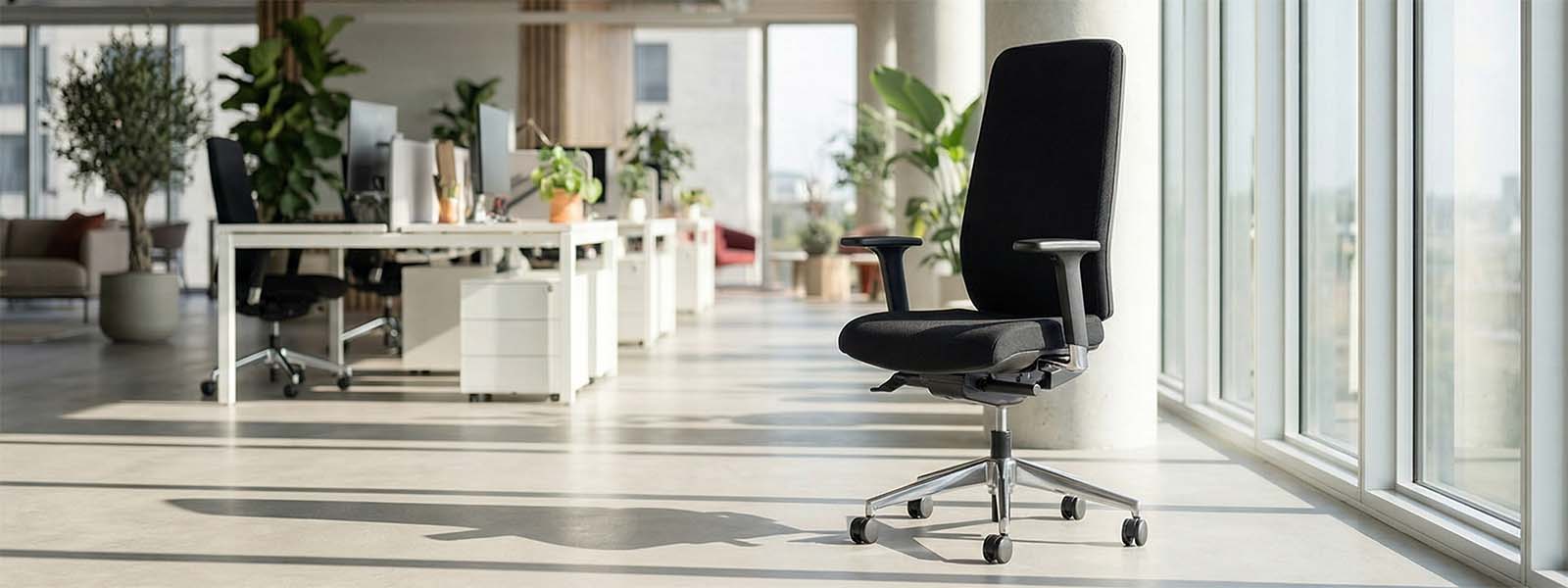
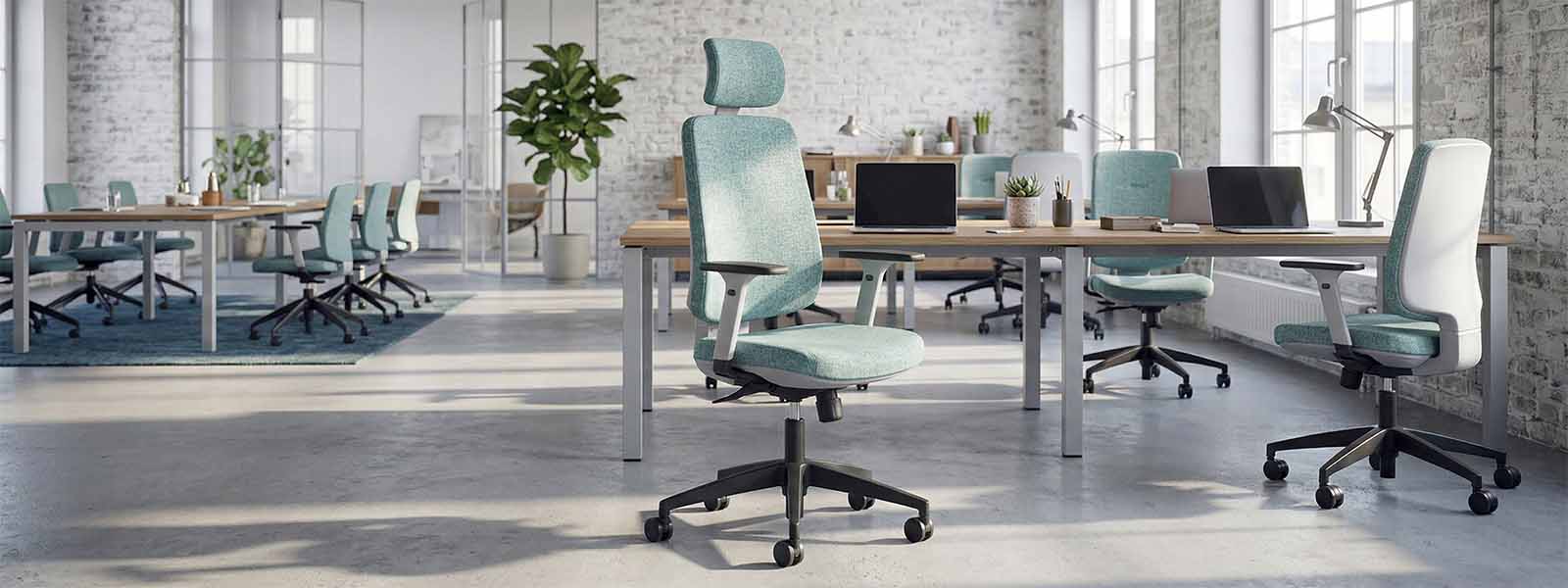
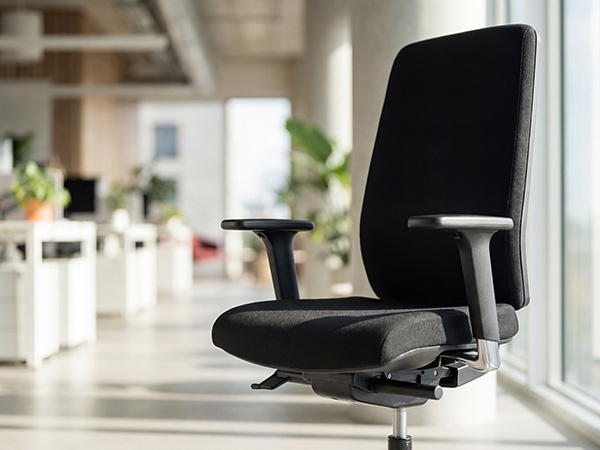
Ergonomic operational chairs are the most balanced choice for those who want a truly high-performing individual workstation, not just one that is aesthetically correct. They offer a more advanced seating setup than standard chairs, with a better ability to follow body movements and support continuous work without stiffening posture. They are ideal in administrative offices, professional studios and corporate environments where the user remains at the desk for many hours and expects a reliable, readable and easy-to-use chair in everyday work.
Mesh chairs
Visual lightness, more dynamic comfort.
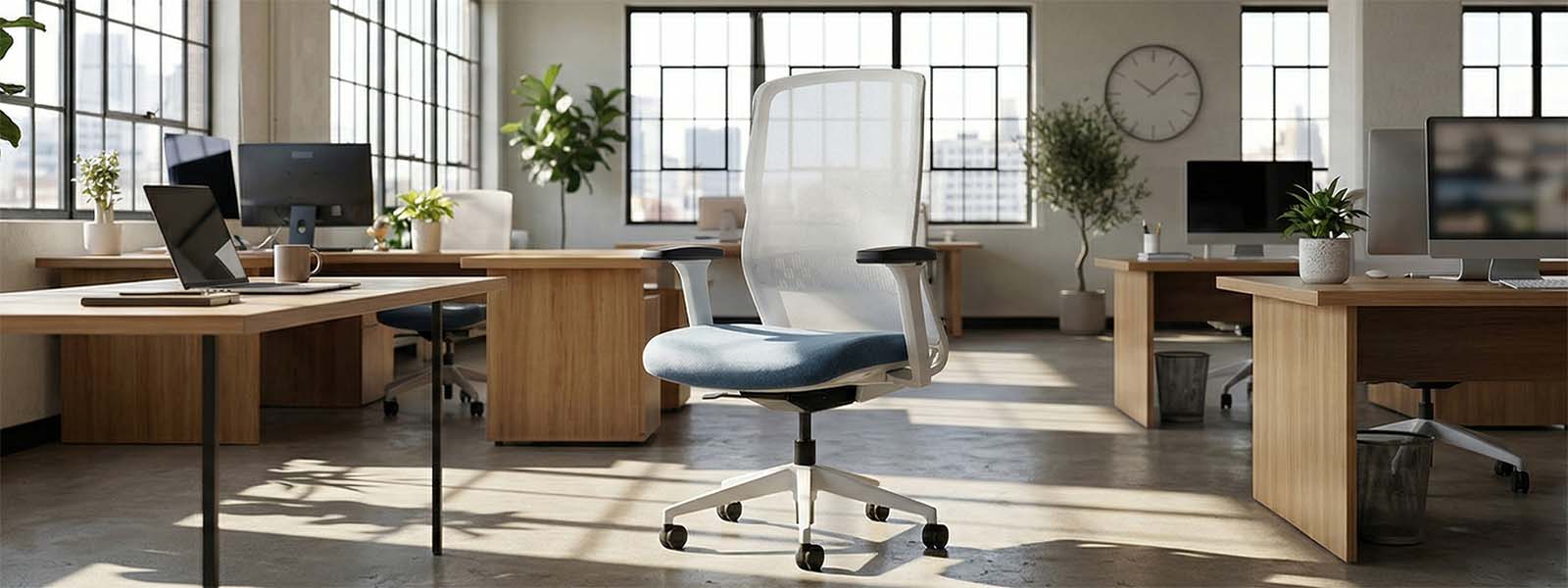
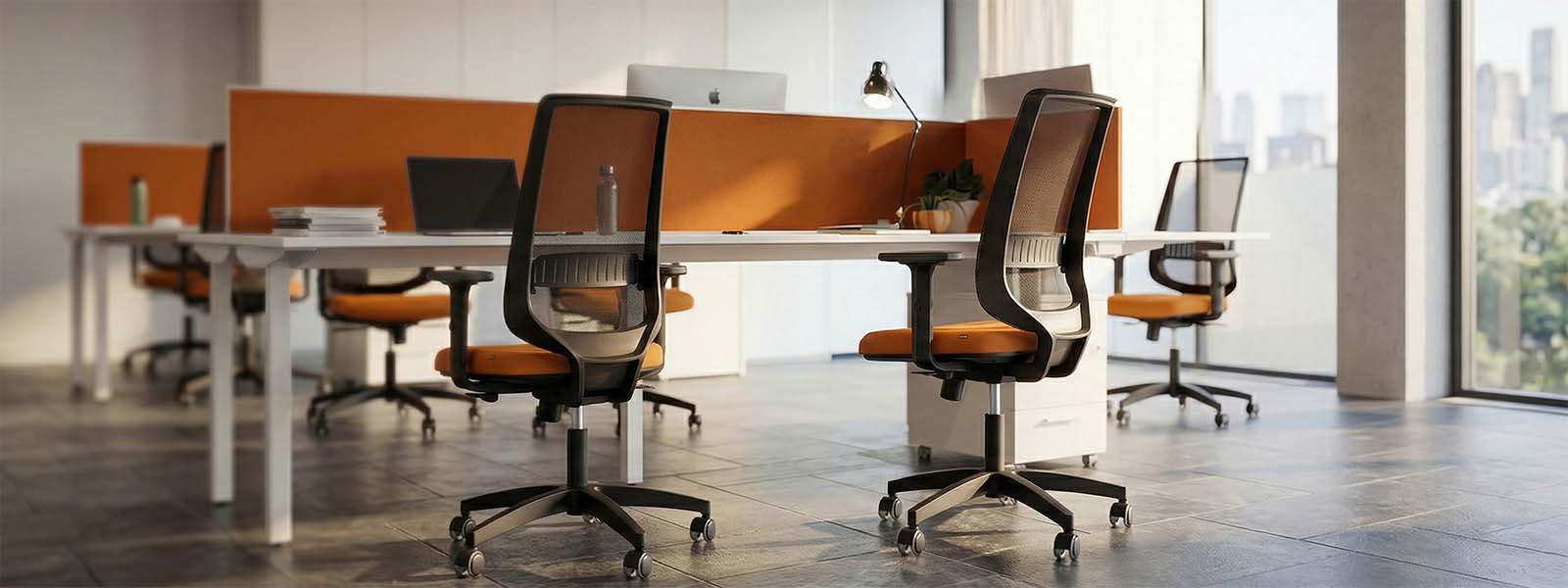
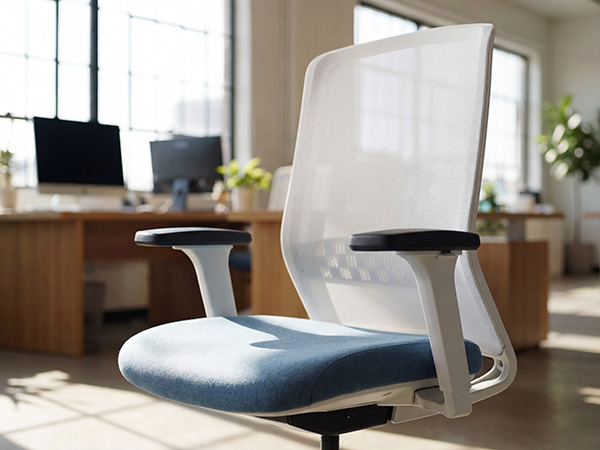
Operational chairs with mesh backrests are highly appreciated when the project requires a more contemporary image and a perception of greater lightness within the layout. Mesh visually lightens the workstation, improves breathability and provides a more agile feeling, particularly interesting in serial operational environments, technical studios and modern offices. They are suitable for those looking for an ergonomic task chair that is less massive, capable of combining everyday comfort, formal clarity and good architectural integration.
Synchronised mechanisms and precise adjustments for perfect posture
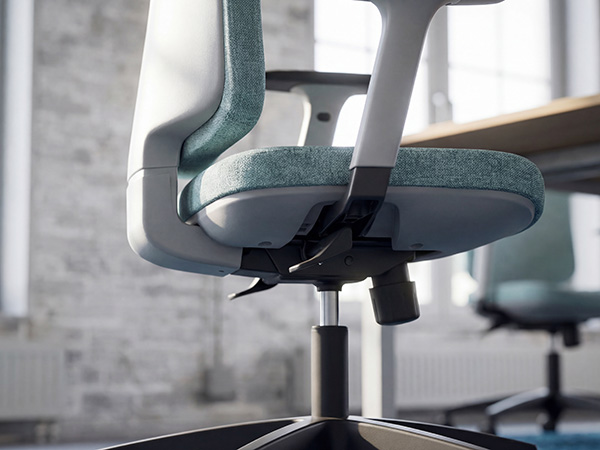
The heart of a professional ergonomic chair is the mechanism. Synchronised systems coordinate seat and backrest movement, maintaining the correct ratio between torso and legs during recline. Adjustable tension, multi-position locking and seat slide make it possible to adapt the chair to each person’s anthropometric characteristics. Advanced mechanics reduce compression on the thighs, relieve lumbar fatigue and support a natural posture throughout the working day, helping prevent musculoskeletal pain.
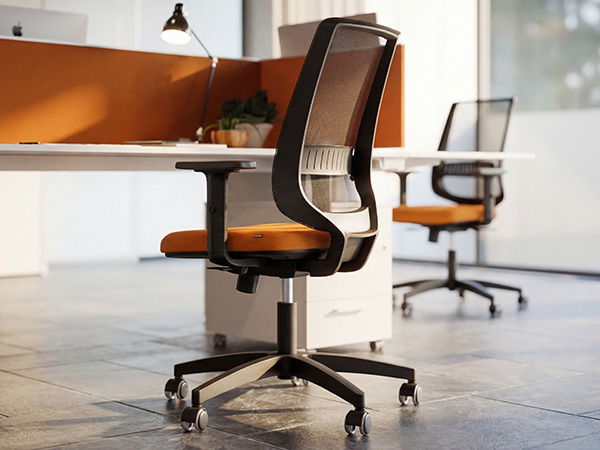
Breathable backrests, lumbar support and technical materials
Mesh backrests ensure continuous ventilation and adapt to the natural curvature of the back, making the chair comfortable even in warmer seasons or in heavily used environments. Adjustable lumbar support makes it possible to modulate the level of support in the lower spine area, reducing tension and helping maintain the physiological lumbar curve. High-density foam padding and technical upholstery, including flame-retardant and wear-resistant fabrics, increase chair durability and ensure prolonged thermal comfort, even in intensive-use scenarios.
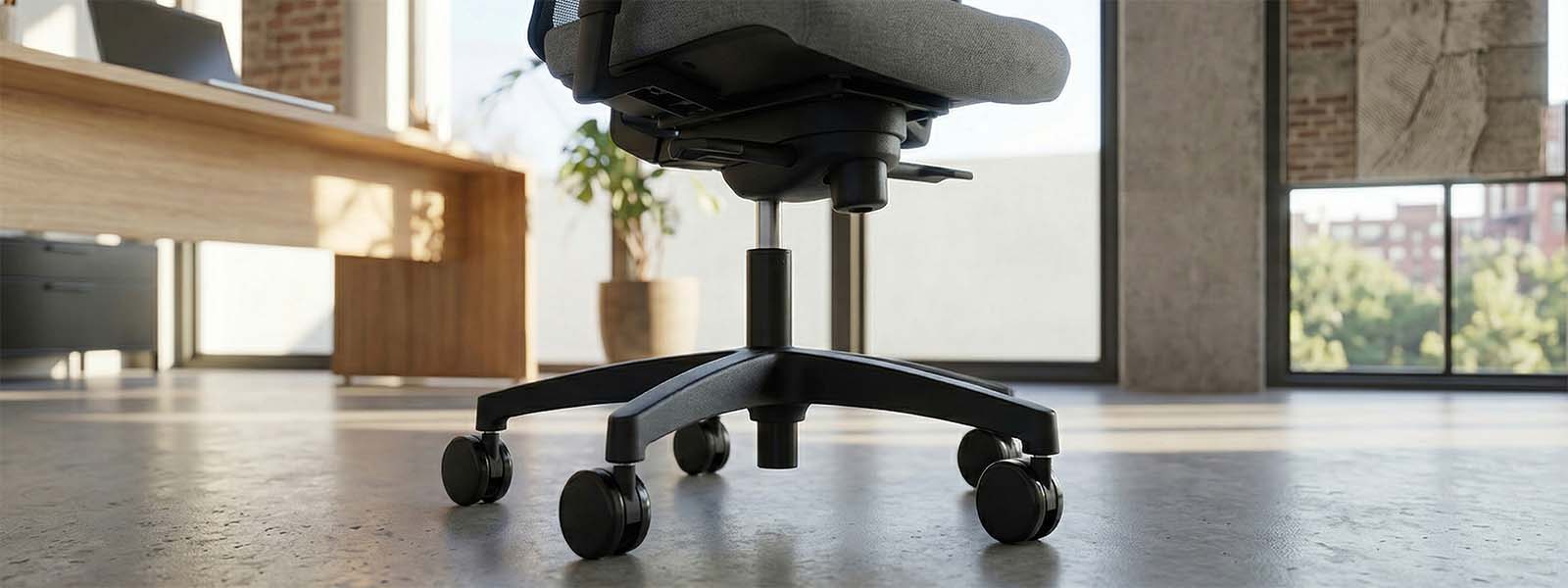
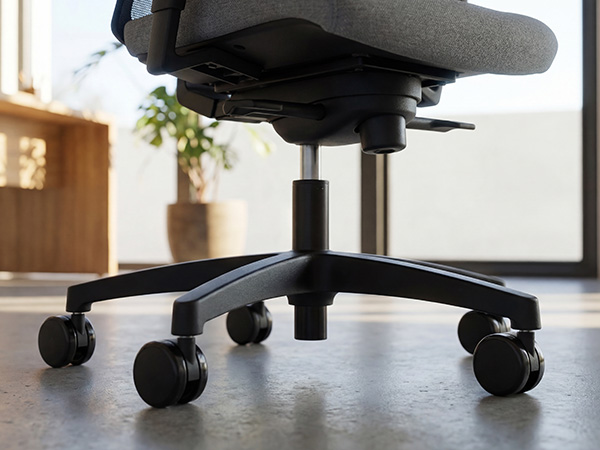
Stability, 5-star base and professional castors
Stability is an essential requirement for safety. The 5-star base is the standard for preventing tipping and unexpected movements. Reinforced nylon and die-cast aluminium are the most common materials, combining resistance and structural lightness. The choice of castors is equally important: soft castors protect parquet and delicate floors, while hard castors ensure controlled movement on carpet and textile flooring. A correct combination of base and castors allows fluid movements, reduces joint stress and contributes to the chair’s overall durability over time.
Professional certifications for intensive use
EN 1335 standards define dimensions, adjustment ranges and ergonomic parameters for office use, ensuring that the chair is suitable for most users. ANSI/BIFMA standards add stricter tests on resistance, stability, mechanism durability and safety under intensive use conditions. Choosing a certified ergonomic chair means relying on measurable values verified by independent bodies, reducing the risk of malfunctions and ensuring consistent performance over time. For corporate projects, high-occupancy open spaces and 24-hour environments, these certifications are a key element in purchasing decisions and workplace health protection policies.
FAQ
A professional ergonomic chair should include: seat height adjustment, adjustable lumbar support, synchronised mechanism, seat slide, 2D/3D/4D armrests and backrest recline. The wider the adjustment ranges, the greater the chair’s ability to adapt to different users and activities during the day.
The mesh backrest is more breathable and adapts better to the body, making it ideal for warm environments or for people who spend many hours seated. The upholstered backrest offers greater containment and a more formal aesthetic, often preferred in executive contexts or representative meeting rooms. The choice depends on working style, climate and the corporate image you want to convey.
Yes. Adjustable lumbar support is essential to maintain the natural curve of the lumbar area and prevent back pain. Seating without adequate support may encourage incorrect postures, while well-positioned support reduces fatigue and improves comfort during long PC work sessions.
Castors strongly affect the user experience: low-quality components increase friction, noise and instability. Professional castors selected according to floor type ensure smoothness, silence and better manoeuvrability, reducing stress on knees and ankles and contributing to chair durability.
In general, yes. EN 1335 and ANSI/BIFMA certified chairs use technical materials, tested mechanisms and components designed to withstand repeated loads over time. Rigorous standards involve resistance, stability and durability tests that translate into superior performance and longer product life, especially in intensive and high-occupancy contexts.