
Planters and indoor greenery: comfort, acoustics and perceptual quality for modern offices
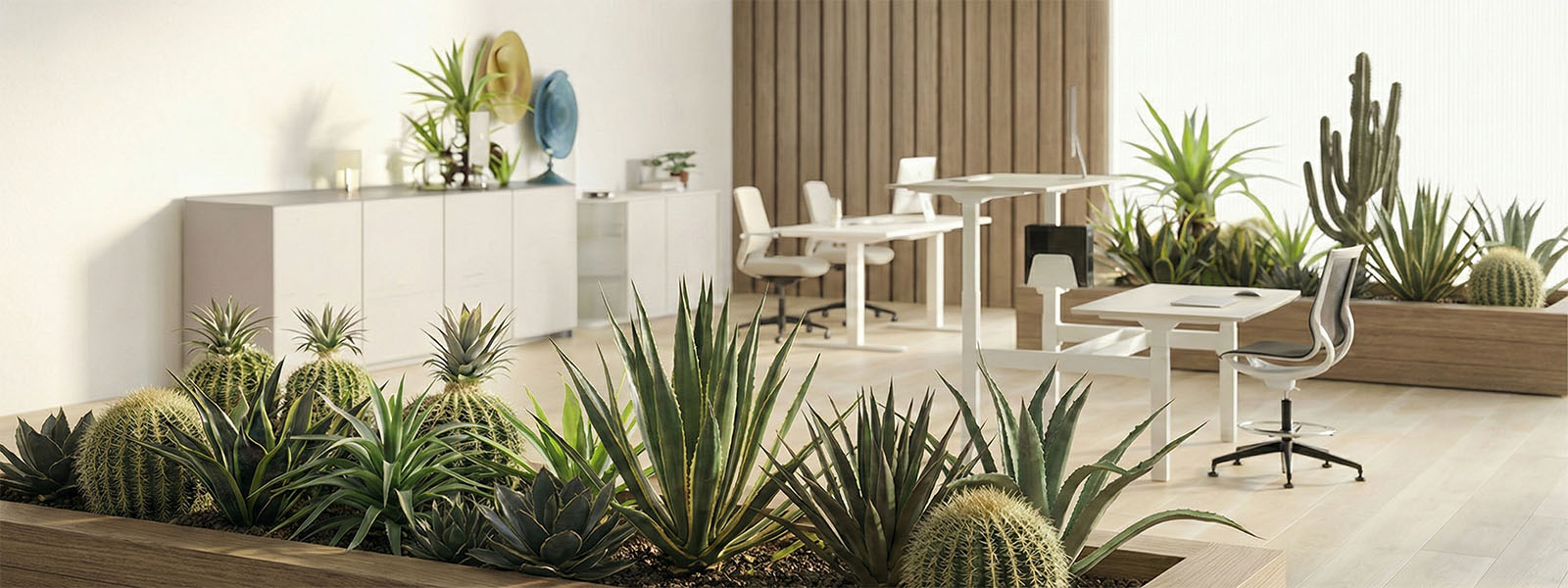
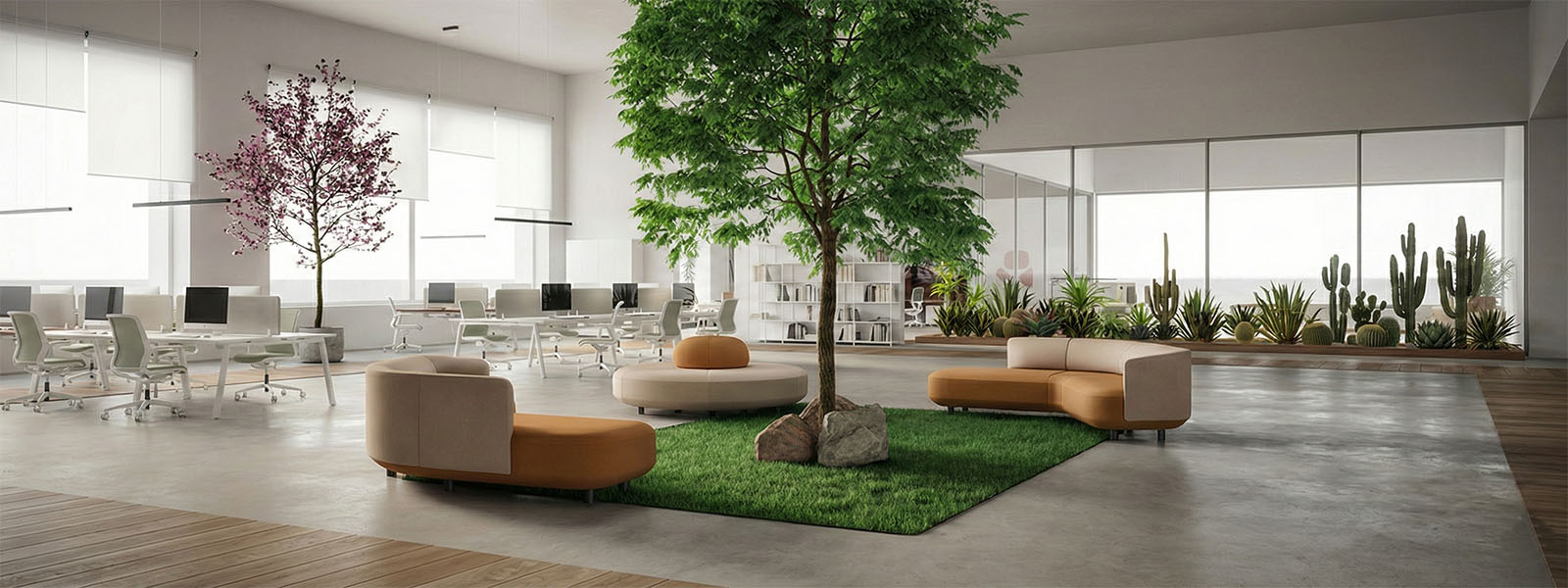
Indoor greenery is a key element in contemporary office design. In addition to improving perceptual quality and psychophysical wellbeing, it helps define identity, acoustic comfort and micro-zones within spaces. Modular planters, plant dividers and integrated solutions make it possible to delimit areas, improve orientation and create a more natural and welcoming environment without structural works: greenery becomes a true functional design tool.Planters and indoor greenery for transit areas are biophilic solutions that organise corridors and office junctions with plants and modular containers. They create light separations between flows and workstations, improve visual comfort and perceived quality, help attenuate reverberation and make routes clearer. Available in floor-standing, divider or suspended versions, with simple maintenance management.
“Wayfinding” planters: greenery that guides routes
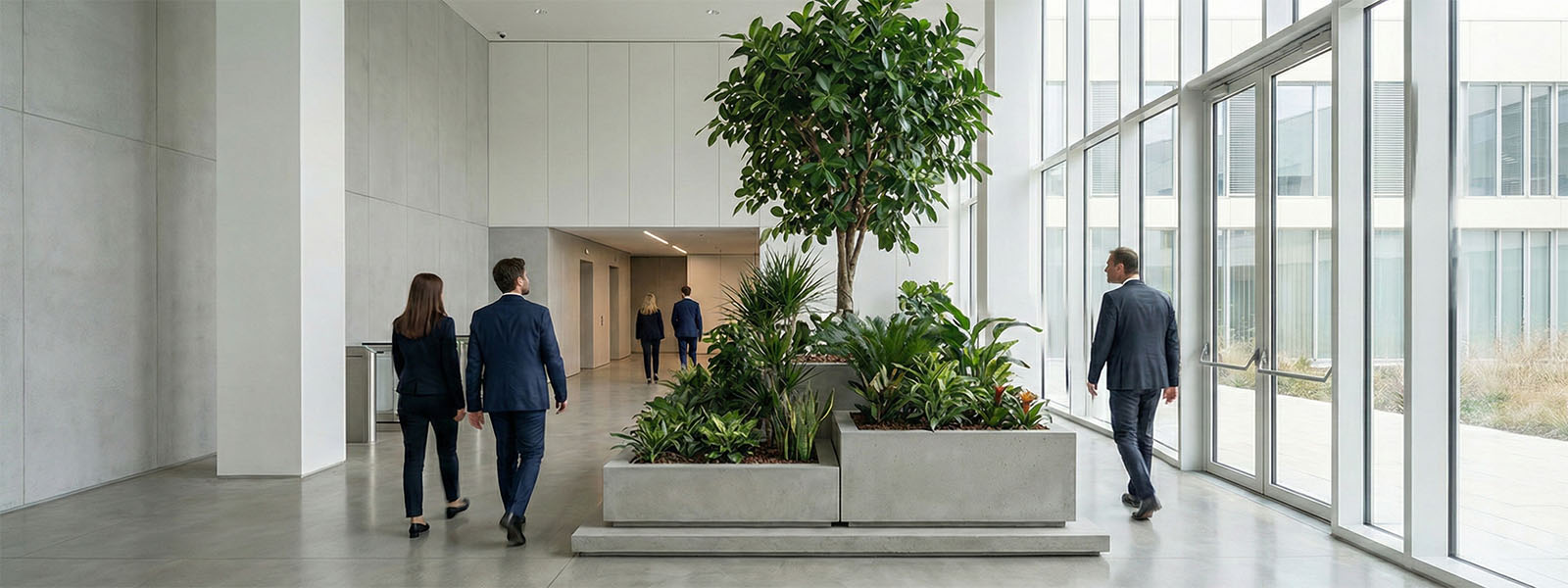
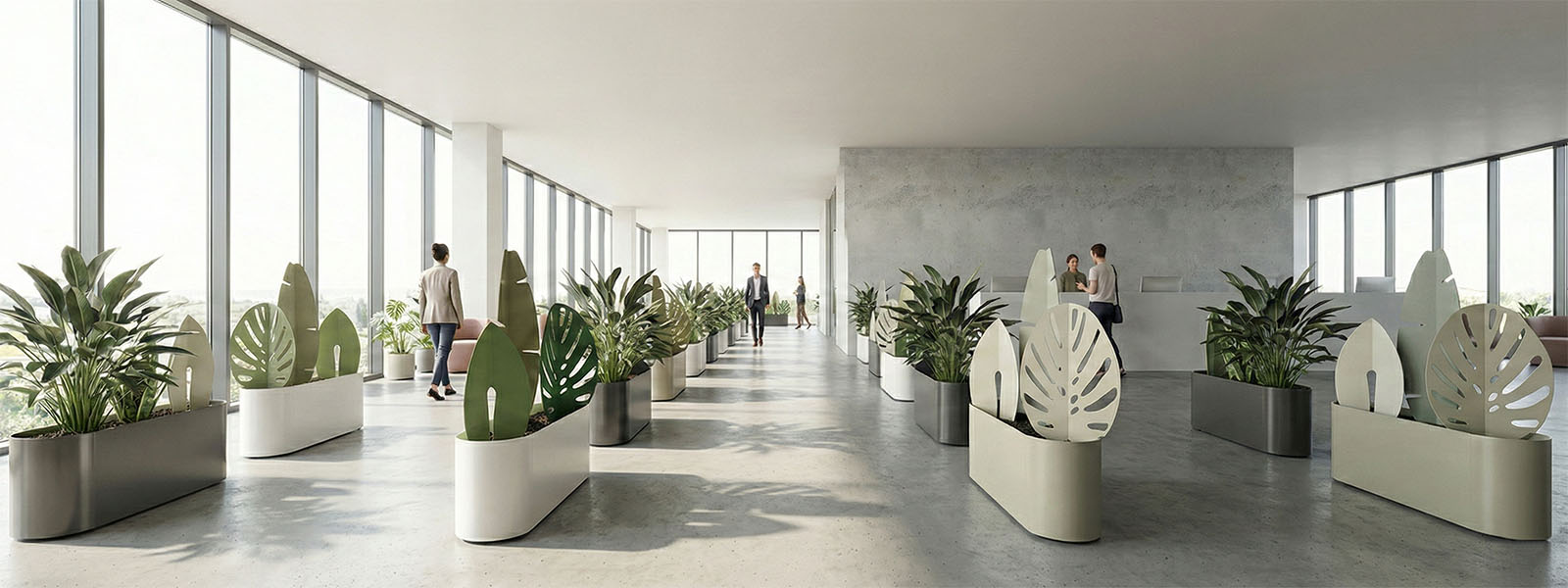
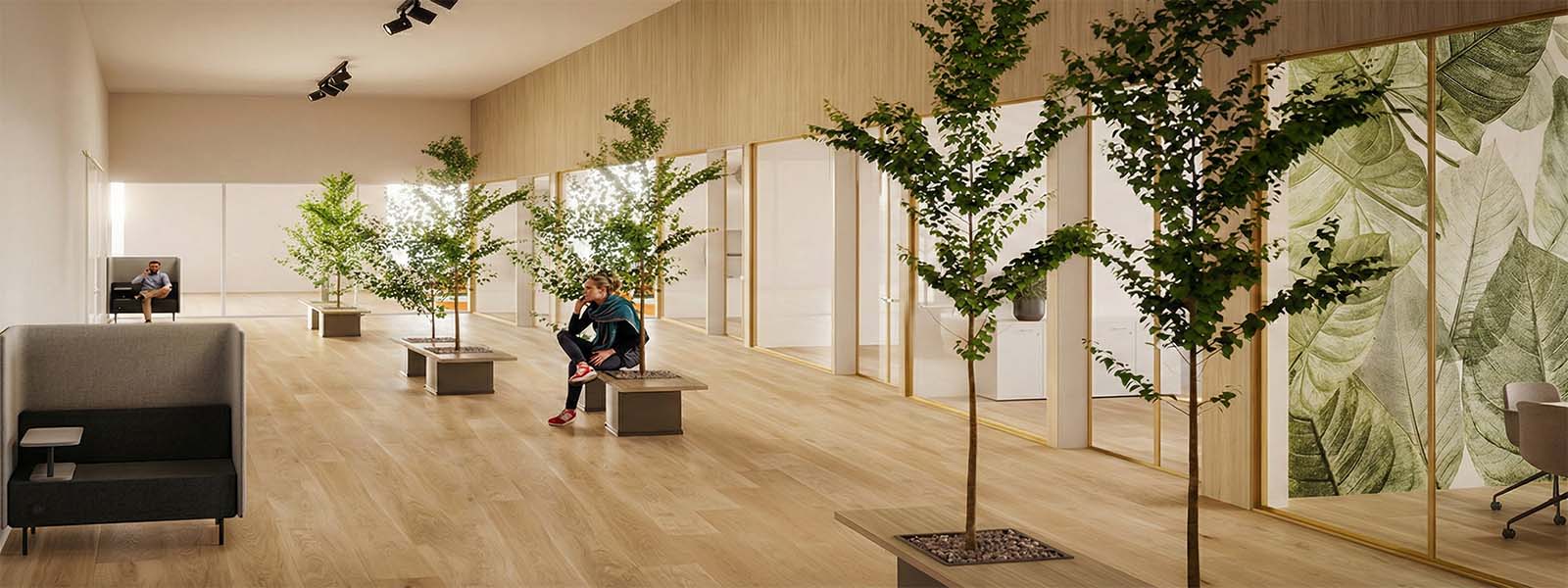
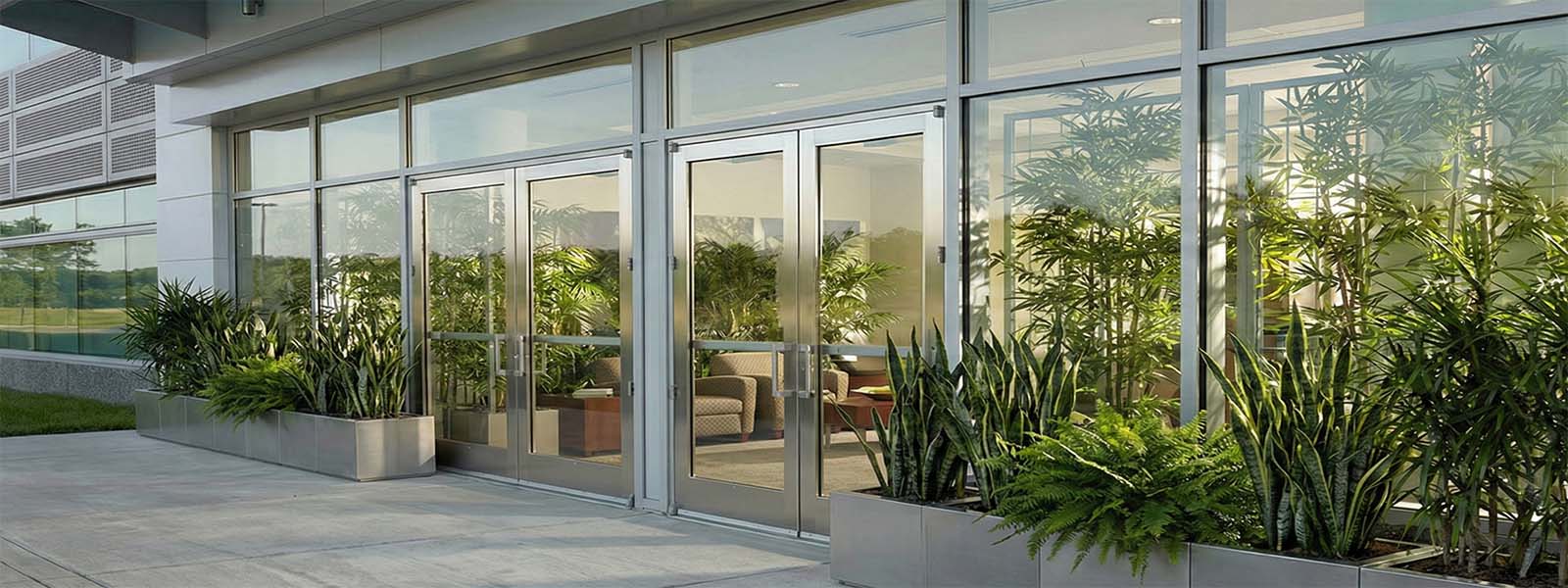
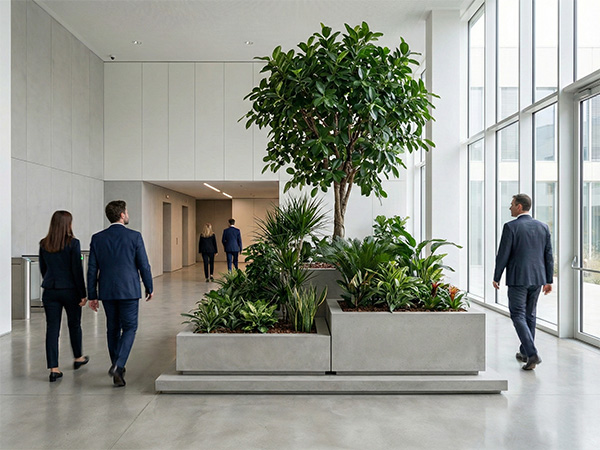
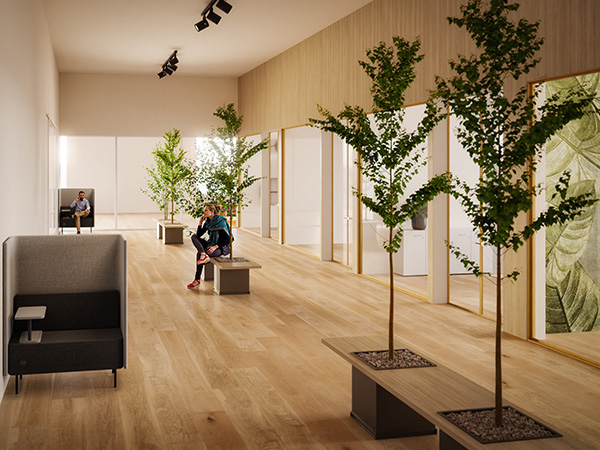
In a wide corridor or a junction between departments, the difficulty is often understanding where to pass and where to stop. Planters work extremely well as wayfinding elements because they draw margins, accompany directions and make movement clearer without using rigid barriers. Placed in the right points, they transform anonymous transit into an orderly and recognisable route, with immediately higher perceived quality.
Green dividers for light separations
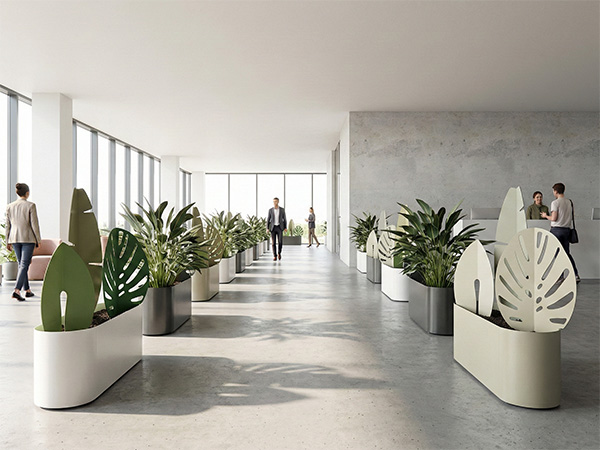
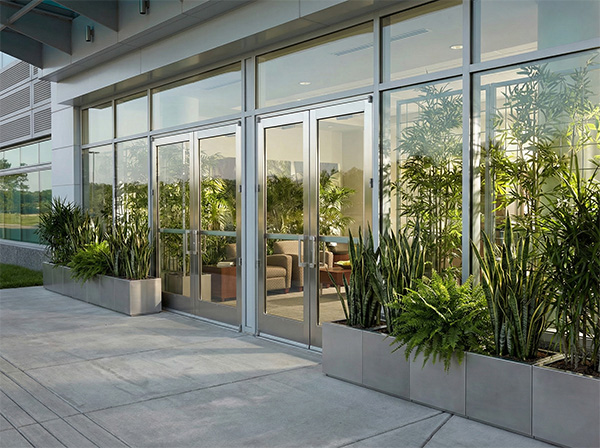
When the transit area borders workstations or waiting zones, greenery can create privacy and comfort without removing light and without closing the space. Linear planters and divider modules with structured plants create a soft separation: they protect sightlines, reduce the feeling of exposure and maintain a contemporary language. This is an ideal solution for open-space edges and passageways near receptions or meeting pods.
Perceptual benefits and psychophysical wellbeing
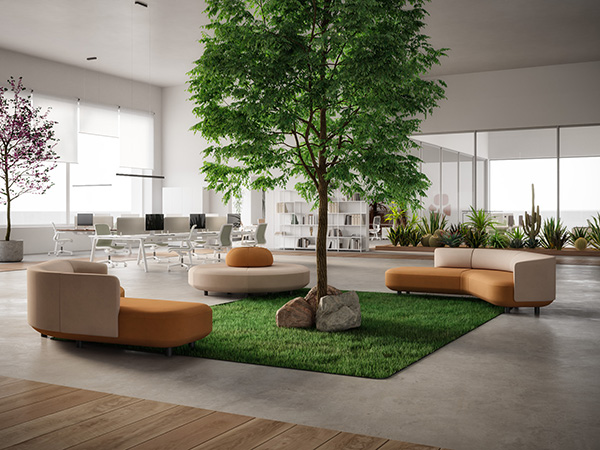
The presence of greenery in offices reduces stress, increases visual comfort and improves concentration capacity. Plants introduce natural colour variations that break the monotony of technical surfaces, making environments warmer and more liveable. Placing planters in strategic points – near workstations, along routes, close to break zones – helps create regenerative micro-breaks during the day, with a positive effect on the psychophysical wellbeing of those using the spaces.
Modular planters and plant dividers to define spaces
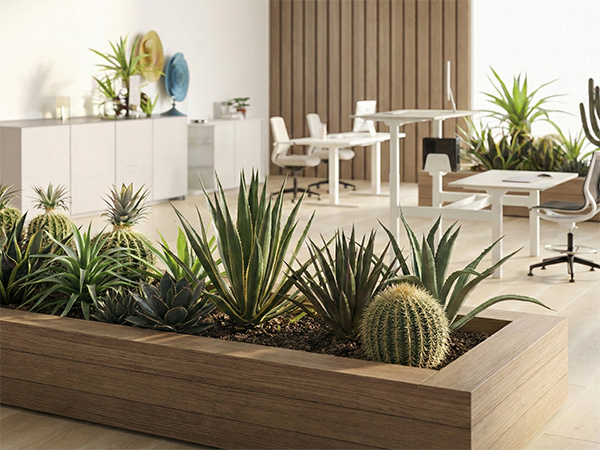
Modular planters can function as true lightweight dividers, ideal for segmenting passageways, open spaces and collaborative areas without introducing rigid barriers. Vertical structures with integrated greenery create soft boundaries that do not obstruct the passage of light and maintain good visual permeability. Bridge or bookcase-style configurations introduce rhythm and visual order, guiding flows and helping people orient themselves within the office without resorting to physical walls or building works.
Acoustic contribution and reverberation control
Indoor greenery does not only have an aesthetic function: plants and substrates contribute to acoustic absorption, especially when combined with sound-absorbing panels or containers covered with soft-touch materials. In transit areas and open spaces, where noise tends to amplify, planters help dampen sounds and reverberation, improving the comfort of the surrounding environment. A project that integrates greenery and acoustic materials makes it possible to significantly improve office sound quality, without sacrificing layout flexibility.
Low-maintenance solutions
Indoor greenery only works if it remains attractive. For this reason, in transit areas it is advisable to choose systems with simple management: resistant species, containers that protect floors and surfaces, and a setup that does not require continuous intervention. When maintenance is considered from the start, greenery becomes a stable asset and not an element that “ages badly” after a few months.
FAQ
Yes, especially modular or vertically developed versions, designed specifically to define spaces and routes without introducing fixed walls. They can be used as lightweight screens between workstations, corridors and relaxation zones, while maintaining excellent visual and light permeability.
Yes, greenery contributes to acoustic absorption, especially when combined with sound-absorbing panels or technical containers with soft materials. In open spaces and transit areas, it helps reduce reverberation and make the overall office soundscape more comfortable.
It depends on the type of greenery selected. Natural plants require irrigation and periodic care, which can be simplified with integrated irrigation systems or dedicated maintenance services. Premium artificial solutions, on the other hand, require no maintenance other than occasional surface cleaning.
Yes, provided that they do not obstruct routes and that the usable passage width is respected. In corridors, foyers and internal stair areas, it is important to size planters correctly and position them so that they accompany flows without obstructing them, while enhancing the experience of movement through the space.
The most commonly used materials are painted metal, HPL, technical melamine and waterproof internal pots. These solutions ensure resistance, ease of cleaning and protection of the building’s surfaces, as well as high colour flexibility to coordinate greenery with other furnishings and the company’s visual identity.