
Individual operational desk
Desks for individual workstations define the operational setup of the workstation and affect order, architectural presence and everyday quality of use. This page focuses exclusively on the desk system: six types of desks designed to respond to different requirements in terms of shape, structure, configuration and budget.Desks for individual workstations are furnishing solutions designed to organise operational, administrative and professional activities in an orderly way, consistent with the office layout. They can be linear, corner, with metal bridge-style legs, with panel-end sides, with integrated storage or in budget versions, to adapt to different spaces, styles and investment levels.
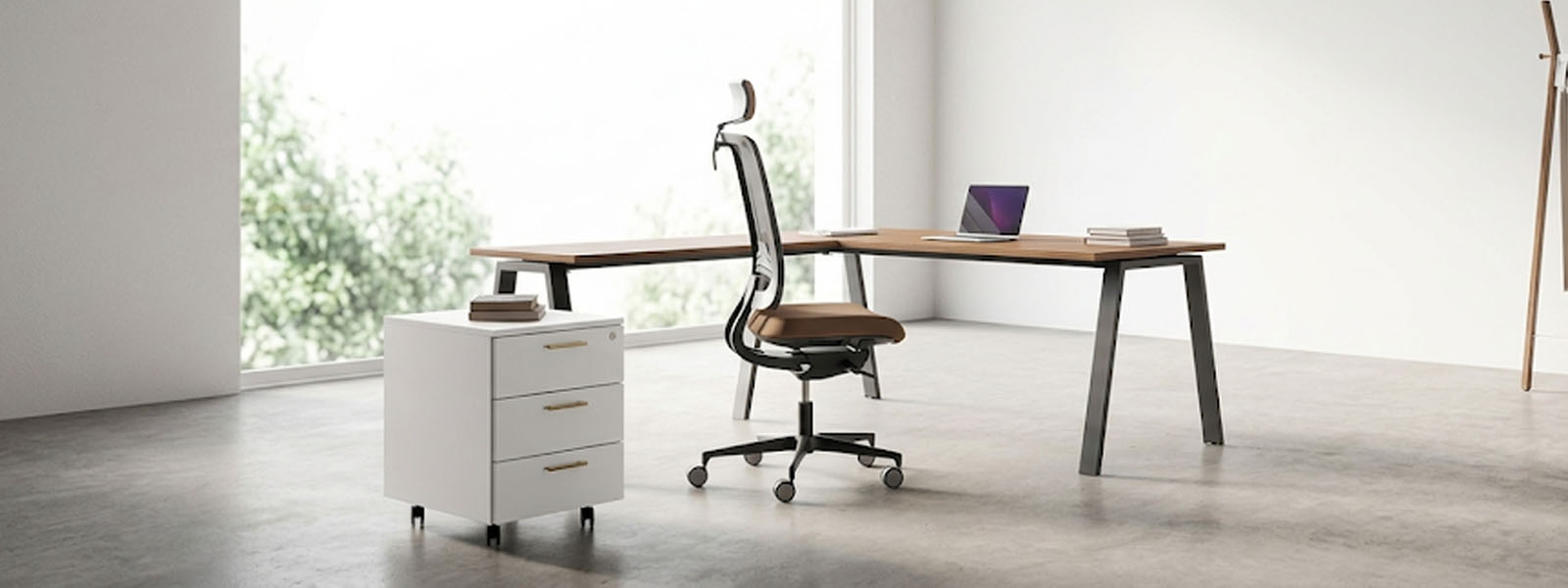
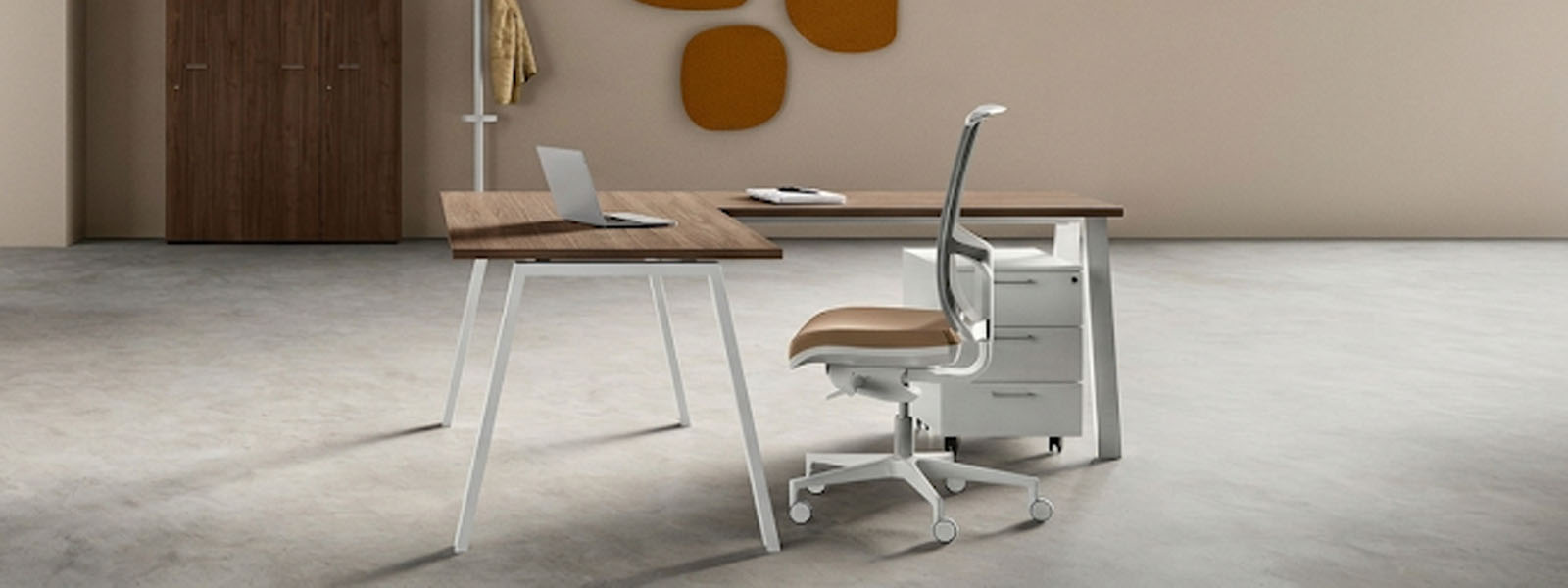
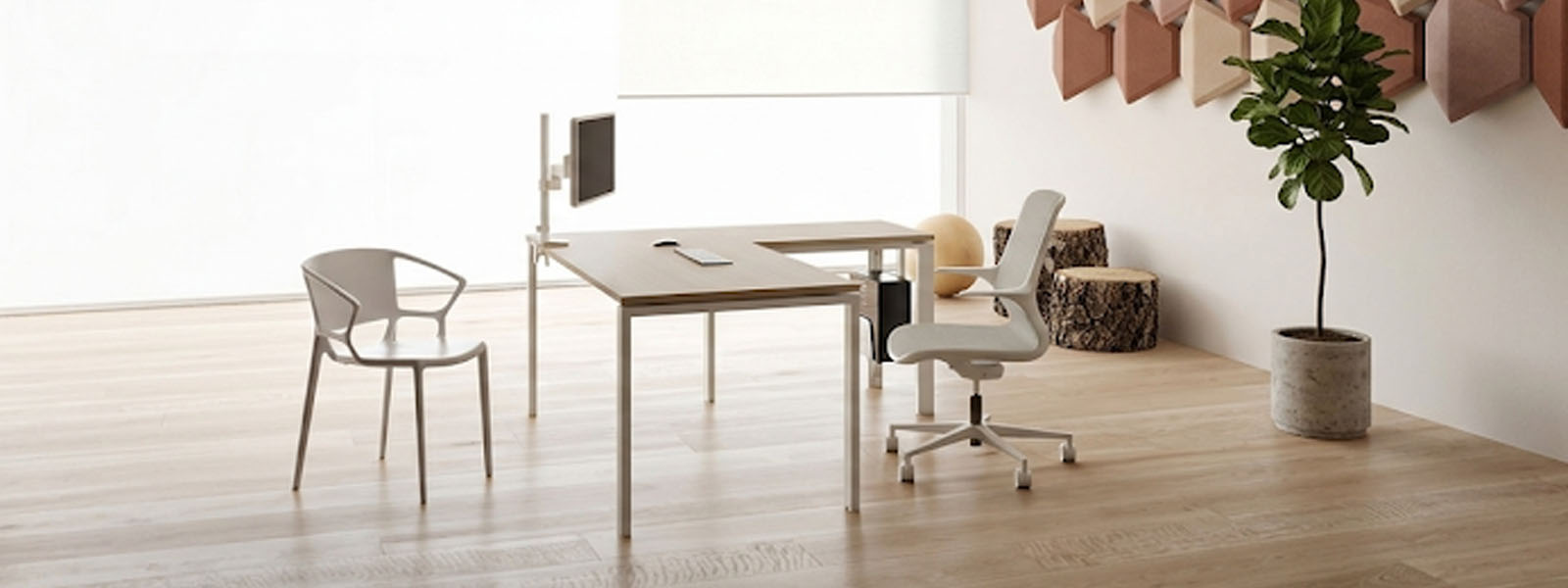
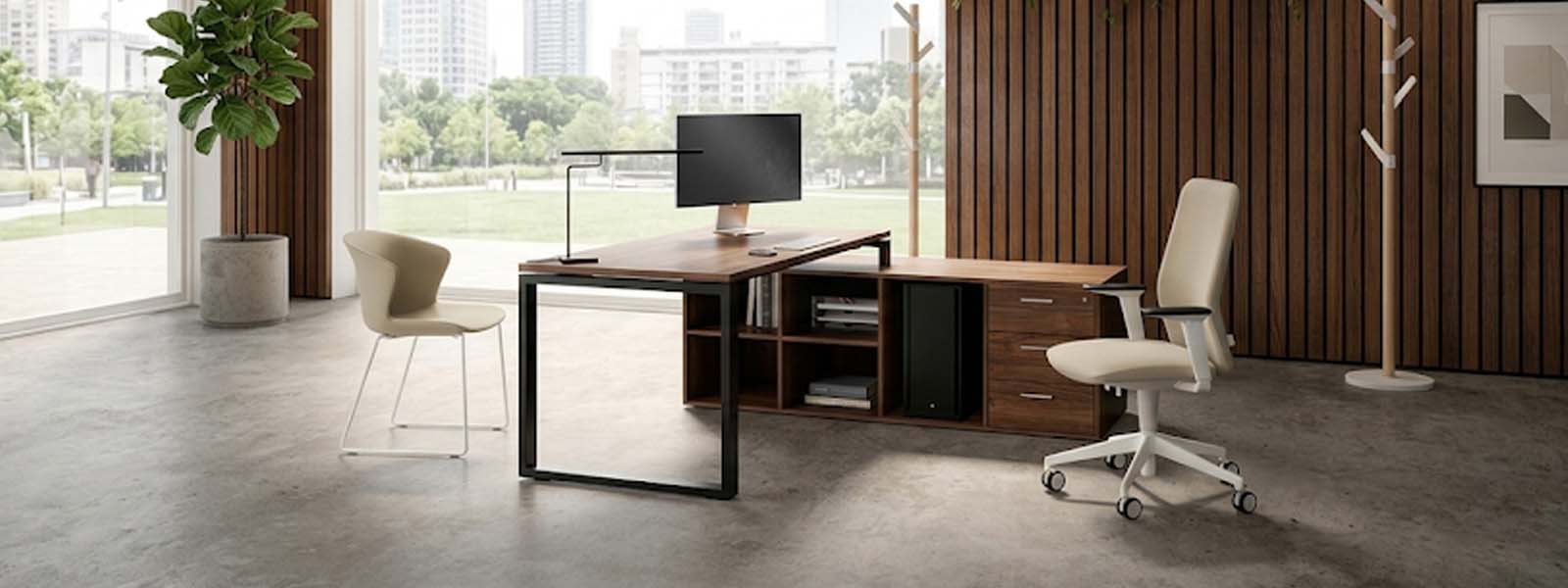
Linear operational desks
The most versatile type for working well.
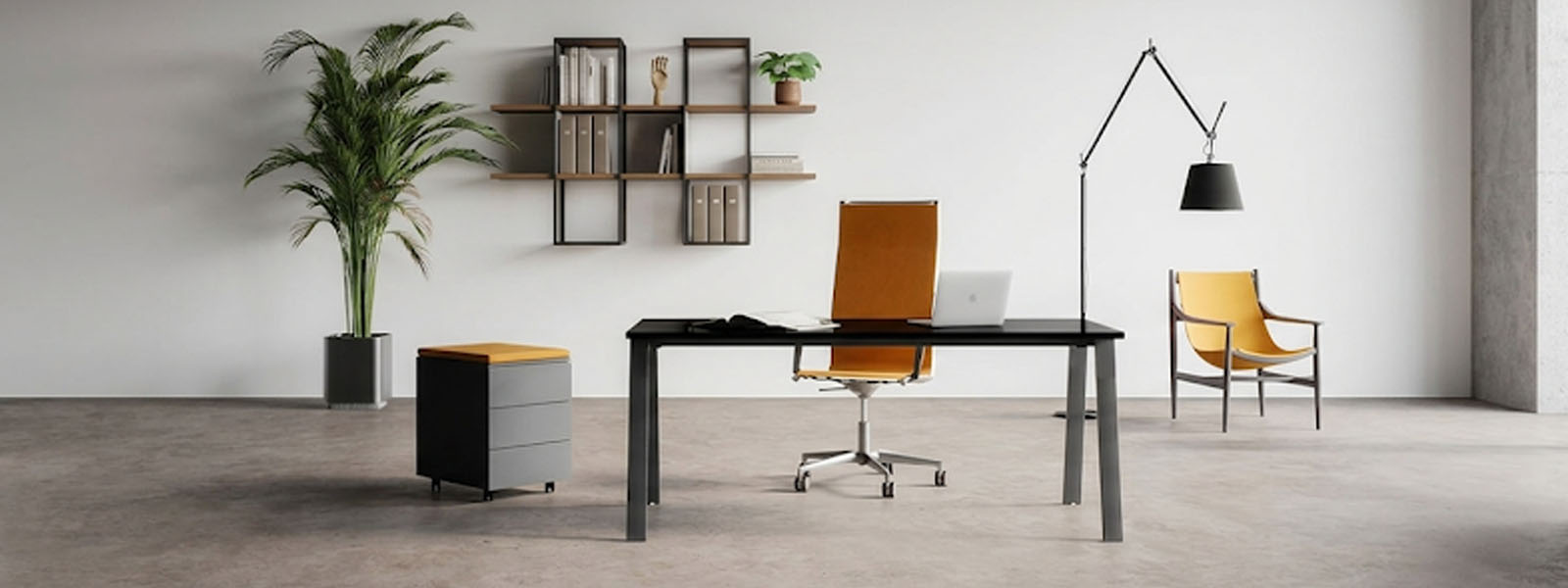
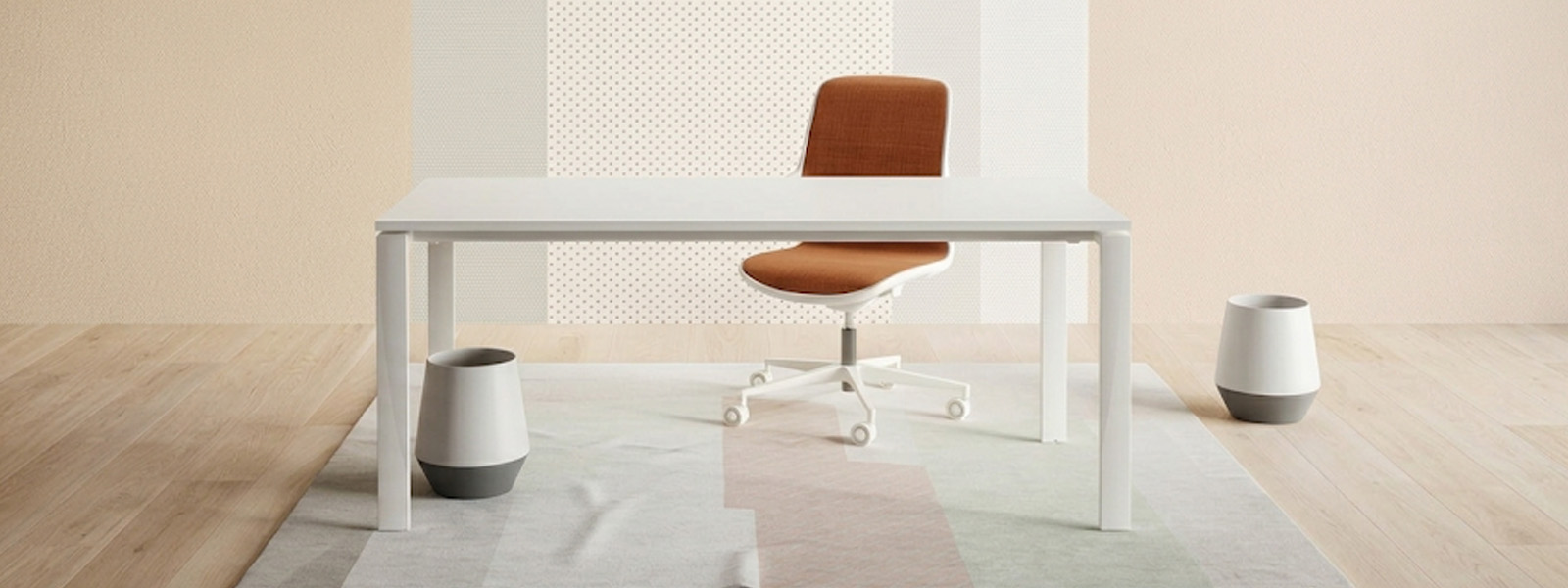
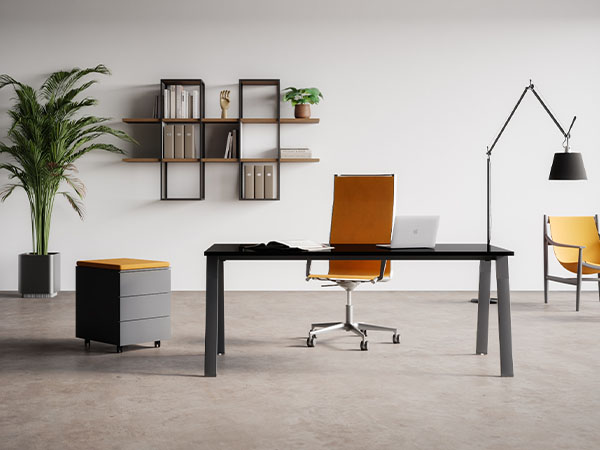
Linear desks are the most versatile solution for individual workstations in operational offices, studios and administrative areas. The rectangular top simplifies integration into the layout, makes the composition readable and adapts to many finishes, from technical melamine to more advanced material effects. Ideal when balance, formal clarity and ease of design are required.
Office corner desks
More usable surface, same operational logic.
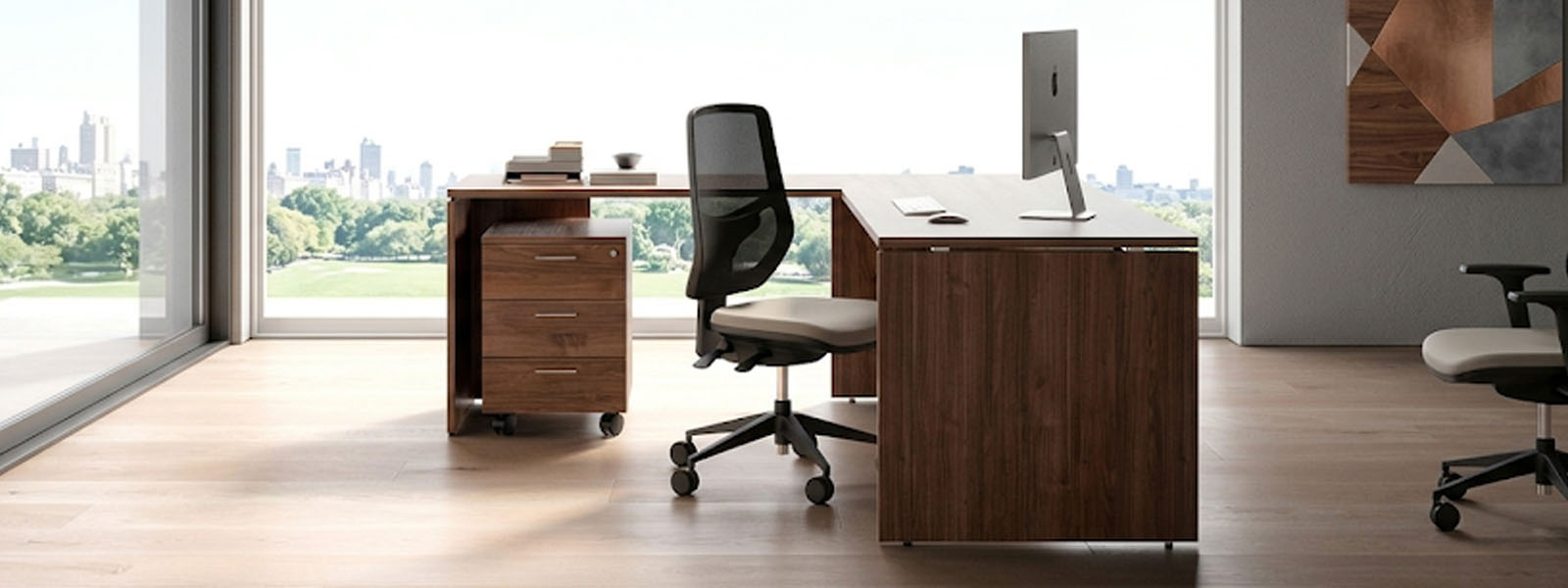
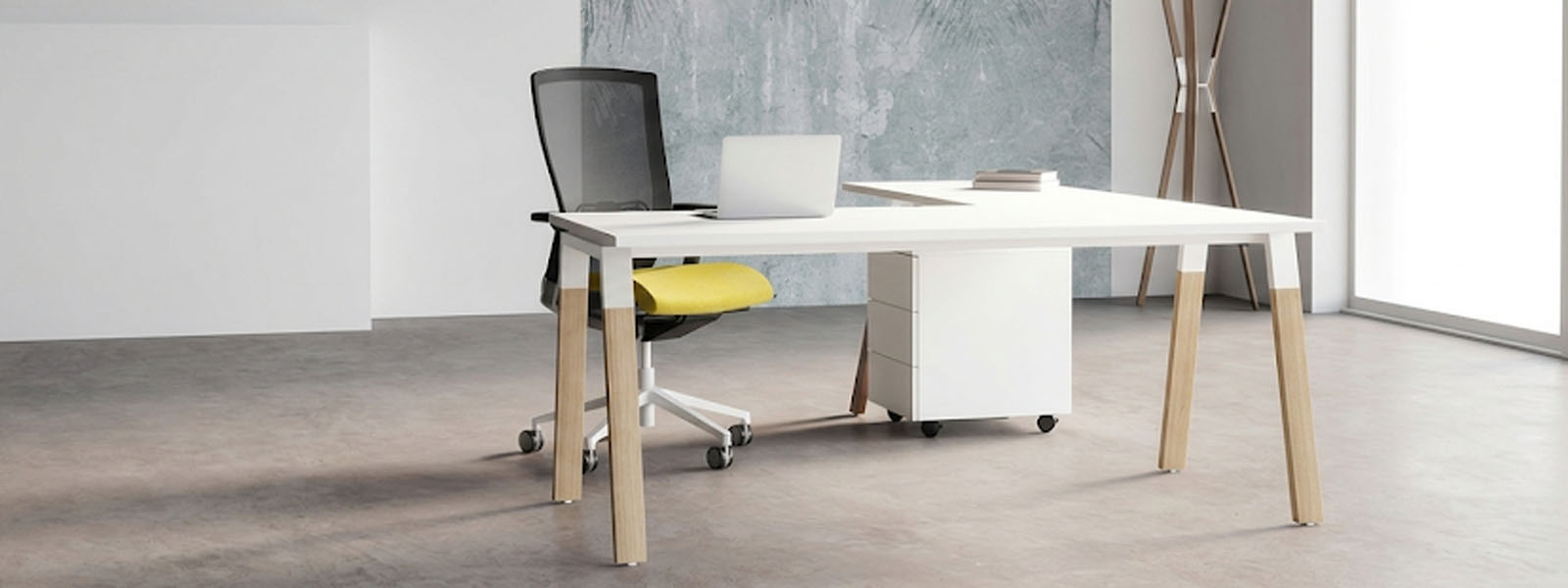
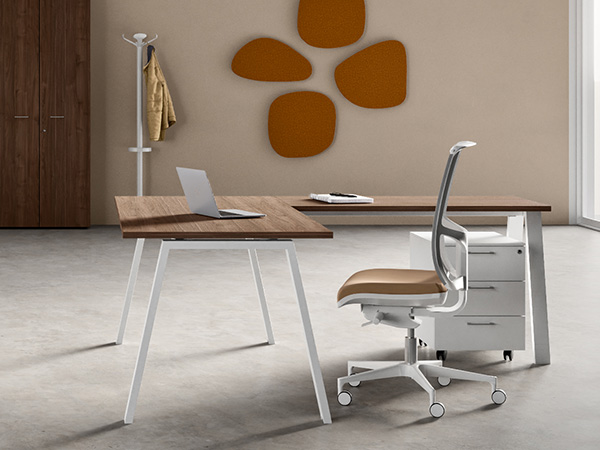
Corner desks are designed for those who need to expand the work surface without moving to more complex solutions. They allow better distribution of activities between the main area and the service side, proving effective in technical offices, administrative functions and professional workstations where operational continuity is a concrete requirement.
Desks with bridge-style legs
Technical structure, contemporary image.
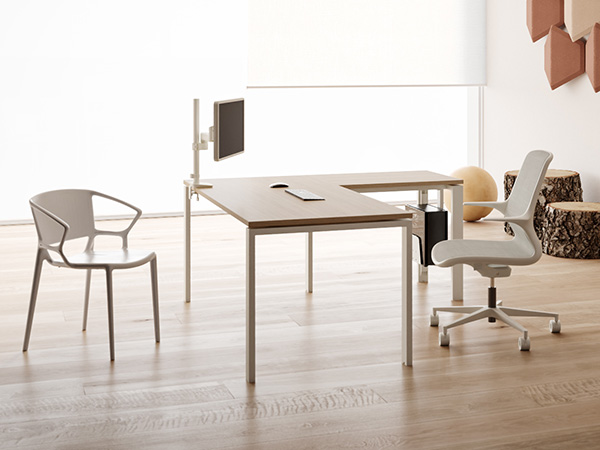
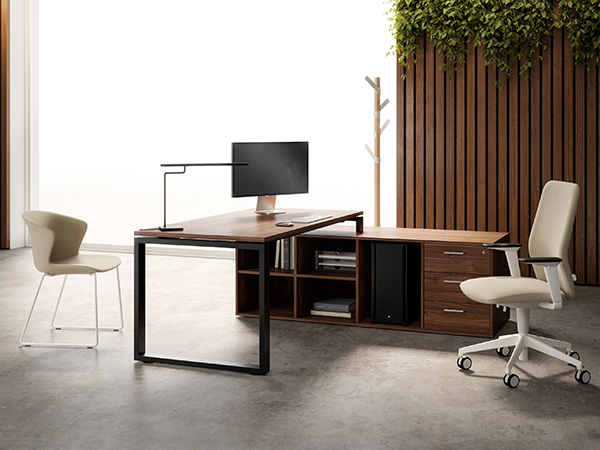
Desks with metal bridge-style legs express a lighter, more architectural language, suitable for modern workplaces and corporate environments. The metal structure visually lightens the desk volume, improves layout readability and provides a more technical and current perception. A suitable choice for those looking for solidity, clarity and essential design.
Desks with panel-end sides
Greater visual presence, stronger compositional continuity.
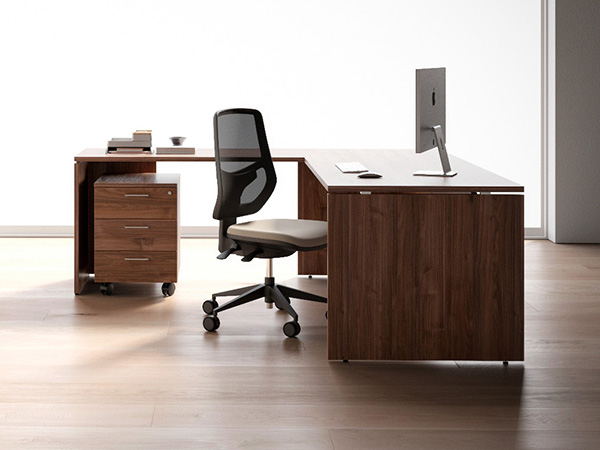
Desks with panel-end sides create a fuller and more structured workstation, with an orderly and professional aesthetic. They are suitable for individual offices, studios and contexts where the desk needs to convey greater visual solidity. They work well with material finishes and continuous surfaces, strengthening the identity of the space without excessive formalism.
Desks with storage unit
A single composition, more complete and resolved.
Desks with integrated storage meet the need for a more compact and functionally complete workstation. The storage unit is not a separate accessory, but part of the desk configuration and defines its balance, mass and practicality of use. A type suitable for professional offices and stable operational roles that require a more structured composition.
Budget desks for offices
Cost control, without weakening the project.
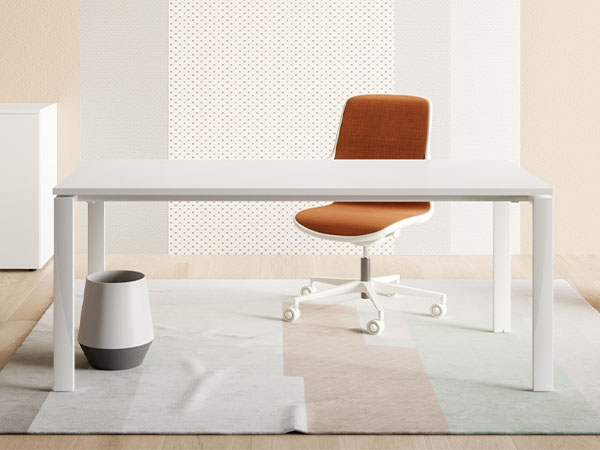
Budget desks are designed for operational environments, large supplies and contract projects with attention to CAPEX. They focus on simple lines, rational structures and versatile finishes, facilitating standardisation and rapid integration. They are the right choice for growing companies, temporary offices or projects where cost must be optimised without trivialising the image.
FAQ
140–160 × 70–80 cm is the ideal standard: it offers enough space for monitors, documents and everyday activities without taking up too much office space.
Melamine is warmer and easier to coordinate with furniture, while metal is more stable and suitable for intensive use. The choice depends on the desired aesthetic result and frequency of use.
A desk with a return is very useful for activities that require many documents or tools, but it needs more space. In small offices it may be bulky and must be carefully evaluated in relation to passage flows.
In poorly lit environments, light colours such as white and oak are preferable because they visually lighten the space. In very bright environments, darker tones such as anthracite or walnut also work well.
Metal bridge-style structures offer the best balance between structural rigidity and visual lightness, ensuring a stable, solid workstation suitable for intensive daily use.