
Open space lighting: natural light and technology for an efficient and comfortable work environment
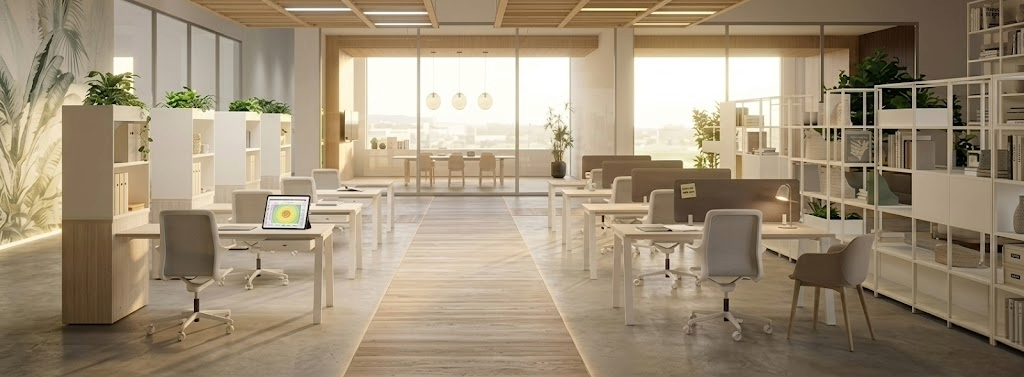
In open spaces, lighting is not only used to “provide light”, but to give rhythm to the space, improve workstation readability and reduce the visual fatigue that often comes from contrasts, reflections or inconsistent distribution. A well-structured lighting design helps people orientate themselves better, work with greater continuity and perceive the environment as tidier, more comfortable and less dispersive. In a shared space, light is an integral part of the user experience, just like furniture, acoustics and layout.Lighting for open spaces includes linear, suspended, punctual and decorative systems designed to distribute light evenly and comfortably in shared workspaces. It improves visibility, orientation, visual wellbeing and the perceived quality of the environment, avoiding glare, shadow zones and excessive contrasts. In a well-designed open space, light helps distinguish operational areas, routes and collaborative zones without weighing down the space.
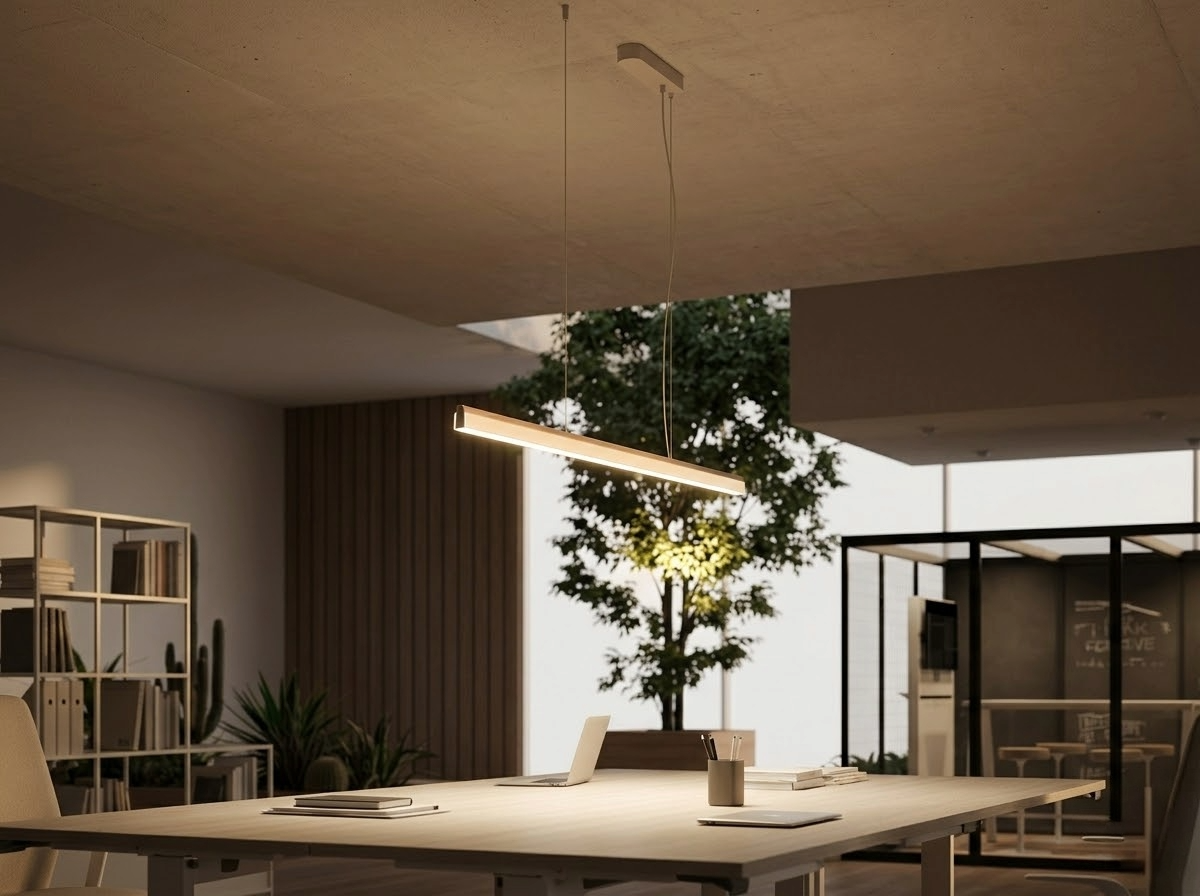
Light lines for benches
Visual order and continuous light for better work.
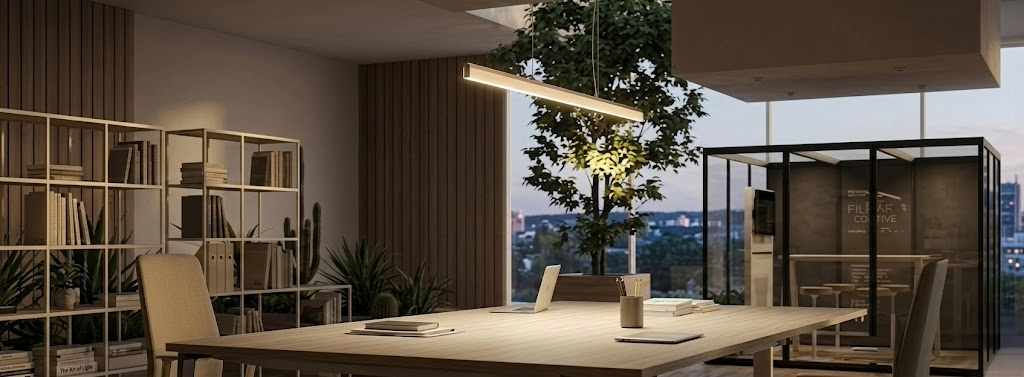
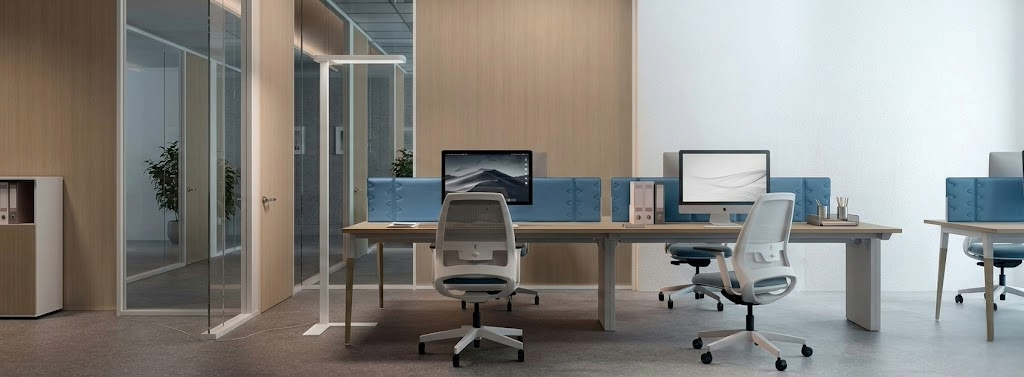
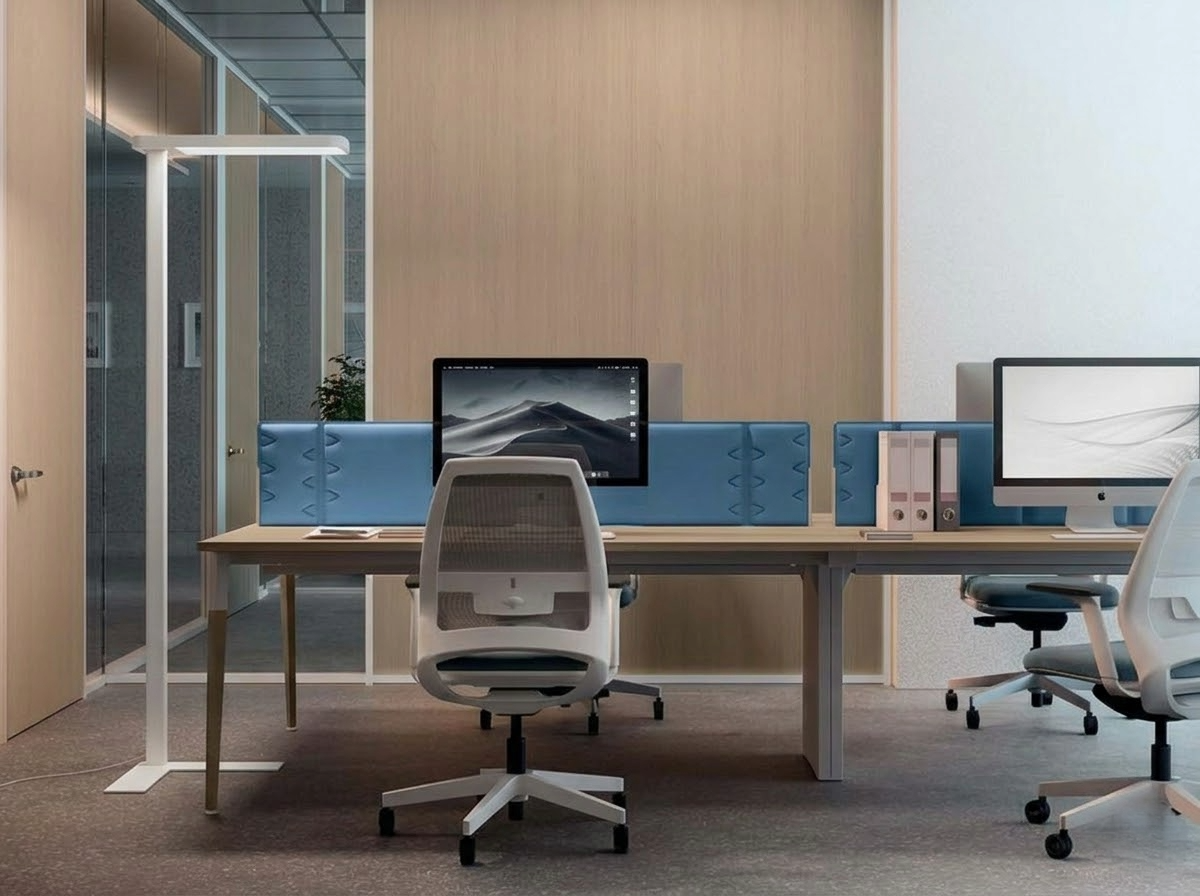
Light lines for benches are one of the most effective solutions in open spaces because they follow the logic of shared workstations and strengthen layout readability without creating visual fragmentation. They distribute light more evenly along operational rows and modular tables, helping users perceive the desk as a clear, coherent and easy-to-live-in space. From a UX perspective, they work very well because they reduce the “light spot” effect, limit discontinuities between one workstation and another and give the workplace a greater feeling of control, cleanliness and professionalism.
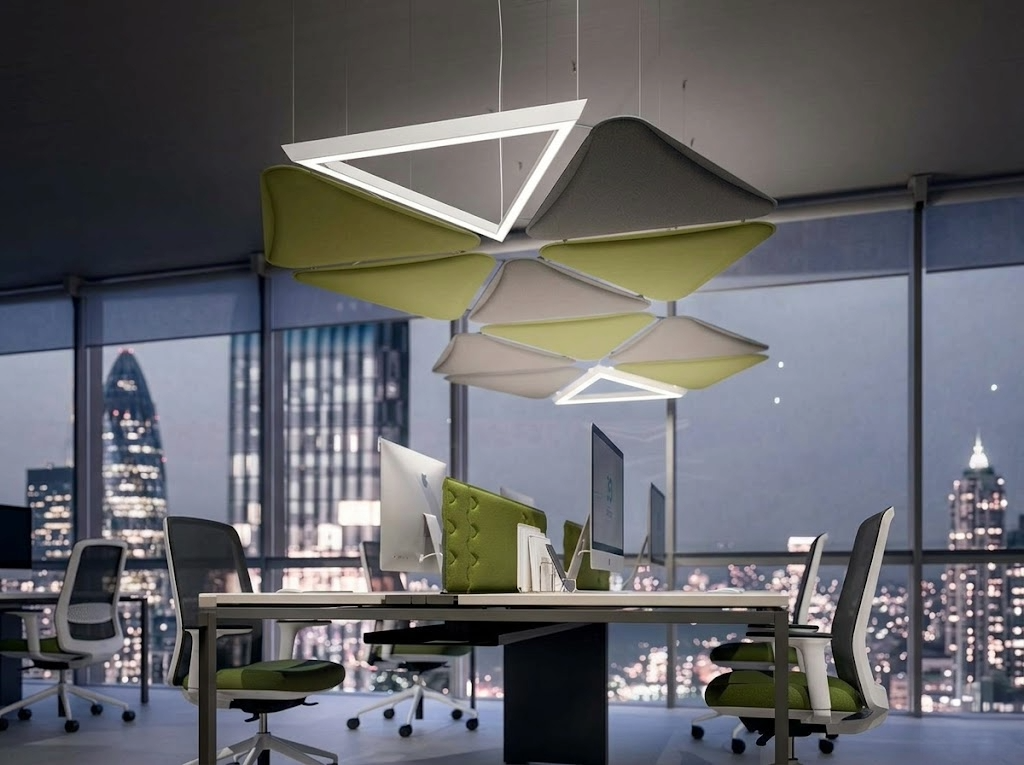
Suspended lamps for team islands
Illuminate the group without losing lightness.
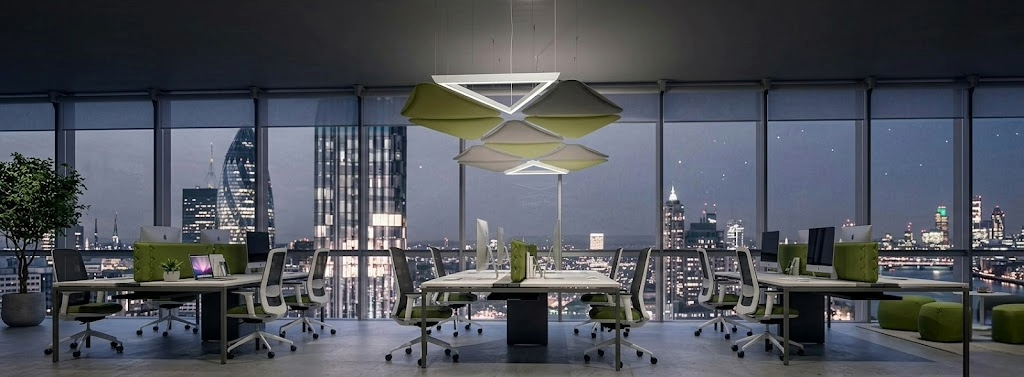
Suspended lamps for team islands are ideal when the open space is organised into clusters or shared tables and the goal is to give each operational core its own visual identity. They do not only illuminate the top, but also build a clearer perceptual perimeter that helps people understand where a work zone begins and where the rhythm of the space changes. This greatly improves user experience, because it makes the environment less anonymous and more intuitive to read. Light thus becomes a silent orientation tool, capable of supporting collaboration and operational continuity without weighing down the composition.
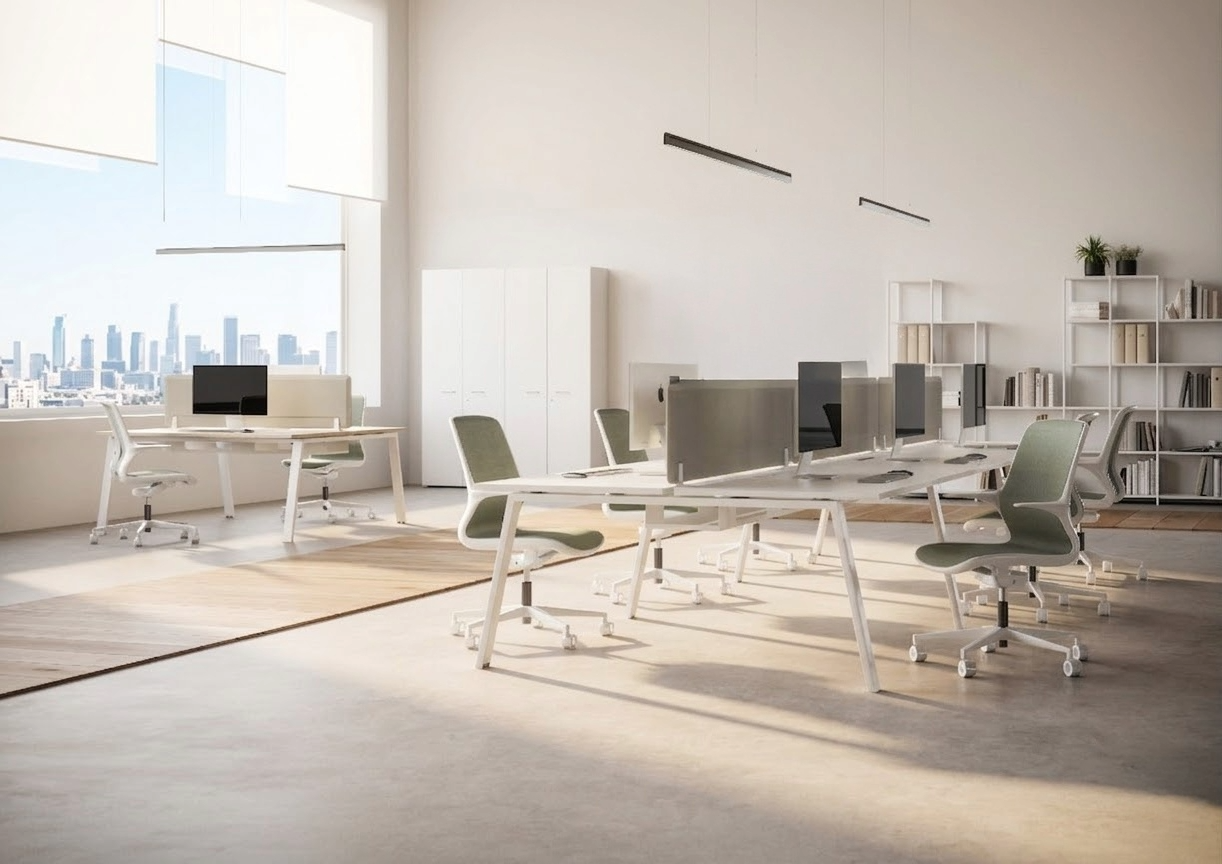
Natural light as the foundation of the project
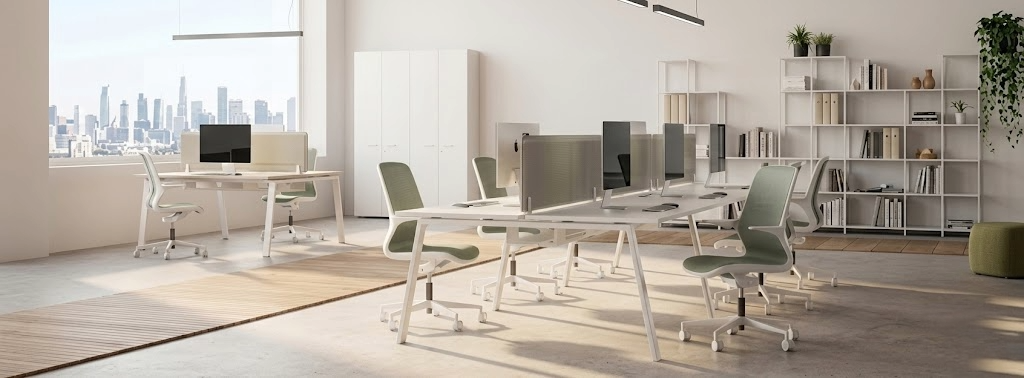
Lighting design always starts from natural light. Ufficiostile furniture is designed to optimise the diffusion and reflection of daylight, thanks to matt finishes and light surfaces. Filtering blinds and light-coloured sound-absorbing panels amplify brightness, reducing energy consumption and improving visual comfort. An approach that enhances the environment and reduces operating costs.
Dynamic lighting and intelligent control
Visual wellbeing is based on light that follows the body’s natural rhythms. Integrated DALI LED systems adjust intensity and colour temperature, 3000–5000 K, according to the time of day and the level of external light. This reduces visual fatigue, improves concentration and contributes to respecting the circadian rhythm, supporting productivity and health.
Zoned lighting for hybrid areas
Every zone works better with its own rhythm.
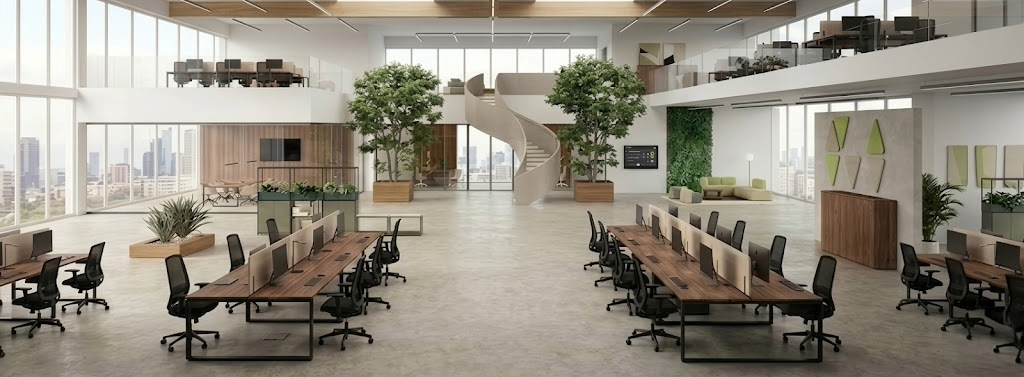
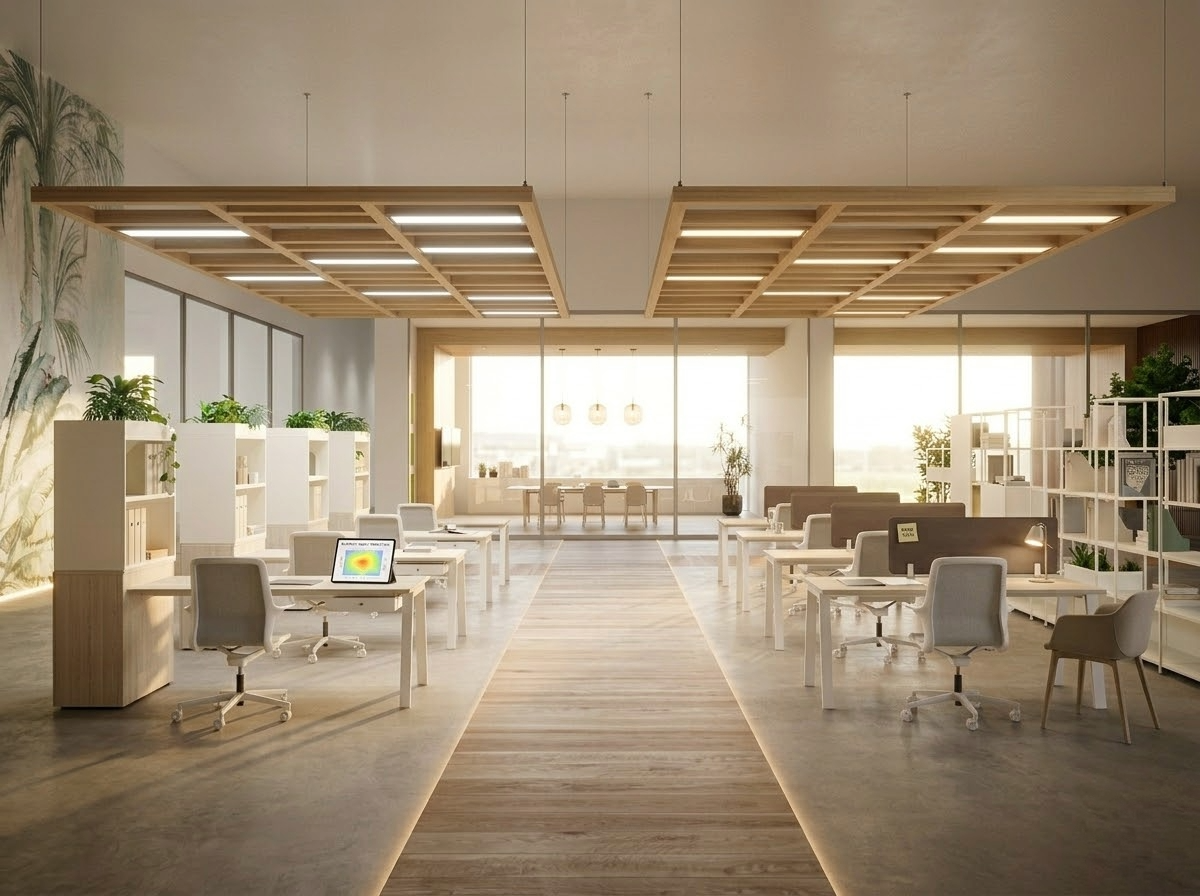
In contemporary open spaces, rarely does everything happen in the same way: there are operational workstations, team tables, passage areas, quick discussion zones and micro-spaces for concentration. This is why zoned lighting is a highly intelligent solution, because it avoids treating the entire environment as a single homogeneous surface and instead makes it possible to calibrate the atmosphere according to the real use of the different areas. For users, the advantage is immediate: the space becomes more readable, more natural to use and less dispersive. A correct lighting hierarchy helps people understand where to focus, where to collaborate and where to move, improving orientation and comfort without the need for intrusive signs.
Scalable contract lighting
Uniformity and control for growing open spaces.
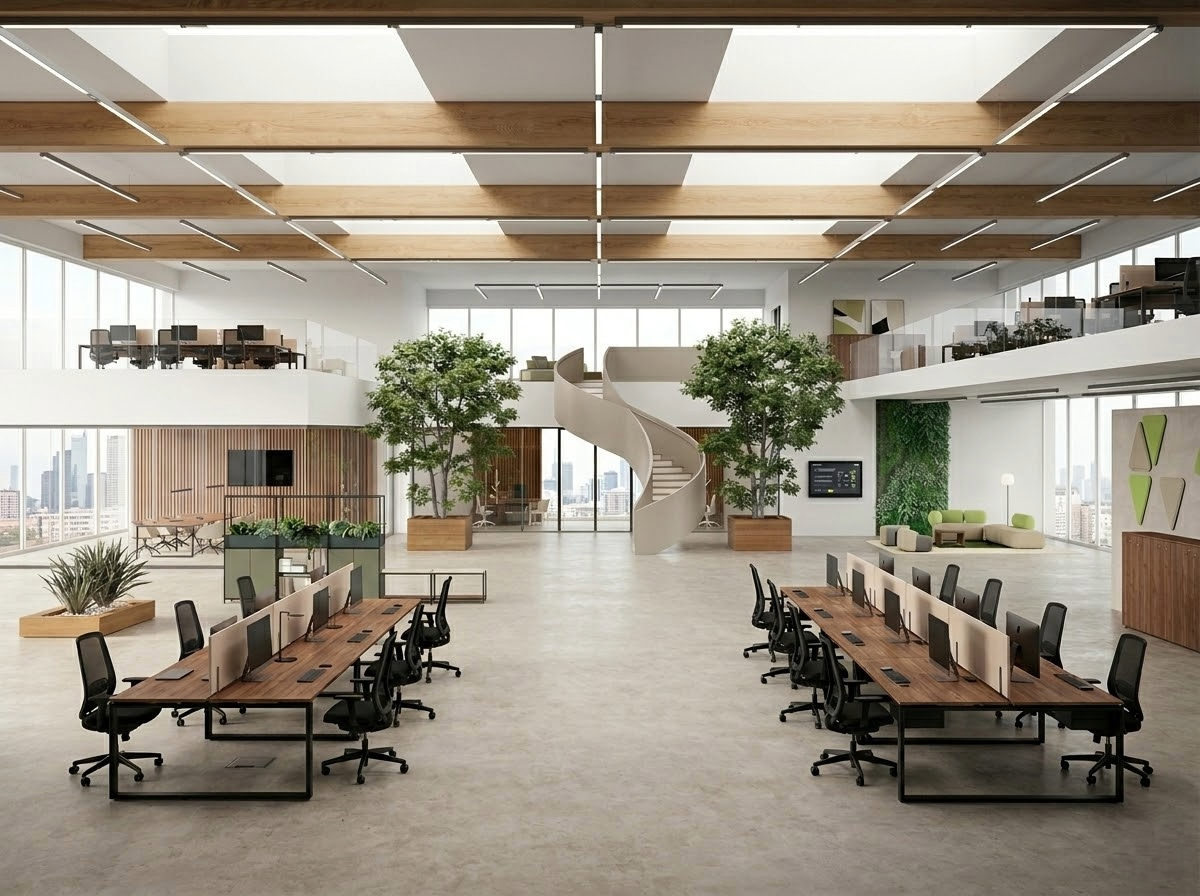
Scalable contract lighting is designed for large projects or projects intended to grow over time, where a repeatable, easy-to-manage and coherent solution is required across the entire operational surface. The value does not lie only in system efficiency, but in the ability to maintain homogeneous lighting quality even when the layout changes, teams increase or the office is developed in phases. From the user experience perspective, this approach avoids perceptual differences between similar areas, makes the environment more reliable and improves the feeling of continuity between departments. It is the correct response when the open space must remain orderly, readable and professional even on a larger scale.
FAQ
The best lighting for an open space is lighting that distributes light evenly, reduces glare and reflections and makes workstations, routes and collaborative areas more readable. There is not a single answer valid for everyone: in linear layouts, continuous systems work very well, while in clusters or hybrid zones a combination of diffuse light and calibrated suspended points is often more effective.
Because it changes the way people perceive and use the space. Poorly managed light tires the eyes, creates unclear zones, makes the environment more dispersive and can even worsen the perceived quality of the furniture. Well-designed light, on the other hand, facilitates orientation, makes work more comfortable and improves the overall sense of order in the open space.
Yes. Cool tones, 4000–5000 K, support concentration, while warmer tones, 3000 K, create comfort in relaxation areas. Controlled alternation helps maintain the circadian rhythm and reduce fatigue.
It depends on the organisation of the space. Uniform light is useful for giving continuity to extended operational areas and maintaining a regular visual landscape. Zoned light becomes more effective when the open space includes different functions and needs to help users distinguish between workstations, team tables, routes and collaboration areas. In most successful projects, the two logics coexist.
Yes, especially when they are used to identify team tables, collaborative islands or areas with a specific function. Suspensions help give rhythm to the space and build clearer visual hierarchies. However, they must be used carefully: if there are too many or if they are too different from one another, they risk weighing down the environment instead of improving its readability.