
Modular operational workstations for open spaces
Modular operational workstations for open spaces are the core of contemporary workplace layouts because they make it possible to organise teams, density, routes and future growth with a more flexible logic than isolated desks. When the system is well designed, it does not only improve the order of the space: it makes work more readable, office evolution simpler and the everyday experience of those who use it more coherent.
Modular operational workstations for open spaces are modular desk systems designed to create shared, scalable and well-organised work areas. They optimise space, support collaboration between colleagues and maintain visual order and design continuity. They can be developed in bench, cluster, opposing-row or expandable configurations, according to number of users, layout and business objectives.
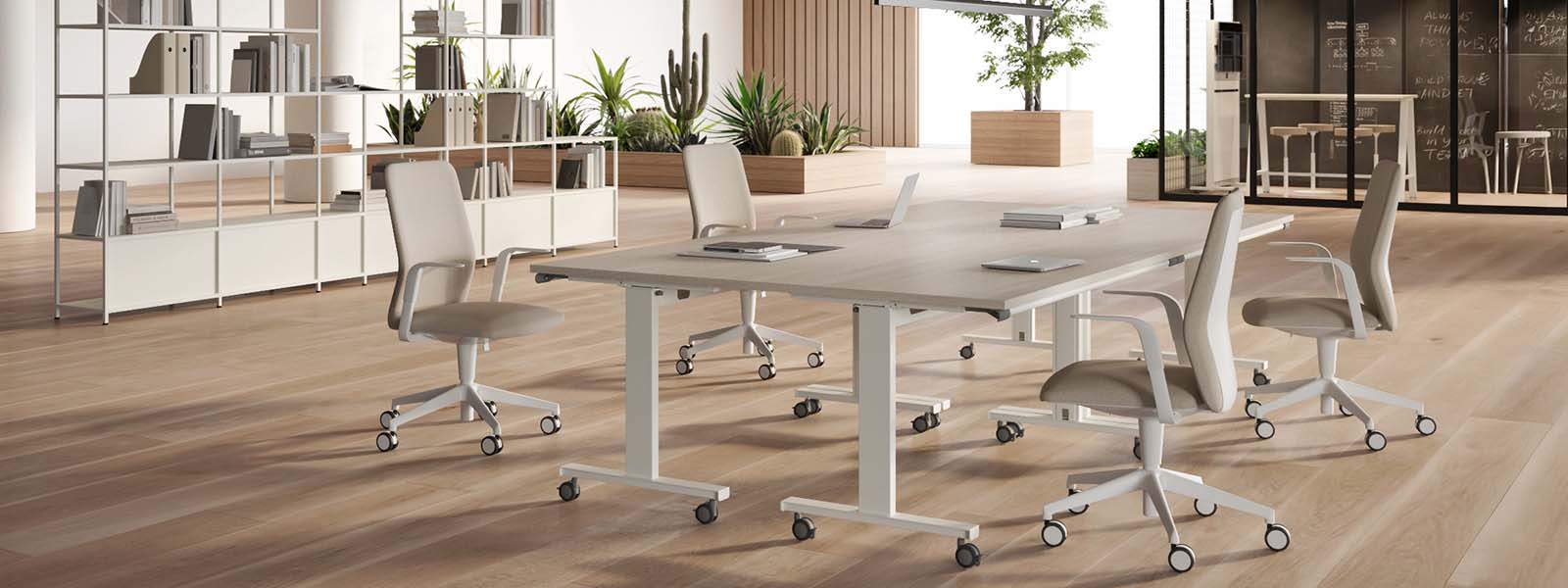
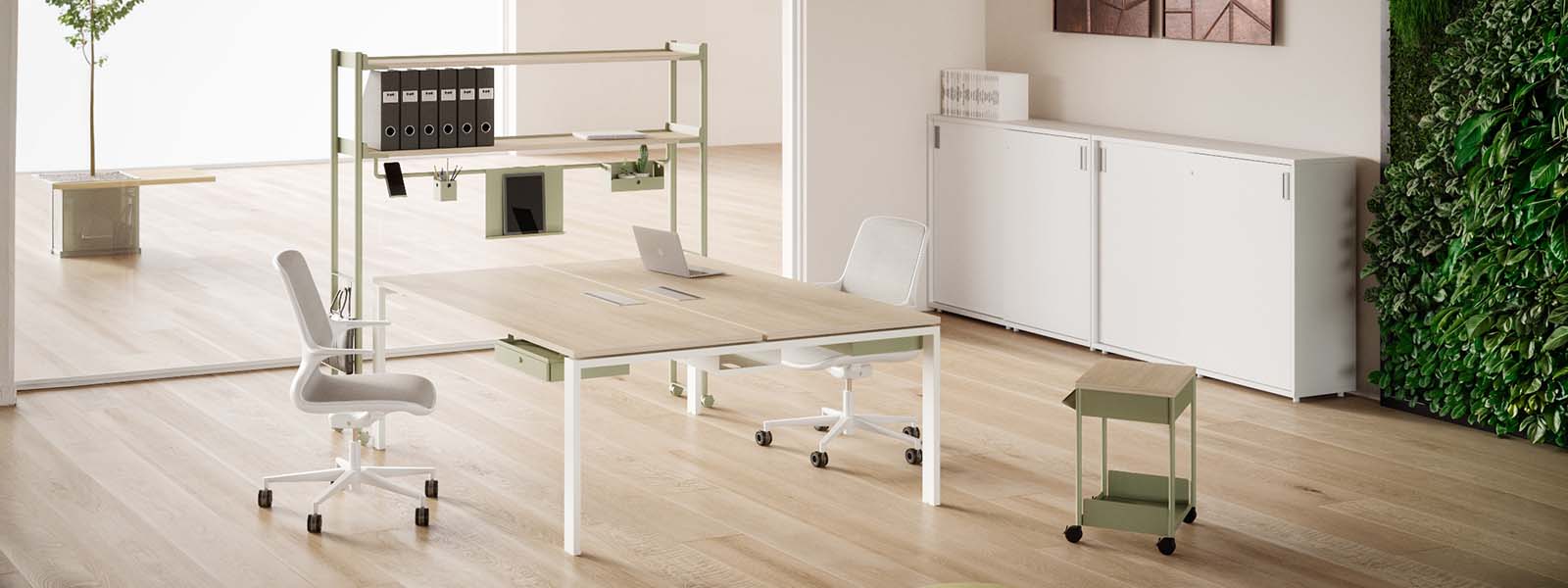
2-seat modular benches
The easiest modularity to understand and expand.
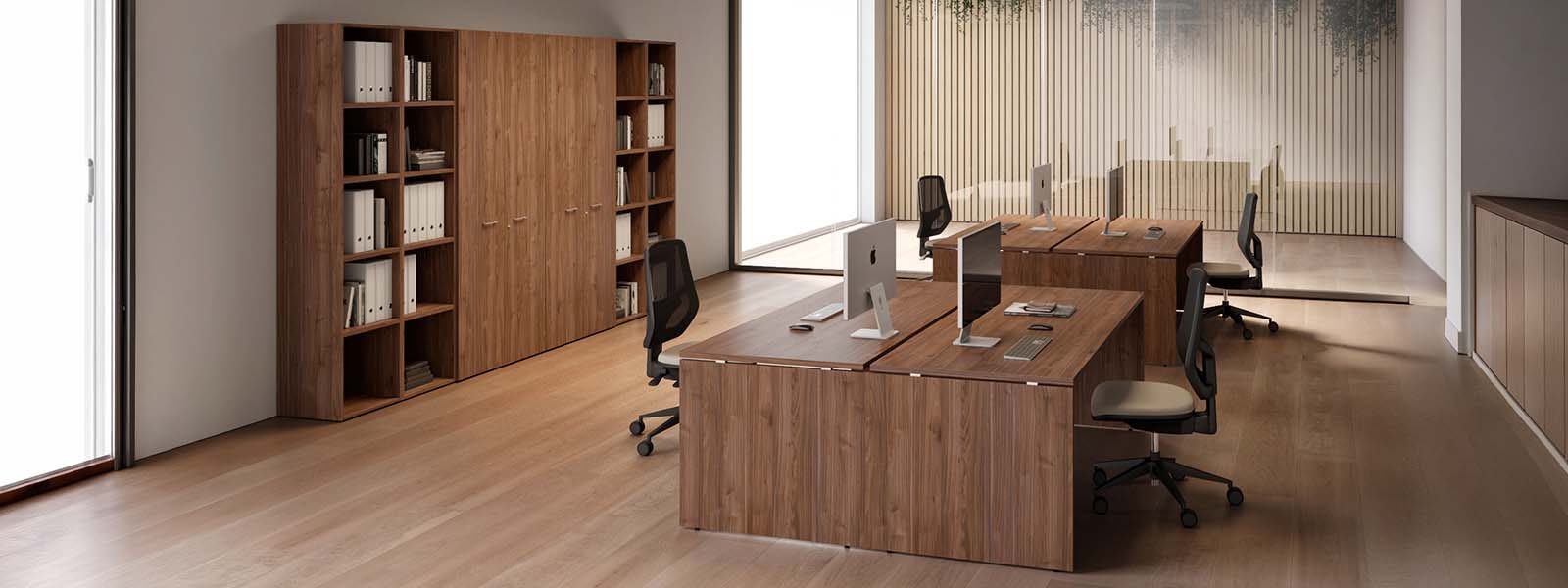
2-seat modular benches are the ideal configuration when you want to build an orderly, readable open space that can be easily expanded over time without making the initial layout rigid. They offer a clear compositional logic, perfect for small teams, professional studios, growing offices and operational areas that need to start with a lean but not temporary setup. From a UX perspective, they work very well because they help users immediately perceive their own workspace within a shared system, maintaining collaborative proximity and a good balance between relationship and individual concentration.
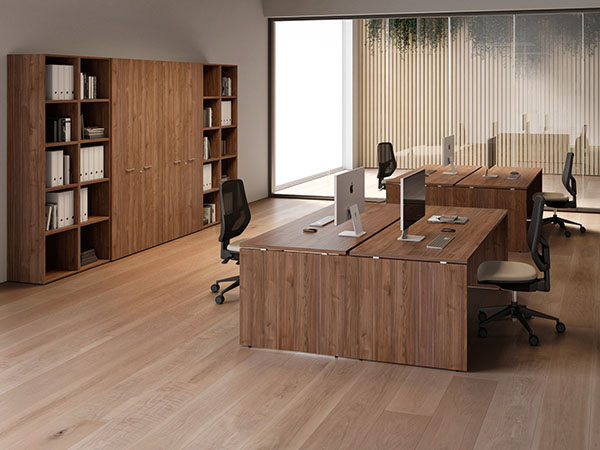
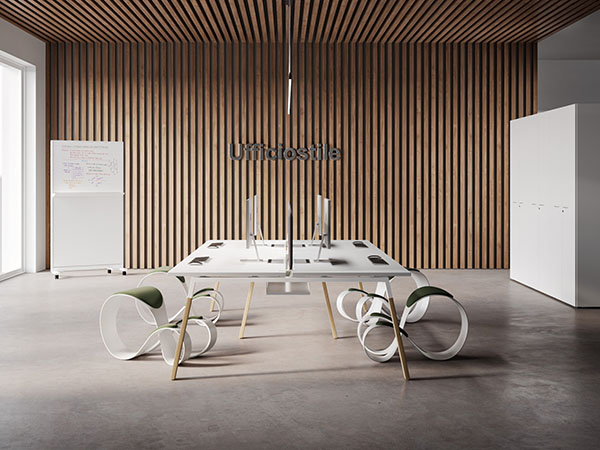
4-seat modular benches
Greater operational density, without losing clarity.
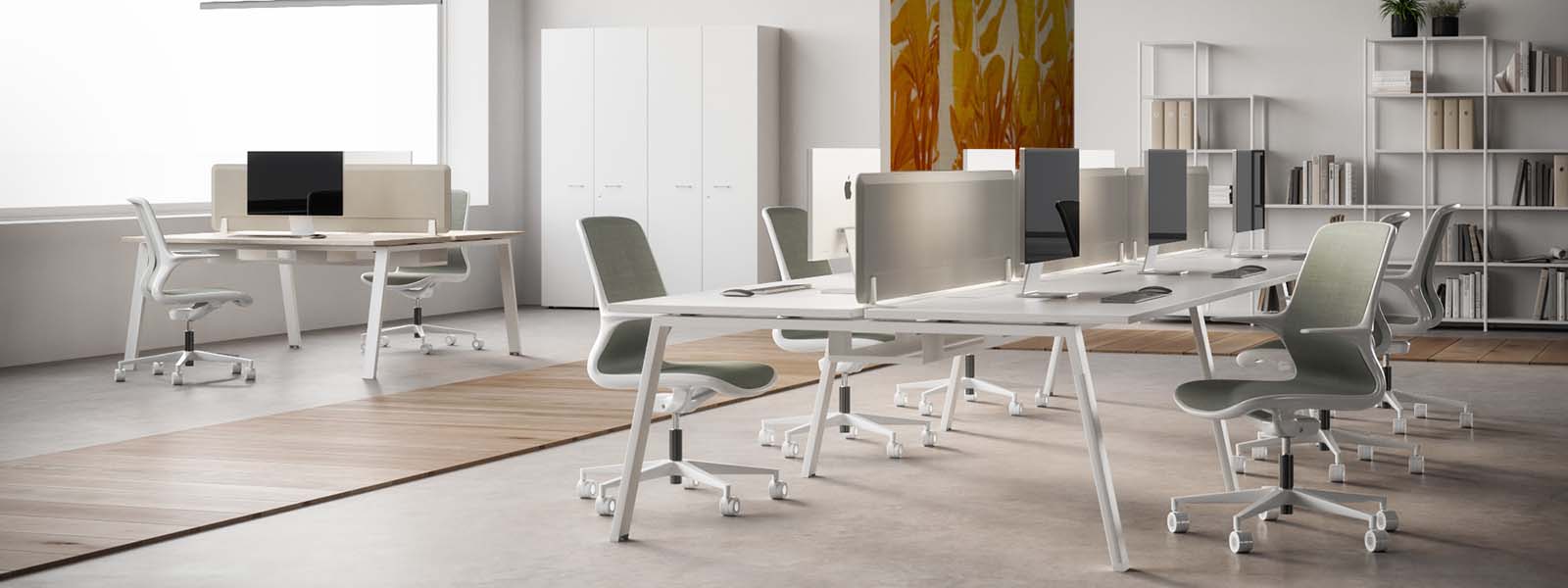
4-seat modular benches are one of the most effective choices for companies that want to increase the number of workstations while maintaining an orderly and professional composition. They are particularly suitable for administrative departments, customer care, operations and teams that work in constant proximity, because they support fast communication without fragmenting the layout. In terms of user experience, this solution greatly helps space readability: the team recognises itself as a unit, routes remain more intuitive and the open space gains a more rational structure, easy to manage even when the number of users grows over time.
Linear modular workstations
Linear order for clear and scalable offices.
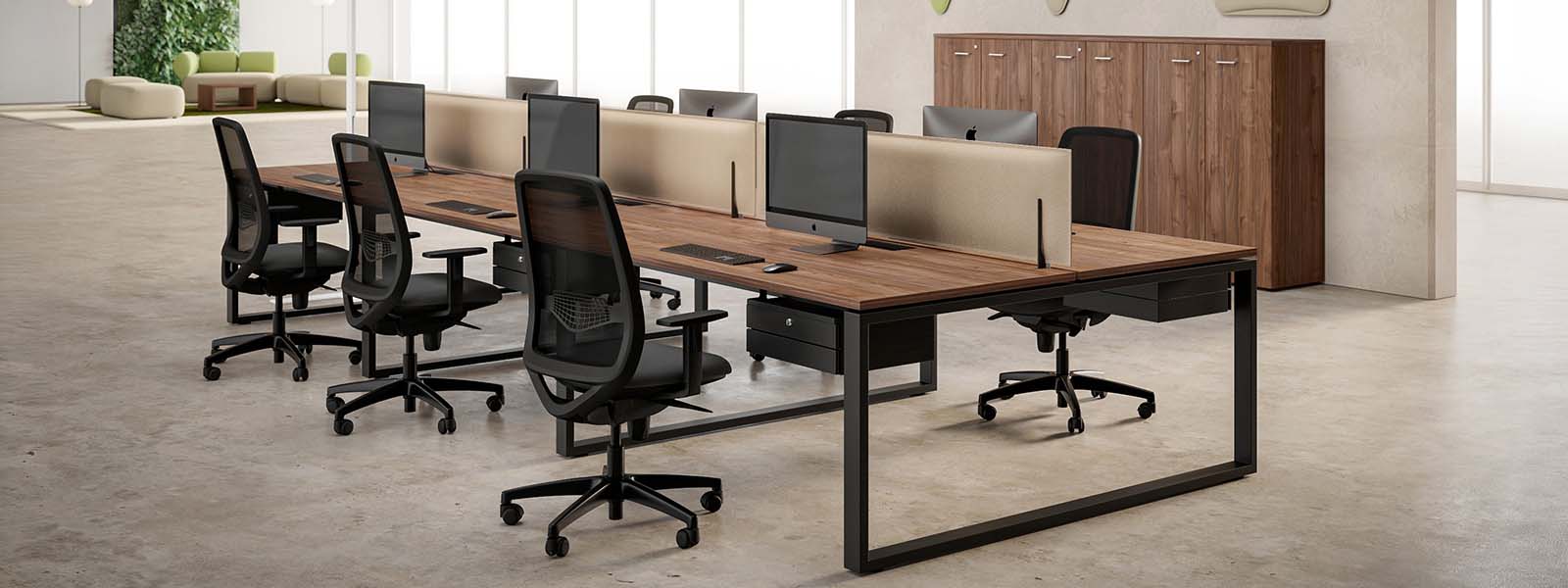
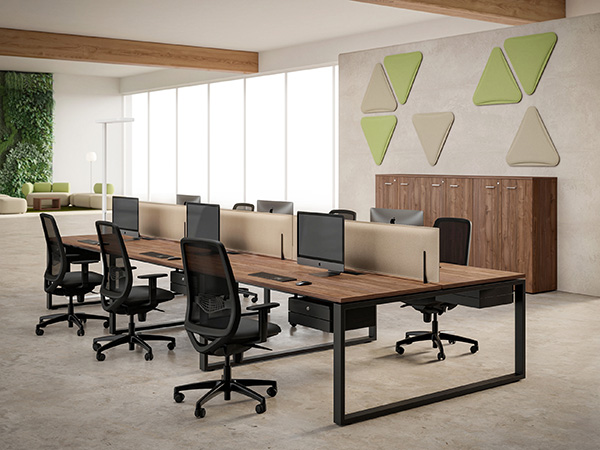
Linear modular workstations are designed for open spaces where visual continuity and a clean distribution system matter as much as the functionality of the single desk. This type is very useful in rectangular environments, deep floorplates or offices where the goal is to build a regular rhythm of workstations while keeping circulation routes always understandable and well calibrated. For the end user, the advantage is concrete: the workstation becomes part of a system that immediately appears orderly, intuitive and professional. For the company, instead, it means being able to add modules in sequence without compromising architectural coherence, density or the overall quality of the workplace.
Modular clusters for teams
Working together, without looking like a call centre.
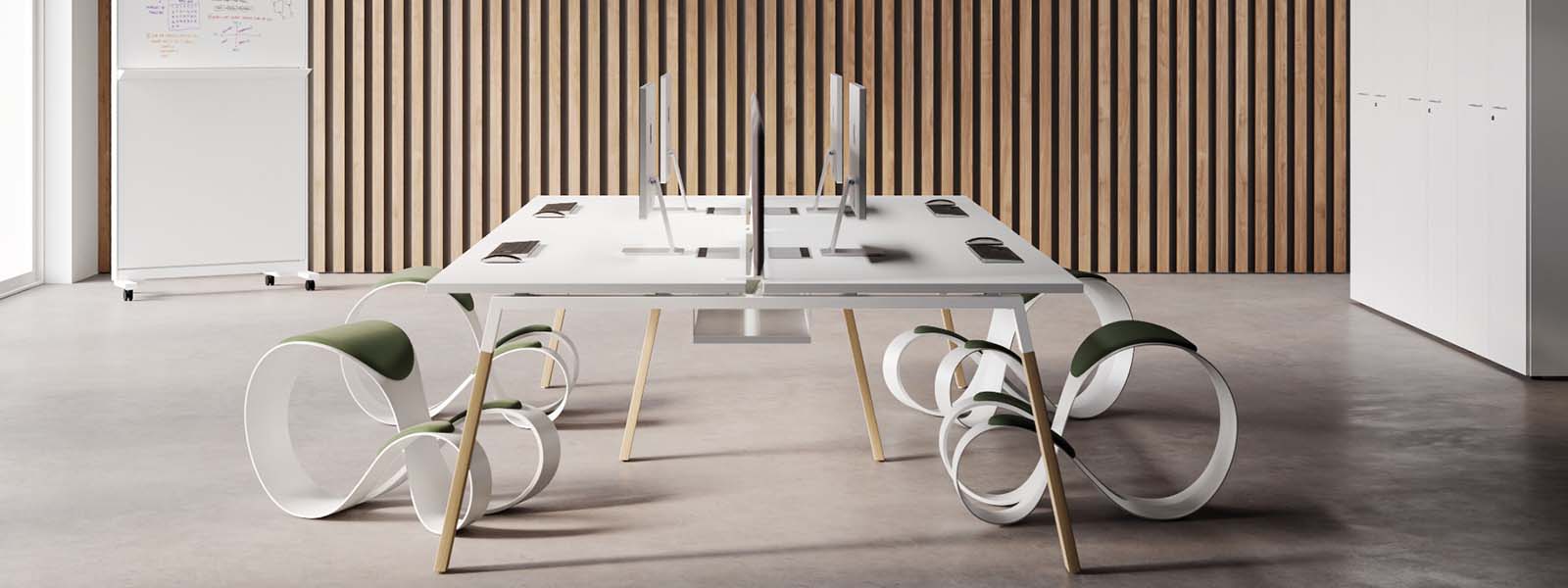
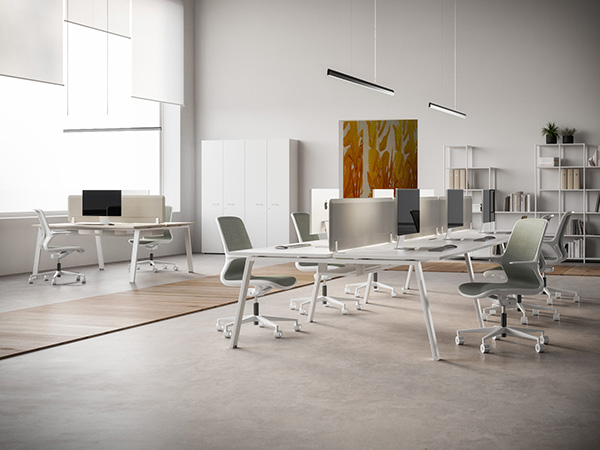
Modular team clusters are the most suitable solution when the open space needs to support real collaboration, quick discussion and belonging to a work group, without falling into impersonal or overly dense configurations. Unlike purely serial compositions, the cluster creates operational micro-islands that help teams recognise themselves and work in a more coordinated way. In UX terms, this choice is very strong because it makes the environment more human and less anonymous: people perceive greater coherence between space and function, while the layout retains flexibility and the possibility of reconfiguration in the event of reorganisations or department growth.
Contract modular workstations
Scale the project well, with budget under control.
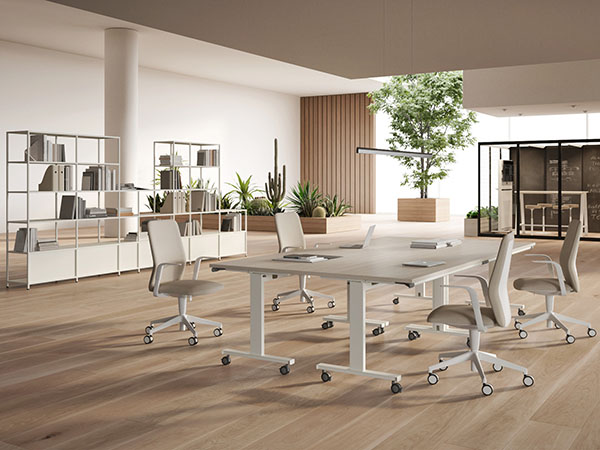
Contract modular workstations are the most effective choice when the goal is to furnish medium or large open spaces with a replicable, credible and economically sustainable system. This does not mean choosing minimal solutions, but identifying configurations that simplify supply, installation, future expansion and operational layout management. In terms of user experience, a good contract solution avoids the “improvised office” effect: every workstation remains understandable, coherent and functional, while the overall project gains uniformity, rollout speed and the ability to adapt to changes in headcount or corporate reorganisations.
Premium modular workstations
When the open space must work and represent.
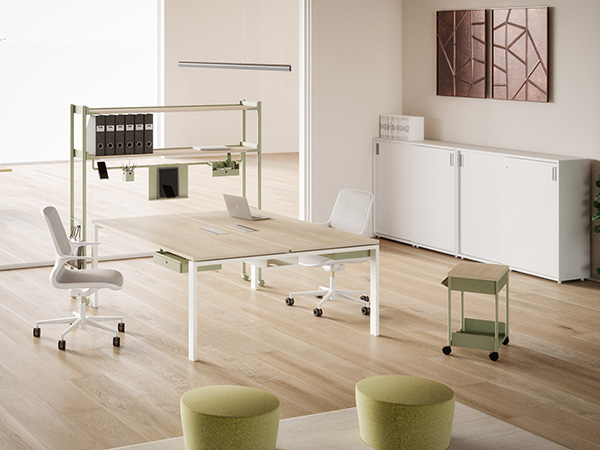
Premium modular workstations are designed for headquarters, advanced studios and corporate environments where the operational system must not only be efficient, but also support a higher image of the workplace. Here modularity remains central, but is interpreted with greater attention to finishes, construction detail, perceived quality and clarity of architectural language. For the user, this translates into a workstation that appears more refined, more stable and more consistent with corporate identity. For the project, it means bringing quality even into higher-density areas, preventing the open space from looking like a less prestigious zone compared to other office environments.
FAQ
They are modular desk systems designed to organise multiple users in a shared space with an orderly, scalable and coherent logic. Unlike isolated workstations, they make it possible to build rows, benches and clusters that simplify layout management and make it easier for the office to evolve over time. Their value lies in the ability to combine functionality, controlled density and design continuity.
It is worthwhile when the team is small or growing and you want to start with a simple configuration that is easy to expand and not too invasive. It is a highly effective choice for studios, agile operational offices and departments that need functional proximity but not high density. In addition, it makes the open space more readable and helps maintain a good balance between collaboration and recognition of the single workstation.
It depends on how the team works. The 4-seat bench is more efficient when orderly density and linear layout continuity are needed, especially in large or highly standardised departments. The modular cluster, on the other hand, is preferable when the identity of the work group matters more and the goal is to create a more recognisable micro-area, with a less serial and more relational perception of the open space.
Yes, because one of their main advantages is scalability. A well-chosen modular system makes it possible to add, reorganise or redistribute workstations without having to rethink the entire open space every time headcount changes. This improves design efficiency, reduces adaptation times and makes the office more ready to receive new organisational needs without losing overall coherence.
You need to start from four elements: number of users, type of work performed, desired density and the image you want to give the space. Linear benches work well when order and replicability are needed, clusters when team-based work matters more, while premium or contract solutions respond to different priorities of representation or budget control. The correct choice is the one that makes the space clear to read and simple to use.