Modular partition screens: micro-workspaces, brainstorming and light space division
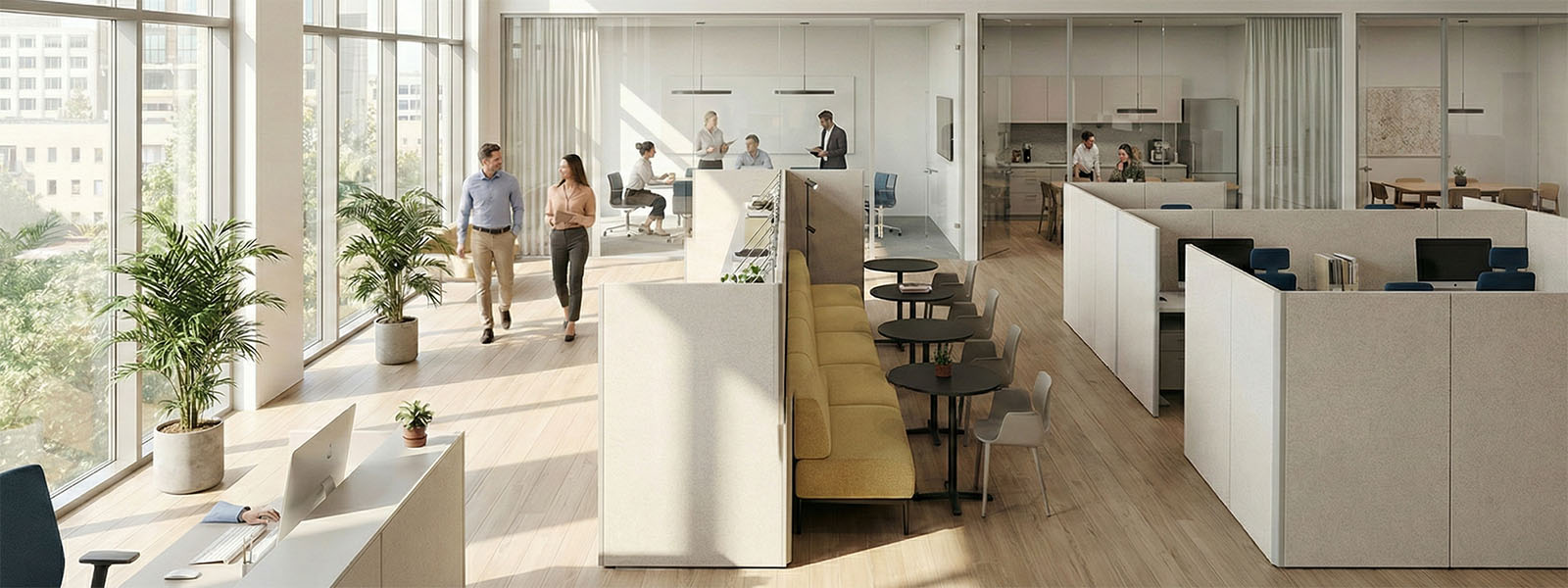
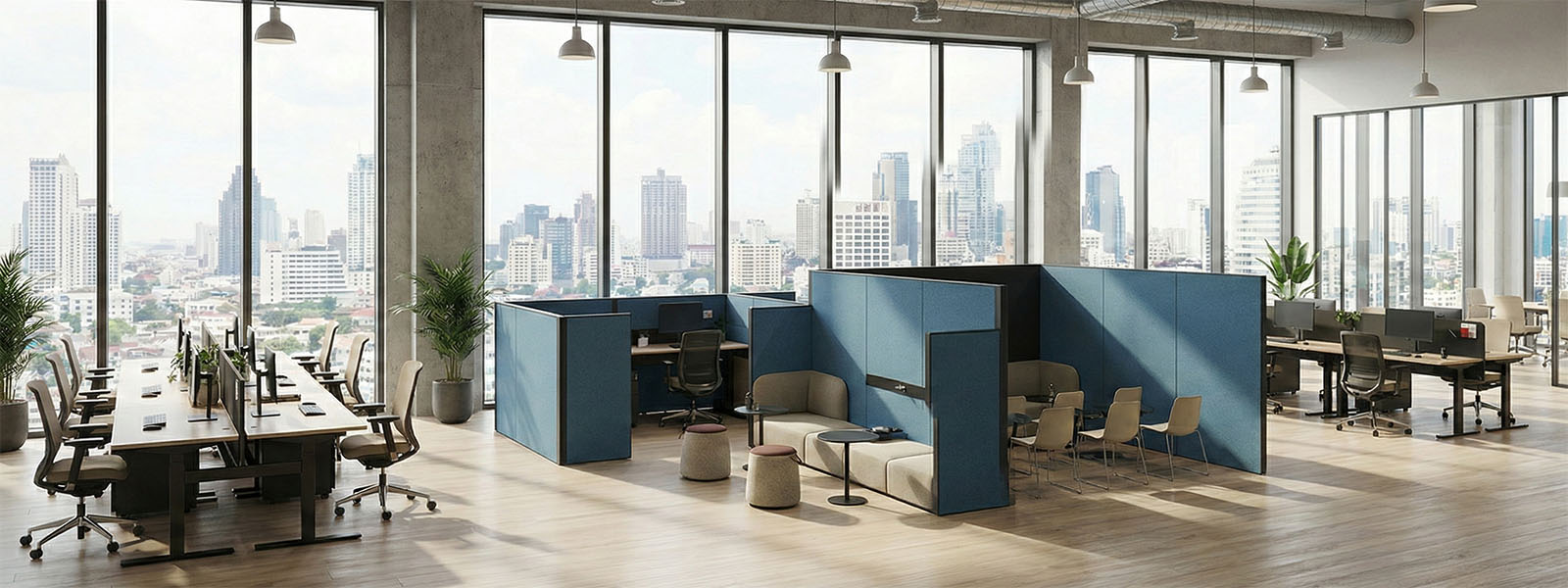
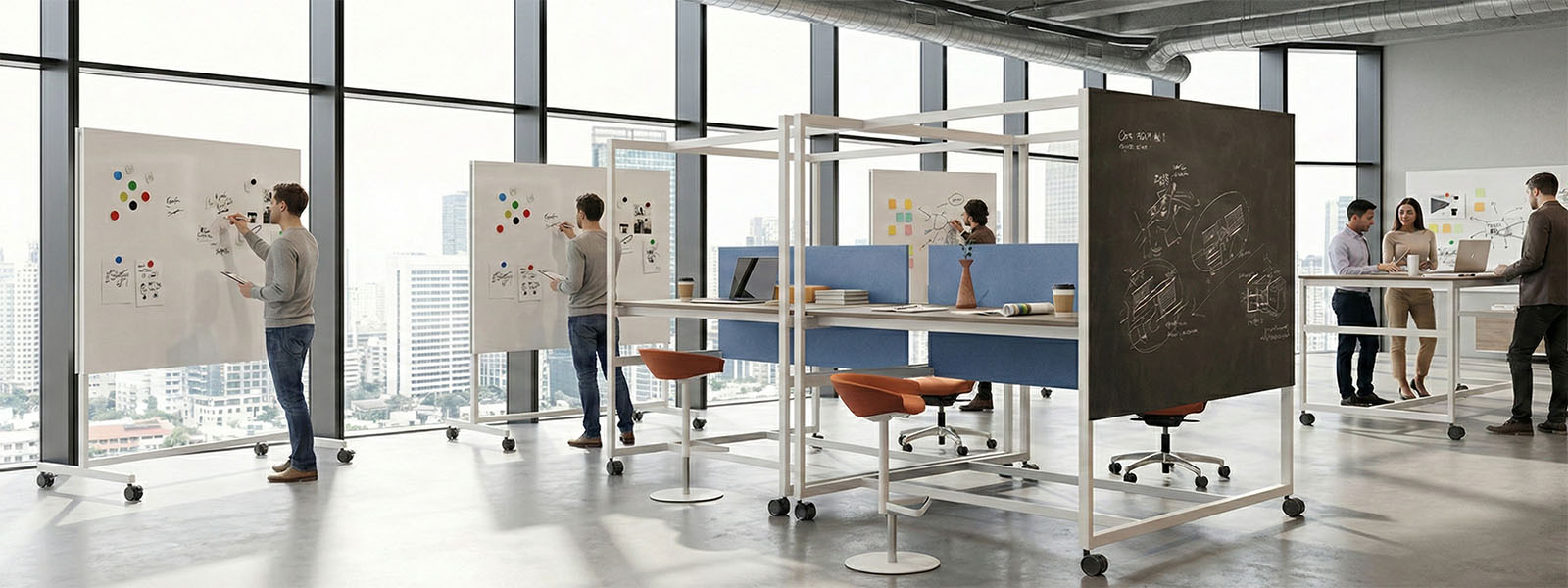
Modular partition screens make it possible to create functional micro-spaces within the office without building works. Thanks to their lightness and mobility, they allow temporary zones to be created for brainstorming, focus work, quick meetings or collaborative activities, especially when combined with tables on castors and mobile furniture. Used as lightweight dividers, they define routes, separate flows and organise environments while maintaining transparency, light and visual continuity.
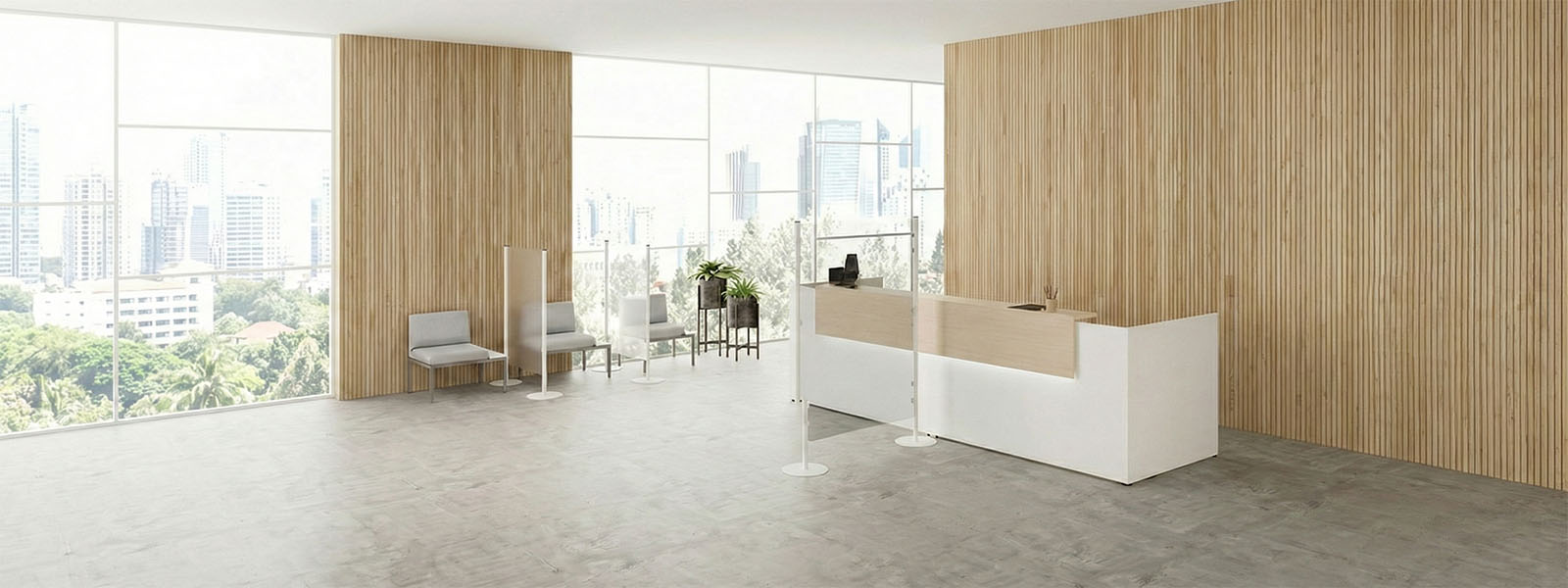
Partition screens for transit areas are lightweight and modular elements, either solid, glazed or sound-absorbing, that organise office corridors and junctions by creating visual separations and micro-areas without building works. They improve wayfinding, privacy and acoustic comfort, define routes and waiting areas, and can integrate greenery, graphics or accessories for a result consistent with the project.
Partition screens as “flow direction” tools: wayfinding
In a wide corridor or junction, the problem is often confusion: people pass everywhere, stop wherever it happens, and the space loses order. Partition screens work as a direction tool because they draw the route, delimit margins and make it immediately clear what is passage and what is stopping area. The result is safer and more readable transit, without the need for full-height walls.
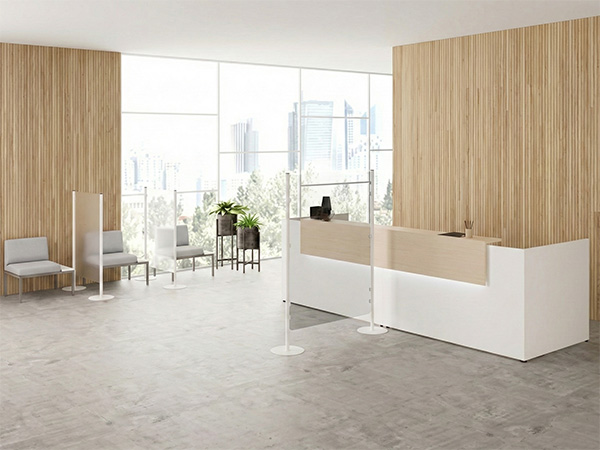
Visual screens for discreet privacy
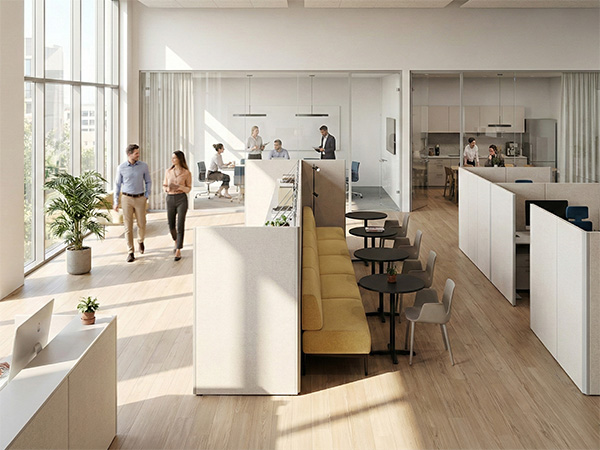
When transit runs alongside workstations, receptions or meeting pods, lightweight visual screening reduces exposure and distractions. Half-height partition screens or screens with translucent sections protect sightlines while maintaining continuity and brightness. This is an elegant solution for creating “psychological distance” without turning the office into a maze.
Partition screens with integrated greenery: biophilia and lightweight separation
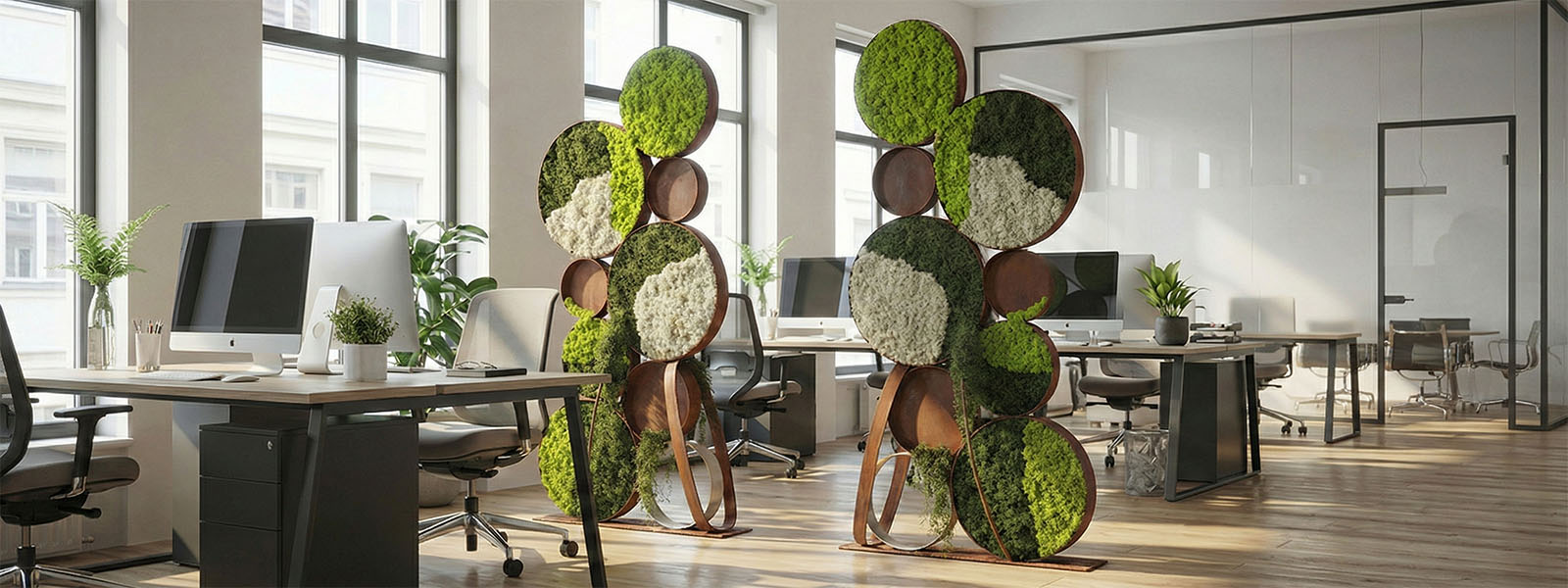
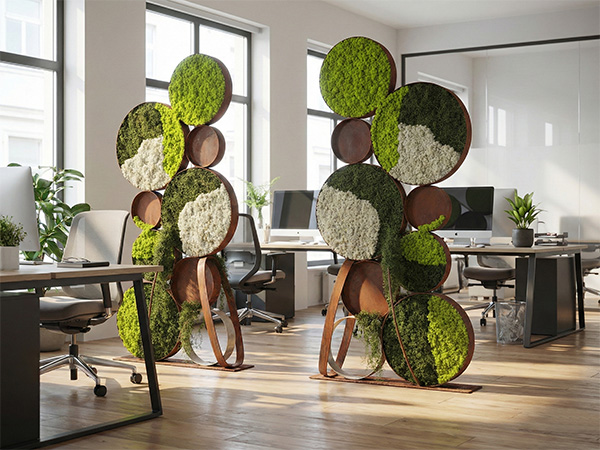
When you want to separate and at the same time “humanise” a passage area, partition screens with greenery or integrated planters are a very strong choice. They create soft screens, improve visual comfort and make routes more pleasant, especially in headquarters and offices frequently visited by guests. In addition, they help avoid the “sterile corridor” effect without requiring building works.
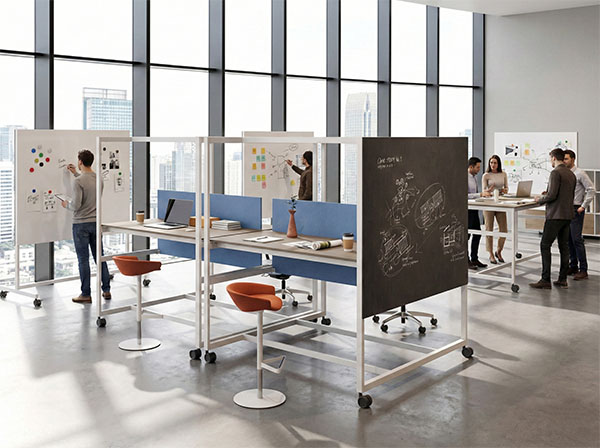
Brainstorming spaces with partition screens and tables on castors
The combination of partition screens and tables on castors is essential in dynamic contexts. Partition screens draw a visual and acoustic perimeter that supports focus and relative privacy, while mobile tables make it possible to quickly modify the setup for co-design sessions, structured workshops, sprint planning or informal discussion moments. Many panels can be writable or magnetic, turning into whiteboards on which to collect ideas, map processes and build project phases together.
Lightweight division of routes and environments
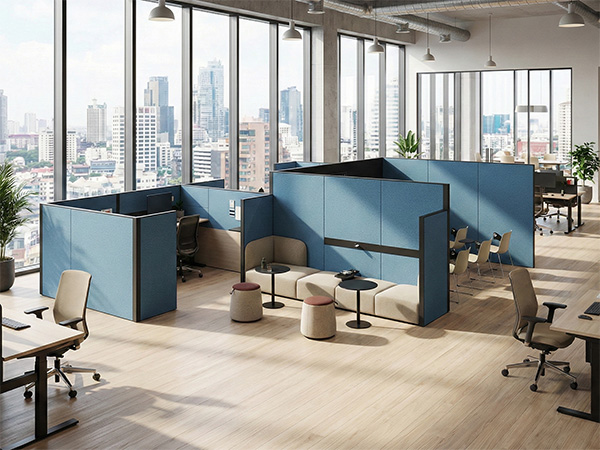
Partition screens make it possible to organise routes and separate environments without sacrificing transparency and brightness. Unlike full walls, they maintain an open perception of the space while still guiding flows clearly. They can create filter zones between entrance and operational areas, screen break areas and meeting zones, or protect workstations from more intense passageways. In this way, the office becomes more readable, orderly and consistent with people’s real flows.
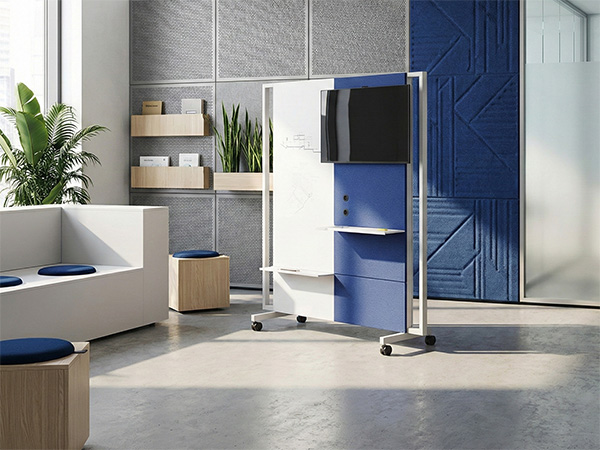
Materials, acoustics and additional functions
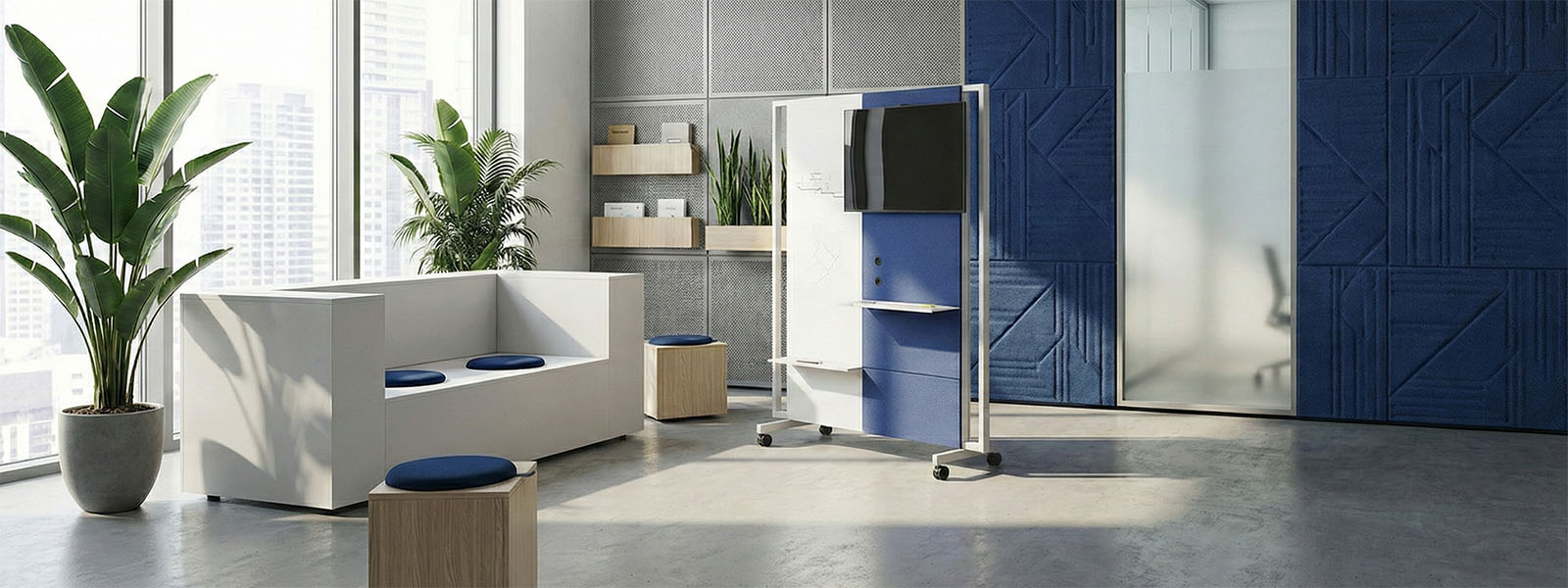
Partition screens can be made in acoustic fabric, technical melamine, micro-perforated metal, transparent or satin-finish glass, or as lightweight panels on a metal frame. Acoustic versions include sound-absorbing panels capable of reducing reverberation and containing noise in the busiest zones. Many solutions include integrated accessories: writable and magnetic surfaces, document pockets, internal communication modules, monitor supports and even vertical greenery elements. In this way, the partition screen becomes a true multifunctional tool, combining spatial division, acoustics and support for everyday activities.
FAQ
Yes. Modular partition screens are designed specifically for quick and flexible configurations, without the need for building works. They can be moved and recomposed according to projects or team needs, creating “on demand” micro-spaces.
Absolutely, especially when equipped with writable surfaces and paired with tables on castors. In this way, the space can quickly shift from a formal setting to more creative configurations for co-design, ideation and open discussion between different work groups.
Yes. Acoustic versions with sound-absorbing panels reduce reverberation and help contain noise in busy zones, improving sound quality both inside the micro-spaces and in the surrounding office areas.
Yes. Partition screens can separate flows and areas while maintaining light transmission and visual permeability, avoiding the closed feeling typical of full walls. They are ideal for creating filter zones between entrance and open space, screening break areas or delimiting collaborative spaces from operational workstations.
The most commonly used materials are acoustic fabric, glass, transparent or satin-finish, technical melamine, micro-perforated metal and lightweight panels on castors. The choice depends on the level of privacy, acoustic requirements and desired degree of visual permeability for the workspaces.