Modern classrooms: flexible solutions for frontal, collaborative and hybrid teaching
Modern university classrooms must ensure flexibility, ergonomics and technological integration. Current teaching models alternate between frontal teaching, group activities, collaborative work and hybrid lessons. For this reason, furniture must be modular, reconfigurable and designed for intensive use of laptops, digital devices and presentation technologies. Desks, chairs with writing tablets, tables on castors and specialised lecture halls make it possible to create versatile, efficient spaces consistent with the needs of students and faculty.
Technical specifications
- Desks and tables for university classrooms with high-resistance technical melamine or HPL tops, 20–28 mm thicknesses, impact-resistant edges and easily sanitizable surfaces for intensive use.
- Painted metal structures with reinforced sections, adjustable feet and versions on castors with certified locking system for flexible classrooms and reconfigurable layouts.
- Integrated cabling in desks: cable ducts, retractable power units, Schuko/USB sockets and provision to power laptops and digital devices on every row.
- Single-shell university chairs in technopolymer or plywood with fixed frame, beam-mounted or sled-frame versions, and chairs with HPL or technopolymer writing tablets with reinforced arms for hybrid teaching.
- Systems for tiered classrooms with modular platforms, inspectable steps, integrated handrails and fixed or folding seating to optimise visibility, safety and capacity.
- Optional AV integration: provision for 4K/laser video projection, monitors, audio systems, writable panels and mobile screens for hybrid lessons and multimedia presentations.
- Materials certified for resistance, safety and sustainability, compatible with university requirements in terms of durability, maintenance and long-term upgradeability.
Typical configurations
Frontal classroom with modular desks
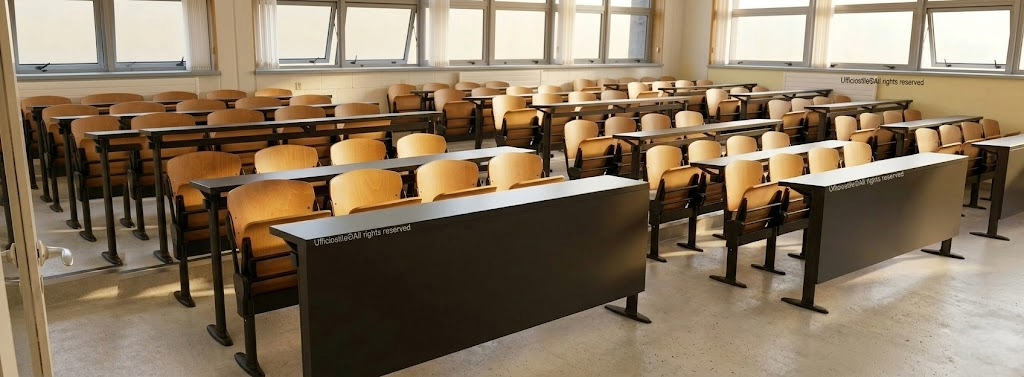
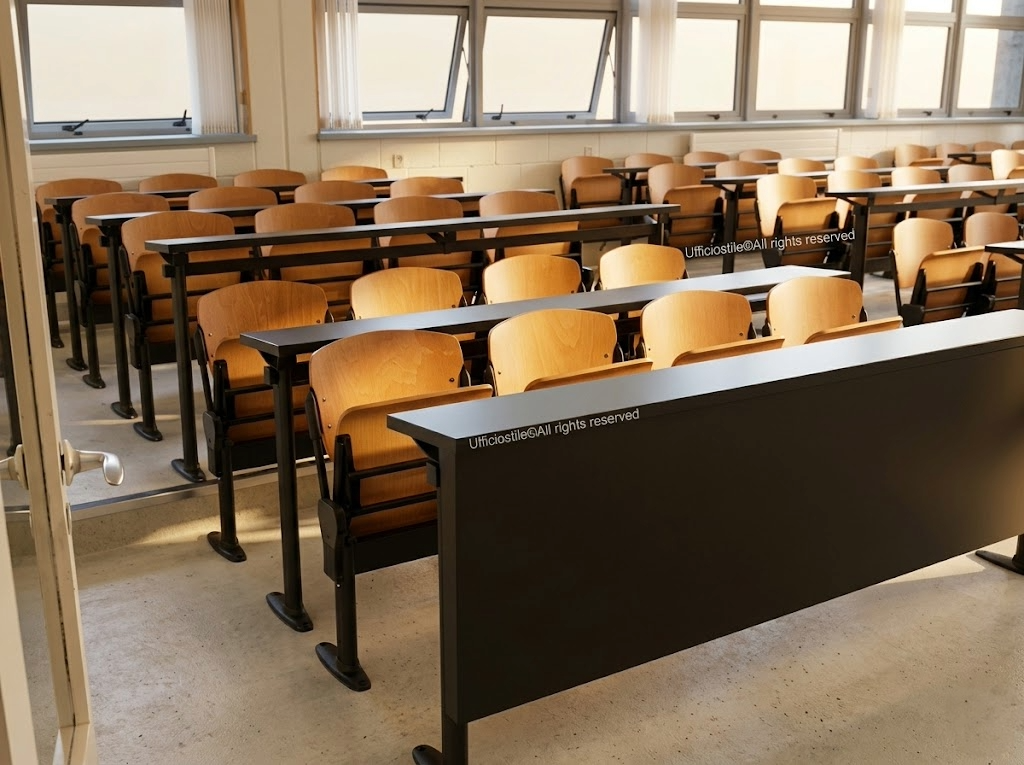
Classrooms with rows of single or shared desks, stable and easily sanitizable surfaces and high-resistance single-shell chairs. The integration of ducts and sockets along the rows allows simultaneous use of laptops and digital devices for the entire duration of lessons.
Flexible classroom with tables on castors
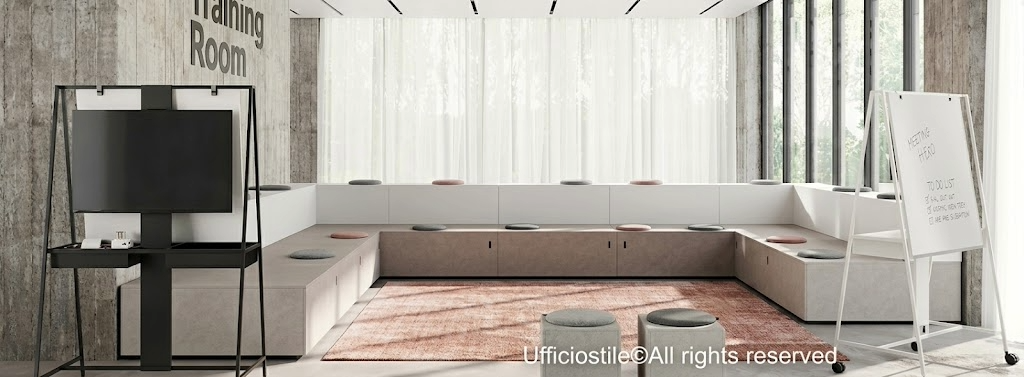
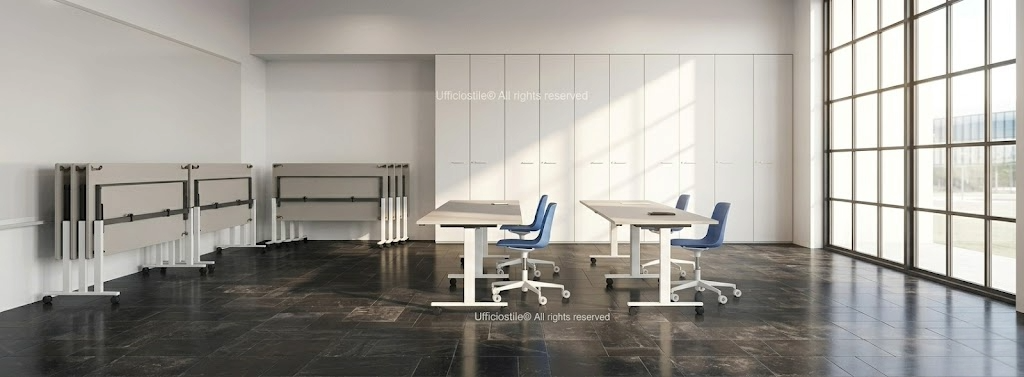
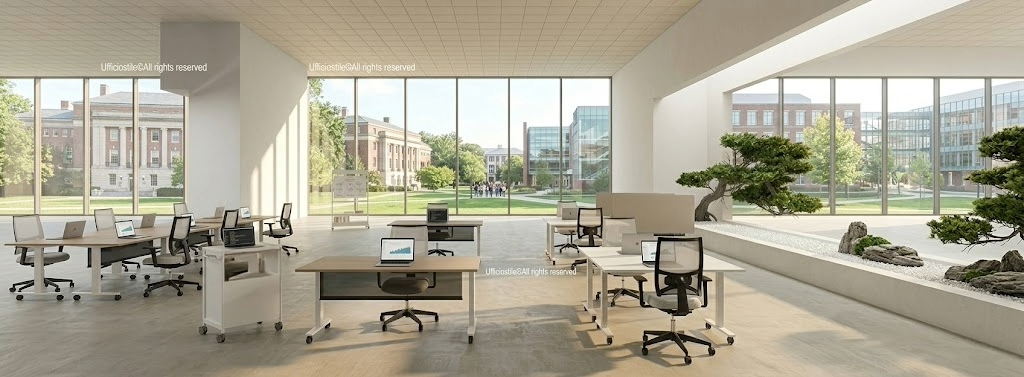
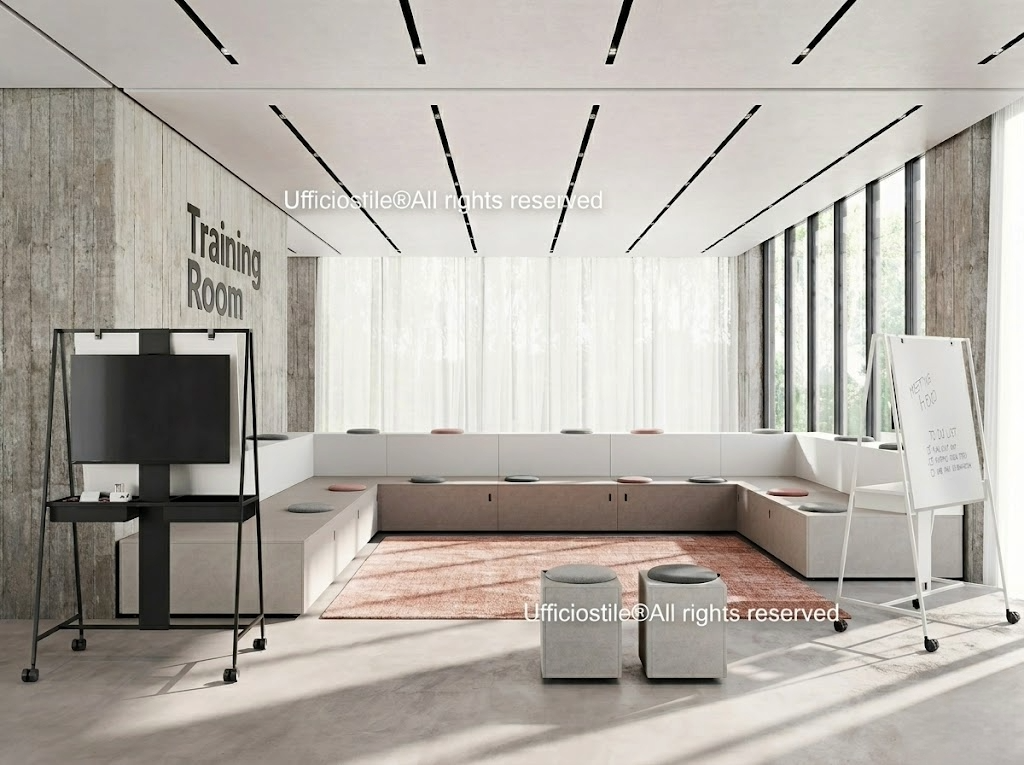
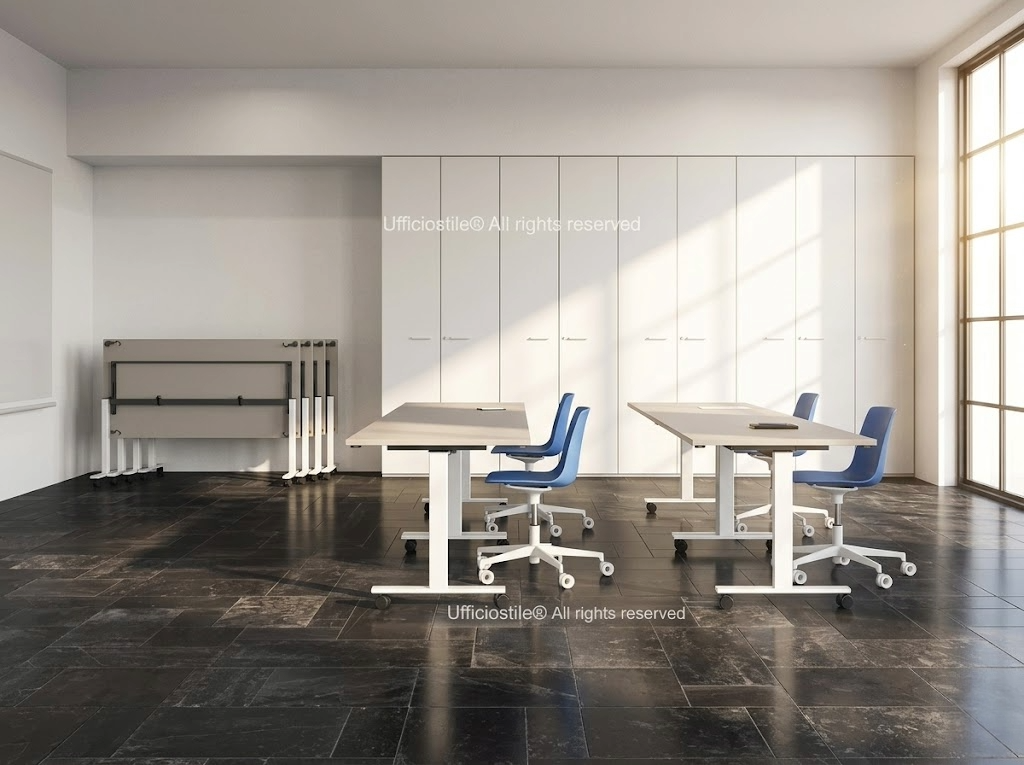
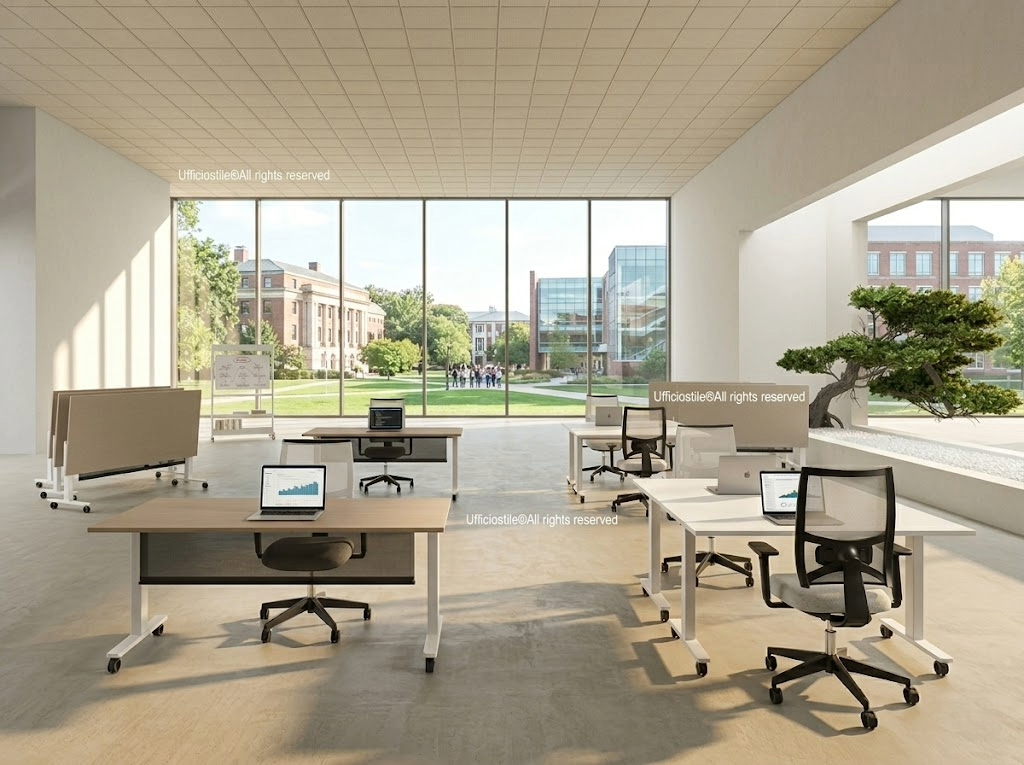
Spaces designed to switch quickly from frontal lessons to group work: tables on castors with certified locking system, island, horseshoe or U-shape configurations, mobile seating and writable panels for collaborative activities, workshops and hybrid sessions.
Tiered classroom / Lecture hall
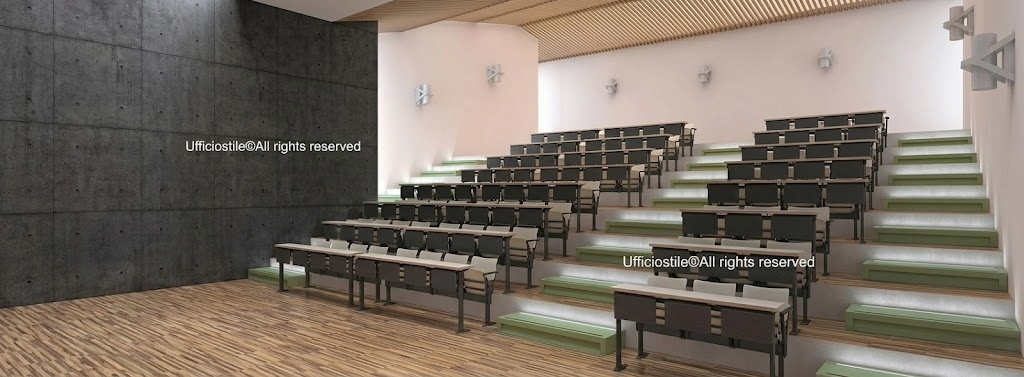
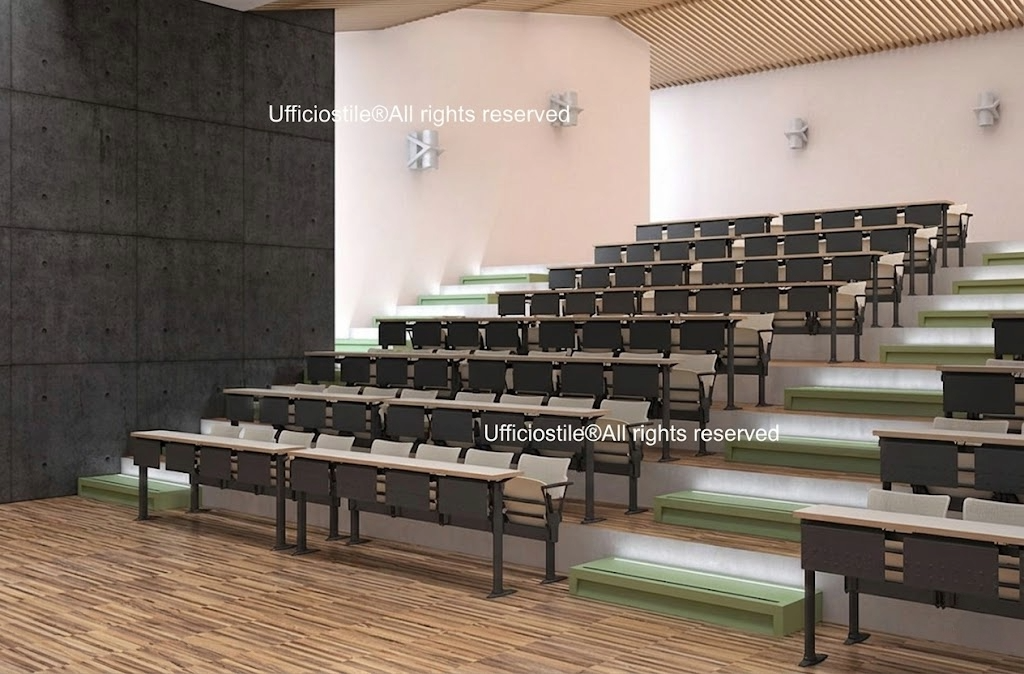
Tiered classrooms with modular platform systems, fixed or folding seating and integrated desks. Ideal for courses with large numbers, they offer optimal visibility, controlled acoustics and the possibility of integrating scenic lighting, multi-level power access and advanced video projection technologies.
Desks and tables for frontal teaching
Frontal teaching requires stable, resistant and easy-to-clean surfaces. University desks are offered in single or shared versions, capable of making the best use of the available space without compromising freedom of movement. High-resistance technical melamine or HPL tops ensure durability over time, while metal structures certify stability even with intensive use and frequent class changes.
The integration of ducts, cable ports and USB/Schuko sockets along the rows allows students to use laptops and digital devices safely and in an orderly way. Desk design takes into account safety regulations, escape routes and maintenance needs, allowing quick interventions on systems and cabling without interfering with the teaching calendar.
Single-shell university chairs or chairs with writing tablets
Single-shell chairs offer robustness, ease of cleaning and a uniform aesthetic, ideal for large classrooms. Thanks to fixed, beam-mounted or sled frames, the room layout remains orderly and easy to manage. For environments that require greater flexibility, chairs with writing tablets add an integrated writing surface, perfect for exams, workshops and hybrid lessons.
HPL or technopolymer writing tablets with reinforced arms ensure long-term resistance, even with intensive use and frequent movements. Stackable versions facilitate storage and rapid classroom reconfiguration, making it possible to free up space for practical activities, events or standing and dynamic work sessions.
Flexible classrooms with tables on castors and reconfigurable layouts
Flexible classrooms are designed to adapt quickly to different teaching formats: from frontal lessons to small-group work, from exercises to interdisciplinary workshops. Tables on castors, equipped with industrial wheels and certified brakes, can be moved and locked in position to create work islands, horseshoe layouts, U-shape configurations or collaborative clusters.
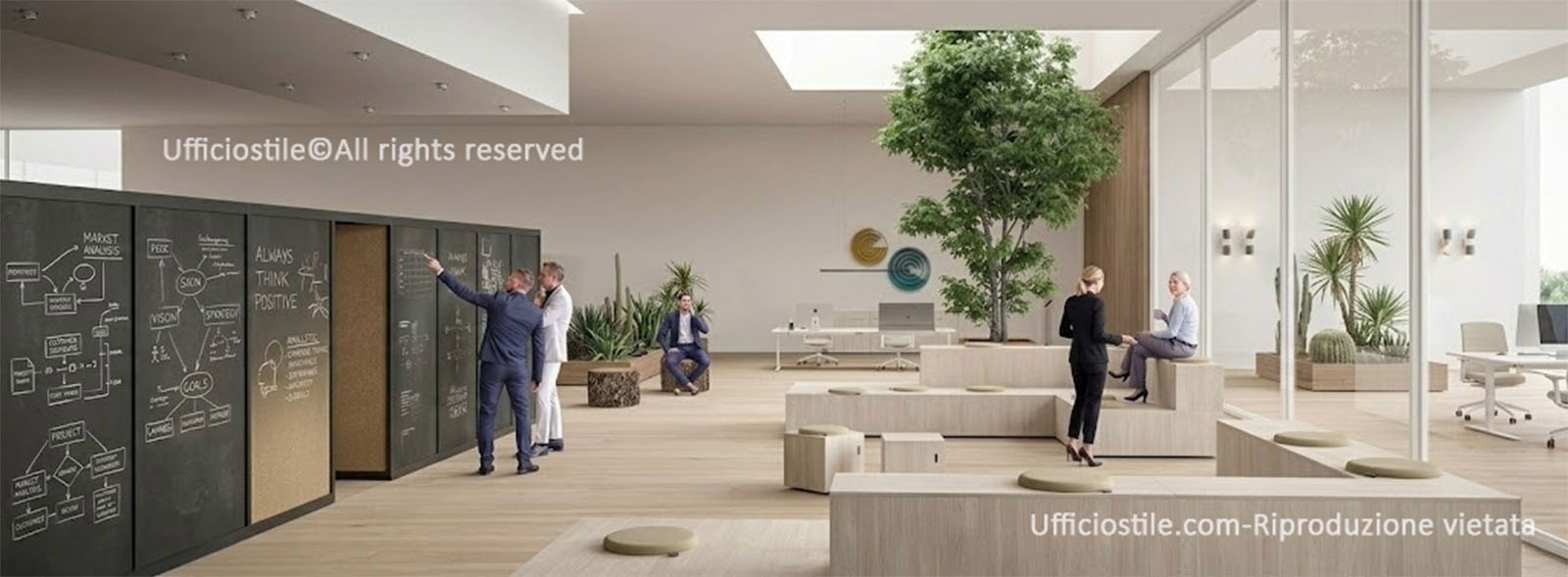
Writable surfaces, mobile whiteboards and partition panels make it possible to segment the space and encourage visual interaction between students and faculty. Plug & play integration of sockets and network connections allows devices and teaching tools to be powered without visible cables, supporting advanced digital teaching and constantly transforming environments.
Tiered classrooms and lecture halls for large numbers
Tiered classrooms offer superior visibility, better acoustics and greater seating capacity compared to traditional classrooms. Modular platform systems make it possible to shape the tiers according to the dimensions of the environment, facilitate system maintenance and ensure safe entry and exit flows thanks to integrated corridors and handrails.
Fixed or folding seating optimises usability and makes cleaning easier between lessons. The integration of scenic lighting, multi-level power access and 4K/laser video projection systems makes it possible to host lessons, conferences, events and high-profile presentations, aligning the in-person experience with the standards of hybrid formats.
FAQ
Modular desks, ergonomic chairs, including chairs with writing tablets, and mobile tables on castors are the key elements to support frontal teaching, collaborative activities and hybrid lessons within the same environment.
Yes, if the writing tablet is made of HPL or technopolymer and combined with reinforced arms and robust hinges. These chairs are designed for intensive use and for the stresses typical of university classrooms.
It is advisable to provide power units integrated into the tables and safe cable routing, in order to power laptops and devices without obstructing routes. Plug & play solutions simplify frequent space reconfiguration.
Yes, it is possible to customise tiers, seating type, colours, lighting and technological integration, audio, video and projection, according to the university’s identity and the type of courses hosted.
Yes, if equipped with industrial wheels with certified brakes and an appropriately sized structure. Under correct use conditions, they guarantee the same stability as fixed tables, with the advantage of being able to reconfigure the classroom quickly.