
Libraries and study rooms: comfort, silence and functionality for concentration
University libraries are complex environments, designed to support long periods of study and intensive use. Furniture must ensure ergonomics, controlled acoustics, adequate lighting and maximum durability. Individual tables, seating for continuous use and high-load shelving define the functional structure of the space, while the division between quiet areas and comfort study zones makes it possible to respond to the different needs of contemporary students.
Technical specifications
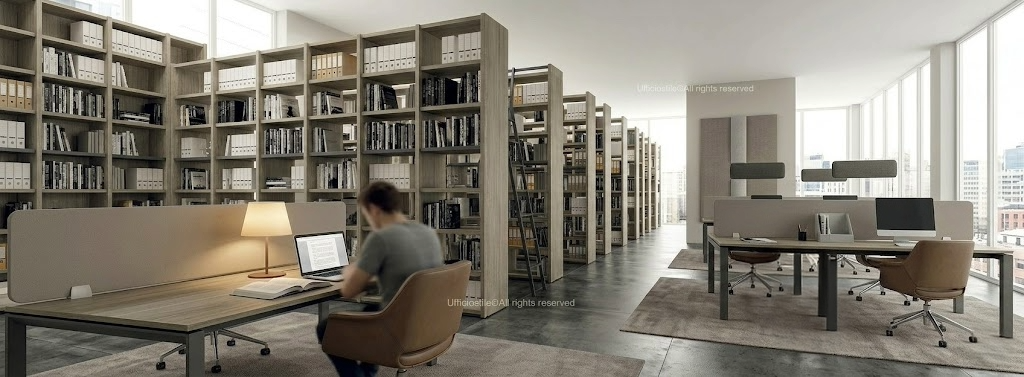
- Individual study tables with technical melamine or HPL tops, anti-reflective matt finish and impact-resistant edges, sized to support books, laptops and reference materials without overcrowding the workspace.
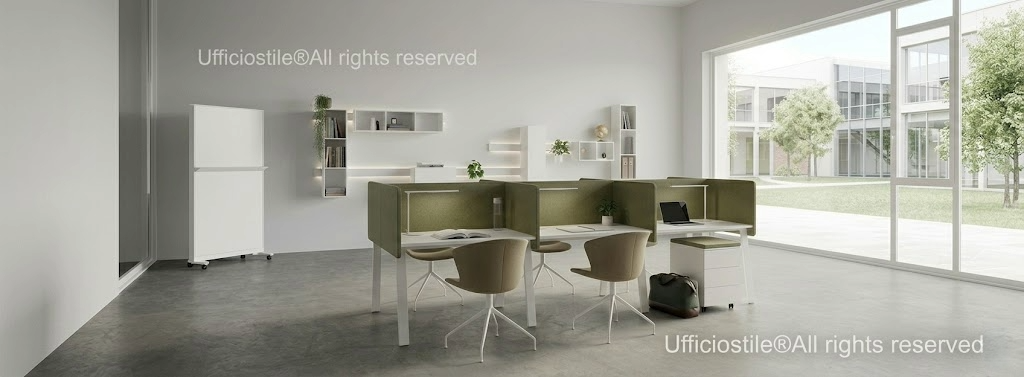
- Reinforced metal structures for tables and desks, with cabling provision: cable ports, under-top ducts, retractable power boxes and electrified towers to power personal devices and desk lighting.
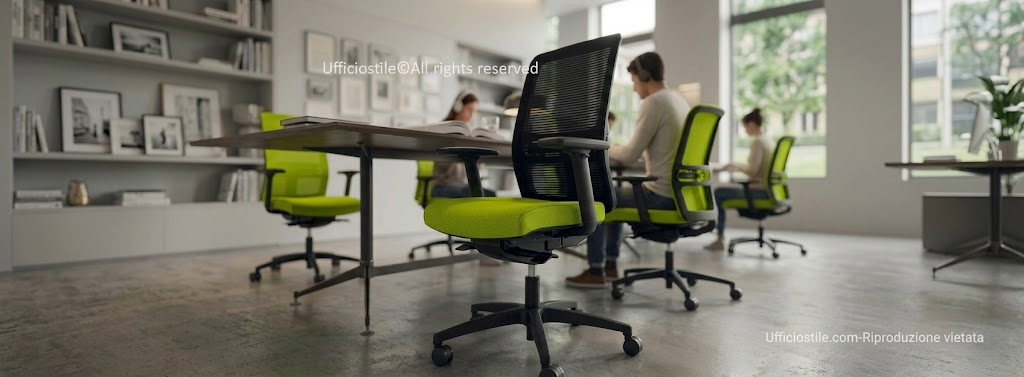
- Ergonomic seating for continuous use, with shaped backrest, lumbar support, high-density padding and breathable, fire-retardant upholstery, designed to remain comfortable even after many hours of use.
- High-load shelving in painted metal, with reinforced uprights, height-adjustable shelves, closed or open side panels and accessories for bookends, labels and dividers, suitable for significant book loads.
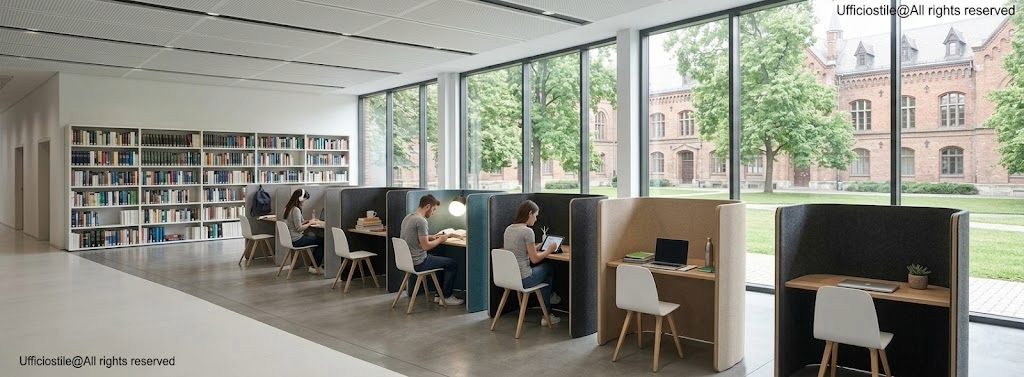
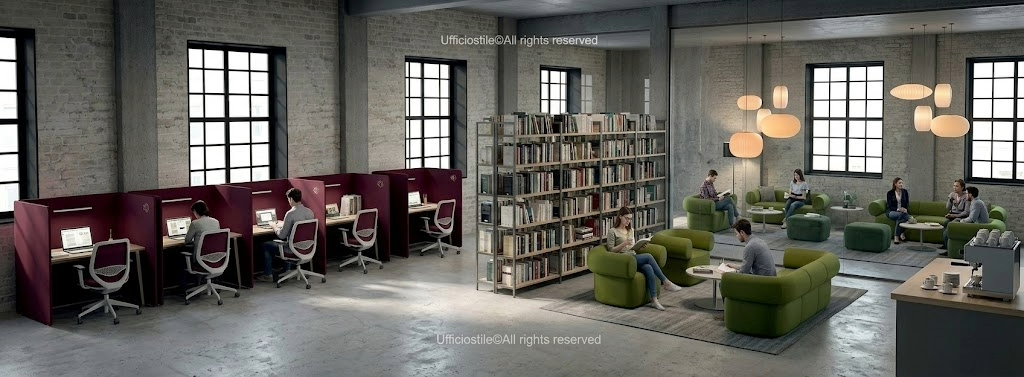
- Space zoning into quiet zones and comfort study areas through vertical acoustic panels, floor-standing dividers, individual booths and small lounge islands for informal study and low-voice group work.
- Technical lighting solutions: diffused-light fixtures for general lighting and desk or linear localized lamps to ensure adequate lux levels for reading without glare.
- Materials certified for wear resistance and ease of cleaning: easy-clean surfaces, robust structures and upholstery that maintain dimensional and colour stability even with intensive daily use.
Typical configurations
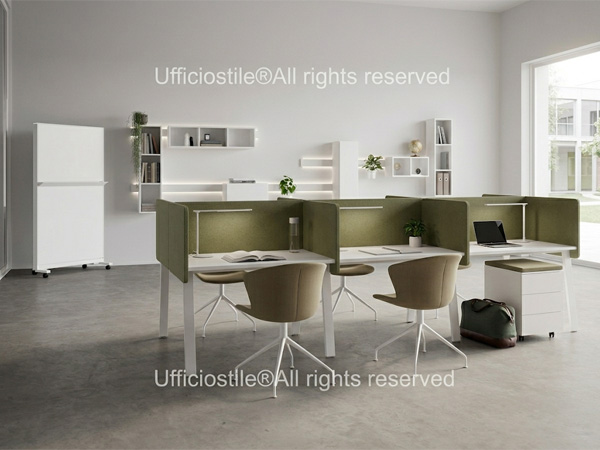
Quiet reading room with individual tables
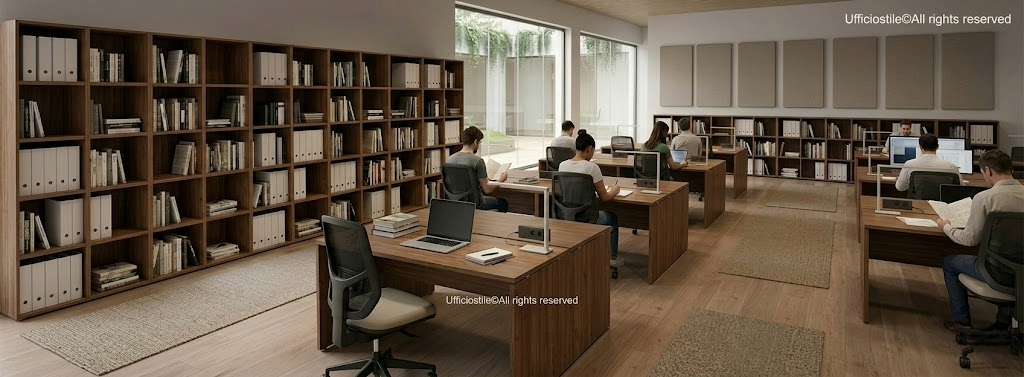
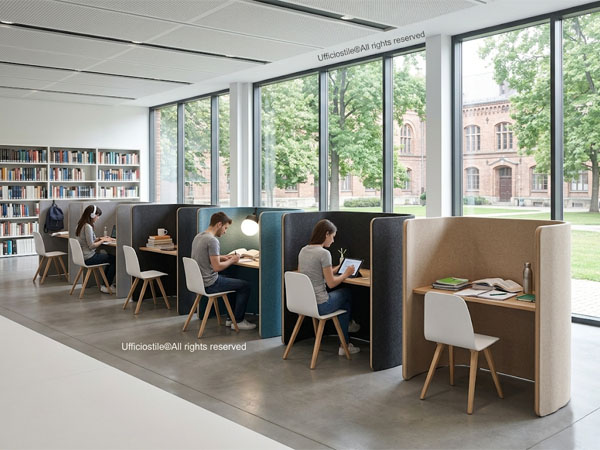
Areas dedicated to high-concentration study, organised with individual tables aligned or arranged in desk rows and adjustable ergonomic seating. The presence of low dividers or acoustic panels between workstations helps preserve visual privacy and reduce distractions, while maintaining an orderly image that is easy for staff to monitor.
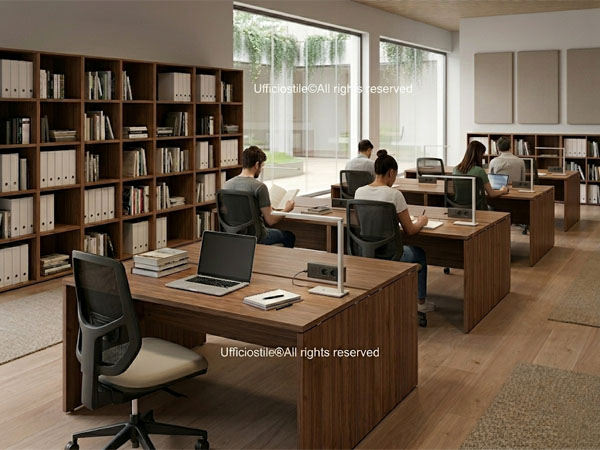
Study rooms with cabled workstations and integrated shelving
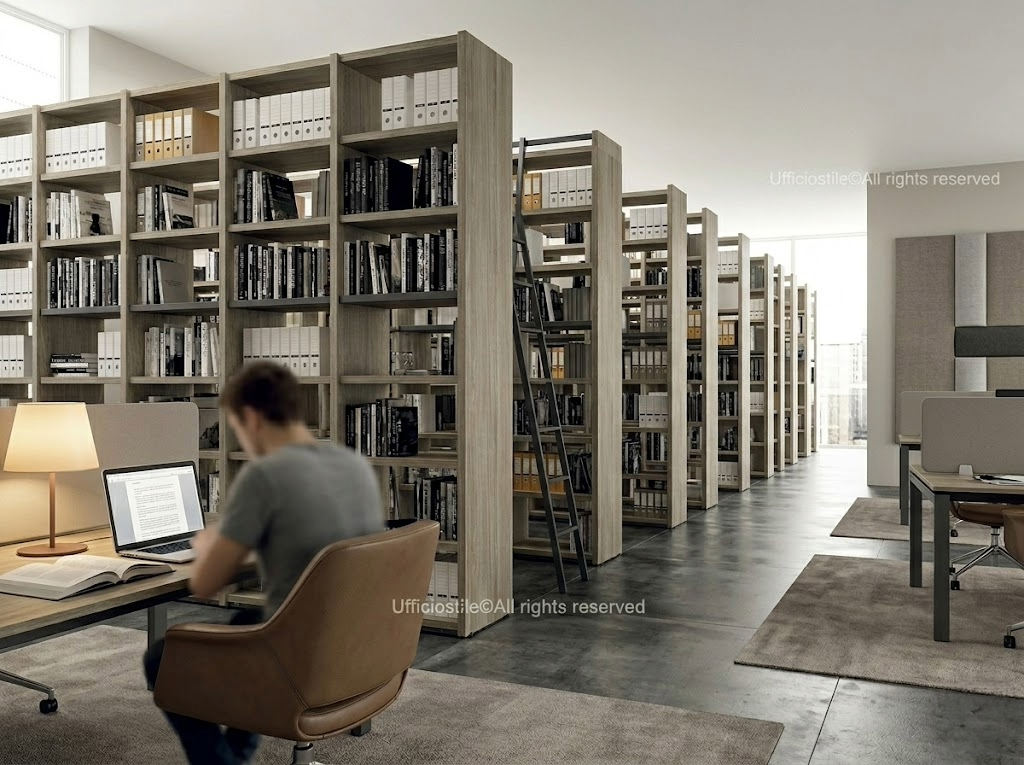
Spaces that combine rows of cabled study tables with integrated sockets and perimeter walls equipped with shelving. Ideal for environments where consultation and study coexist in the same space: students have both printed material and digital resources within reach, without sacrificing comfort and ergonomics.
“Comfort study” areas for informal study and light work
Zones furnished with lounge seating, small tables, poufs and acoustic dividers that allow low-voice conversations or group work on shared projects. These spaces complete the offer of traditional study rooms, accommodating more flexible study modes without compromising the silence of the more technical areas.
Individual study tables designed for concentration and continuous use
Individual study tables are the functional core of every university library. They must provide enough personal space for books, PCs and notes, while also offering visual privacy and order. Matt technical material tops reduce reflections from light sources, improving visual comfort during prolonged sessions. Cabling provision — with cable ports, electrified trays and easily accessible power points — allows students to use their devices safely, without cable tangles on the floor. Table geometry and distance between workstations are calibrated to support concentration and define clear circulation routes, even during peak attendance hours.
Ergonomic seating designed for consecutive hours of study
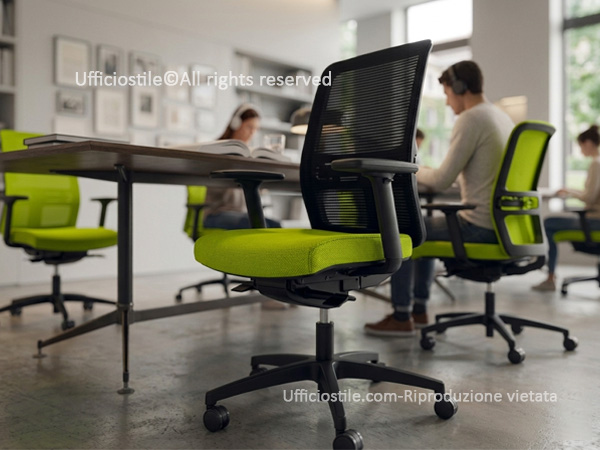
Seating for libraries and study rooms cannot be simple occasional chairs: it must support correct postures for many consecutive hours. Shaped backrests, seats with high-density padding and adjustable mechanisms, including height, tilt and possible lumbar support, help reduce muscle fatigue and maintain concentration. Breathable and fire-retardant upholstery contributes to thermal comfort, even in very busy environments. Designing ergonomic seating means protecting students’ health over the long term and improving the perceived quality of university study spaces.
High-load storage systems for extensive book collections
University book collections require shelving capable of supporting high loads and remaining stable over time. Reinforced metal structures with adjustable shelves make it possible to organise materials by location, format and frequency of use, optimising the usability of volumes. Closed or open side panels, bookends and labelling systems make shelving clear and immediately readable. Where required, shelving can be integrated with anti-tip systems and specific certifications for seismic safety, ensuring protection for people and book collections even in critical conditions.
Quiet zones and “comfort study” areas with different levels of privacy
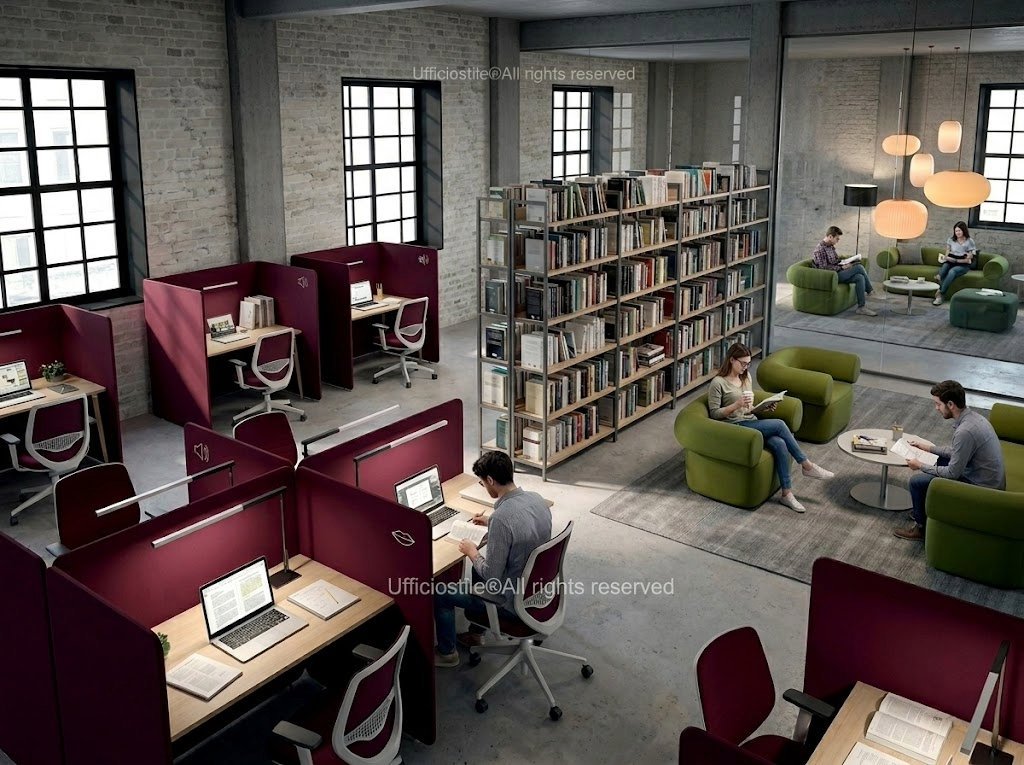
Contemporary libraries are no longer monolithic spaces: alongside traditional reading rooms, more informal areas are created for light study, quick consultation and low-voice project work. Acoustic dividers, individual booths, lounge seating and small tables help create micro-environments with different levels of privacy, so each student can choose the most suitable context for the type of activity. Lighting is calibrated differently: more technical and direct in quiet zones, softer in comfort areas. Clear zoning makes it possible to maintain silence where necessary, while enhancing social interaction and collaboration in dedicated spaces.
FAQ
The most suitable are stable individual tables, with resistant and matt surfaces, sized to accommodate books and devices without overloading the top. The integration of electrical sockets and cable ports is now a standard, because it allows students to study for long periods with laptops and devices always powered and used safely.
Ergonomic seating with shaped backrest, lumbar support, high-density padding and, where possible, adjustable mechanisms is recommended. Breathable and fire-retardant upholstery contributes to thermal comfort and safety, making long stays in the library more sustainable.
Yes, especially in the presence of high book loads. It is important that shelving is designed and certified for significant load capacities and, where required, for seismic safety and anti-tip systems. In this way, both users and the university’s documentary heritage are protected over the long term.
Quiet zones are highly controlled spaces from an acoustic point of view, with technical furniture, targeted lighting and stricter behaviour rules. Comfort study areas, on the other hand, are more informal, with soft seating, flexible layouts and the possibility of speaking quietly or working in small groups, while still maintaining a respectful atmosphere for other users.
Absolutely: the integration of electrical sockets and data points into tables is now a standard in modern university libraries. It allows laptops, tablets and other devices to be used throughout the day without having to move in search of wall sockets, improving the study experience and flow management within the rooms.