
Adjustable desks and sit-stand workstations for dynamic ergonomics
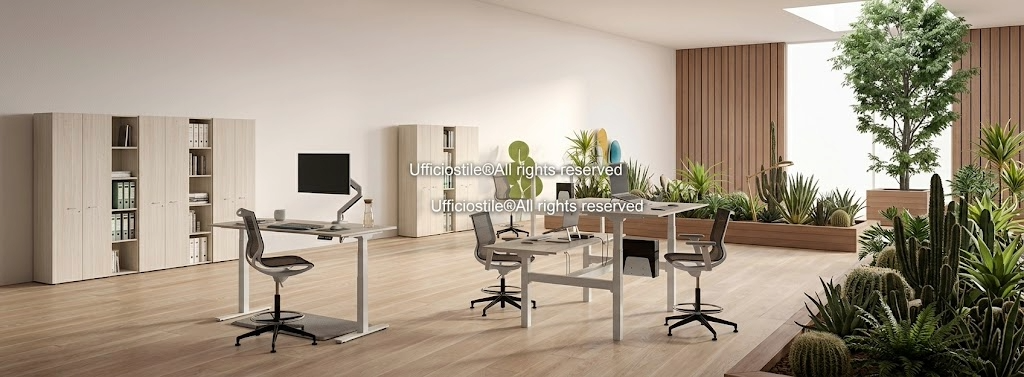
Adjustable desks are a pillar of modern ergonomics, allowing users to alternate between seated and standing posture throughout the day. This dynamic reduces muscle fatigue, supports joint wellbeing and improves productivity. Stable structures compliant with UNI EN standards absorb movement and loads evenly, ensuring smooth transitions and safe, prolonged use.
Technical specifications
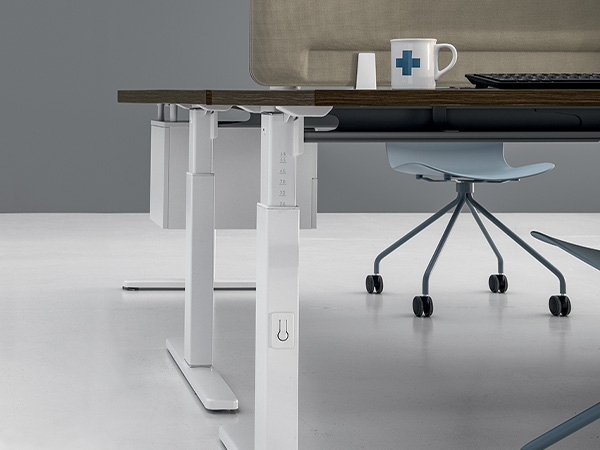
- Indicative height adjustment from 65–130 cm with smooth and silent lifting systems, designed to quickly alternate between seated and standing posture without perceptible vibration.
- Structures certifiable according to UNI EN 527, with high stability and rigidity at every height, suitable for intensive daily use in operational workstations, executive offices and coworking spaces.
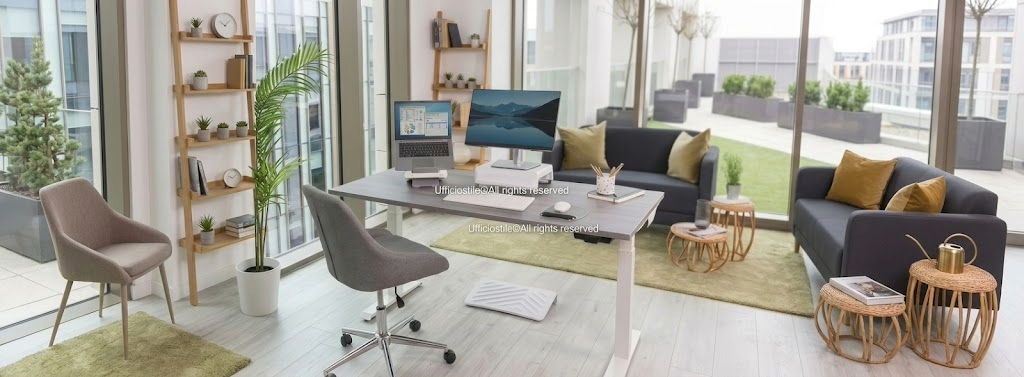
- Low-emission matt soft-touch tops, with anti-reflective finishes to reduce visual fatigue and rounded ergonomic edges that support the forearms, avoiding compression and microtrauma.
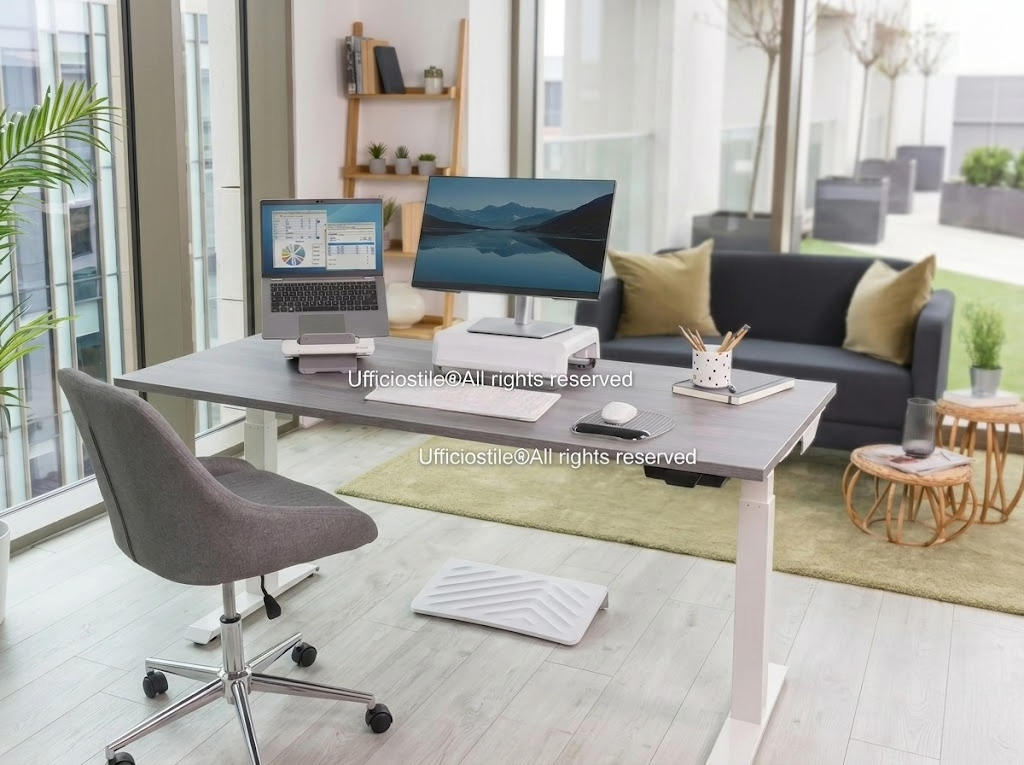
- Integrated cable management through ducts, cable ports, vertical cable columns and power modules, prepared for adjustable monitor arms and IT devices supporting hybrid work.
- Workstation design compliant with UNI EN ISO 9241-5 and health and safety criteria, with particular attention to elbow–top alignment, monitor positioning and freedom of movement.
Typical configurations
Dynamic operational workstations
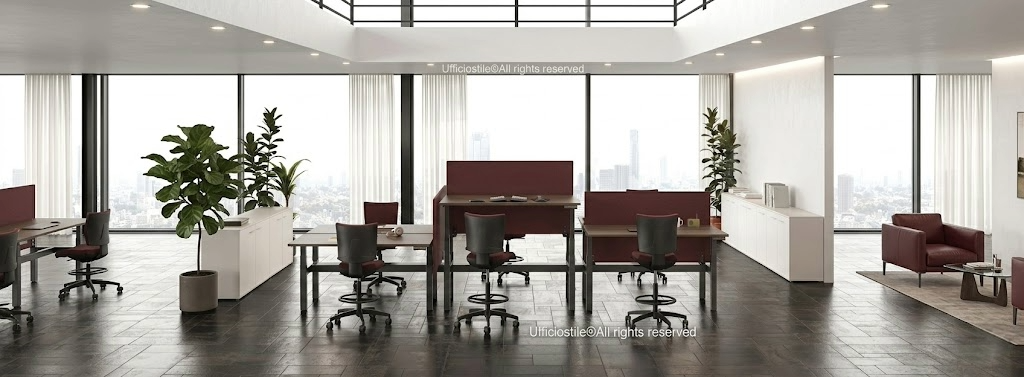
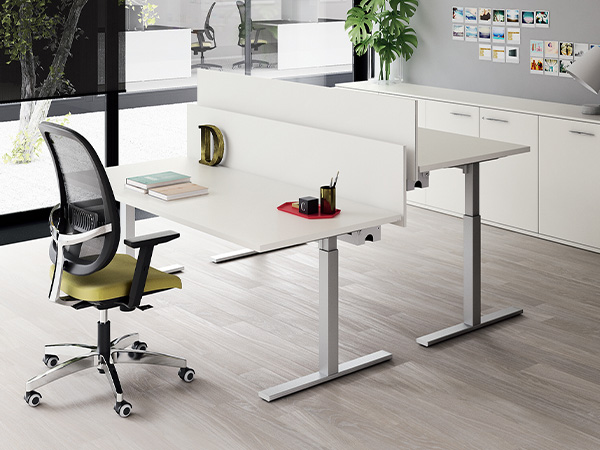
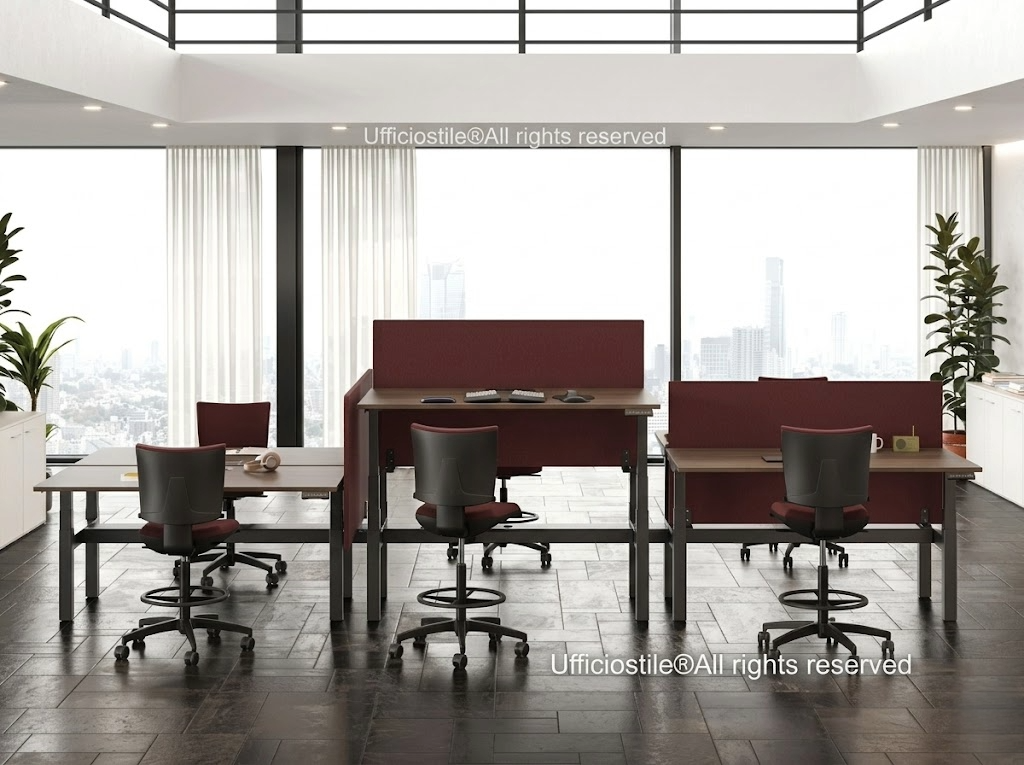
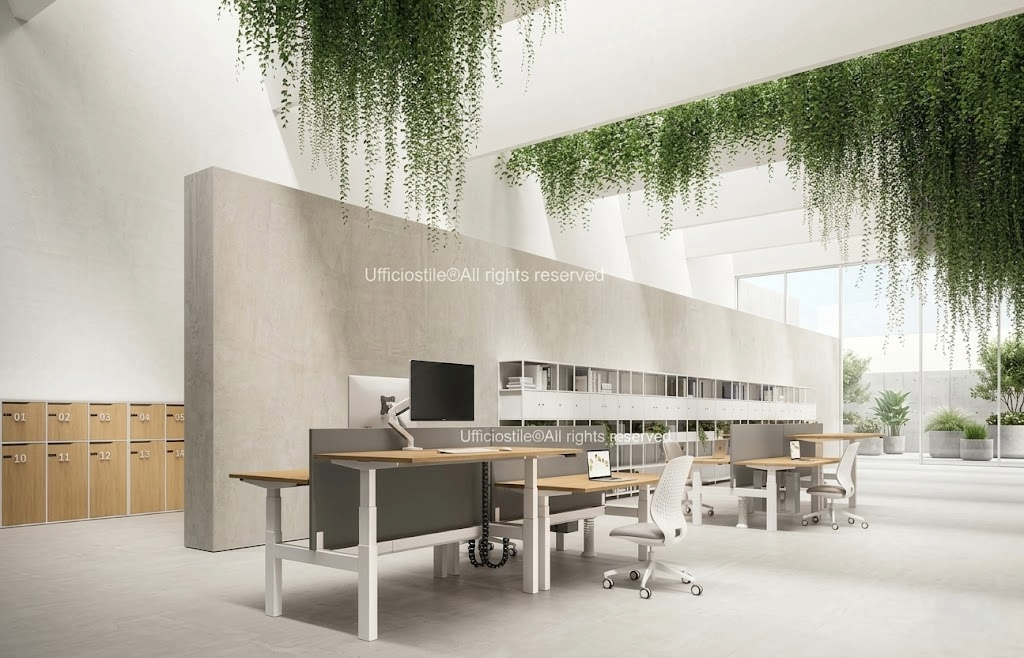
Sit-stand desks for operational teams with individual adjustment, soft-touch tops and integrated cable management; suitable for reducing sedentary behaviour, encouraging micro-movement and supporting comfort during prolonged screen-based activities.
Executive environments with adjustable desks
Executive layouts that integrate height-adjustable desks with premium surfaces, ergonomic managerial chairs and coordinated cabinets, combining representative value, ergonomics and postural flexibility.
Coworking, shared desks and sit-stand meeting areas
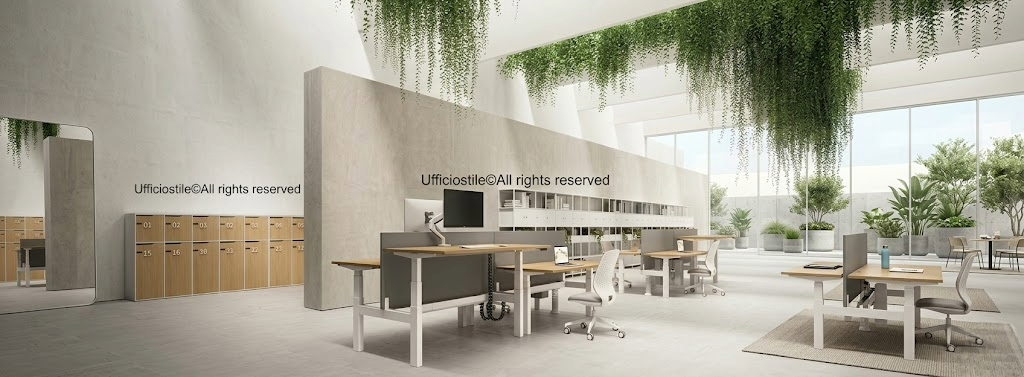
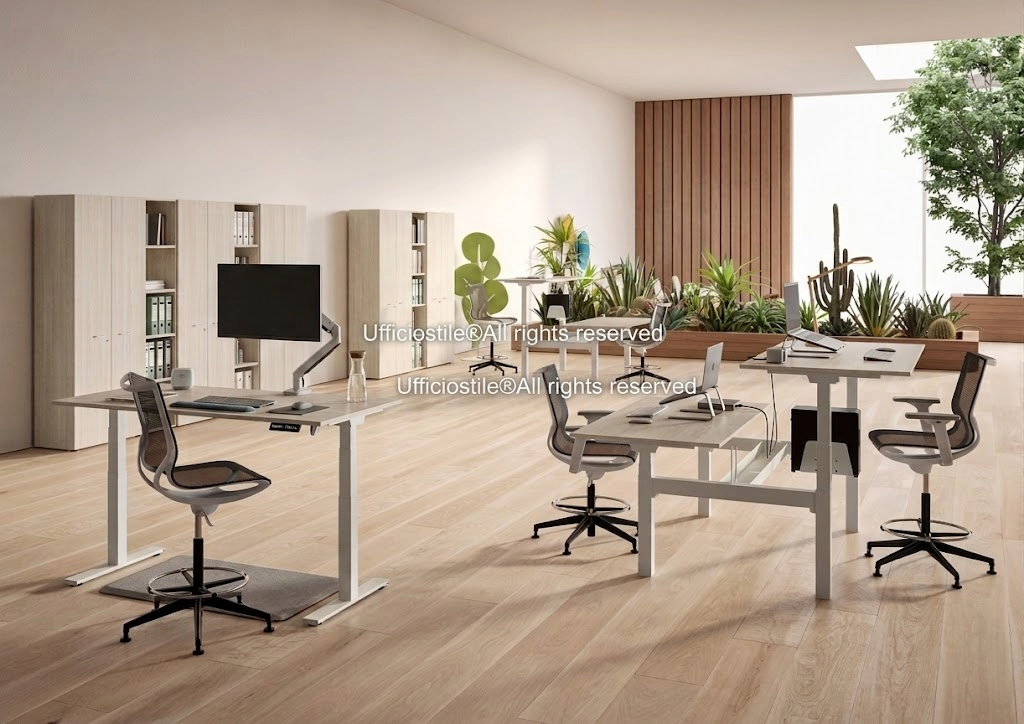
Shared workstations and small meeting points with sit-stand tables, designed for hybrid work, frequent rotations and alternate standing/seated use; ideal for coworking spaces, corporate hubs and informal collaboration areas.
Sit-stand desks with smooth adjustment and certified stability
Sit-stand desks enable windows of constant movement, alternating seated and standing posture with precise and silent adjustments. The EN 527-certified structure ensures resistance and stability even in intensive-use configurations, while the lifting system guarantees continuous height changes without perceptible vibration.
This dynamic ergonomics reduces muscular stress and joint tension, encouraging a more natural posture and a better balance between phases of static concentration and moments of activity throughout the working day.
Ergonomic soft-touch tops for visual and tactile comfort
Soft-touch surfaces improve the user experience thanks to matt finishes that reduce reflections and visual fatigue. Ergonomic edges support the forearms, distributing loads more effectively and limiting pressure on support points during long operational sessions.
Low-emission materials contribute to better indoor air quality and make the workstation more comfortable and safer over time, particularly in environments where time spent at the workstation is continuous.
Integrated management of cabling and devices for operational order
Adjustable desks integrate cable management systems that maintain order and safety even during height changes. Ducts, cable ports, retractable plugs and power columns support operational continuity and quick access to laptops, docking stations and peripherals.
This organisation reduces clutter and trip risks, facilitates cleaning and makes the transition between seated and standing posture smoother, keeping the worktop free and visually ordered in every configuration.
Anthropometric adaptability and design compliant with UNI standards
Height adjustments make it possible to adapt the workstation to the user’s body dimensions, supporting correct alignment between elbows, monitor and keyboard. Design follows UNI EN ISO 9241-5 guidelines and health and safety principles to ensure biomechanical comfort and prevention of overloads.
Attention to the anthropometric dimension makes sit-stand desks suitable for a broad and diverse user population, improving performance and wellbeing in every operational context: from traditional offices to hybrid and shared spaces.
FAQ
Yes, they reduce sedentary behaviour and joint tension by allowing posture variation throughout the day. Alternating seated and standing work helps distribute loads more effectively and prevent localised fatigue.
Yes, if the structure is stable and certifiable according to EN 527. Sit-stand systems are designed for intensive daily use, provided they are correctly sized for loads and the number of daily adjustment cycles.
In many cases, yes: the ability to move, change posture and reduce muscular stiffness supports focus, energy and perceived comfort, with positive effects on work quality over the medium to long term.
Yes, because they reduce reflections on the worktop and visual fatigue caused by light sources and monitors. In addition, the softer tactile feel is more comfortable for supporting the forearms and hands.
Adjustable monitor arms, cable management systems and, where necessary, footrests and anti-fatigue mats are recommended. These accessories complete workstation ergonomics and enhance the benefits of the adjustable desk.
Request a complete ergonomic design project to integrate sit-stand workstations into your office.