Ergonomic sit/stand workstations for dynamic and healthy work
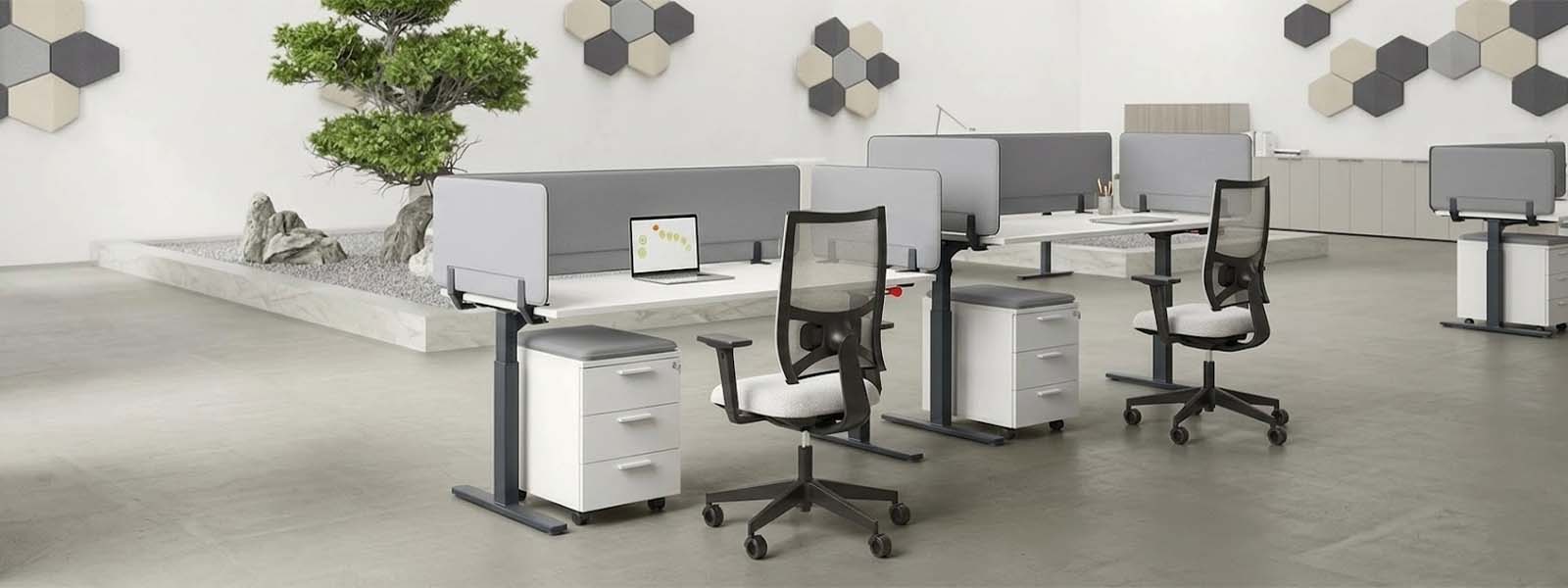
Sit/stand workstations for individual work introduce a more advanced operational logic compared to a fixed desk: the value lies not only in height adjustment, but in the possibility of building a more dynamic workstation, more adaptable and more consistent with contemporary work rhythms. In a well-structured office project, the sit/stand desk becomes an applied ergonomics asset, supporting task organisation and perceived workstation quality. Sit/stand workstations are height-adjustable desks designed to allow alternation between seated and standing work during the day. They are used in individual workstations to increase flexibility of use, improve top adaptability to different body types and build operational environments that are more ergonomic, contemporary and aligned with a dynamic approach to work.
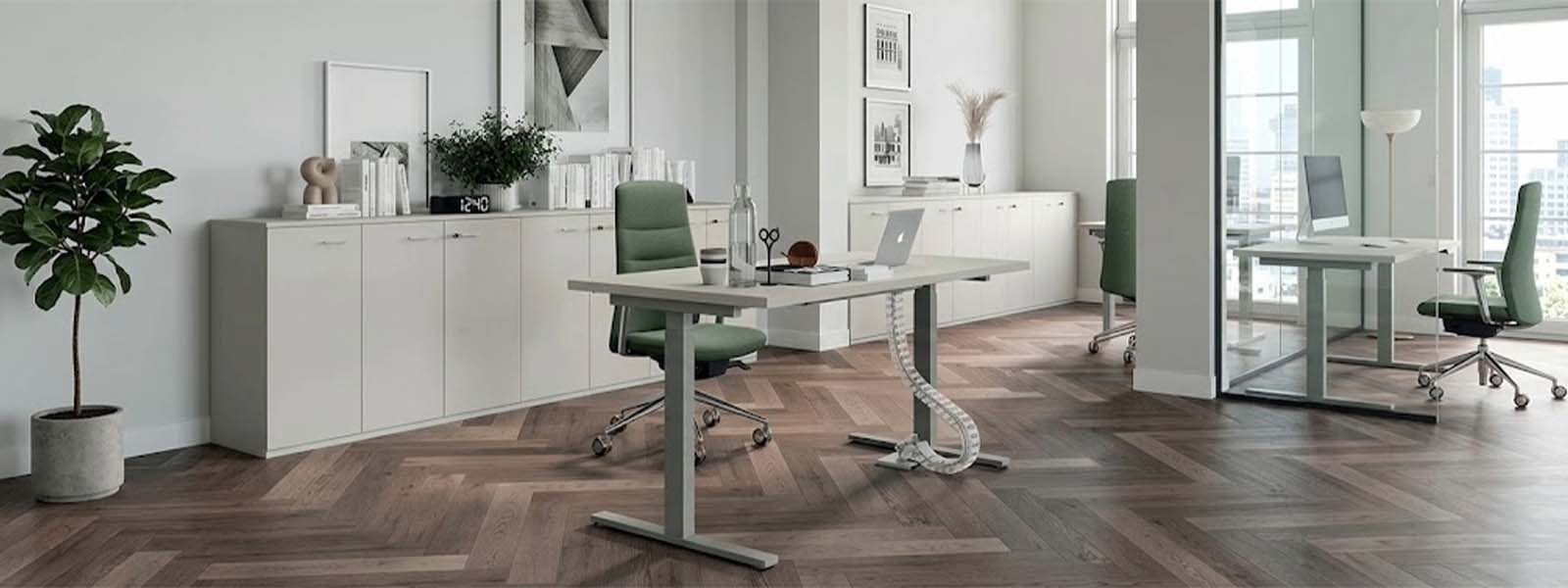
Technical specifications
- Sit/stand frames with 2- or 3-stage electric columns, load capacity suitable for professional use and smooth movements even at full load.
- Steel structure with adjustable feet and stiffening crossbars to ensure transverse stability even at maximum heights.
- Professional low-noise motors, below 50 dB, so as not to disturb colleagues and meetings in open spaces.
- Indicative recommended range of 65–70 cm / 120–130 cm to cover different heights and working styles, seated and standing.
- High-resistance technical melamine, Fenix® or HPL tops, with suitable thicknesses to maintain rigidity during raising and lowering.
- Rectangular or shaped forms to improve wraparound, operational distance and comfort in both seated and standing positions.
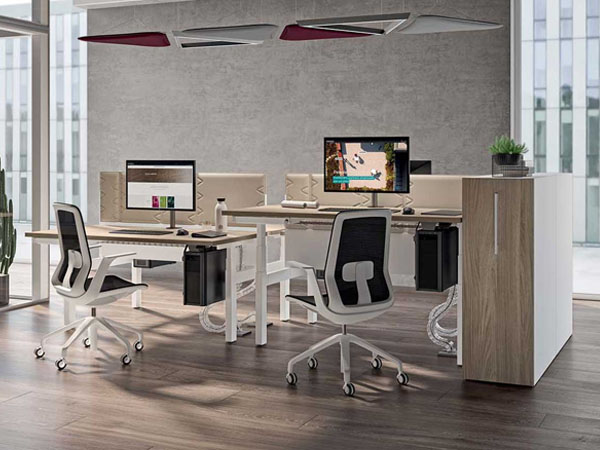
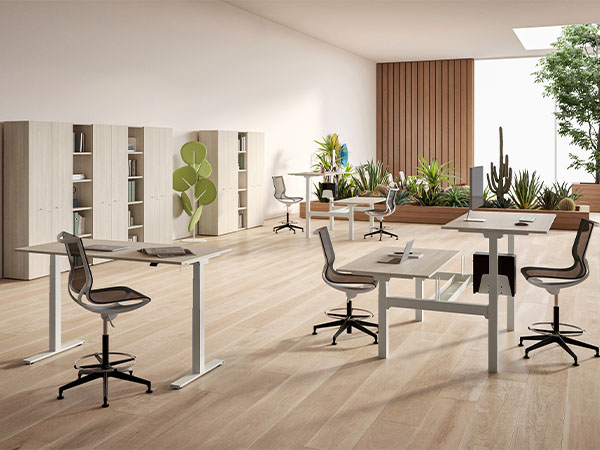
Typical configurations
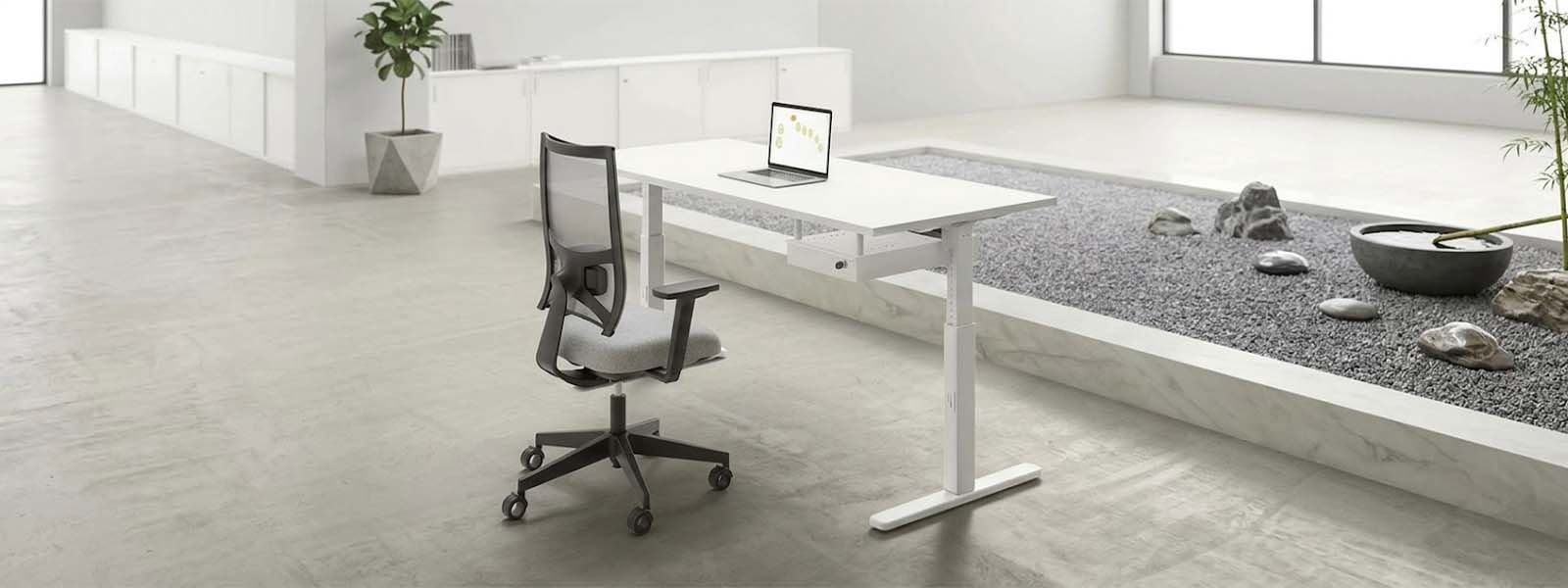
Ergonomic single sit/stand workstation
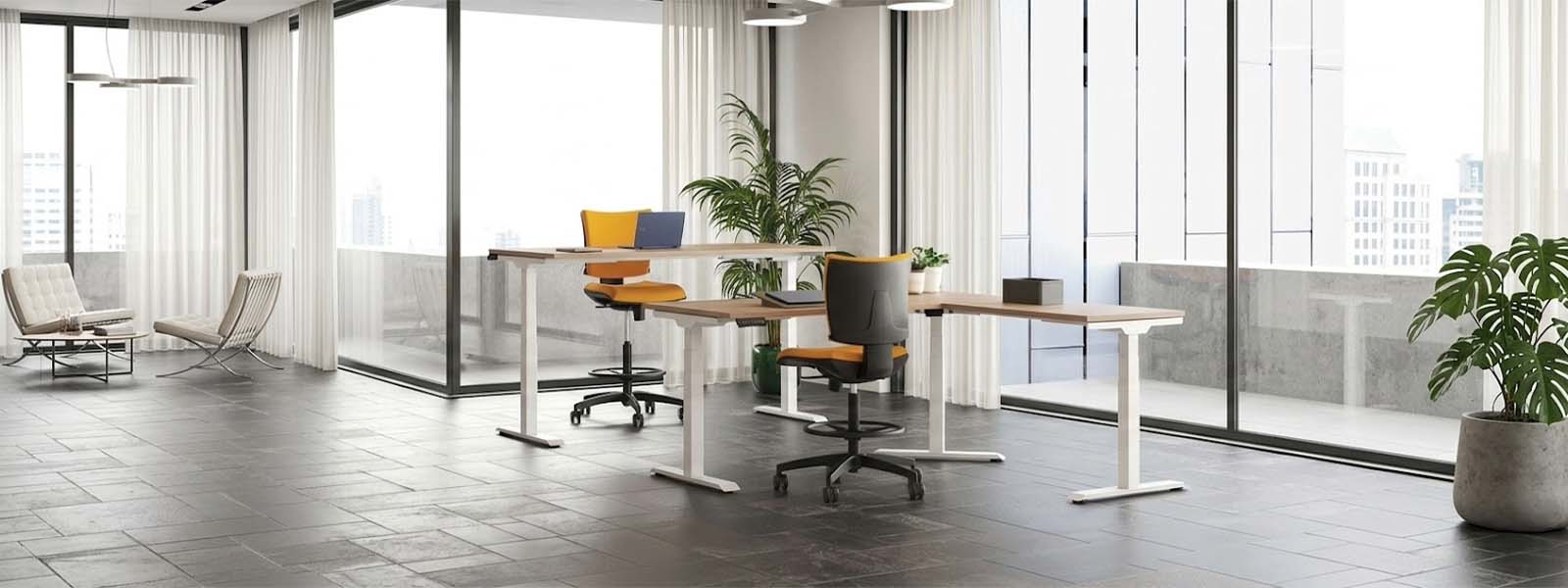
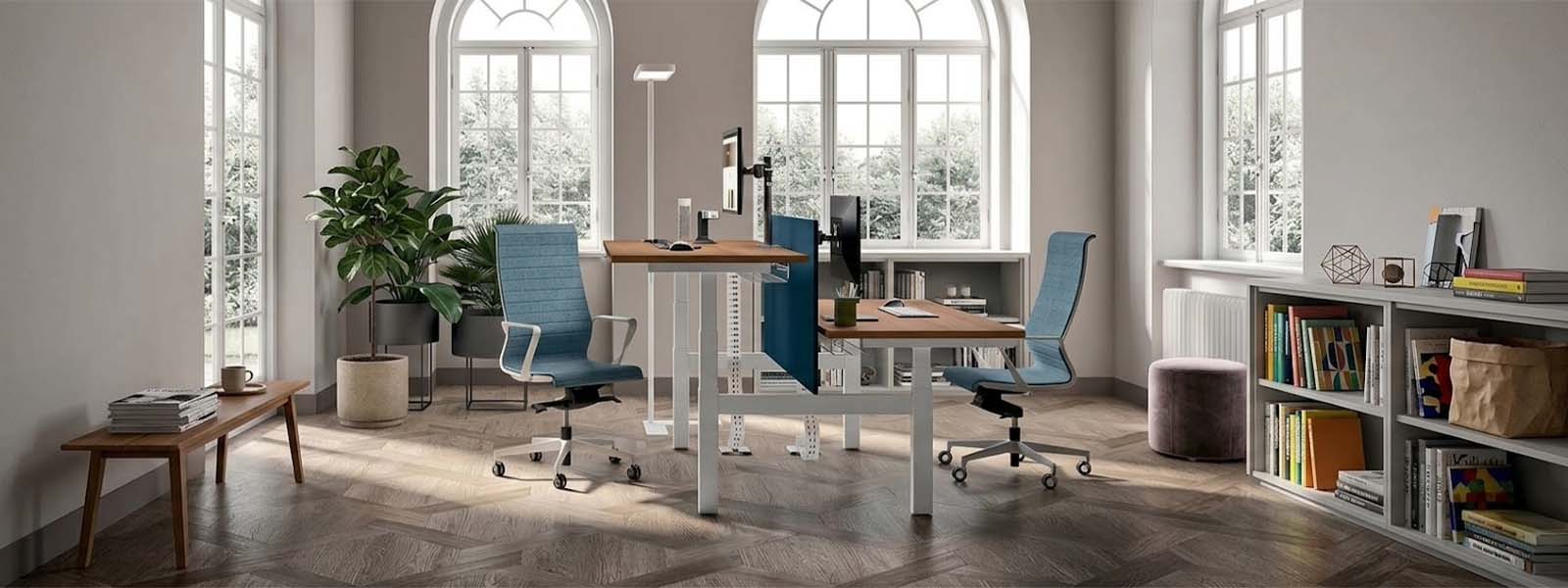
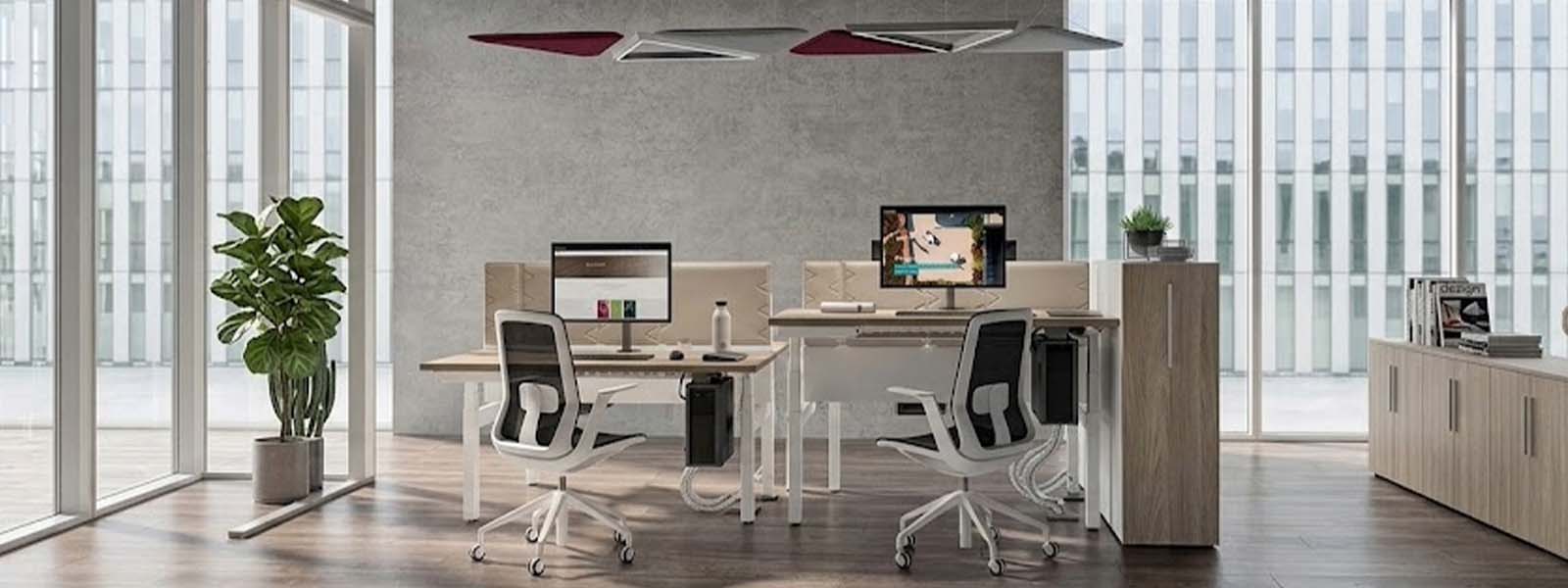
Electrically adjustable desk with 140–160 × 70–80 cm top, 3-stage column and silent motors. Ideal for knowledge workers, designers and developers who alternate deep concentration phases with standing work during phone calls, reading or review moments.
Sit/stand bench for hot desking and team working
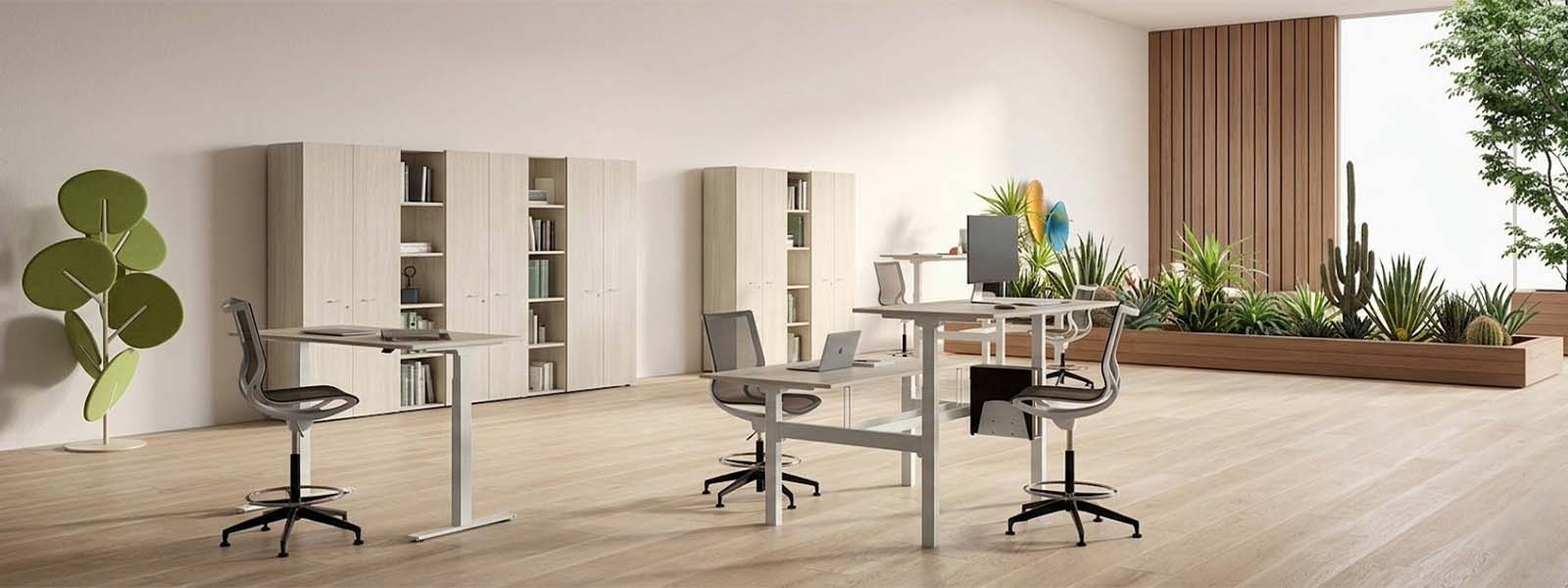
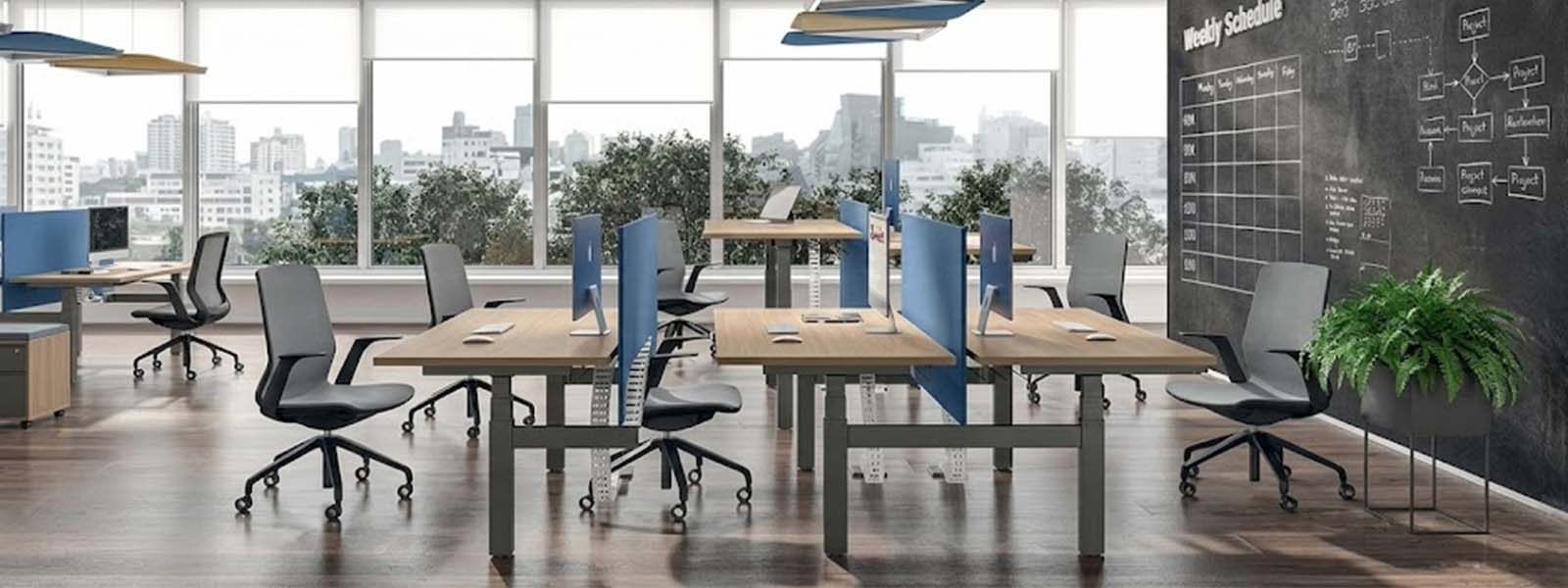
Double or multiple bench with independent adjustment for each user, designed for shared environments and workstation rotation. Rapid adjustment makes it possible to adapt the desk in just a few seconds, improving comfort and desk-sharing efficiency.
Sit/stand corner for focus and active micro-breaks
Compact workstation with shaped top, ideal as a support point for short sessions, quick calls or standing focus moments. Perfect near team spaces, creative areas or passage corridors to encourage micro-variations in posture during the day.
Dynamic ergonomics to reduce fatigue and improve focus
Sit/stand workstations support micro-variations in posture that are fundamental for health. Alternating seated and standing work reduces lumbar compression, improves circulation and increases cerebral oxygenation. This translates into less cervical and muscular stiffness, greater mental clarity and better resistance to fatigue in analytical or long-duration activities. Posture is no longer static, but becomes an active part of everyday wellbeing.
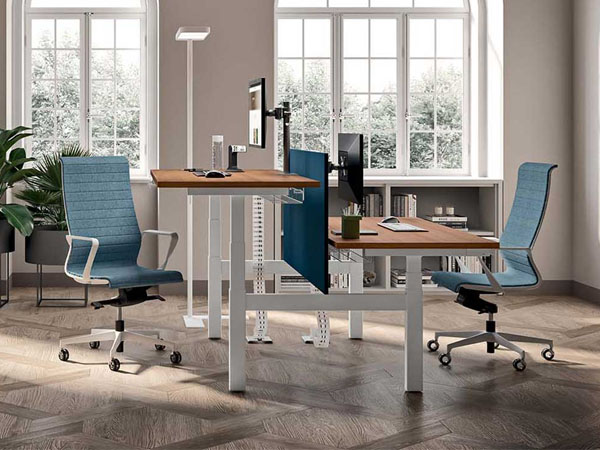
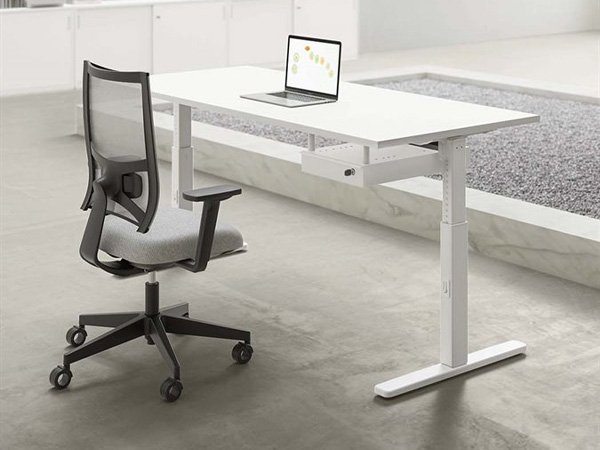
Structure and electric columns: stability, load capacity and low noise
The quality of electric columns is decisive: it influences stability, vibration and durability over time. Two-stage frames offer standard performance, while three-stage frames guarantee wider travel, greater vertical rigidity and smoother movements. In open-space contexts, low noise is essential: motors below 50 dB allow discreet adjustment, without distracting colleagues or interrupting ongoing meetings. Adjustable feet, steel frames and reinforced crossbars complete a structure designed for intensive use.
Recommended heights and ideal use in different roles
A good sit/stand workstation must cover a wide height range, indicatively between 65–70 cm and 120–130 cm. This range includes most body heights and different working styles. Graphic designers, planners, developers and knowledge workers benefit from standing work during analytical or creative phases, while in shared environments or hot desking, instant electric adjustment allows the workstation to be adapted in just a few seconds to each user, increasing perceived comfort and operational efficiency.
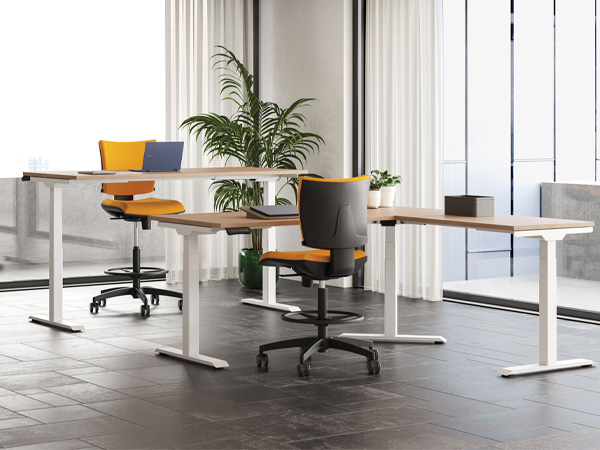
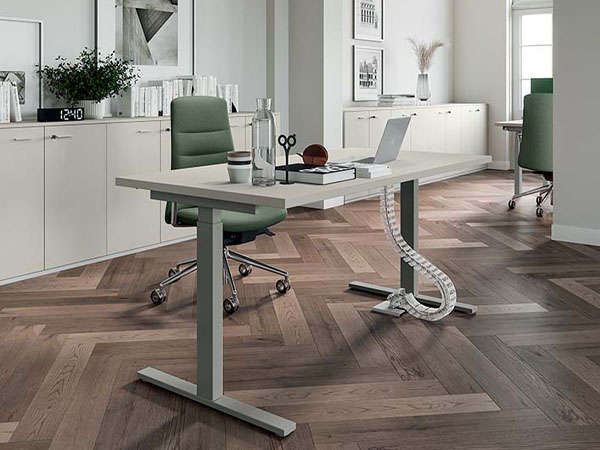
Tops, shapes and materials for rigidity and tactile comfort
The worktop must remain rigid during raising and lowering movements, without annoying vibrations. Technical melamine, Fenix® and HPL are ideal surfaces for sit/stand workstations: resistant to impacts, pleasant to the touch and easy to clean. Rectangular tops offer maximum versatility, while shaped forms improve wraparound and reduce the operational distance when standing. The choice of finishes takes natural light into account: light tones visually expand poorly lit environments, while more intense colours are balanced in very bright and contemporary spaces.
FAQ
The main benefits concern improved circulation, reduced sedentary behaviour, increased cerebral oxygenation, reduced back pain and greater mental clarity. Alternating seated and standing posture helps distribute loads better and reduce accumulated physical stress.
Two-stage columns are suitable for standard use, while three-stage columns offer wider travel, greater stability and less vibration. For intensive use, shared environments and users with very different heights, three-stage systems are recommended because they are more versatile and higher-performing over the long term.
In open spaces and shared rooms, noise level is a key factor. Systems below 50 dB make it possible to adjust height without disturbing colleagues or interrupting meetings and calls. Silent adjustment makes frequent use of the sit/stand function more natural during the working day.
In general, widths from 120 to 180 cm and depths between 70 and 80 cm are recommended. For large monitors or multi-monitor configurations, a depth of at least 80 cm is preferable, in order to maintain the correct viewing distance both seated and standing.
No. Consumption occurs only during raising and lowering movement and is very low. At rest, the systems absorb only a few watts; this allows daily use without significant impact on office energy consumption, especially when included in a broader energy efficiency strategy.