Ergonomic seating for shared spaces
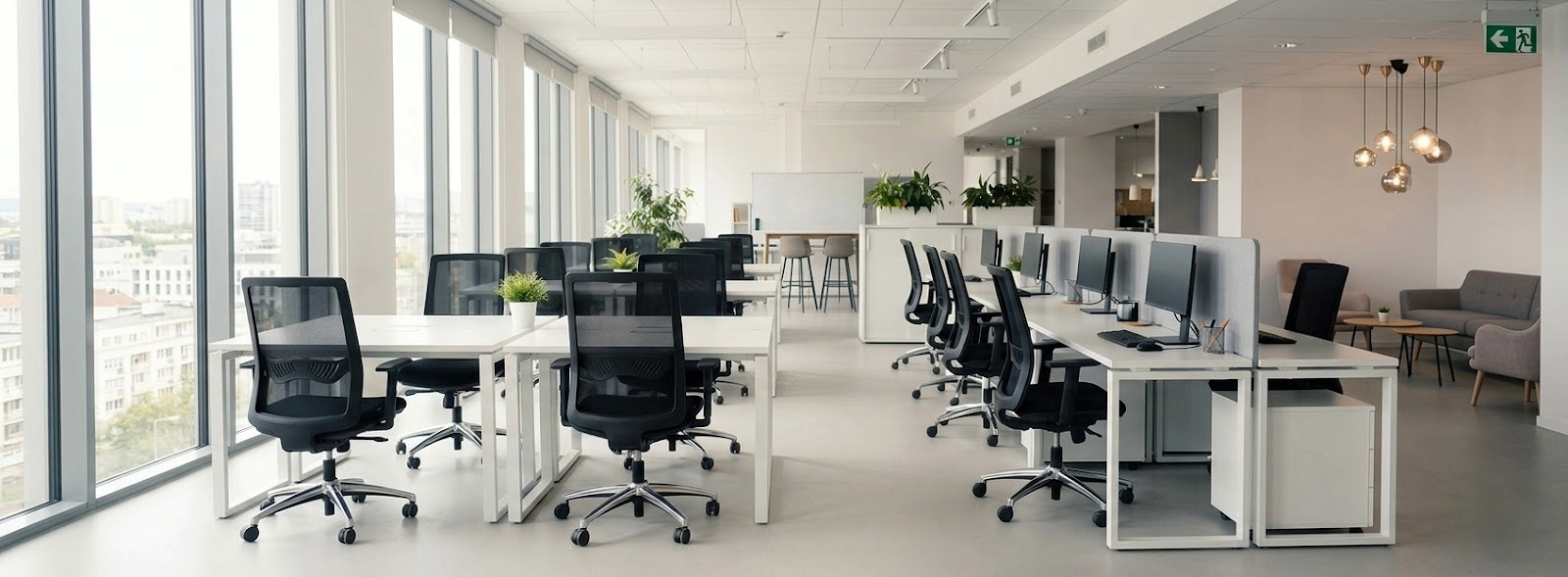
In open spaces, ergonomic seating must not only guarantee individual comfort: it must work well within a system made up of modular workstations, continuous circulation, operational density and coexistence between different users. A good task chair for shared spaces improves work continuity, visually lightens the layout and makes the environment more readable, tidier and easier to live in throughout the day.
Ergonomic seating for shared spaces consists of operational chairs designed for open spaces, bench workstations and collective work areas. They support correct posture, adapt to different users and maintain comfort, visual order and design coherence in high-intensity environments. In Ufficiostile master content, the open space integrates ergonomic operational seating with references to EN 1335, synchro mechanisms, 4D adjustments and breathable upholstery for intensive use.
Synchro chairs for operational teams
The natural movement that supports work.
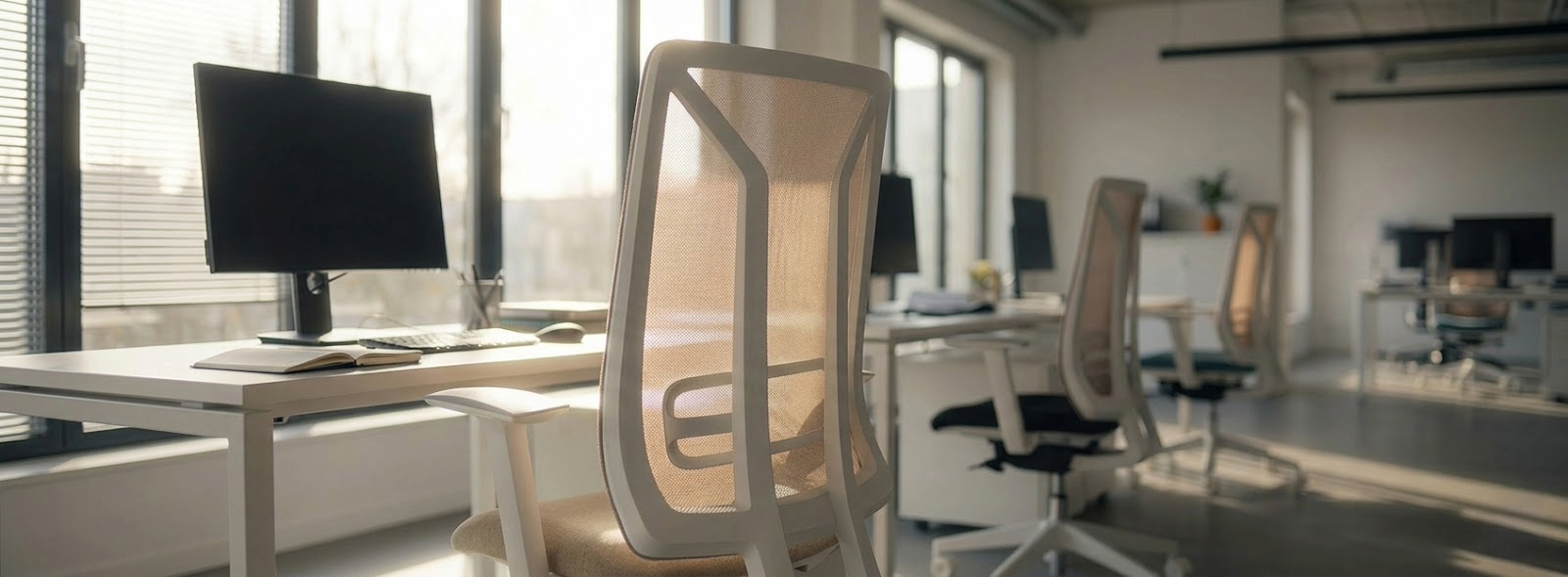
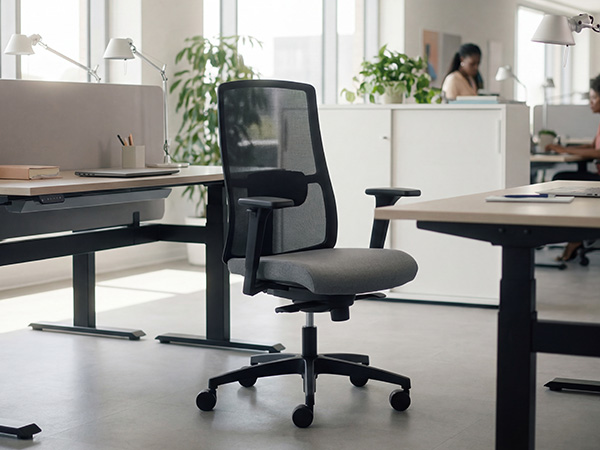
Chairs with synchro mechanisms are particularly suitable for shared spaces because they offer more dynamic and intuitive comfort than more basic solutions. In an open space, the advantage is not only ergonomic: a chair that better follows movements reduces perceived fatigue, supports longer continuity at the workstation and improves everyday work quality for administrative, operational and design teams. They are the right choice when looking for a serious, professional task chair suitable for users who work at the workstation for many hours, without making the user experience too complicated.
4D chairs for different users
One product family, multiple body types well managed.
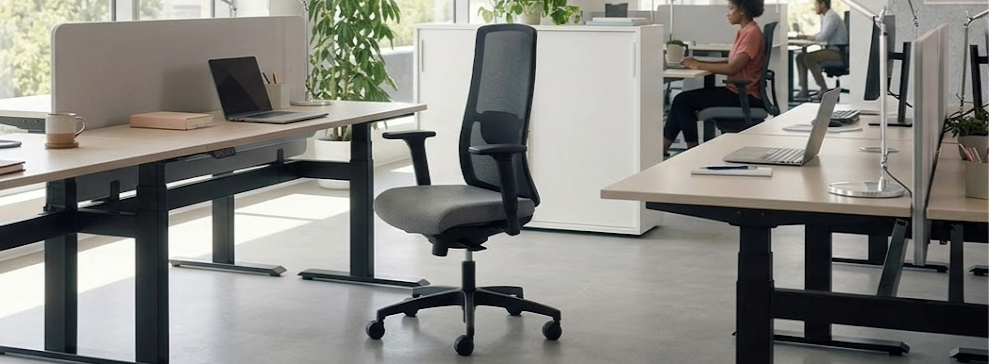
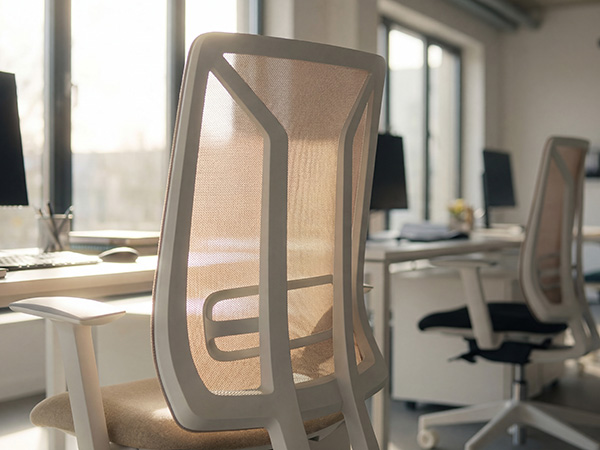
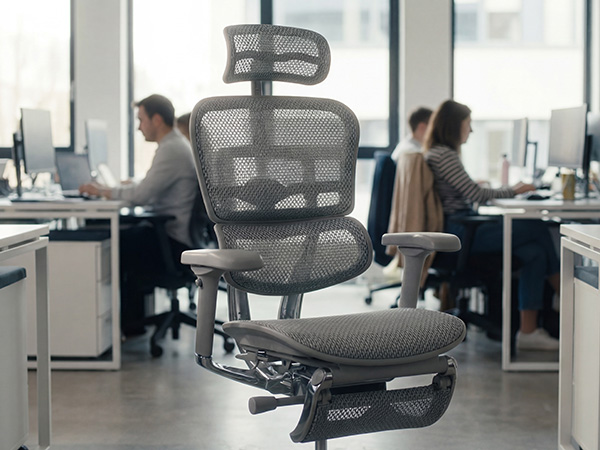
In shared open spaces, workstations are not always used by the same person, or users with very different habits and body types coexist. This is why chairs with more advanced adjustments, including 4D armrests, have concrete value: they allow more precise personalisation of the support point and make the setup more adaptable without disrupting the project. They are particularly useful in corporate environments, flexible offices and departments where layout standardisation must coexist with a good level of ergonomic fine tuning, improving real comfort and the perceived quality of the workplace.
Intensive-use chairs for shared use
When comfort must truly last throughout the day.
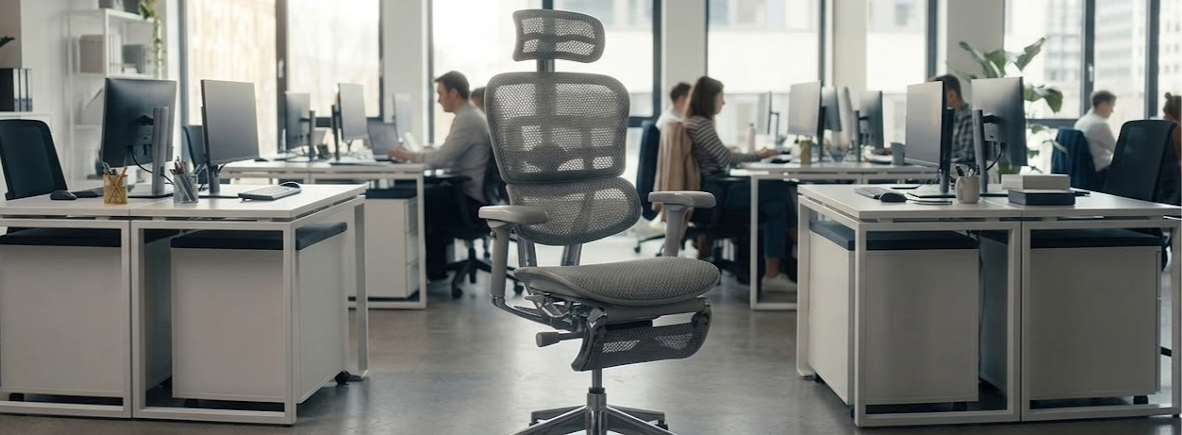
Intensive-use chairs are the most appropriate solution when the open space hosts functions that work at a constant pace and spend long periods at the desk. In these cases, the chair is not an accessory, but a comfort infrastructure: it must maintain support, consistent response and reliability even after many hours of use. They are ideal for operations, customer care, administration, finance and technical areas where productivity also depends on the chair’s ability to support the body without stiffening it. In UX terms, this means less perceived fatigue and a workstation that remains credible until the end of the day.
Compact chairs for high-density spaces
Optimise space without making it look compressed.
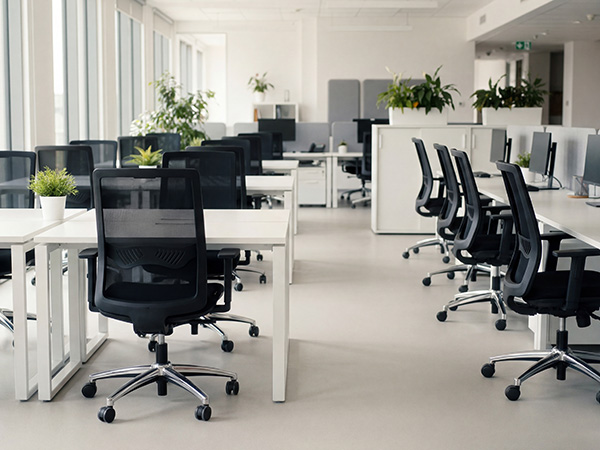
Compact ergonomic chairs are designed for open spaces where the number of workstations is high and every element must contribute to an accurate balance between comfort and footprint. A well-designed compact task chair avoids the overcrowded effect, improves circulation fluidity and makes the overall office layout easier to read. They are highly effective in contract projects, large departments and layouts where density must be controlled intelligently, not simply compressed. The advantage for the user is a less chaotic environment that is easier to use; for the company, better space management without overly weakening the seating experience.
Benches for team tables
More operational informality, more immediate collaboration.
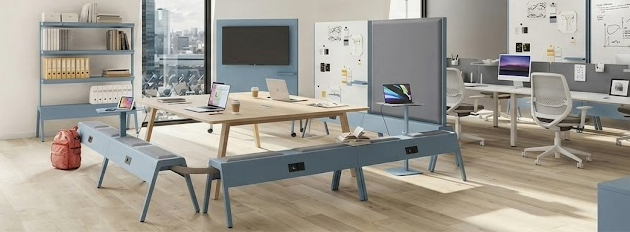
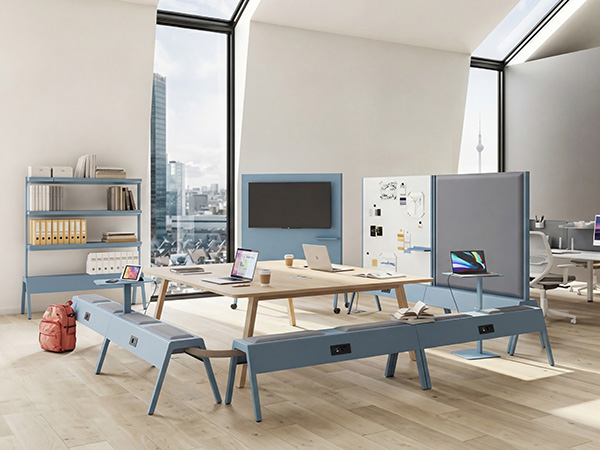
Benches for team tables are a very interesting solution in open spaces when the goal is not to replicate the classic operational workstation, but to create a more fluid, dynamic and relational shared work area. Compared to the traditional task chair, they introduce a lighter and more collaborative language, ideal for project tables, quick meetings, discussions between colleagues and informal co-working moments. From a user experience perspective, they work well because they make the space less rigid, support more agile occupancy and help clearly distinguish individual concentration areas from zones dedicated to interaction, brainstorming and teamwork.
Coordinated contract seating
Scalability, coherence and simpler maintenance.
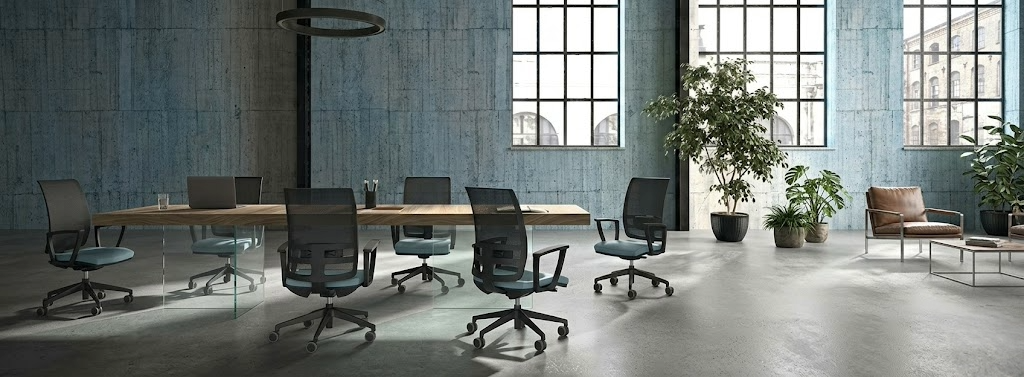
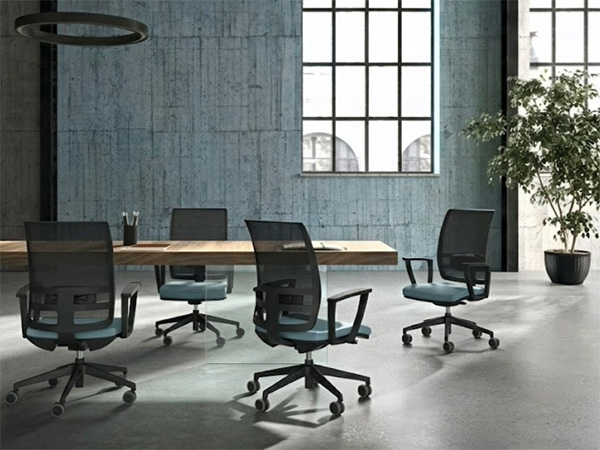
Coordinated contract seating is the most effective response when the open space involves many workstations and requires a product family capable of supporting rollouts, replacements and future expansions without losing coherence. In a shared space, visual continuity matters greatly: chairs that differ too much from one another fragment the environment and reduce perceived quality. A well-selected contract solution, on the other hand, makes it possible to manage volumes, budgets and maintenance with greater control, while maintaining a professional and orderly image. It is the right choice for headquarters, operational sites and multi-team projects where UX also depends on the clarity of the whole.
FAQ – ergonomic seating
The most suitable chairs are those that balance individual comfort, visual lightness and ease of collective management. In an open space, choosing a chair that is comfortable in abstract terms is not enough: you need to assess how it fits into a system of benches, fluid circulation and shared workstations. This is why mesh task chairs, synchro chairs, models with more advanced adjustments and coordinated contract families work very well, because they improve both the individual experience and the overall readability of the layout.
It depends on the result you want to achieve. Mesh is often more effective in open spaces because it visually lightens the workstation landscape and communicates greater freshness and contemporaneity. Upholstery, on the other hand, may feel more welcoming at first and is better suited to contexts where a less technical image is desired. In very dense shared spaces, however, mesh often has an important design advantage: it makes the environment less heavy and more breathable, including from a visual point of view.
They matter a lot when the open space is used by different users or when the company wants to offer a more adaptable workstation without having to change model from team to team. 4D adjustments are not a marketing detail: they help better personalise the contact point with the chair and make it easier to find a credible configuration for different body types and working methods. In Ufficiostile master content, 4D adjustments are in fact referenced precisely as part of the technical value of the ergonomic chair.
EN 1335 is an important reference in the world of operational seating because it identifies a family of requirements and criteria linked to office chairs designed for professional use. For those purchasing or designing, it is not just an acronym: it is a useful indicator to understand whether the chair sits within a more serious perimeter consistent with everyday work. In the Ufficiostile Open Space master, the ergonomic chair is explicitly presented as an “EN 1335 chair”, together with synchro mechanisms and 4D adjustments, therefore as a qualifying component of the solution.
Not necessarily. They penalise comfort only when compactness comes from a pure cost-saving logic and not from a well-calibrated design. A well-designed compact chair can be highly effective in high-density open spaces, because it frees up circulation routes, avoids visual overcrowding and maintains correct workstation use. The point is not to reduce the chair, but to find the right balance between footprint, support and layout coherence, so that the user perceives more order without feeling that the workstation is compromised.