
Energy efficiency in work environments: lighting, climate control and consumption
Energy efficiency in modern offices is a strategic element for reducing operating costs, improving user comfort and supporting ESG objectives. Low-consumption LED lighting, intelligent HVAC systems and real-time monitoring platforms make it possible to optimise energy use, limit waste and create healthier and more sustainable work environments.
Technical specifications
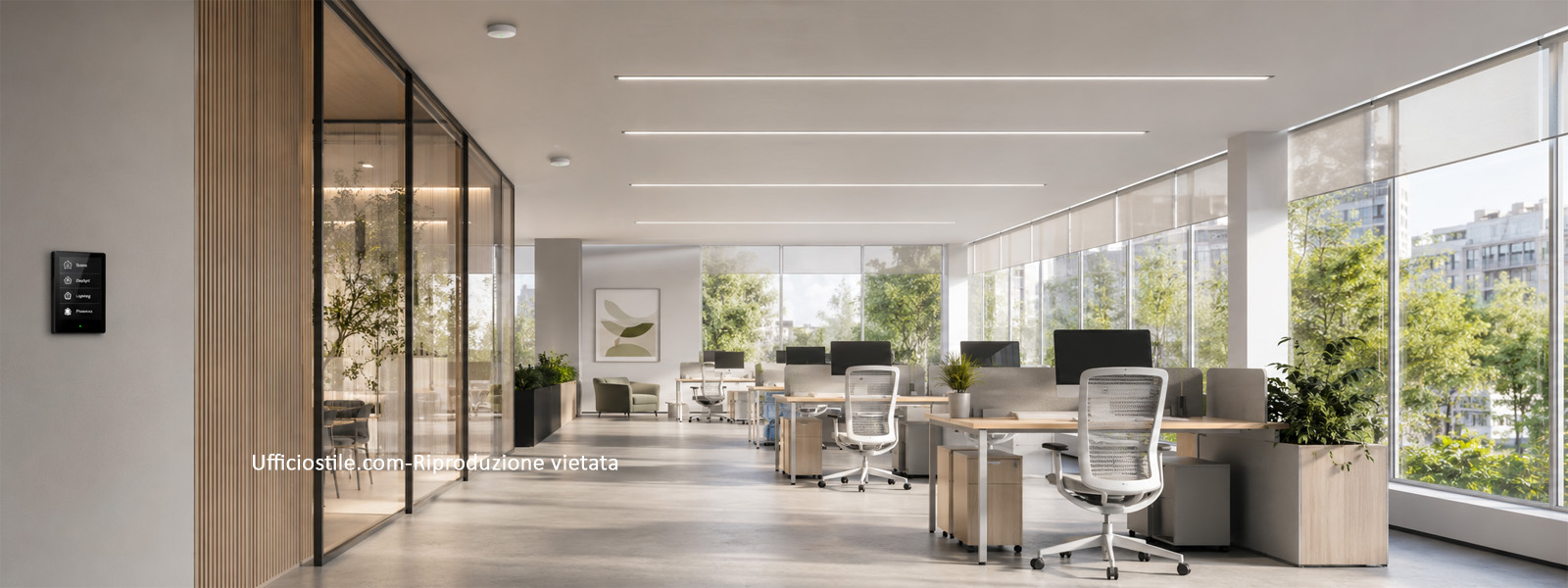
- Low-consumption LED lighting systems with presence sensors and automatic brightness adjustment.
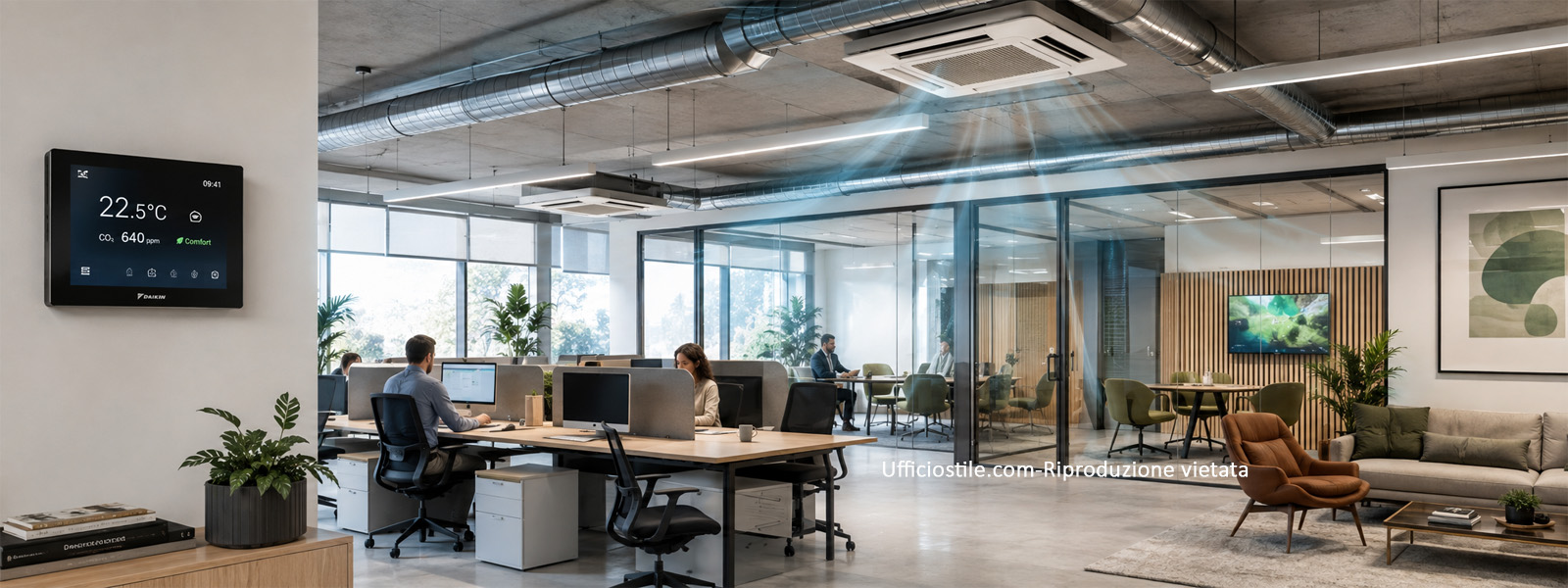
- New-generation smart HVAC systems with predictive algorithms, airflow modulation and intelligent temperature management.
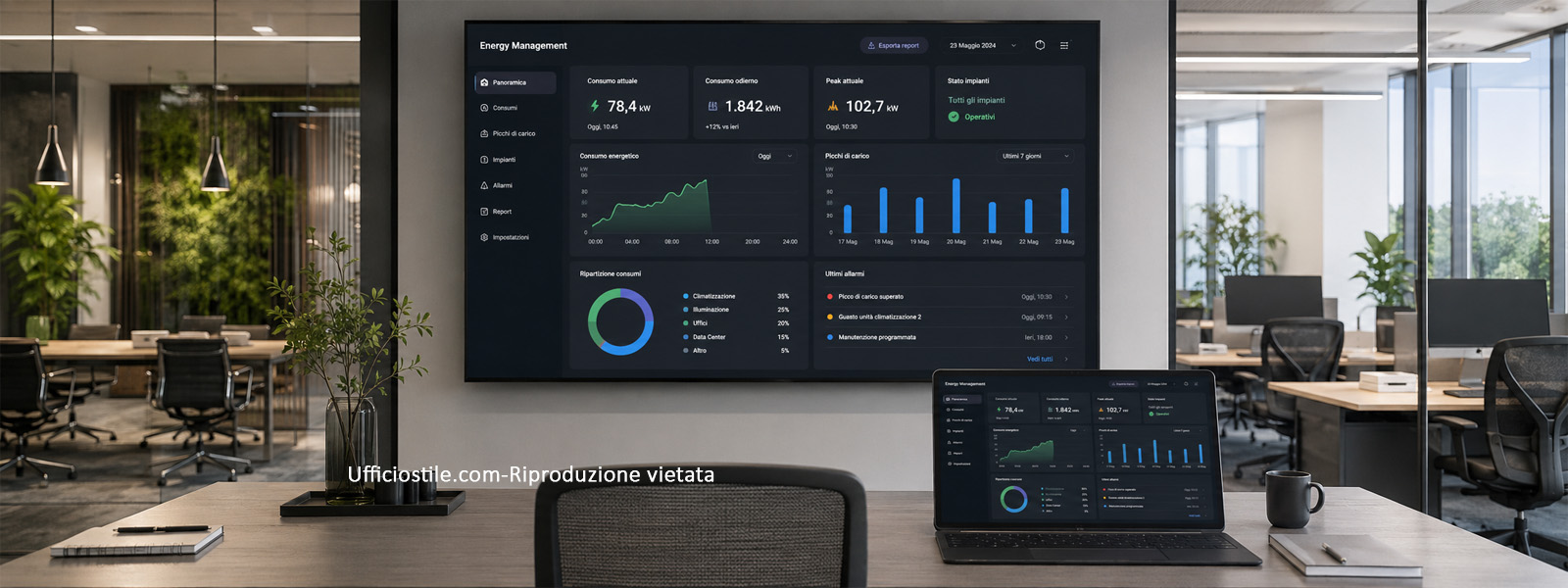
- Energy management platforms for continuous monitoring of consumption and load peaks in real time.
- Integrated CO₂ sensors and presence sensors to optimise ventilation, climate control and the use of artificial lighting.
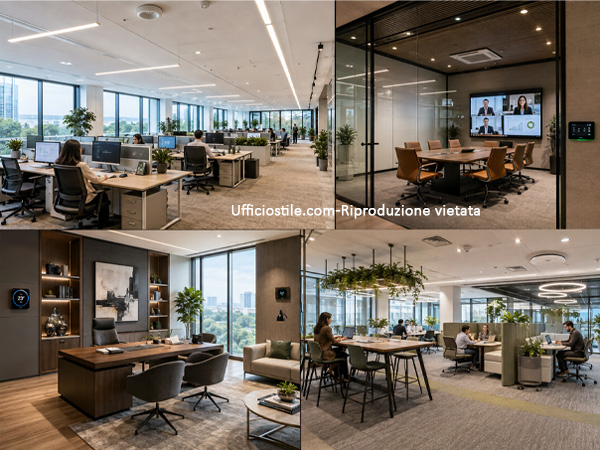
Typical configurations
Open spaces
LED lighting with presence sensors, daylight harvesting systems and centralised HVAC to ensure optimal visual and thermal comfort while optimising energy consumption in large shared spaces.
Meeting rooms
Dimmable lighting schemes, preset scenarios and precise climate control to reduce waste during meetings, presentations and hybrid sessions.
Executive offices
Comfortable lighting solutions, individual microclimate control and consumption monitoring to combine representation, high comfort and lower operating costs.
Hybrid spaces and smart working
Flexible environments with intelligent sensors, modular HVAC and integrated energy management, designed to support shared workstations, hot desking and collaborative areas with variable use.
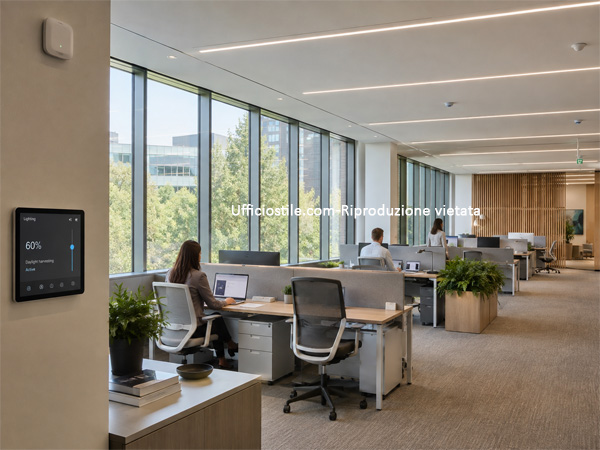
LED lighting and intelligent natural light management
Low-consumption LED lighting, combined with presence sensors and automatic brightness adjustment systems, drastically reduces consumption compared to traditional technologies. Natural light management through DALI protocols and daylight harvesting strategies makes it possible to maximise external light while maintaining optimal visual comfort with the minimum contribution of artificial lighting.
In dynamic offices, where space occupancy varies throughout the day, these systems automatically adapt illuminance levels, avoiding excessive waste when workstations are not in use. The result is an effective combination of visual wellbeing, reduced energy costs and alignment with sustainability objectives.
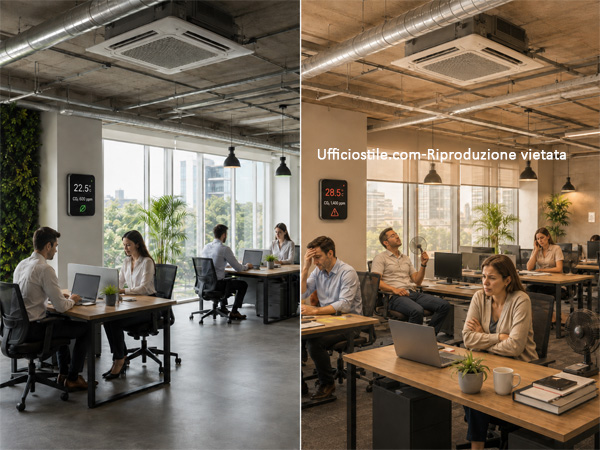
Efficient climate control with new-generation HVAC systems
New-generation HVAC systems optimise climate control, ventilation and air quality through predictive algorithms and automatic adjustments. Airflow modulation, the use of CO₂ sensors and intelligent temperature control make it possible to adapt system operation to real usage conditions, avoiding unnecessary overcooling or overheating.
In this way, consumption and emissions are reduced while maintaining high thermal comfort in every season. Integration with central supervision systems makes it possible to monitor performance, implement energy-saving strategies and act promptly in the event of anomalies or inefficiencies.
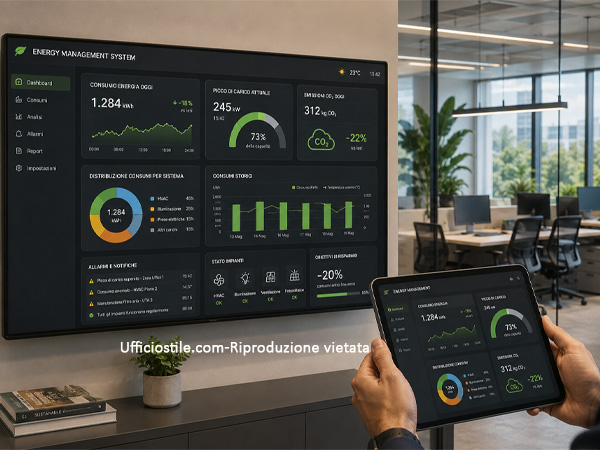
Intelligent consumption control and continuous energy monitoring
Energy management platforms make it possible to monitor consumption and load peaks in real time, quickly identifying inefficiencies and anomalies. Thanks to integration with smart building systems, lighting, climate control and equipment can be coordinated through a single control interface, simplifying everyday building management.
Continuous monitoring provides objective data to define consumption reduction strategies, plan maintenance interventions and evaluate the return on investments in energy efficiency. This data-driven approach makes the building more responsive, sustainable and aligned with the operational needs of constantly evolving companies.
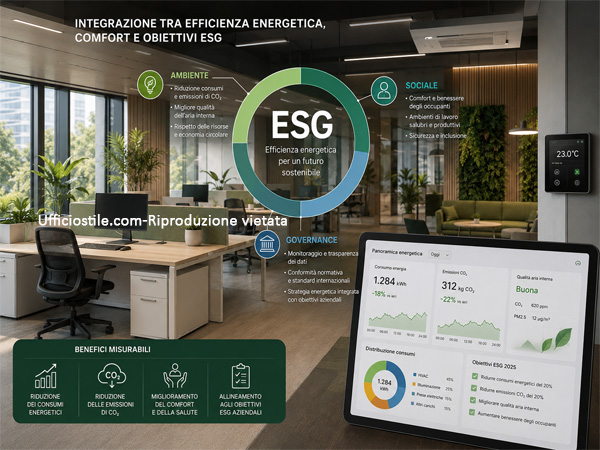
Integration between energy efficiency, comfort and ESG objectives
Energy efficiency is not only about saving on consumption, but directly contributes to user comfort, indoor air quality and the achievement of ESG objectives. Comfortable lighting, adequate ventilation and reduced CO₂ emissions generate healthier and more productive work environments, in line with the best international standards.
An integrated approach based on smart technologies, informed design choices and continuous monitoring guarantees measurable results over time. This allows companies to transparently communicate their environmental performance, improve reputation and strengthen alignment between energy strategy and corporate social responsibility.
FAQ
A latest-generation LED system can reduce consumption by up to 60–70% compared to traditional lighting solutions, especially when combined with presence sensors and automatic brightness adjustment based on available natural light.
An intelligent HVAC system automatically adjusts airflow, temperature and ventilation based on real conditions detected by sensors, such as occupancy, CO₂ and temperature, optimising comfort and consumption without requiring continuous manual intervention from users or facility managers.
Continuous energy monitoring makes it possible to identify waste, abnormal peaks and areas for improvement, optimising the settings of systems and equipment. This translates into more efficient building management and precise control of operating costs over time.
Yes. More efficient energy use leads to better air quality, more stable thermal comfort conditions and more appropriate lighting levels, with direct benefits for the wellbeing, productivity and health of the people who work in the office every day.
In most cases, yes: investments in energy efficiency can be amortised in relatively short times thanks to reduced consumption, lower operating costs and, in some contexts, access to incentives and benefits dedicated to building energy sustainability.