Custom ergonomic design and regulatory compliance for safe, high-performance work environments
Custom ergonomic design, anthropometric analyses, certified layouts and UNI EN ISO compliance for safe, high-performance work environments.

Technical specifications
- Layouts compliant with UNI EN ISO 9241-5 for the correct design of VDT workstations.
- Complete anthropometric analyses to define heights, functional distances and reach zones.
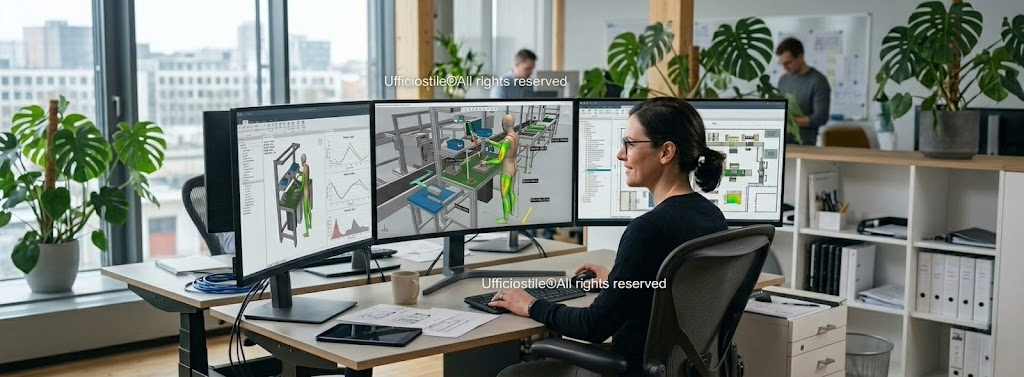
- Technical drawings and three-dimensional simulations for preventive verification of dimensions and postures.
- Certified ergonomic integration to reduce postural risks and improve wellbeing and performance.
Typical configurations
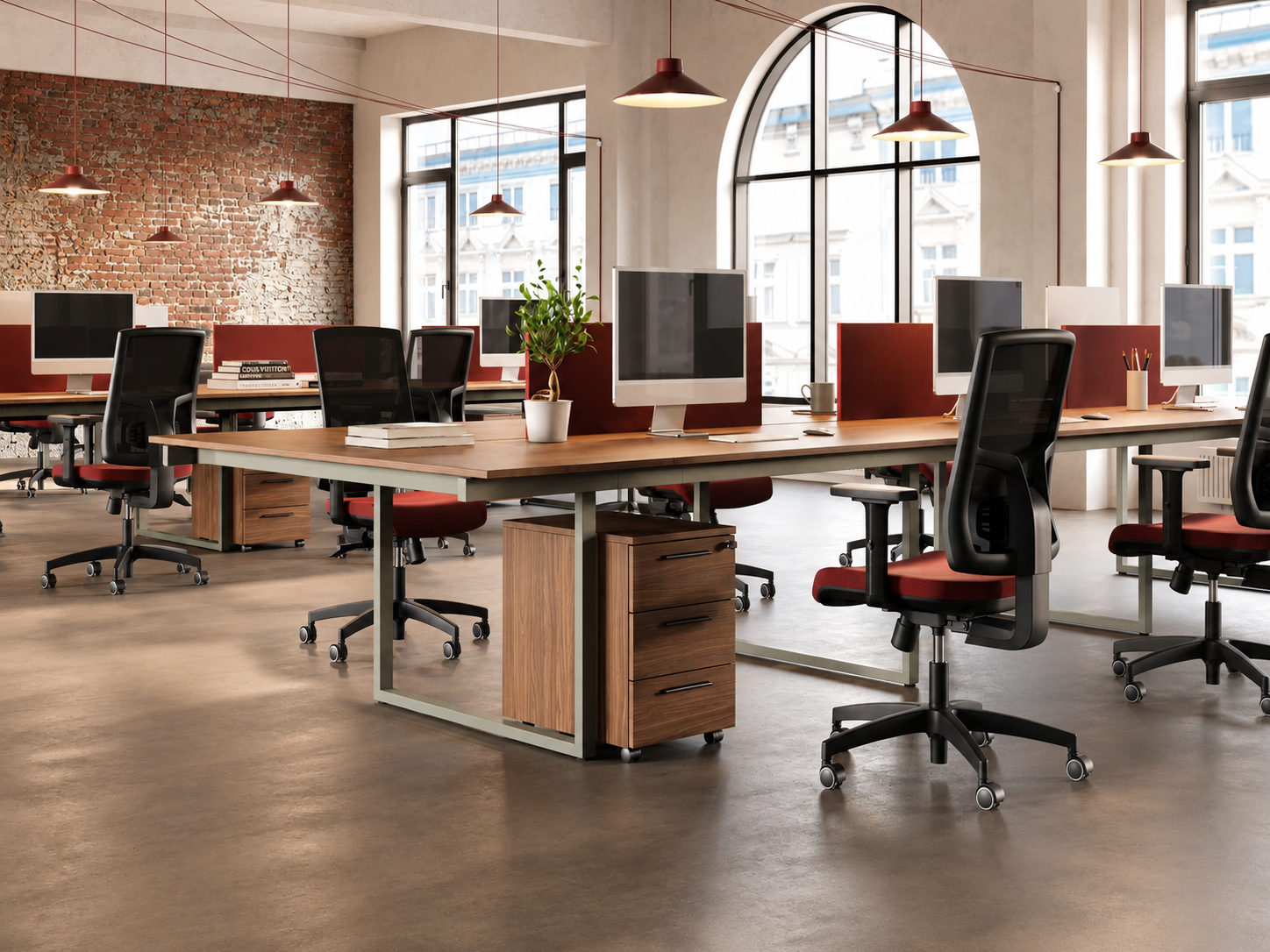
Operational offices
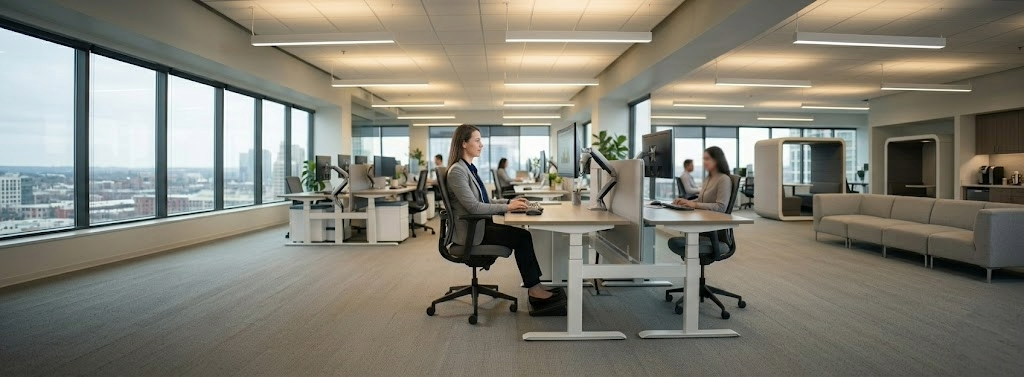
Ergonomic workstations designed for continuous computer-based activities, with calibrated worktop heights, correct eye-monitor distance and flow organisation to reduce fatigue and micro-stress.
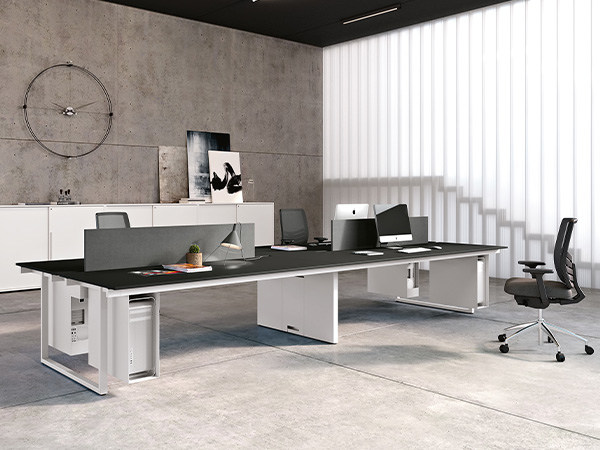
Executive environments
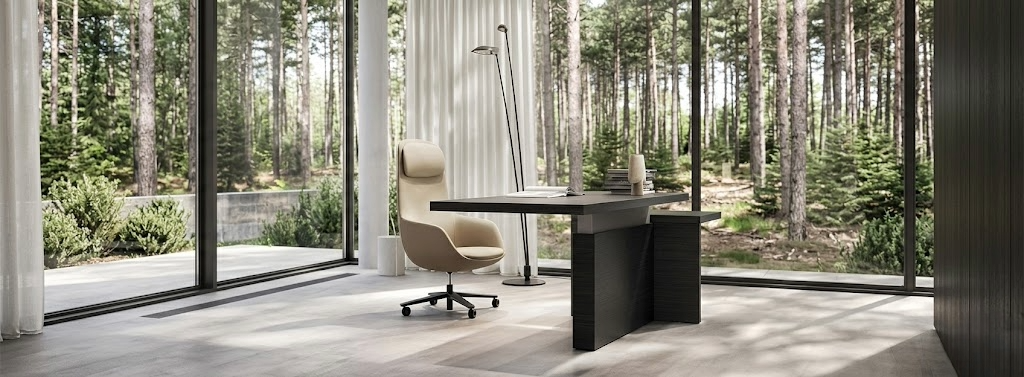
Layouts that combine representative value and operational comfort, with adjustable desks, ergonomic chairs and element arrangement designed to support meetings, decision-making and focused work.
Specialist areas and shared spaces
Custom solutions for specialist areas and shared, flexible spaces, with modular configurations that facilitate collaboration, equipment accessibility and correct management of people flows.
Anthropometric analysis to define ergonomic measurements and distances
Anthropometric analysis makes it possible to define proportions, heights and distances suited to users with different body types. This assessment identifies worktop heights, inclinations, reach distances and movement zones without overloads. The result is a workstation calibrated to real physical and operational needs, reducing fatigue and improving efficiency.

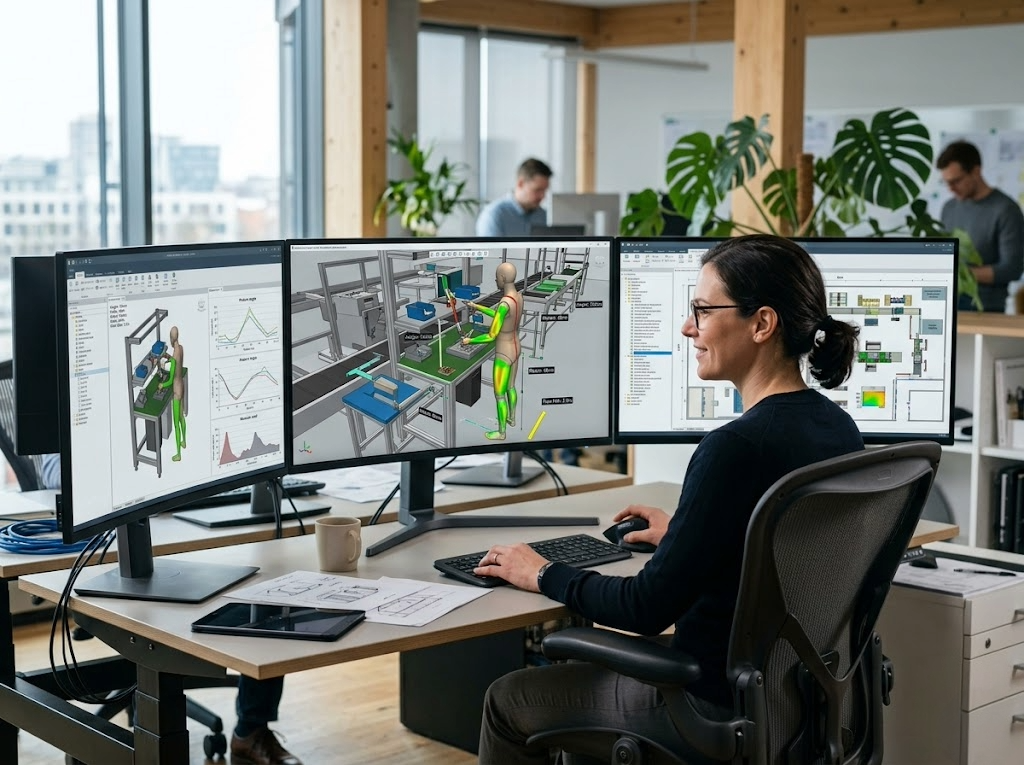
3D design and technical simulations for ergonomic layouts
3D design makes it possible to simulate real scenarios by verifying dimensions, functional distances and workflows. Through simulations, it is possible to anticipate critical issues, optimise usage heights and ensure consistency between furniture, posture and tools. This approach reduces design errors and ensures ergonomically correct layouts from the preliminary phase.
Compliance with UNI EN ISO standards for safety and health
Compliance with UNI EN ISO standards makes it possible to guarantee certified ergonomic performance, reducing risks and ensuring a work environment compliant with health requirements. The guidelines define dimensions, distances, postures and minimum requirements that protect the user. Respecting them means designing safe, coherent environments oriented towards wellbeing.
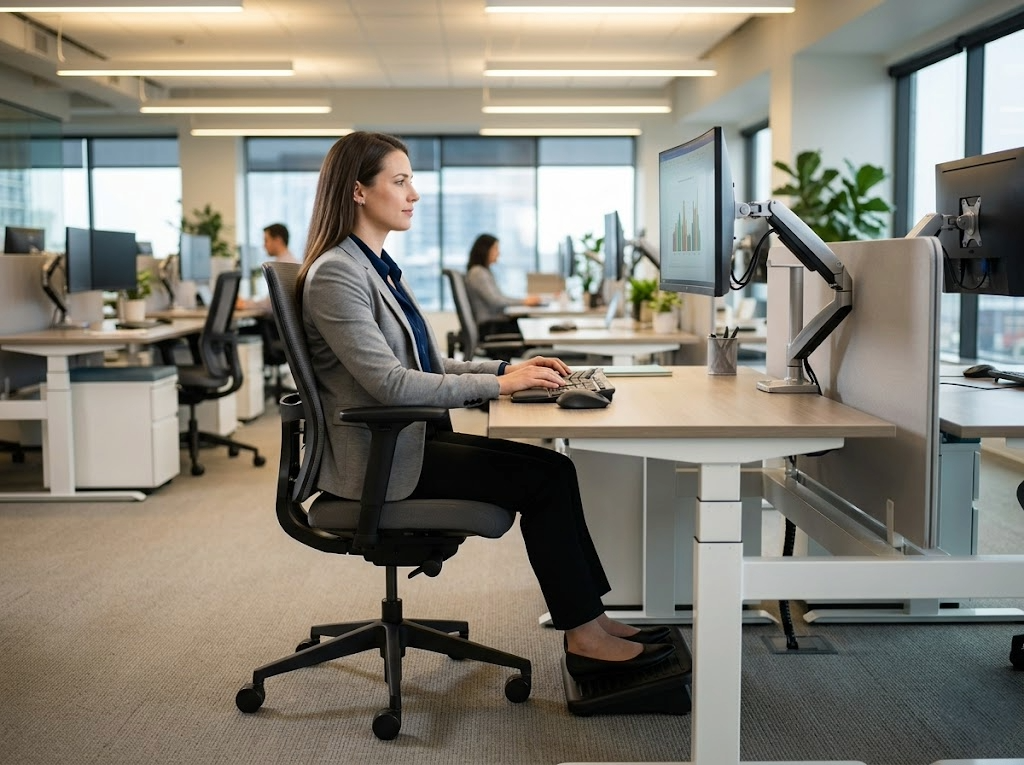
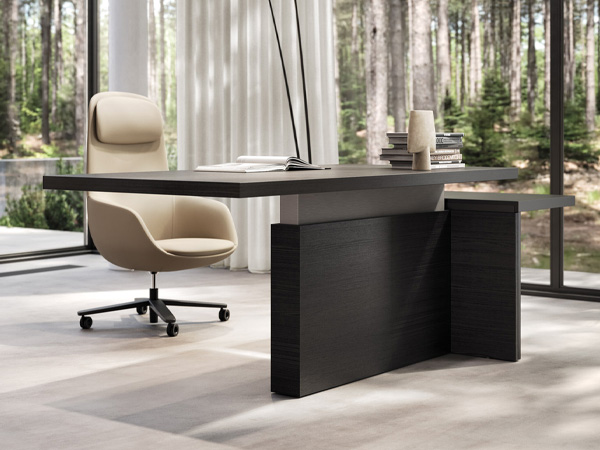
Workstation customisation for roles, activities and operational flows
Every profession has different postural and functional needs, so customisation makes it possible to adapt the workstation to the specific role. The tailored approach improves autonomy and comfort, reducing operational micro-stress. Defining heights, orientations, access points and distances facilitates operational continuity and optimises performance and wellbeing.
FAQ
To adapt the workstation to the user’s real body type, ensuring correct measurements, less fatigue and greater operational comfort.
Yes, it reduces design errors, allows dimensions and workflows to be checked in advance and ensures ergonomically correct layouts.
It is essential to ensure safety, certified ergonomic performance and work environments compliant with health requirements.
Very much: a custom workstation improves comfort, concentration and operational continuity, reducing micro-stress and interruptions.
Yes, through targeted ergonomic interventions it is possible to upgrade existing workstations, improving comfort and adapting them to current regulations.