
Coworking workstations and shared benches to save on space and structures
Coworking workstations and shared benches are one of the most effective solutions for optimising budget without sacrificing quality. Sharing structures, repeating identical modules and reducing the amount of materials required makes it possible to contain costs and maximise the available space. Ideal for open spaces, start-ups and companies that need flexibility and controlled investments.
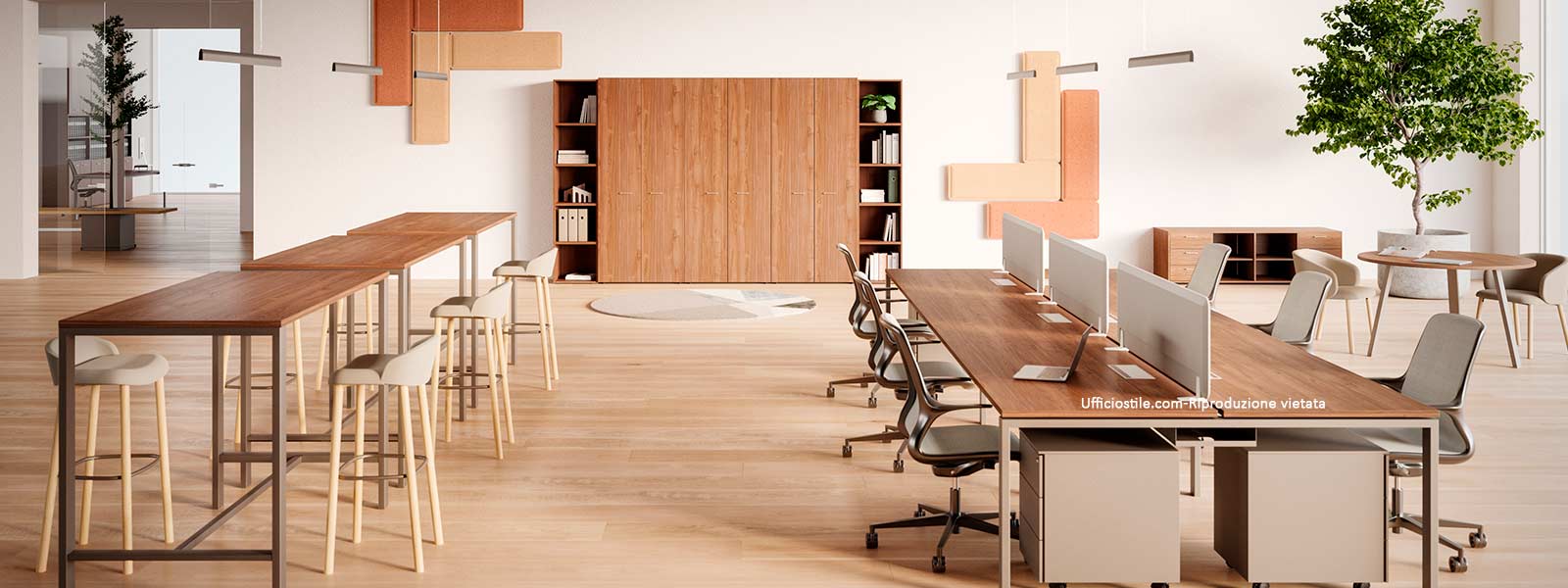
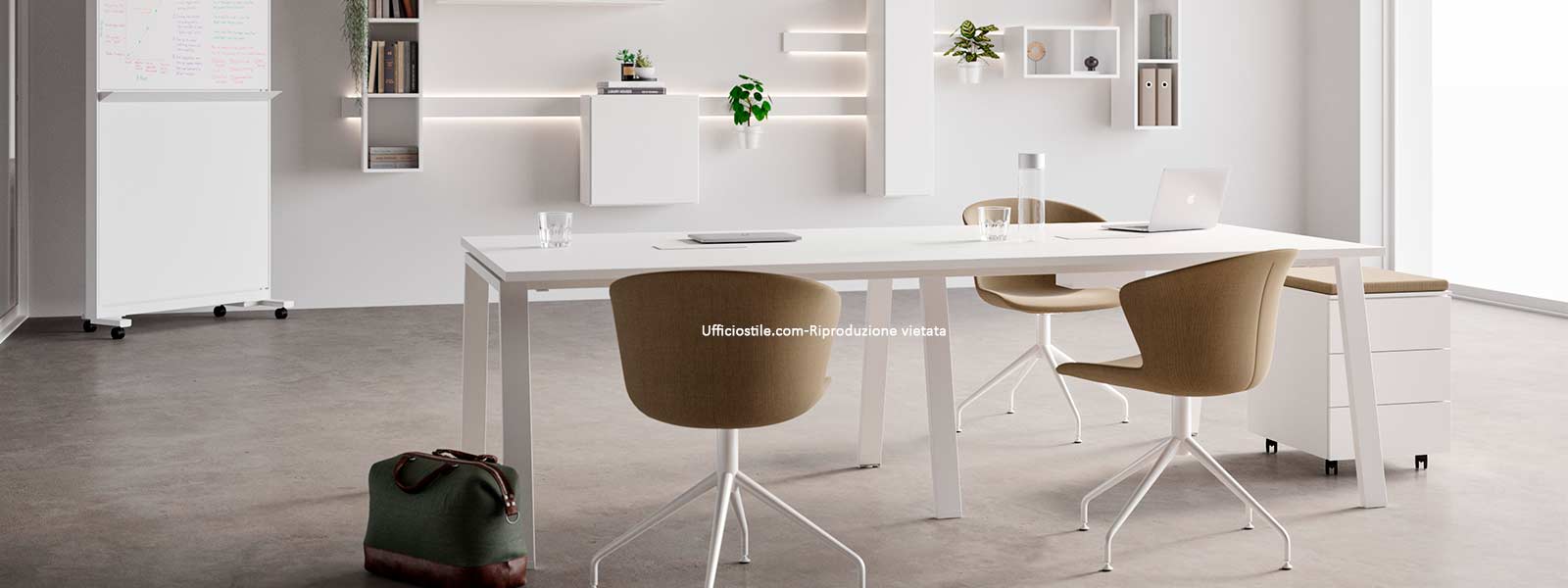
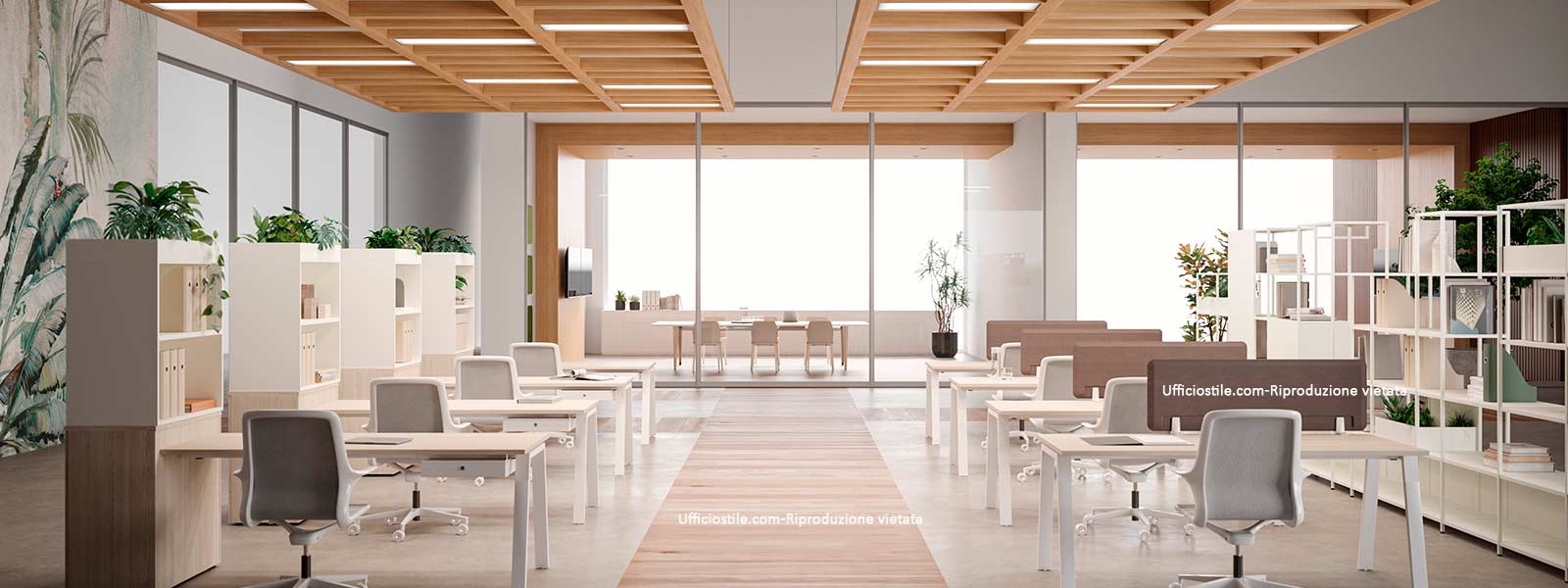
Technical specifications
- Shared structures with legs, crossbars and frames common to multiple workstations to reduce components and materials used.
- Standard tops, especially melamine tops, in 120×60, 140×80 and 160×80 cm formats to leverage economies of scale.
- Replicable modules that simplify production, logistics, installation and future layout expansions.
- Compliance with UNI EN 527 for height, stability, safety and basic ergonomic performance.
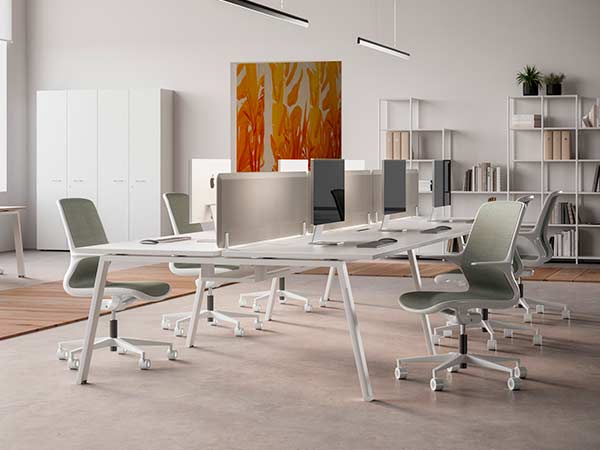
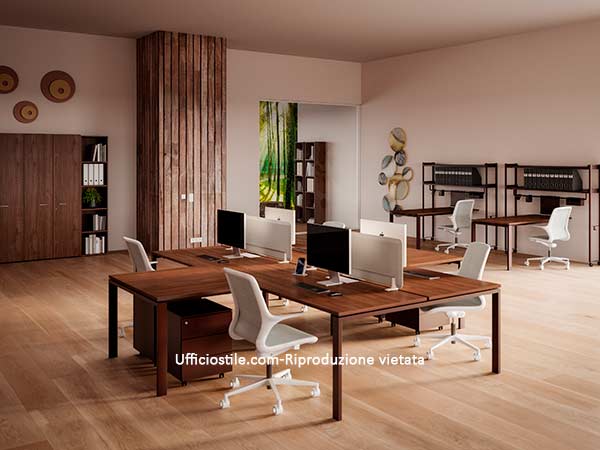
Typical configurations
Coworking
Shared benches with repeatable modules to accommodate many users in limited spaces, ideal for hybrid and flexible coworking environments where people and configurations change frequently.
Open spaces
Linear rows and continuous layouts that increase operational density, reduce the surface area occupied per workstation and make it easier to reconfigure spaces over time.
Start-ups
Scalable workstations designed to grow quickly with the company, with additional modules that integrate easily with existing structures without major new structural investments.
Operational teams
Shared benches dedicated to project teams, operational departments and customer service, where the goal is to maximise available seats while maintaining ergonomics and basic professional quality.
Sharing structures to reduce costs and materials used
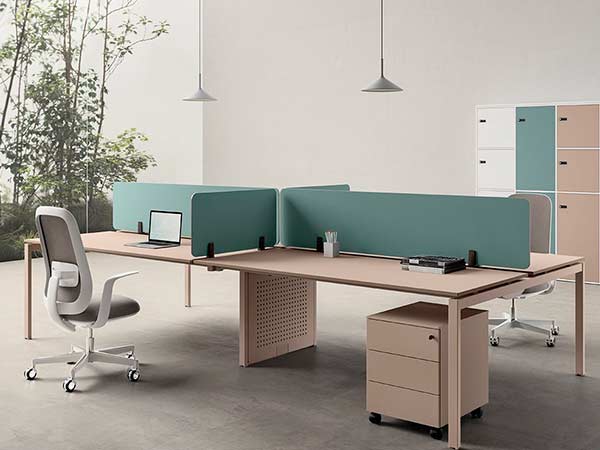
Bench configurations share legs, crossbars and frames, drastically reducing the number of components compared to individual workstations. This approach makes it possible to cut production, packaging and transport costs while maintaining stability and resistance suitable for everyday use.
The modularity of shared structures also makes it possible to plan gradual expansions: simply add new modules and standard tops to increase the number of workstations, without redesigning the entire layout from scratch or sustaining redundant structural investments.
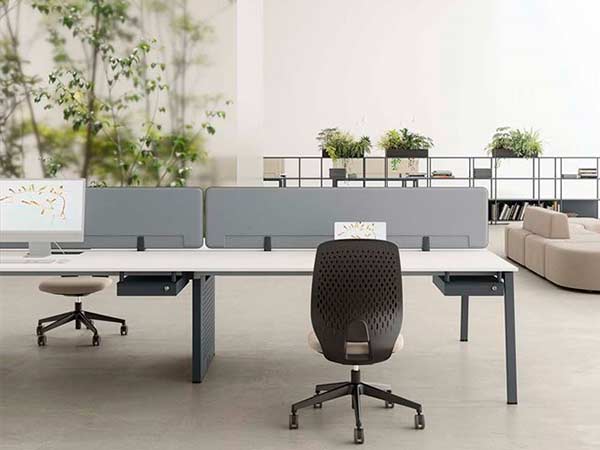
Standardised tops and replicable modules to optimise production
The use of standard tops, often in melamine, in 120×60, 140×80 and 160×80 cm formats generates significant economies of scale. Module repetition simplifies production and stock management, reducing errors and procurement times.
For the end user, this translates into fast delivery and installation times, as well as a significantly lower cost per workstation compared to custom solutions. Replicable modules also make it possible to maintain a coherent aesthetic throughout the open space, while also facilitating long-term maintenance.
Space optimisation to increase density and reduce occupied surfaces
Coworking workstations make it possible to increase operational density while maintaining basic comfort and ergonomics. Rationalising the surface area occupied by each workstation makes it possible to reduce rented floor space or free up space for additional functions such as meeting areas, phone booths or relaxation zones.
Linear, compact and continuous layouts make environments more efficient and easily reconfigurable: moving a team, adding new workstations or modifying internal circulation flows becomes a fast operation, without invasive interventions on systems or complex furniture.
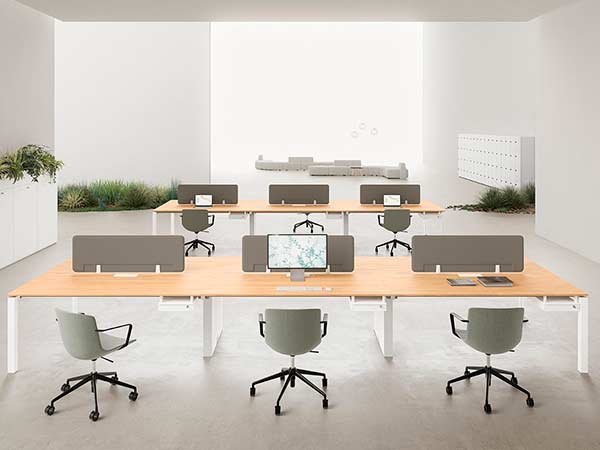
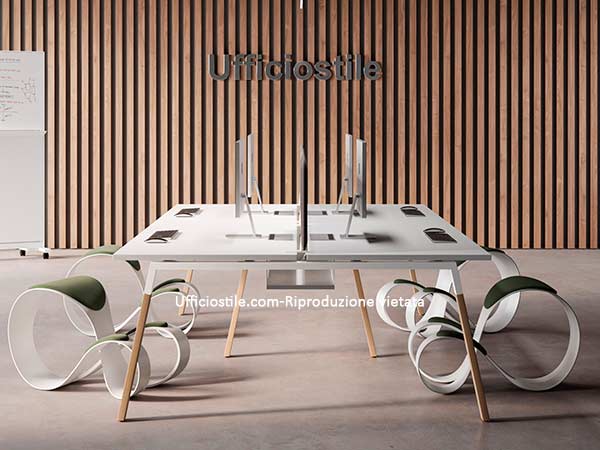
Ergonomic compliance and professional quality even in budget solutions
Despite the economic logic, shared benches must still comply with UNI EN 527 for height, stability and safety. Certified tops, impact-resistant edges and robust structures guarantee professional performance and long durability, preventing savings from turning into compromises on quality.
For companies and start-ups, this means being able to adopt budget-conscious solutions that remain fully suitable for intensive use, in line with user expectations for comfort and safety and with policies of responsibility towards staff and the work environment.
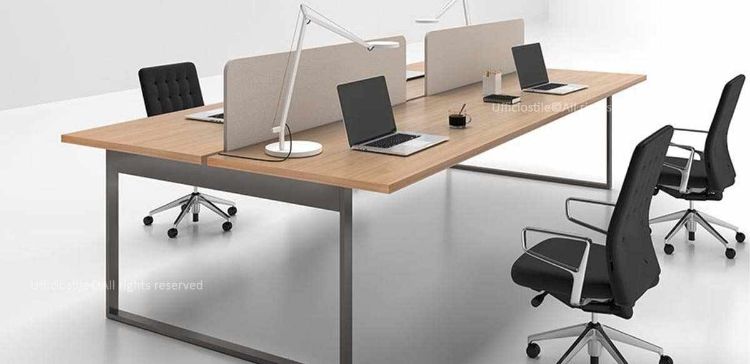
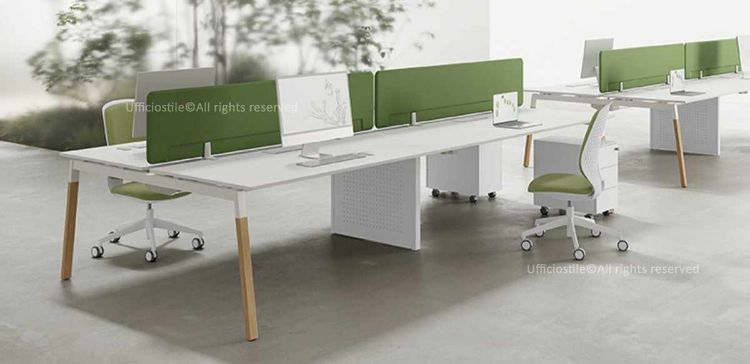
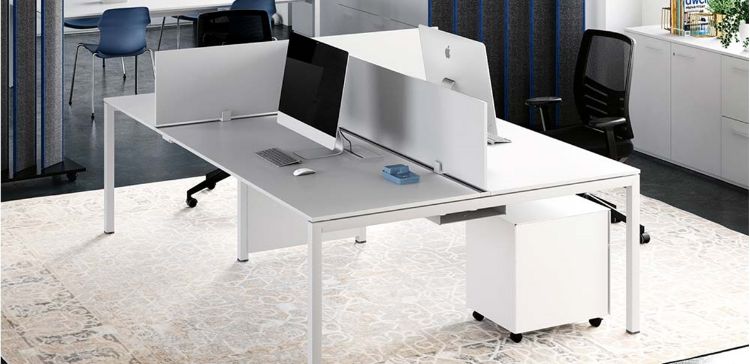
Recommended shared bench and coworking solutions
FAQ
Yes, shared benches are designed for intensive use: the shared structure is dimensioned to guarantee stability and durability over time, even in very busy open spaces and high-turnover coworking environments.
Yes. Sharing structures, reducing the number of components and optimising floor space makes it possible to lower furniture and space management costs while maintaining an adequate level of professional quality.
Absolutely. Melamine tops guarantee excellent durability, contained costs and a wide range of finishes, making them particularly suitable for large installations in open spaces and multi-workstation coworking environments.
Yes, shared benches can integrate centralised cabling systems, which are generally more economical than duplicating towers and ducts on individual workstations, while also simplifying maintenance and future upgrades.
No, provided professional standards and certifications such as UNI EN 527 are respected. Budget logic works on economies of scale and shared structures, not on reducing minimum requirements for safety, stability and ergonomics.