
Common areas and informal spaces: social and dynamic environments for university life
University common areas are fundamental spaces for encouraging interaction, informal study and regenerative breaks. Furniture must combine resistance, comfort and modularity, supporting high flows and diversified uses. Flexible lounges, modular seating, poufs and equipped relaxation zones transform campuses into welcoming and multifunctional ecosystems, capable of adapting to the needs of students, teaching activities and internal events.
Technical specifications
- Lounge systems with linear and modular sofas, soft armchairs and poufs, with reinforced structures and high-density fire-retardant foam padding, upholstered in washable technical fabrics resistant to the intensive use typical of university spaces.
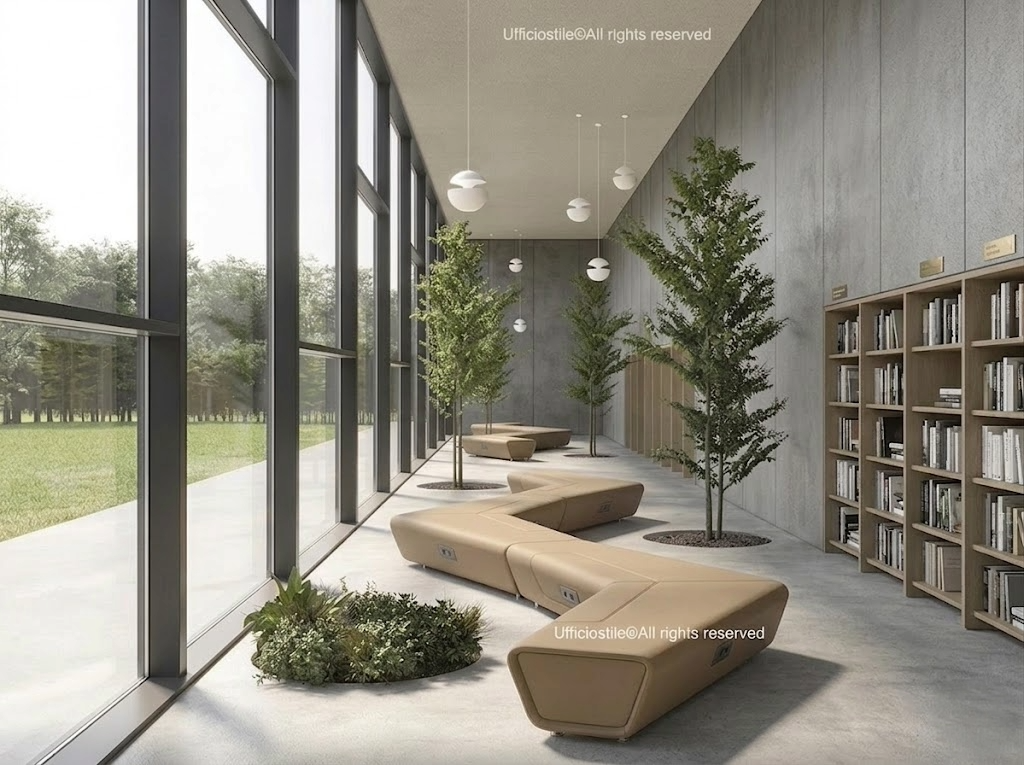
- Modular seating configurable into islands, opposed rows, linear benches or “S” configurations, with elements that can be linked together, adjustable feet and options with or without backrest to adapt to continuously changing layouts and flows.
- Technical coffee tables for lounges and informal study with laminate or HPL tops, impact-resistant edges and painted metal structures, available in different heights, coffee, side and work, to accompany soft seating and benches along routes.
- Graphic panels and vertical coverings, fabric, printed melamine or technical films, usable to integrate wayfinding, university visual identity and communication into routes and informal pause areas.
- Possibility of integrating electrification into seating and coffee tables, USB socket, retractable power unit, desktop towers, to support informal study with laptops and personal devices even in areas not traditionally intended for study.
- Stain-resistant and easy-clean materials, easy-clean surfaces and finishes designed to withstand impacts, frequent movements and configuration changes, in compliance with safety regulations and the maintenance needs of high-footfall campuses.
Typical configurations
University lounges for social interaction, quick study and waiting
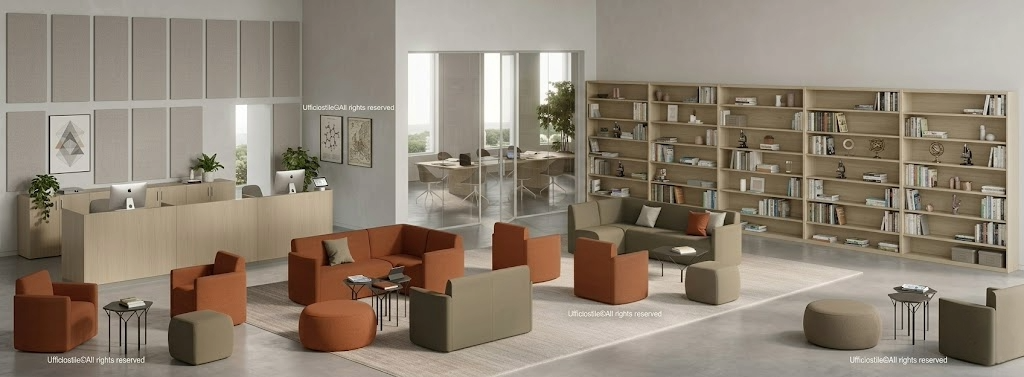
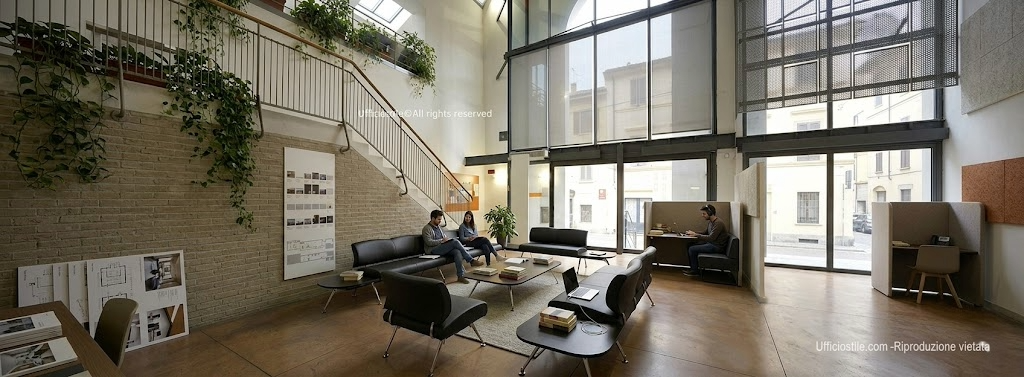
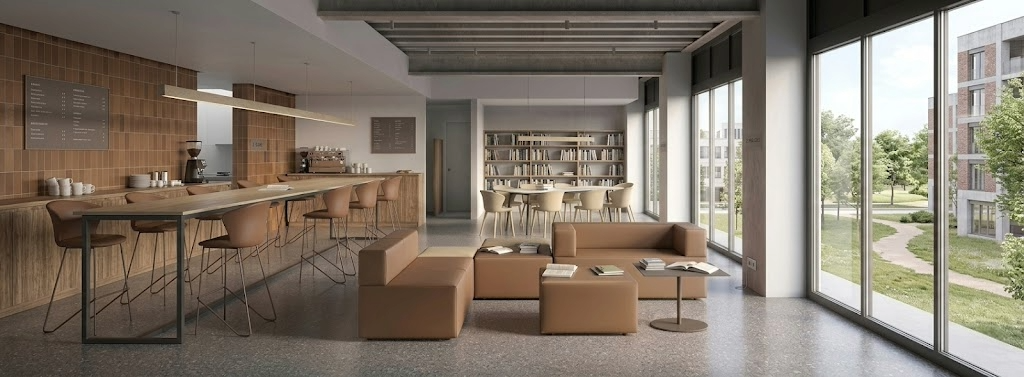
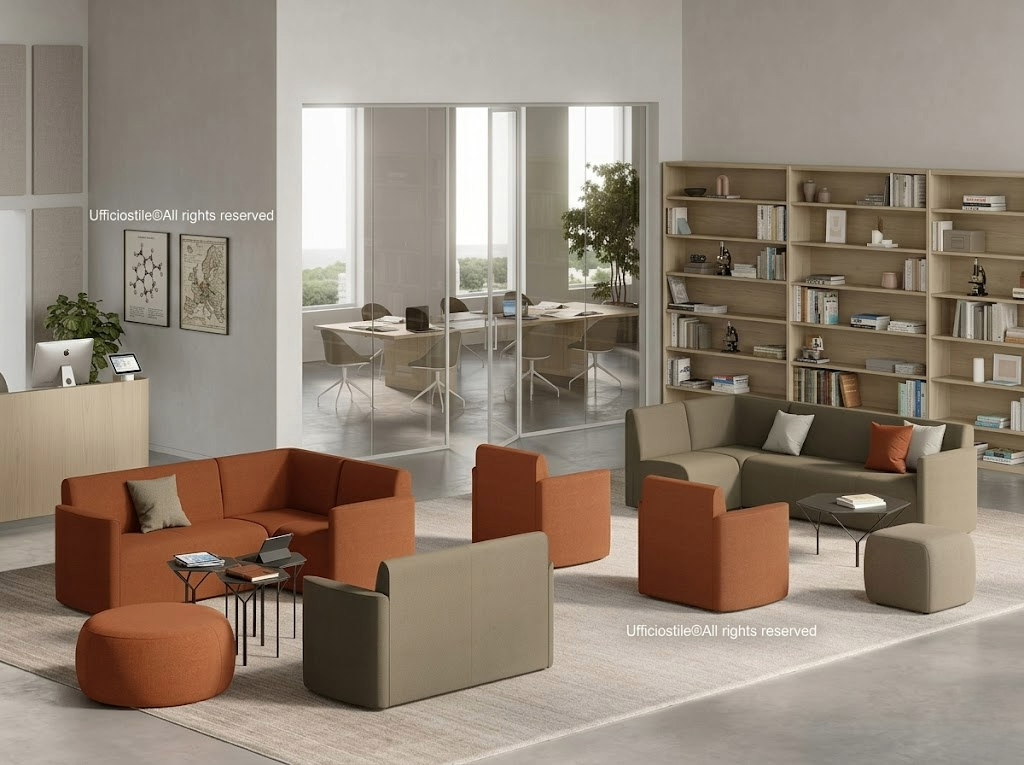
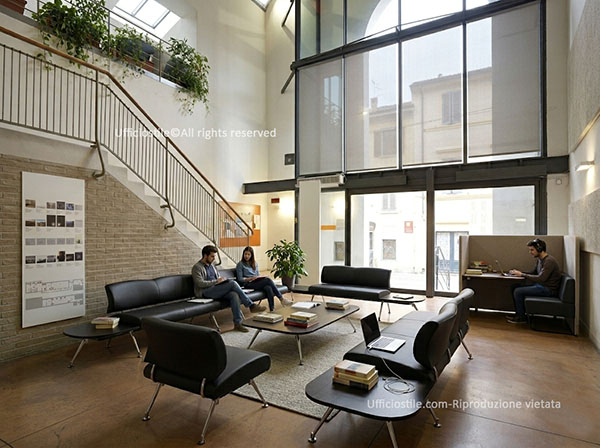
Lounge spaces located in atriums, foyers, reception areas or near the main classrooms, with sofas, soft armchairs and technical coffee tables. Ideal for informal meetings, short study sessions between lectures and waiting before exams, with furniture designed for continuous user turnover.
High-footfall zones with configurable modular seating
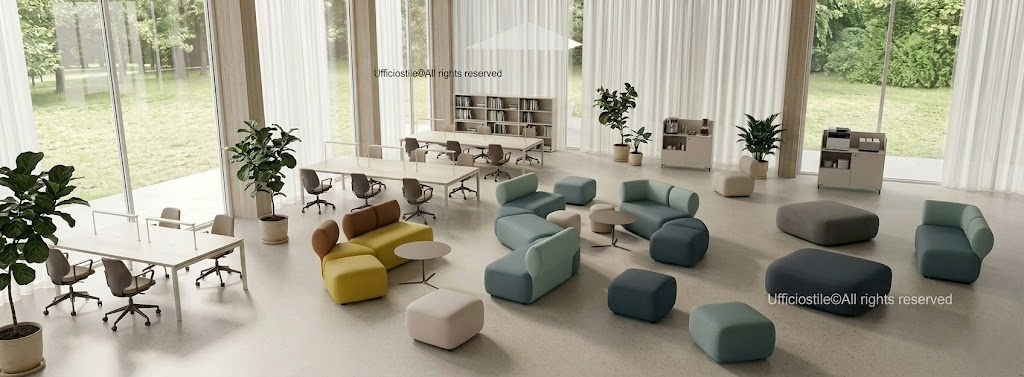
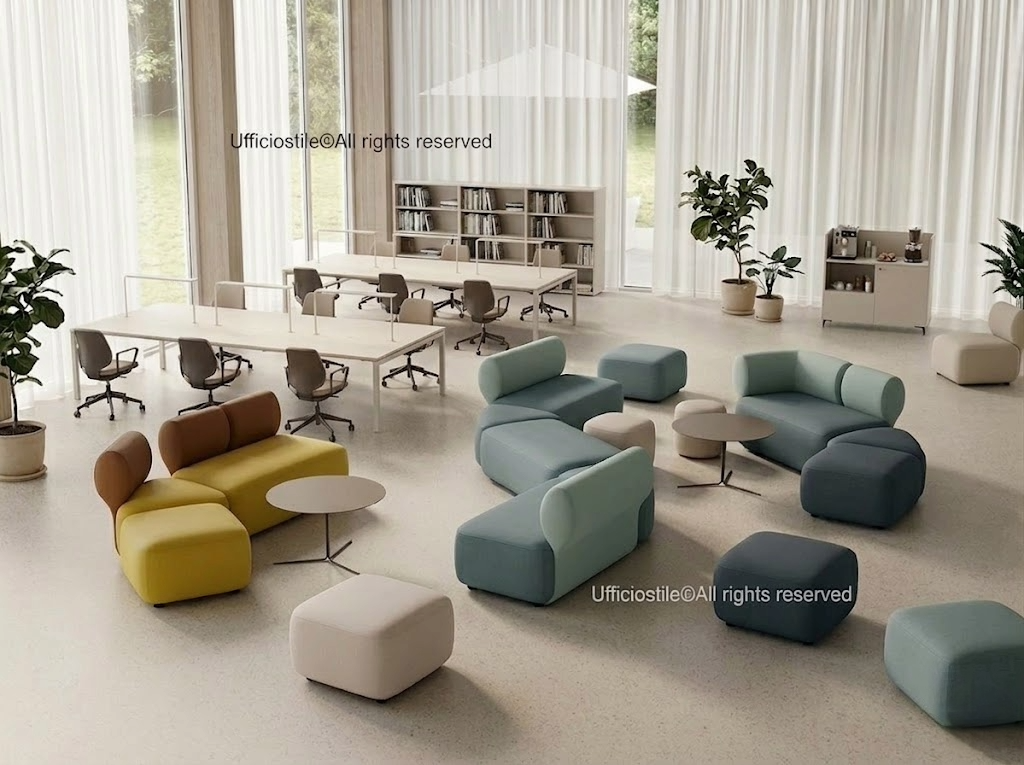
Common areas located along the main routes of campuses and departments, furnished with modular seating configurable into islands, linear benches or amphitheatre layouts. Modular solutions make it possible to reconfigure the space quickly according to peak times, events and temporary needs.
Relaxation spaces and equipped transit routes
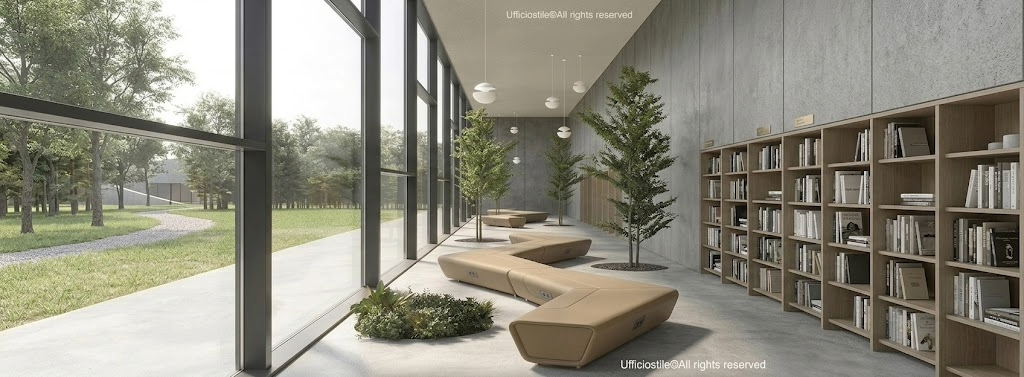
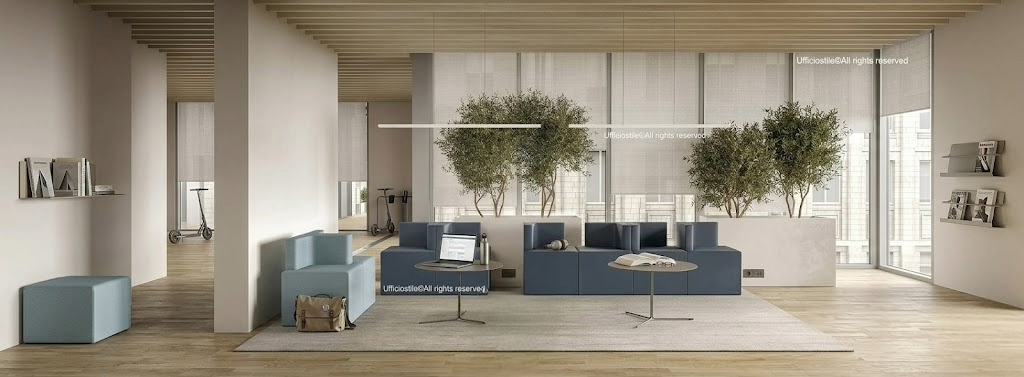
Wide corridors, galleries and junctions between buildings transformed into fluid spaces, with quick seating, poufs, rapid-support benches and graphic panels. These equipped routes improve everyday liveability, offering short breaks, micro-social spaces and support points for light study on the move.
University lounges designed for social interaction, quick study and waiting
University lounges are the calling card of common spaces: places where students meet, wait for lectures to begin, quickly check notes or simply take a break. Sofas, armchairs and coffee tables must combine aesthetics, resistance and ease of maintenance. Models with technical padding and washable upholstery make it possible to withstand intensive use without losing comfort and perceived quality. The furniture arrangement encourages micro-social interaction and short study sessions, while leaving fluid passages for people in transit.
Configurable modular seating for high-footfall zones
Modular seating makes it possible to quickly adapt common spaces to changes in attendance. Composable elements in fire-retardant foam and robust structures are linked together to create pause islands, linear benches or double-sided compositions, depending on current needs. During exam periods or events, the layout can be optimised to increase the number of seats; during quieter moments, the same modules can be repositioned to encourage social interaction and informal group work.
Sofas and poufs for informal study and micro-social interaction
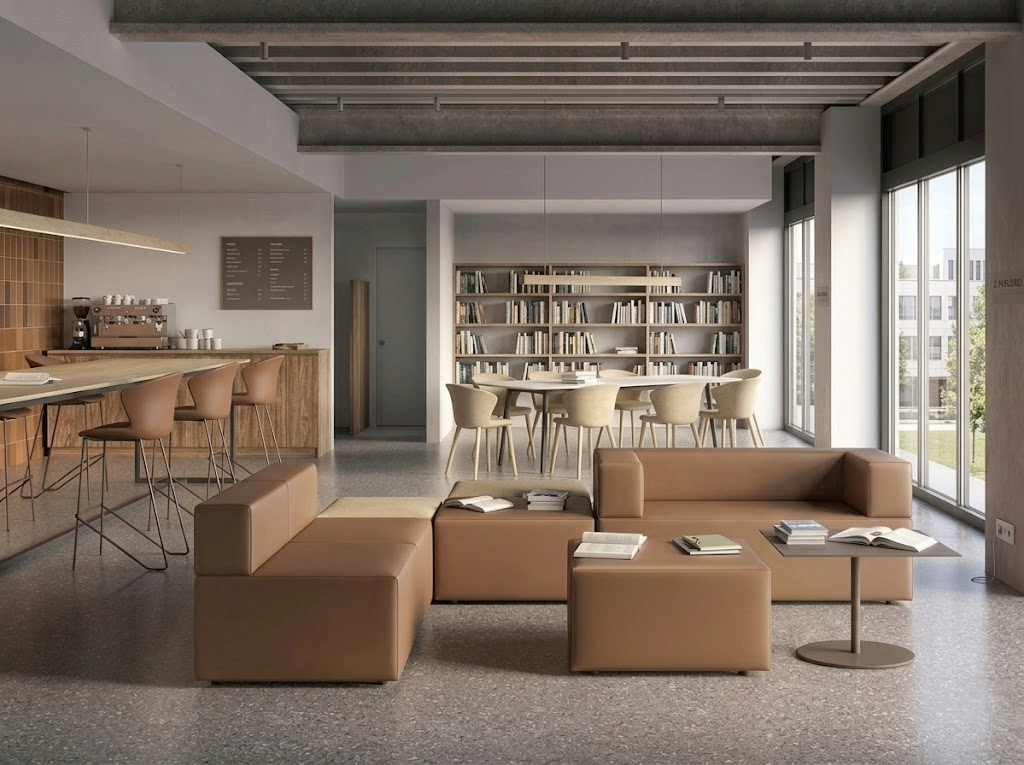
Poufs, low armchairs and compact sofas introduce a more informal dimension into university study. This soft furniture, often placed along the edges of routes or in small bays, enables quick study sessions, group reviews and immediate idea exchanges. The use of simple volumes and colours coordinated with the university’s visual identity makes the spaces recognisable and welcoming. Technical padding and washable upholstery ensure that, despite intensive use, the seating maintains shape, comfort and cleanliness over time.
Relaxation spaces and equipped transit routes for fluid and contemporary environments
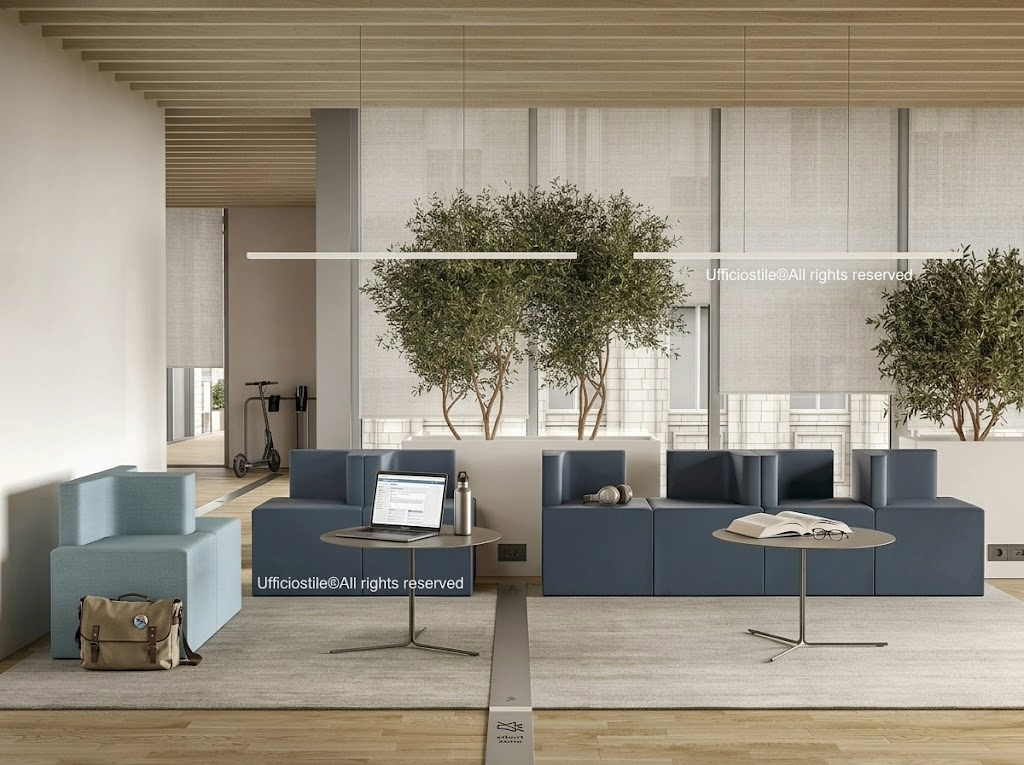
Contemporary universities increasingly enhance passage areas, transforming them into lived-in and functional spaces. Corridors, balconies and galleries can host quick benches, support poufs, laptop shelves and graphic panels that communicate events and services. The aim is to create a continuum between study areas, classrooms and social zones, avoiding unused “voids” and increasing opportunities for meeting and pausing. Compact and well-positioned furniture ensures compliance with escape routes, keeping the main flows clear while offering new opportunities for informal space use.
FAQ
A modern university lounge stands out for modularity, resistance to intensive use and technological integration. Modular sofas, accessible electrical sockets and easy-clean materials make it possible to offer spaces that are always welcoming, even with a high turnover of students throughout the day.
Yes, modular seating is designed precisely to manage high flows. It allows quick reconfigurations according to attendance levels, offering more seats at peak times and more informal scenarios when student presence is lower, without complex structural interventions on the spaces.
Yes, if made with technical padding and quality washable upholstery. Poufs for university use are designed to withstand frequent movements, intensive use and regular cleaning, maintaining stability, comfort and good aesthetic performance over time.
Yes, compact benches, poufs and small tables can also be placed in corridors, provided they do not obstruct passage and comply with escape routes. Shallow furniture positioned in recesses or widened route areas makes it possible to create micro-pause areas without compromising circulation.
Absolutely. Common areas are designed to host light study, quick reviews, laptop work and spontaneous interactions. Comfortable seating, support tables, electrical sockets and stable Wi-Fi transform passage areas into true distributed learning spaces across the campus.