
Circular Economy: Reuse, Remanufacturing and Adaptable Modular Office Furniture
Applying circular economy principles to the workplace means extending the lifespan of office furniture, reducing waste and promoting the efficient use of resources. Reuse, remanufacturing and modularity are essential strategies for optimising investments, minimising environmental impact and creating resilient, flexible and genuinely sustainable workspaces.
Technical Specifications
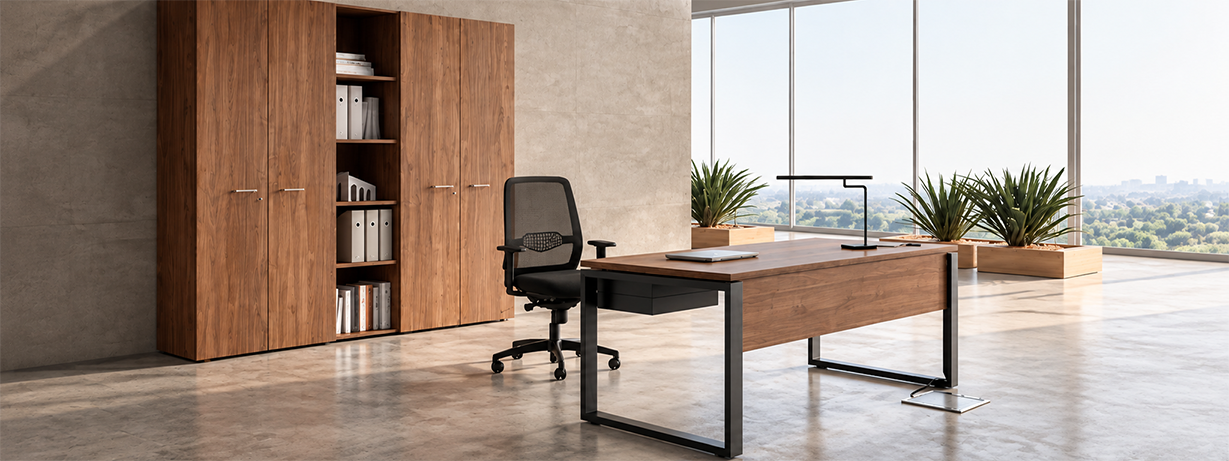
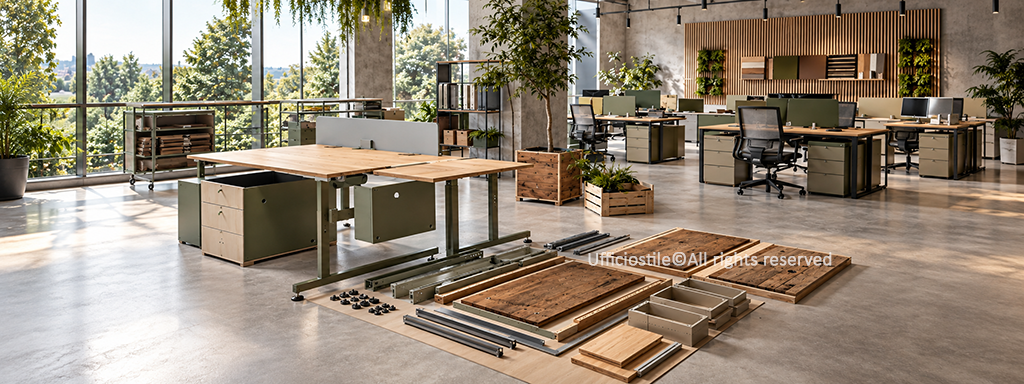
- Modular components designed to be reconfigured, expanded or moved into new layouts without replacing entire furniture systems.
- Extensive use of recycled and recyclable materials, selected to reduce environmental impact throughout the product lifecycle.
- Structured remanufacturing processes to refurbish existing furniture through component replacement and functional upgrades.
- Zero-waste strategies based on single-material design, recovery of discarded components and maximising opportunities for reuse.
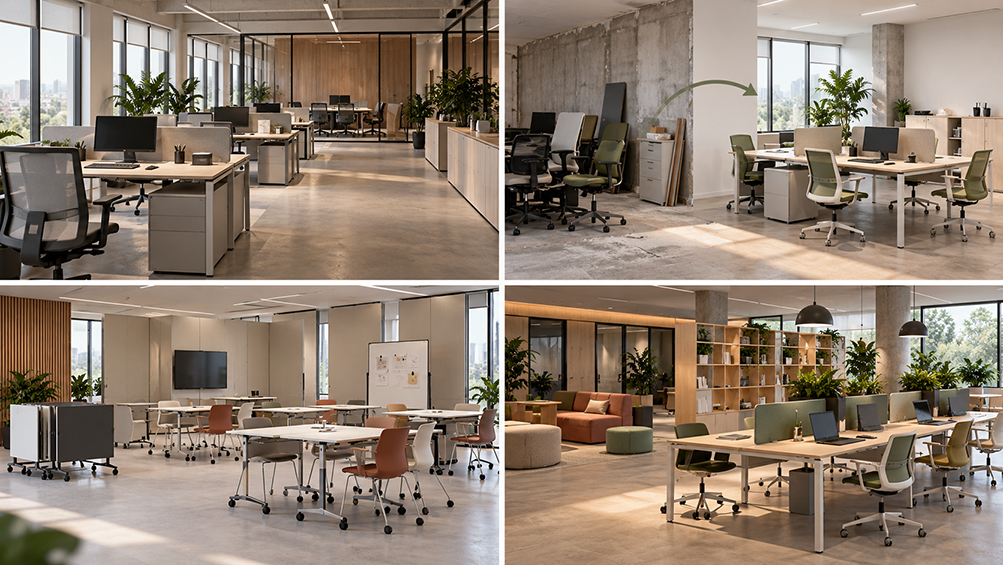
Typical Configurations
Corporate Projects
Corporate offices and headquarters where existing furniture assets retain their value over time through reuse and remanufacturing, with modules that can be incorporated into new configurations and scheduled upgrade plans.
Office Refurbishments
Refurbishment projects that begin with an assessment of existing furniture, identifying items that can be reused, remanufactured or combined with new modular elements to reduce purchases and waste.
Flexible Workspaces
Multifunctional areas and dynamic layouts where modular furniture can be quickly reconfigured to accommodate different projects, teams and ways of working, extending the useful life of installed solutions.
Coworking Spaces
Coworking and shared workspaces that require a high degree of adaptability: modular furniture, easily movable elements and upgradeable modules that support intensive use and frequent layout changes.
Reusing Office Furniture to Reduce Waste and Optimise Resources
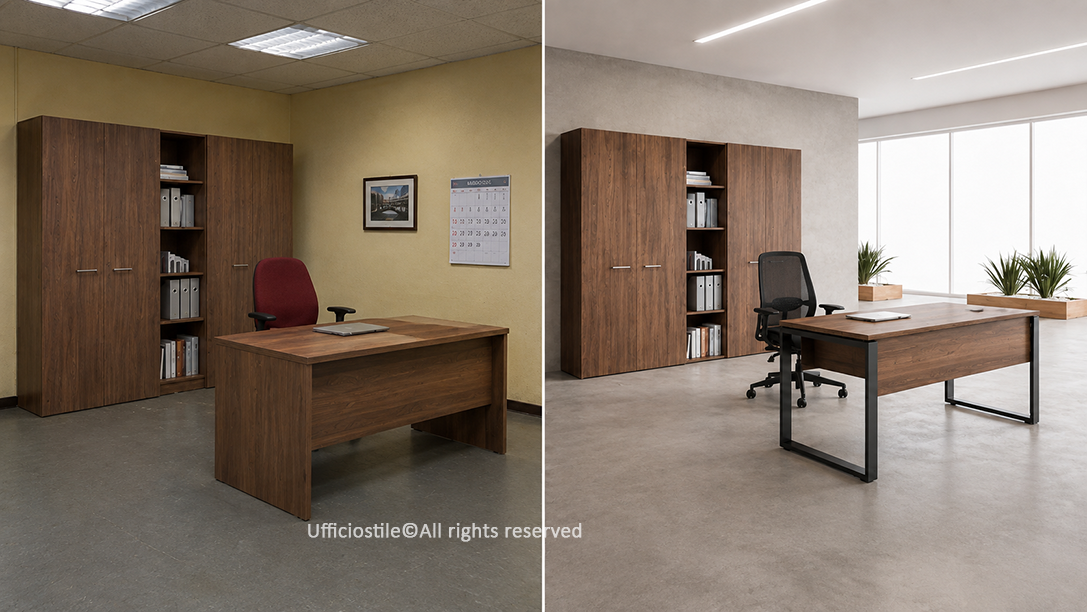
Reusing office furniture extends its useful life, reduces waste and limits the need for new resources. Through careful structural and aesthetic assessment, many items can be incorporated into new office layouts, adapting to updated configurations without compromising on quality.
This strategy delivers significant savings, prevents premature disposal and supports more sustainable management of company assets. From a circular economy perspective, reuse is the first step towards treating furniture as a long-term asset rather than something to be replaced whenever a company relocates or reorganises its workspace.
Remanufacturing to Restore Existing Furniture to Like-New Condition
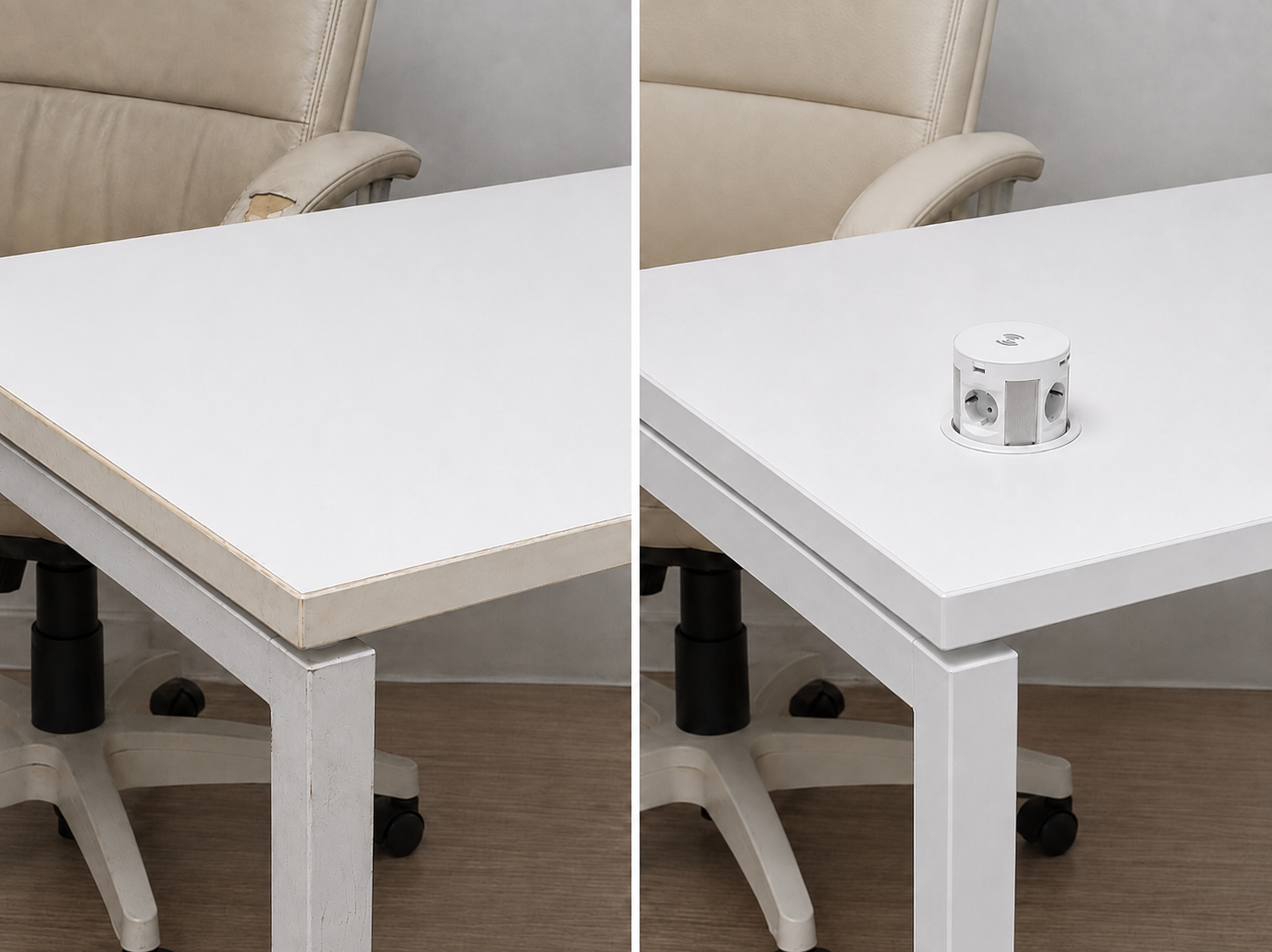
Remanufacturing involves restoring existing furniture through targeted technical interventions: replacing worn components, upgrading mechanisms, improving finishes and integrating new features. This brings furniture back to a condition comparable to new, without starting from scratch.
This approach helps preserve the value of the original investment, reduce waste and bring furniture into line with current requirements and standards. Remanufacturing is particularly effective in large-scale corporate projects, where replacing an entire furniture inventory would entail substantial financial and environmental costs.
Modularity and Upgradeability to Extend Furniture Lifespans
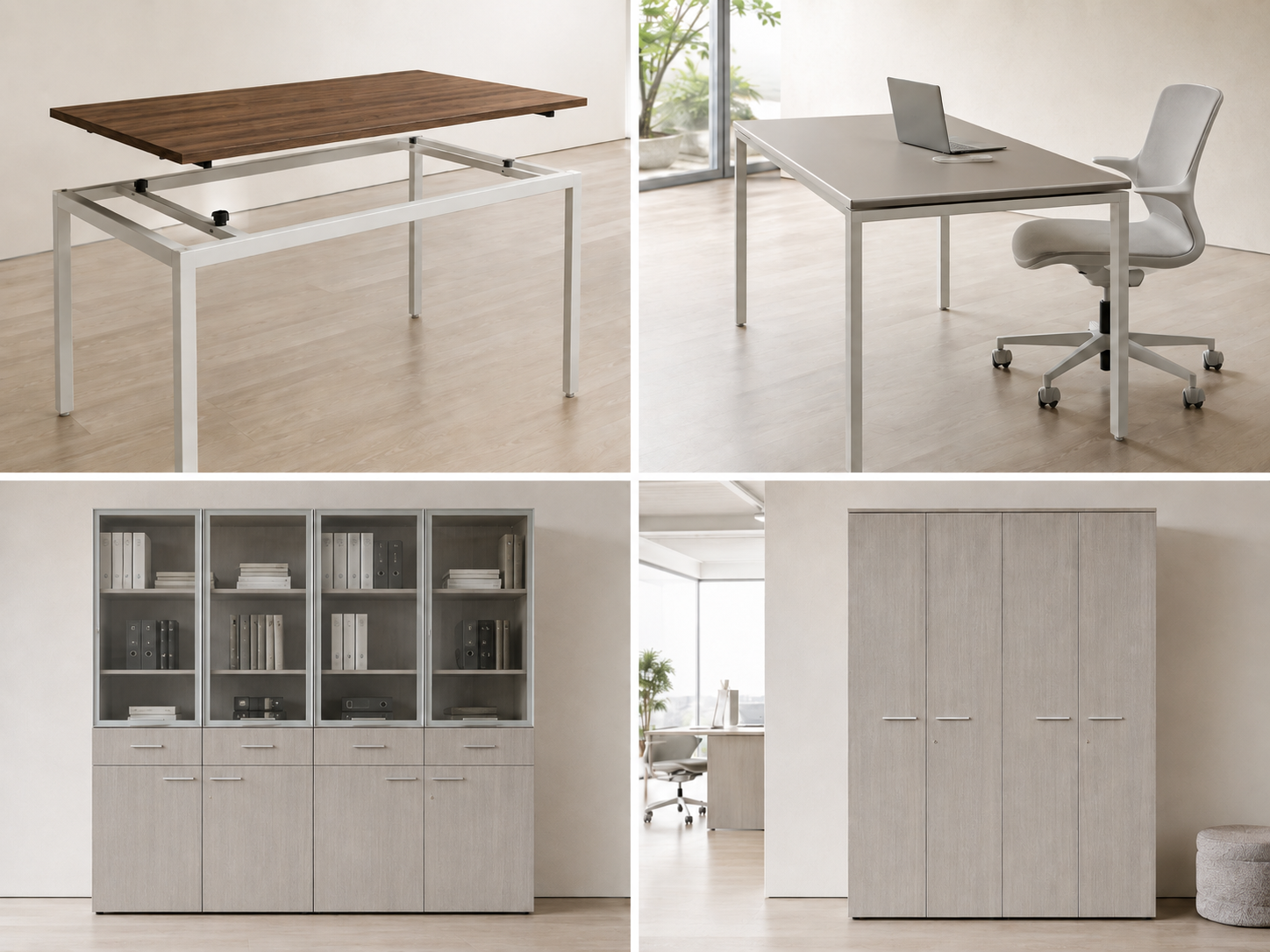
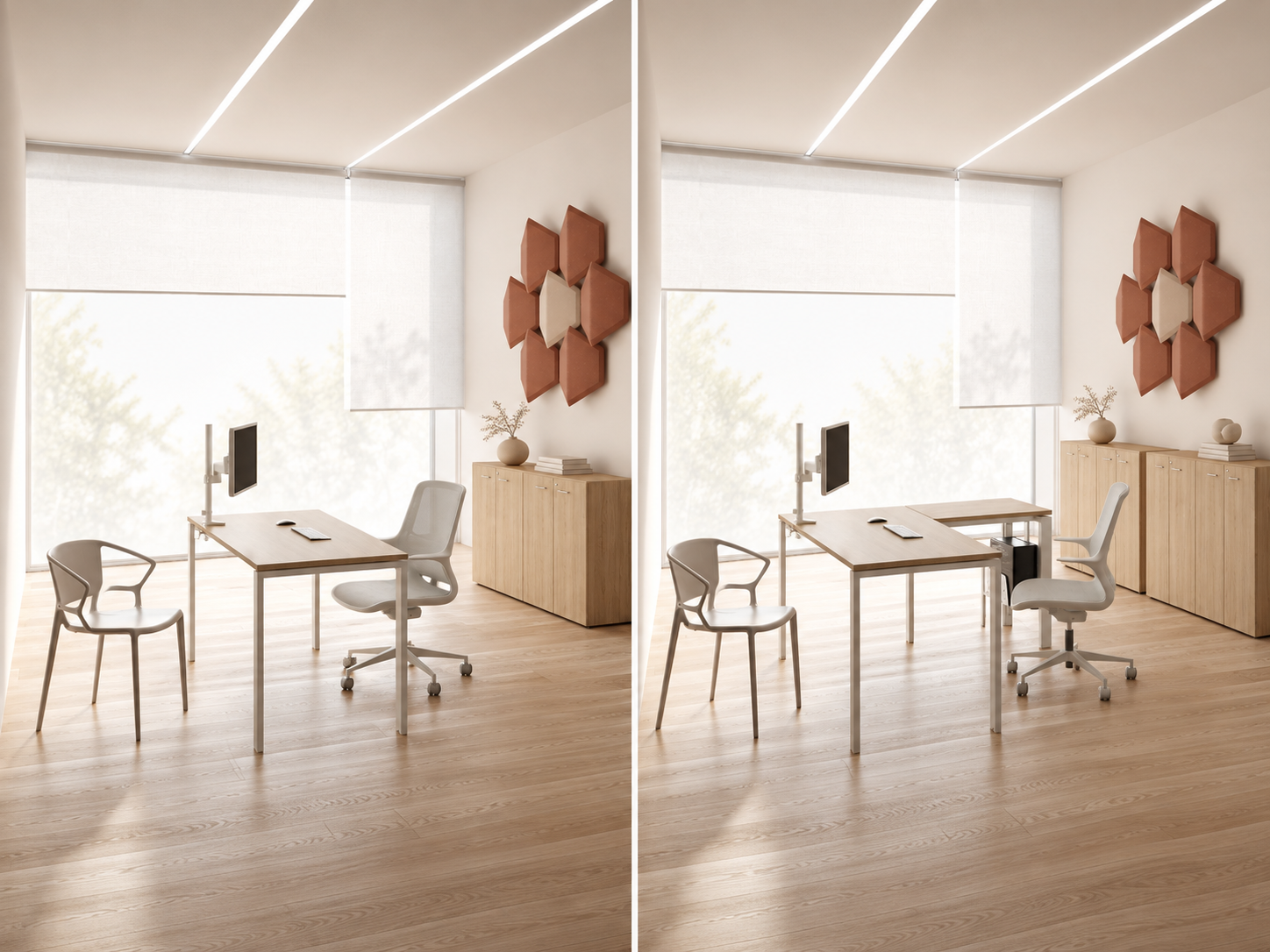
Modular furniture can be reconfigured or expanded without the need for complete replacement. Interchangeable components, expandable structures and systems that can be upgraded over time provide greater adaptability to organisational and technological changes, avoiding waste associated with outdated layouts.
In this context, modularity becomes a practical way to manage resources intelligently: modules can be moved, combined or integrated with new elements while maintaining a consistent aesthetic and functional identity. The result is an extended lifecycle in which furniture evolves alongside the company rather than being replaced with every internal reorganisation.
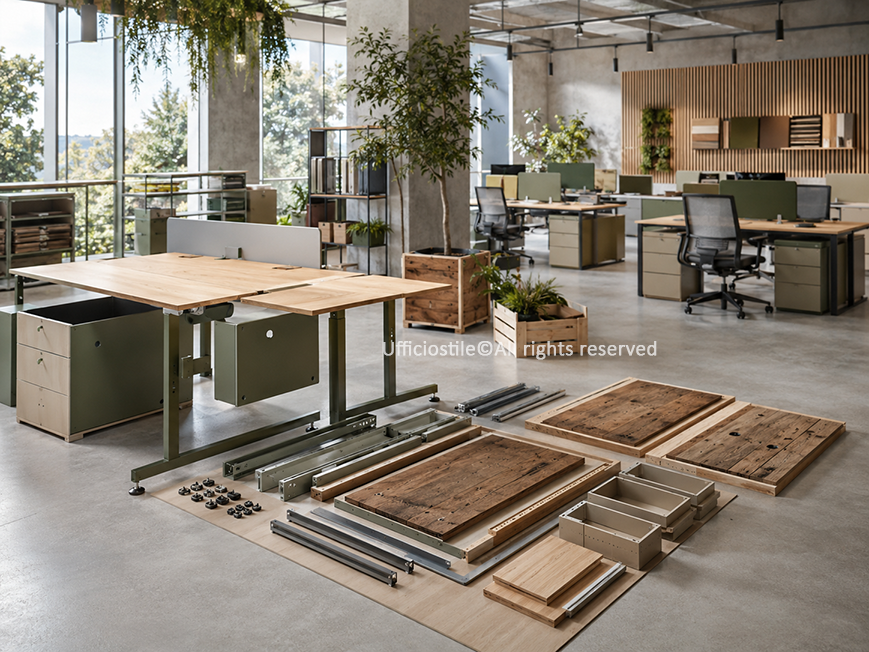
Zero-Waste Strategies to Reduce Environmental Impact
The zero-waste approach aims to eliminate waste throughout the entire furniture lifecycle. This includes design choices that favour single-material construction, easy separation of components at the end of their useful life, and the use of recycled and recyclable materials. Every element is designed to be recovered, refurbished or reintroduced into the production cycle.
These strategies make a tangible contribution to reducing the environmental footprint and achieving ESG objectives. They also encourage greater awareness within organisations: the office becomes a place where circular economy principles are translated into practical choices, reflected in layouts, materials and the way furniture is managed over time.
FAQ
Reuse reduces costs and waste, makes the most of existing assets and limits the need to purchase new products. It extends the useful life of furniture and enables more sustainable workplace management in line with circular economy principles.
Remanufacturing involves the technical restoration of furniture: replacing worn components, introducing functional upgrades, and improving performance and finishes to return products to a like-new condition while minimising waste.
Yes. It avoids complete replacements when layouts, space requirements or internal organisation change. Modular furniture can be reconfigured, expanded and upgraded, extending its lifespan and reducing the amount of material that needs to be disposed of over time.
Zero waste is based on single-material design, recycling and material recovery. Furniture is designed for easy disassembly, allowing individual components to be recovered and materials to be reintroduced into the production cycle, minimising waste at every stage of the product lifecycle.
Yes. The circular economy can reduce spending on new purchases, lower disposal costs and preserve the value of existing investments. Over the medium to long term, reuse, remanufacturing and modularity deliver measurable financial as well as environmental benefits.