
Cable management and electrification in open spaces
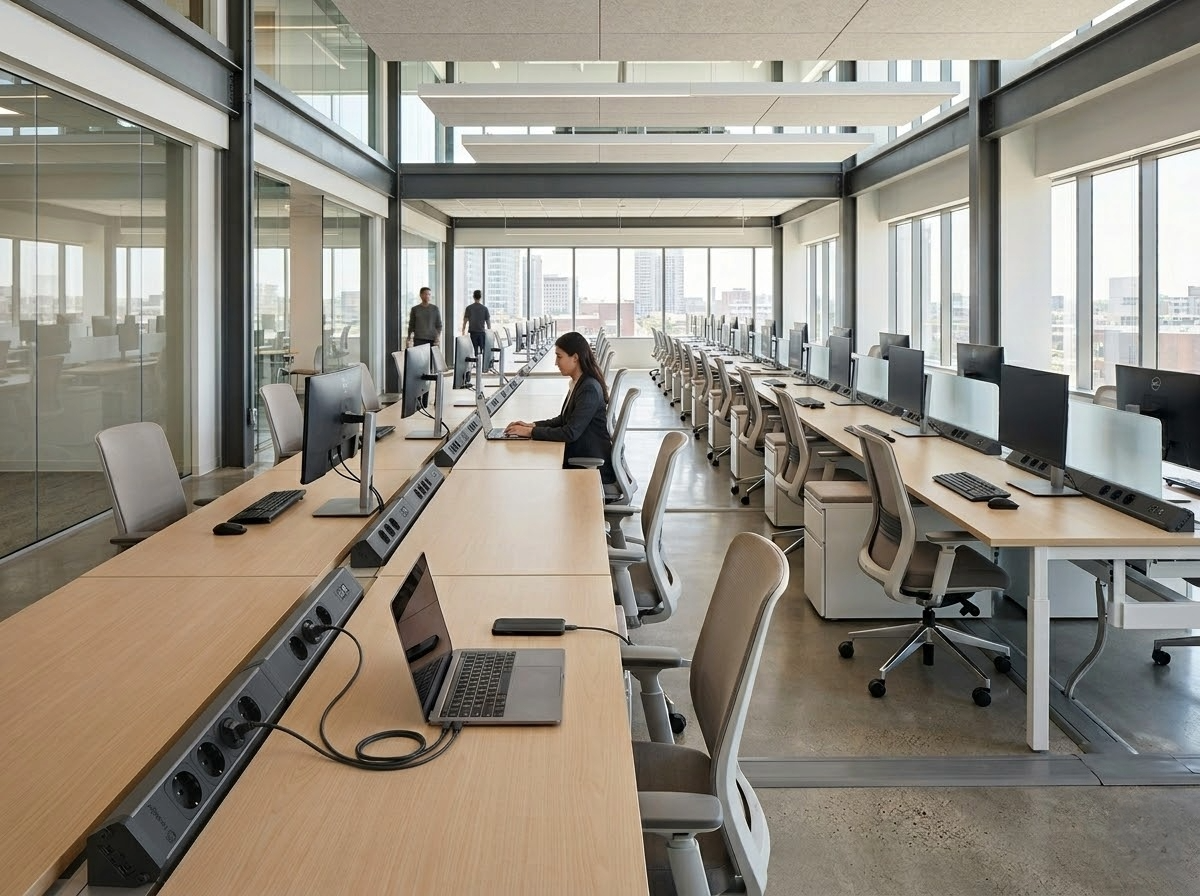
In a well-designed open space, cabling and electrification should not be perceived as a problem to be hidden afterwards, but as a structural component of the layout. When power and connections are intelligently integrated, the space appears tidier, more readable and much easier to use, both for those who work at the workstation every day and for those who need to manage future team evolutions.Cable management and electrification in open spaces include integrated solutions that bring power and connections to shared workstations in an orderly, accessible and scalable way. Ducts, top access, towers, power poles and modular distribution systems help reduce visual clutter, improve safety, simplify everyday use and make the layout easier to modify over time without compromising the quality of the space.


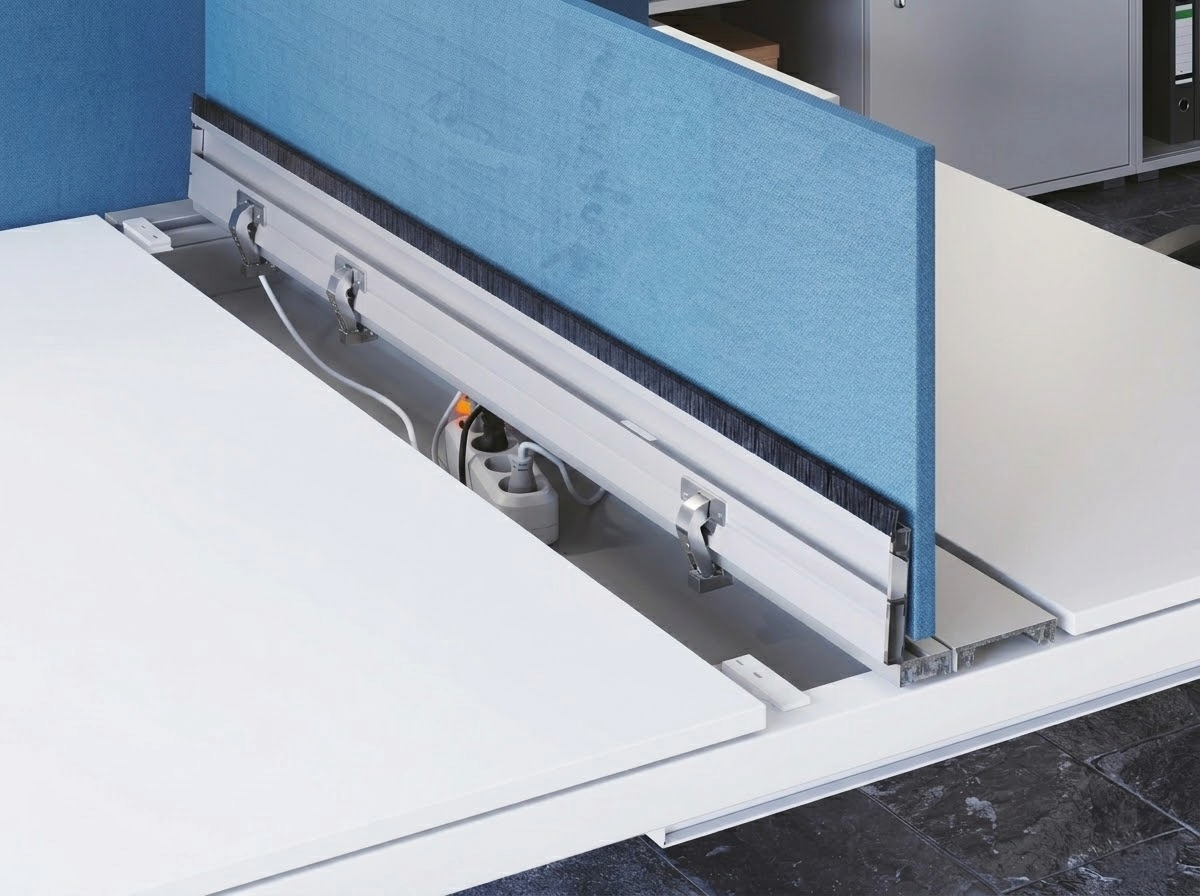
Under-top ducts for benches
Cabling disappears, the workstation works better.
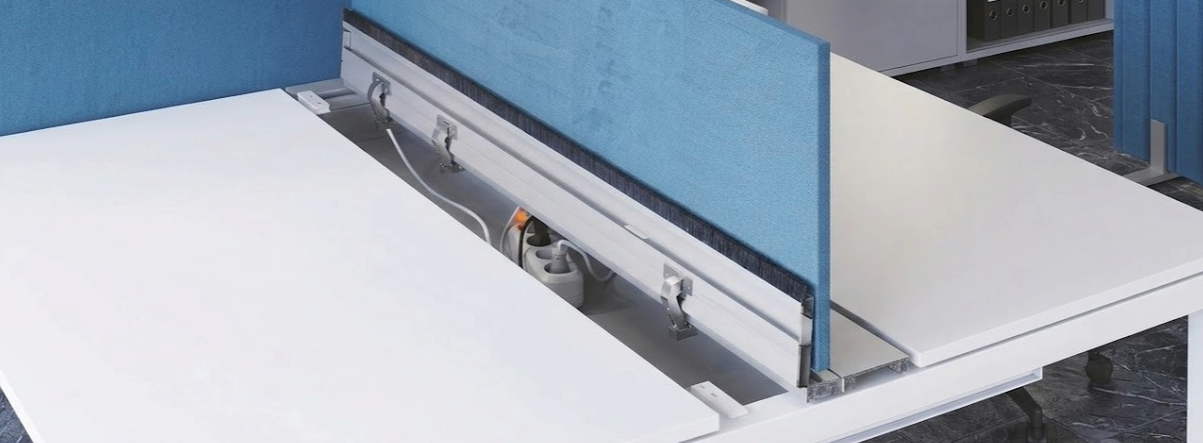
Under-top ducts for benches are one of the most effective solutions when the goal is to keep the open space orderly and readable even with many closely spaced workstations. They collect power supplies, cables and connections under the top, avoiding visual build-up, interference in circulation routes and that feeling of disorder that immediately lowers the perceived quality of the environment. From a UX perspective, they greatly improve the everyday workstation: the team finds a cleaner, safer space that is easier to keep coherent over time.

Multi-user top access
Power and data where they are needed, without invading the top.
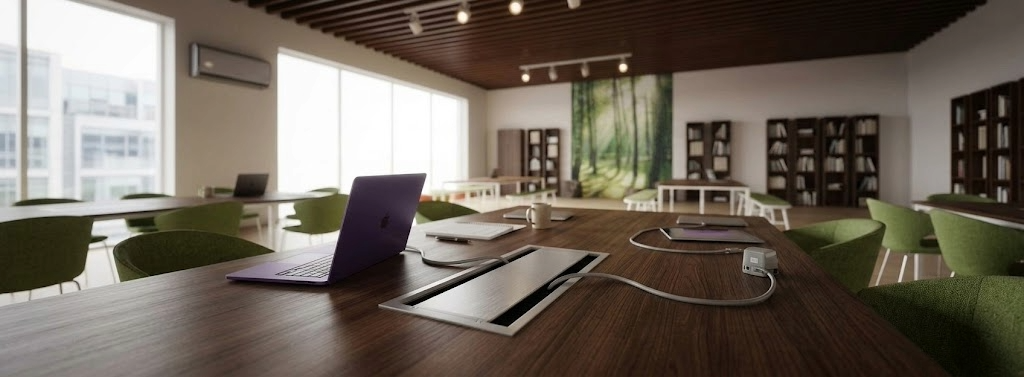
Multi-user top access modules are ideal in open spaces where benches or shared tables need to offer immediate access to connections without turning the top into a congested surface. Integrated directly into the desk, they make connecting notebooks and devices more intuitive, reducing unnecessary gestures and improving workflow fluidity. For the user, the advantage is clear: everything is closer, clearer and tidier. For the project, it means maintaining a professional image even in high-intensity operational environments.
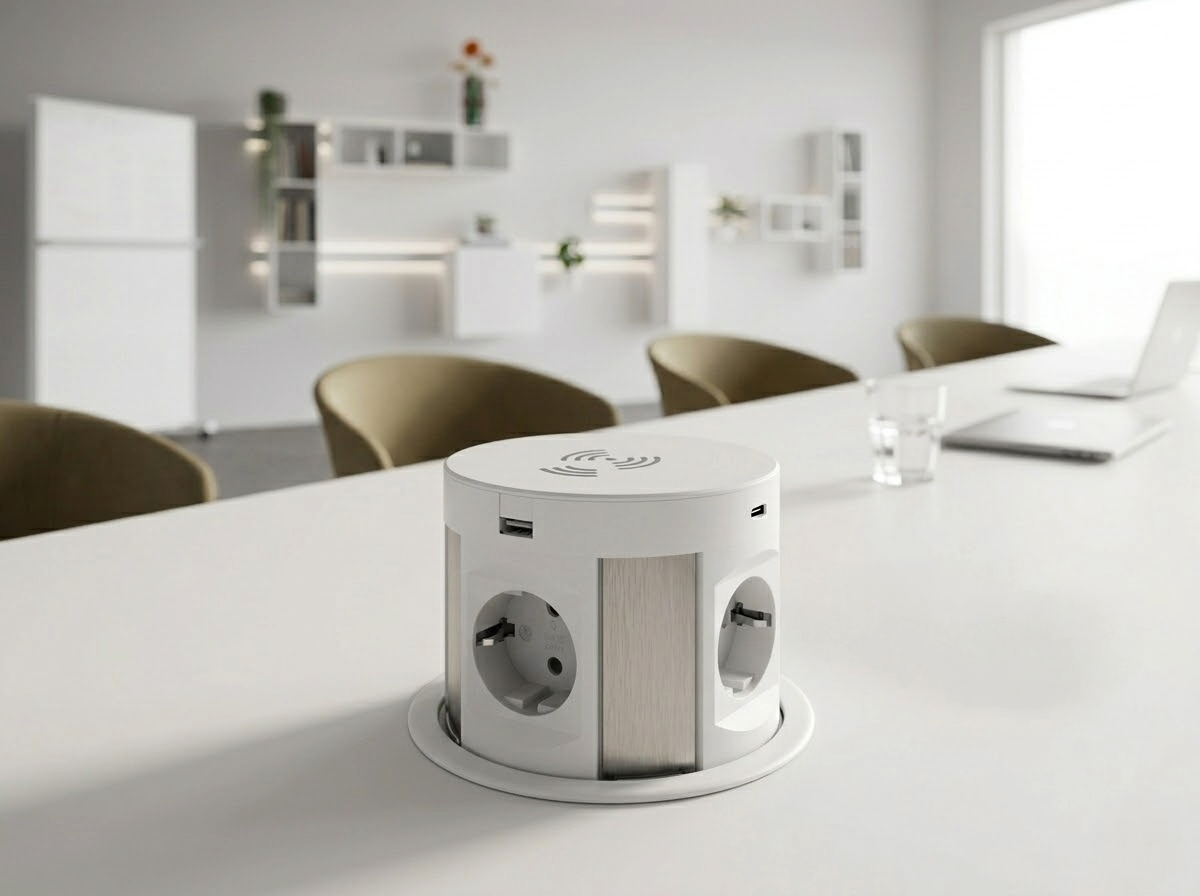
Towers for shared tables
Connectivity emerges only when it is truly needed.
Electrified towers are particularly suitable for shared operational areas where several people use the same table or work island during the day. Their strength is immediate, but not permanent, usability: when not needed, they leave the top cleaner and less crowded; when needed, they concentrate power and connections in an easy-to-reach point. In terms of user experience, they help avoid improvised connections, reduce visual chaos and make collaborative areas more elegant, intuitive and ready to accommodate different uses.
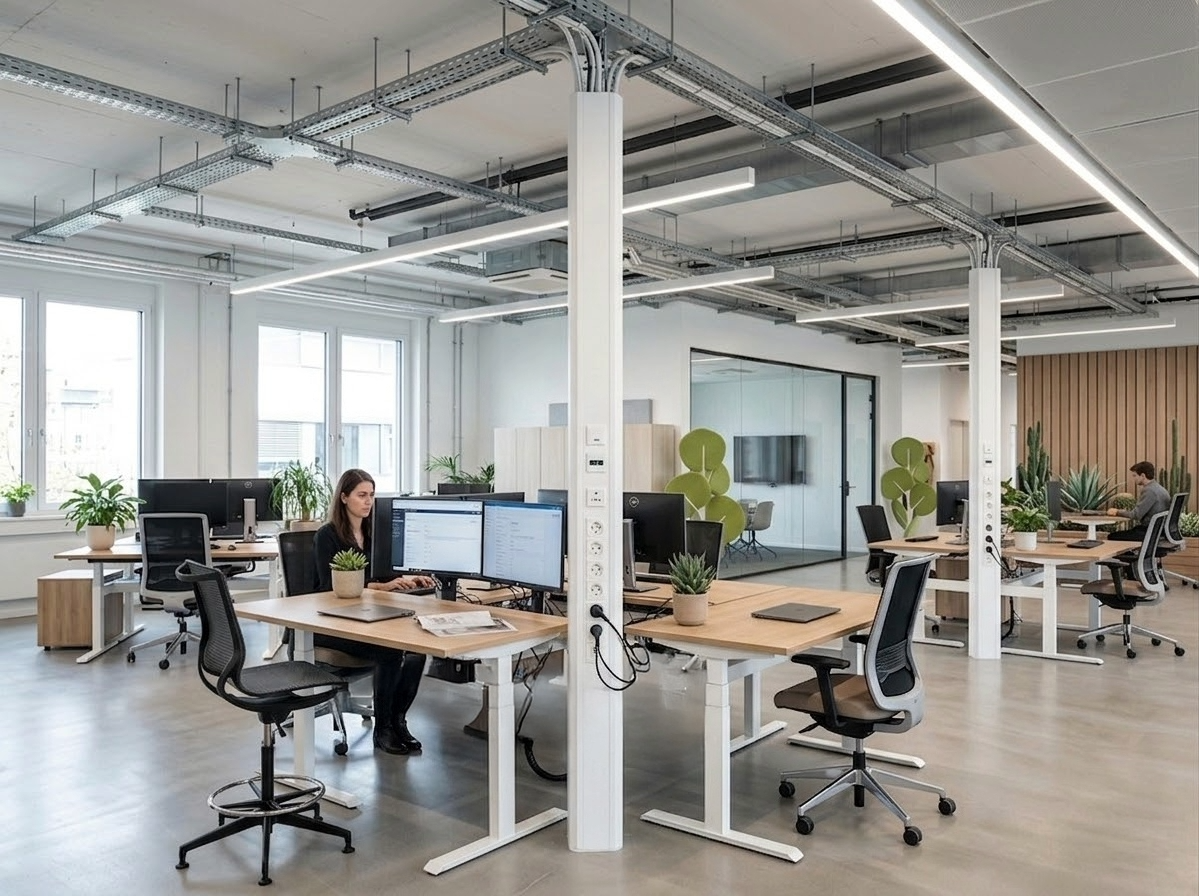
Power poles and equipped columns
Bring power from above with greater design freedom.
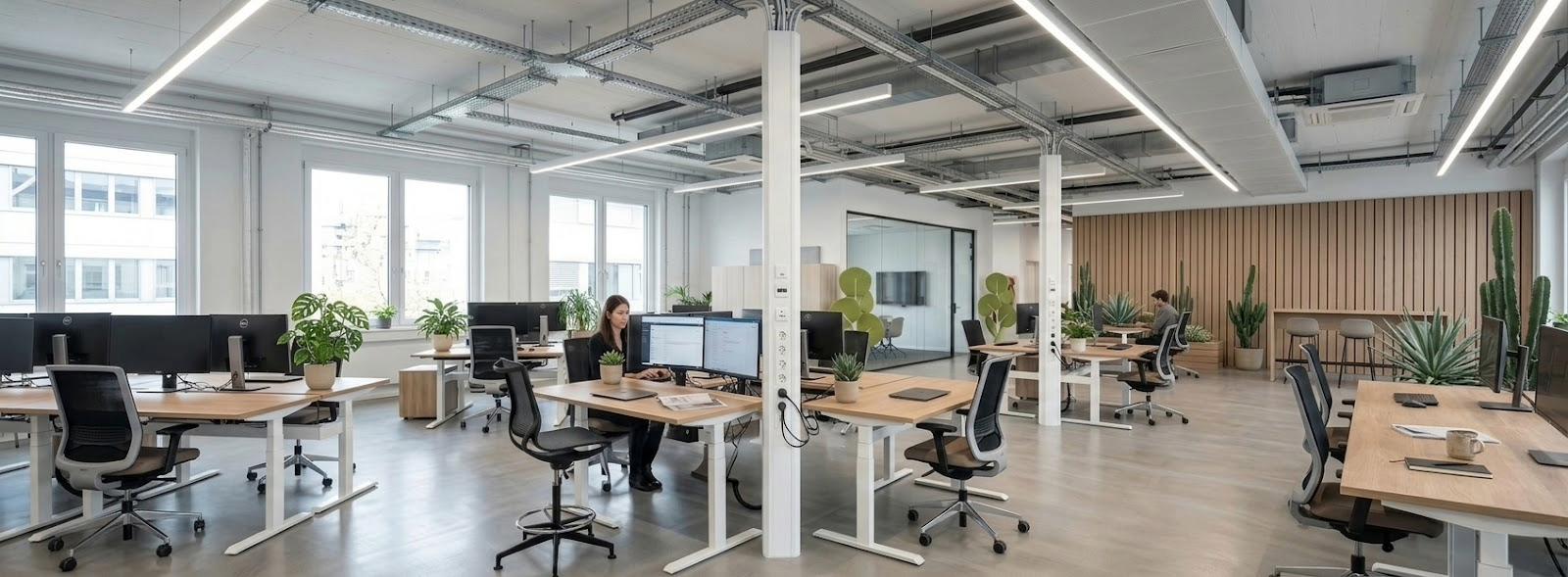
Power poles and equipped columns are very useful solutions when the open space does not allow easy distribution from the floor or when maximum flexibility in the positioning of operational islands is required. They make it possible to bring power and data in a clean, readable and relatively non-invasive way, avoiding long visible cable runs or adaptations that are not very consistent with the layout. For the team, this means workstations that are immediately operational and easier to understand; for the company, it means being able to evolve space distribution without redoing everything each time.
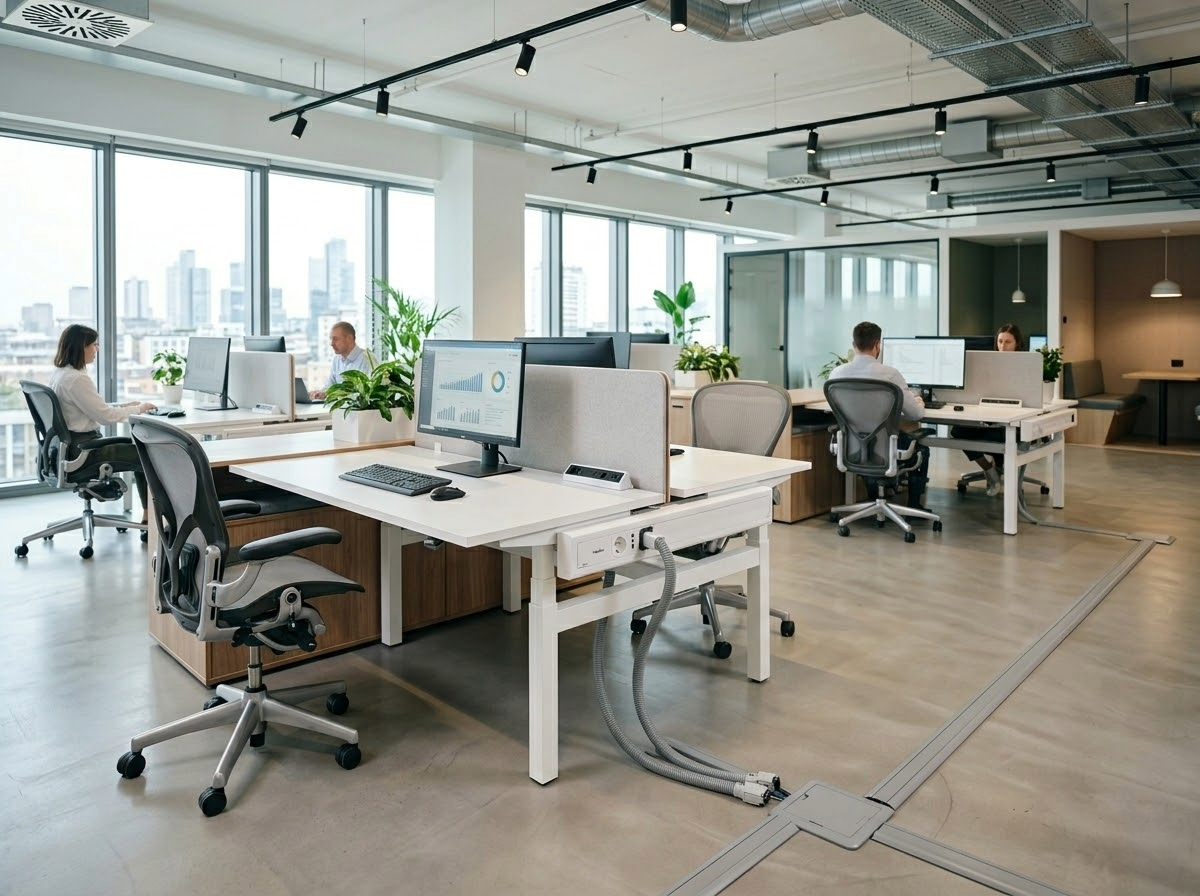
Quick-connect modular cabling
Reconfigure the open space without starting from scratch.
Quick-connect modular systems are designed for open spaces that change over time, grow in phases or require frequent reconfiguration of benches, clusters and departments. In these contexts, the real value is not only having sockets and connections, but being able to rethink them quickly without invasive interventions and without slowing down office life. From a UX perspective, this approach also greatly improves the everyday experience: workstations remain coherent, the layout is easier to update and users do not find themselves in an environment that looks temporarily adapted every time.
Scalable contract electrification
Standardise well today to grow better tomorrow.
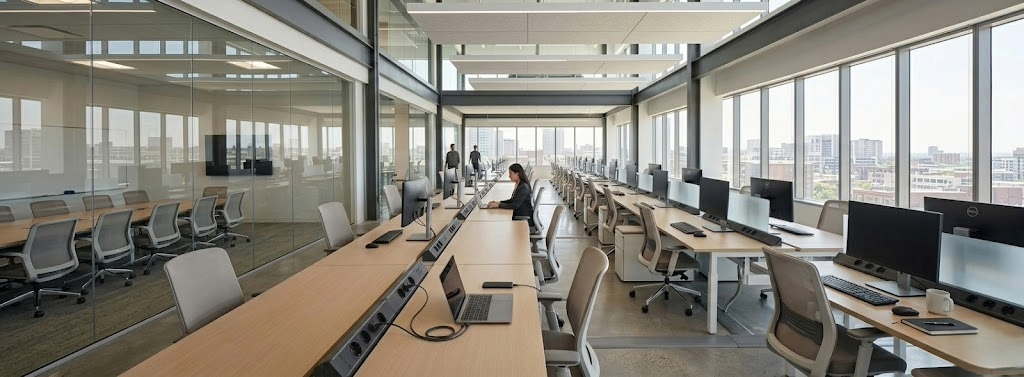
Scalable contract electrification is the right choice when the open space includes many workstations and must maintain uniformity, order and ease of maintenance on a large scale. Here the issue is not only distributing power, but building a repeatable standard that simplifies installation, everyday use, future expansions and replacements. In terms of user experience, the result is very concrete: every workstation works in the same way, the team orientates itself immediately and the entire environment communicates greater quality, control and reliability, avoiding the fragmented effect typical of offices that have grown without clear direction.
FAQ – cable management
It refers to the set of solutions that organise cables, power and connections in an orderly and accessible way within shared workstations, benches and operational tables. It does not only concern the technical system, but also the quality of use of the space: well-designed cabling reduces visual clutter, improves safety and makes the open space easier to use every day.
Because it directly influences the way people connect, work and move through the space. If sockets and connections are difficult to reach or generate visible cables, the workstation feels uncomfortable, unintuitive and visually more chaotic. When electrification is well integrated, everything appears clearer, more professional and smoother in everyday use.
It depends on the type of table and user behaviour. Top access is ideal when continuous and discreet integration directly into the workstation top is required. A tower works very well when the same table must remain clean for part of the time and activate connectivity only when needed. Both solutions greatly improve user experience, but respond to different design logics.
They are needed when workstations are numerous or heavily equipped and you want to prevent cabling from remaining visible under desks or along routes. They are particularly useful in benches and modular systems because they help keep power supplies and connections tidy, also simplifying maintenance and cleaning. In practice, they make the open space more readable and less dispersive.
It is a modular connection system designed to facilitate changes, expansions and reconfigurations of the open space without invasive interventions. It is very useful in offices that change over time, because it allows workstations to be moved or added more quickly and with less impact on operations. For the end user, this means working in an environment that remains orderly and coherent even as it evolves.