
Break area accessories: small details, great everyday comfort
Accessories define how well a break area really works: small elements that reduce clutter, simplify cleaning and make breaks more comfortable. When selected logically, they transform coffee points and kitchenettes into an orderly, “ready-to-use” space, where people and guests immediately find everything they need and maintenance remains simple even on peak-use days.Office break area accessories include elements for organising coffee points and kitchenettes: cup holders, dispensers, trays, bag holders, shelves, trolleys and solutions for cleaning and waste. They improve order, hygiene and speed of use, reduce clutter on worktops and make the space more efficient, especially in offices with high turnover and guest presence.
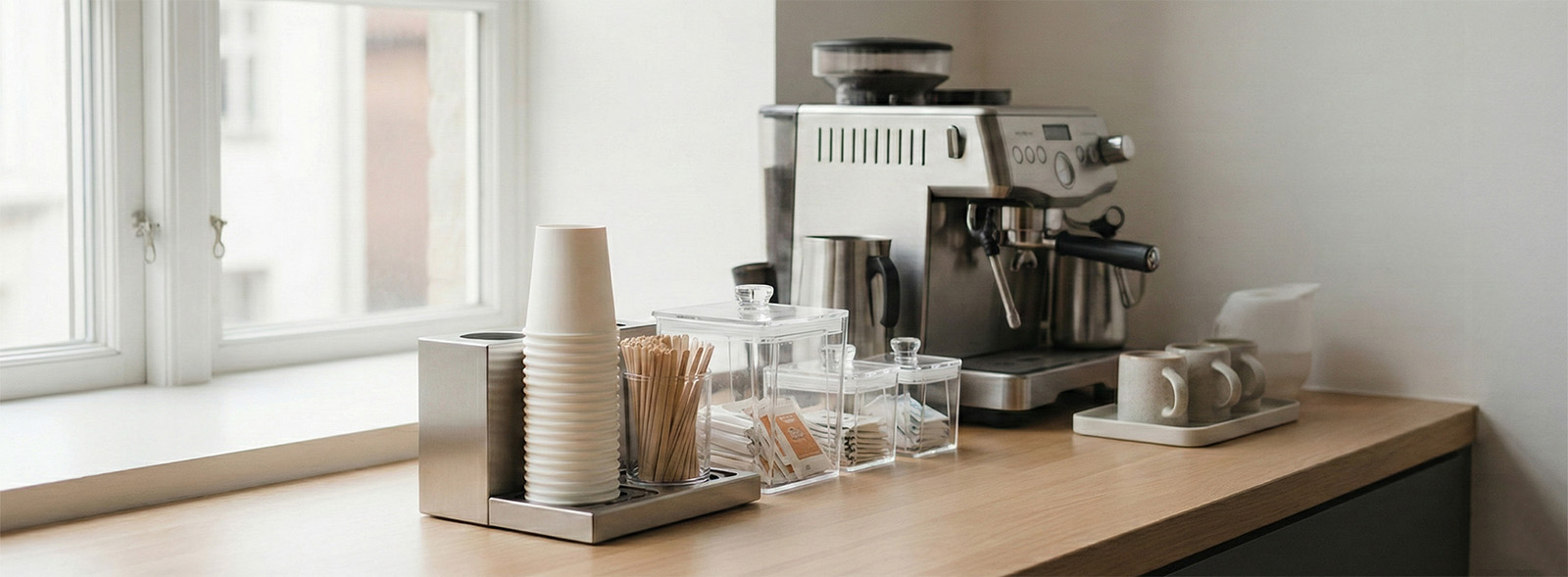
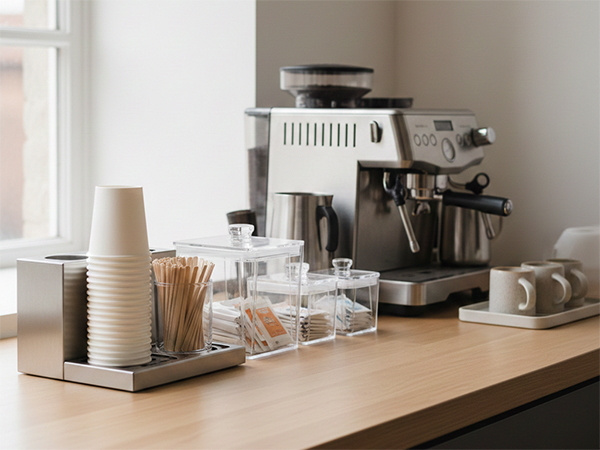
Coffee point organisation: cups, stirrers and sugar
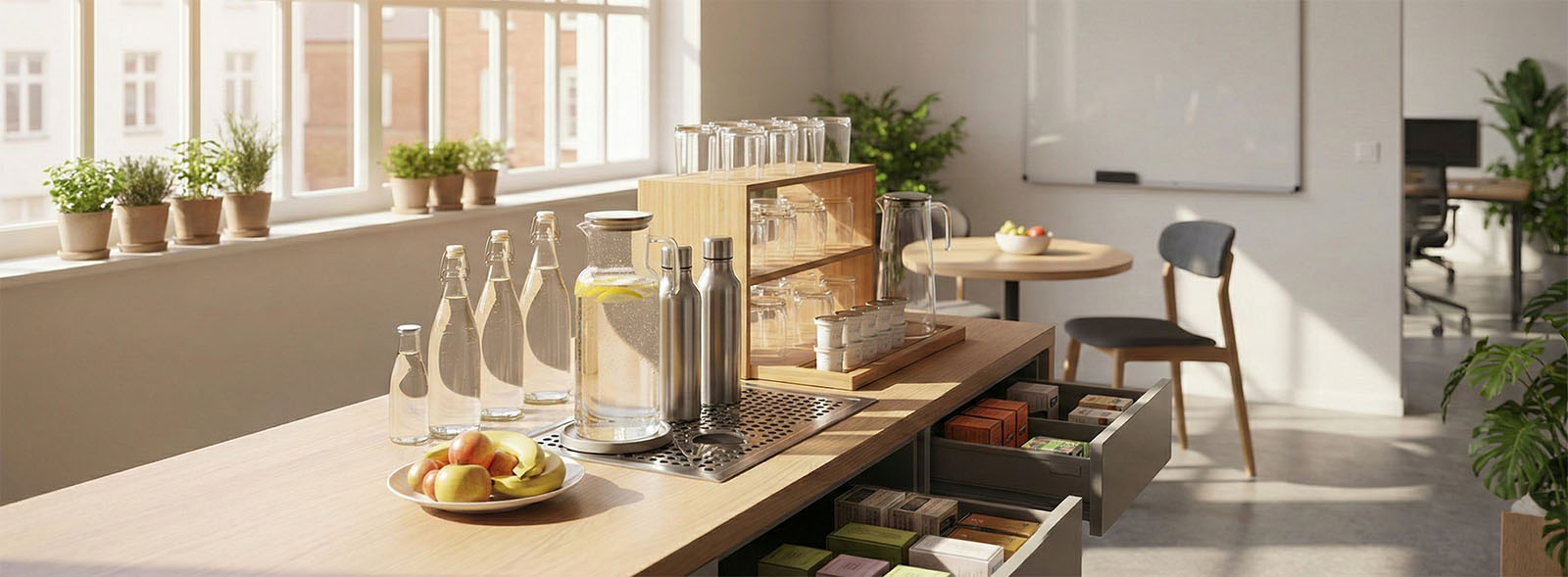
A coffee point works when it is immediate: take, consume, put away, without leaving traces. Accessories such as dispensers and dedicated containers help avoid scattered sachets, stirrers everywhere and accumulations on worktops. The result is a simpler gesture for those using the space and an always-orderly appearance, even with continuous flows.
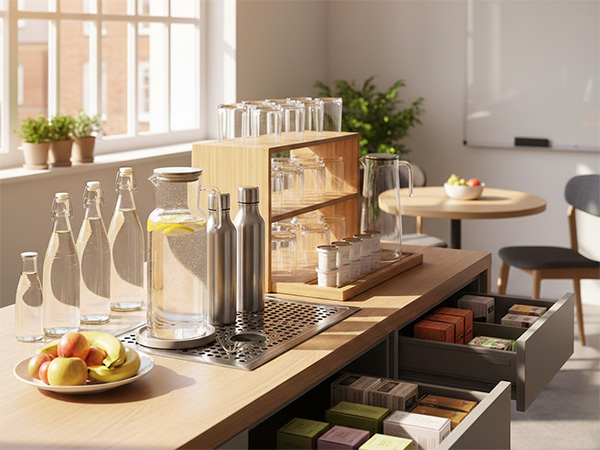
Water and beverage management: bottles, carafes and refills
When water, drinks or carafes enter the space, order depends on where things are placed. Accessories consistent with the kitchenette, such as dedicated shelves and supports, reduce drips, clutter and micro-disorder. This is particularly useful when the break area also hosts informal meetings and guests pass through: the service remains clean and credible.
Accessories for quick cleaning and everyday hygiene
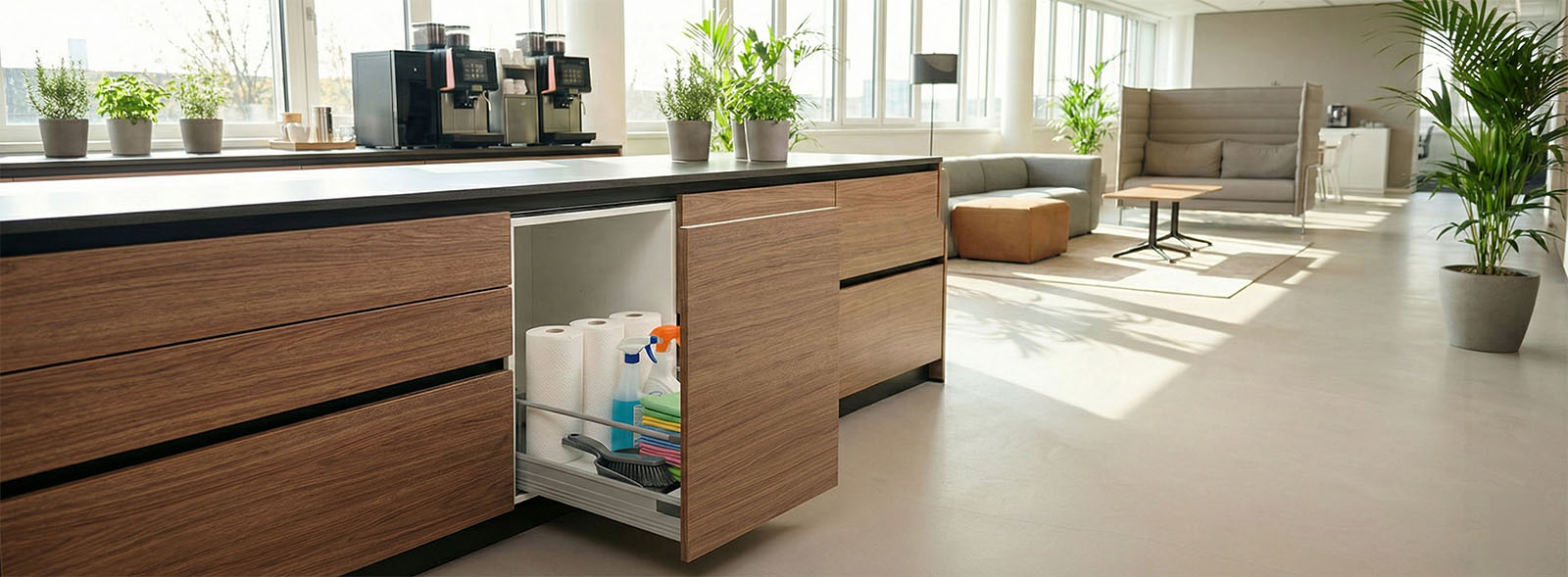
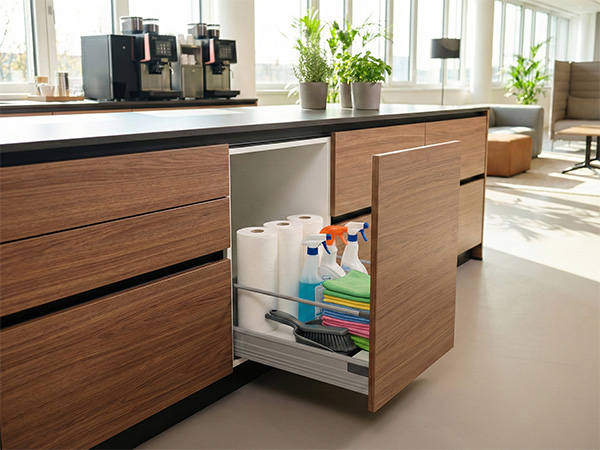
The difference between a “beautiful” break area and a “usable” break area lies in how easy it is to reset. Accessories for quick cleaning, dedicated points for paper, sprays and small tools, and solutions that keep everything tidy without being visible make maintenance lighter and the environment more pleasant throughout the day.
Smart supports and micro-storage: shelves, niches and trays
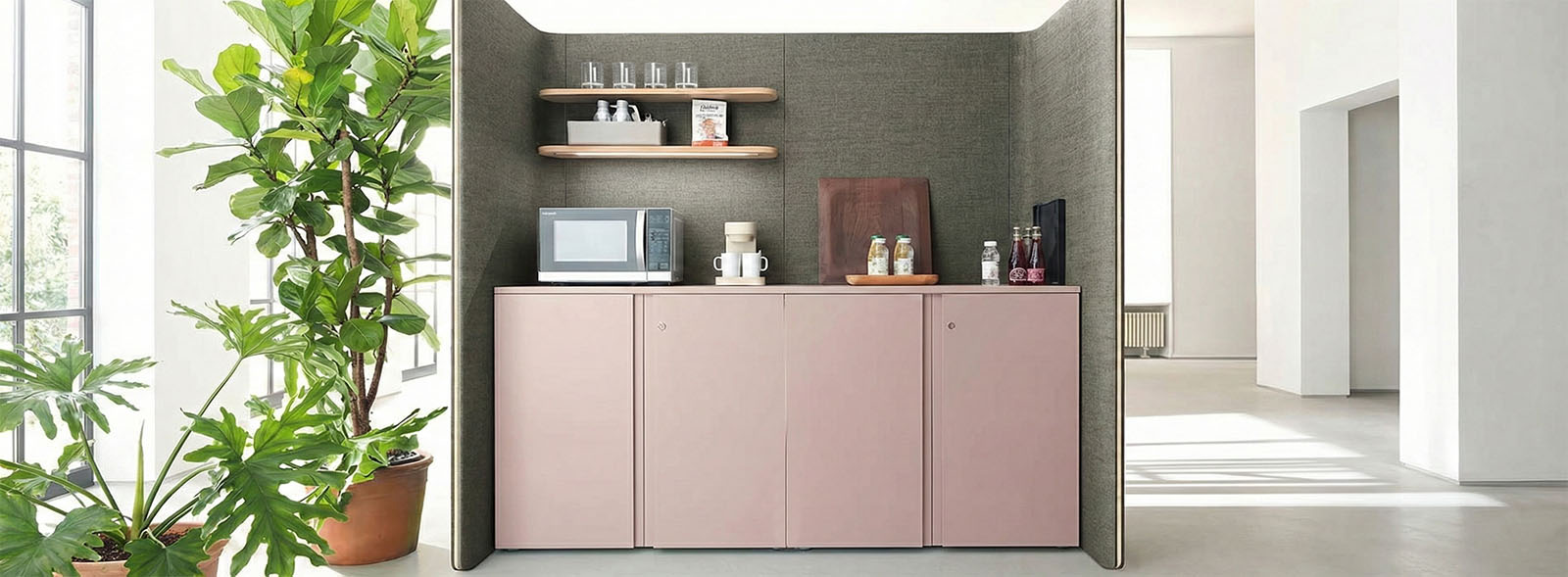
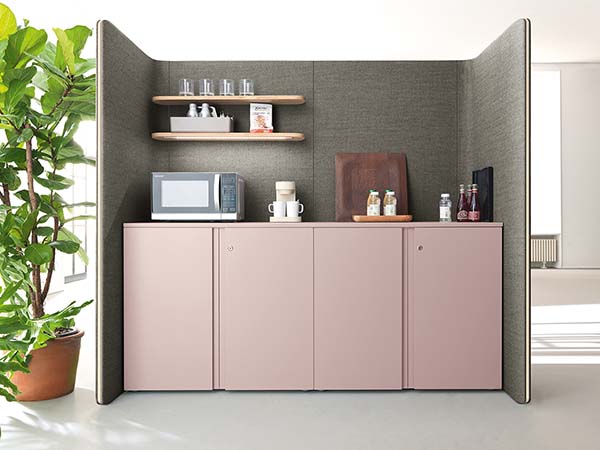
Objects multiply in break areas: cups, small plates, snacks, accessories and small appliances. Shelves, niches and trays help “move” clutter from the worktop to dedicated spaces, keeping surfaces free. This increases the perception of order and reduces time wasted clearing worktops for use.
Trolleys and mobile supports for peak moments
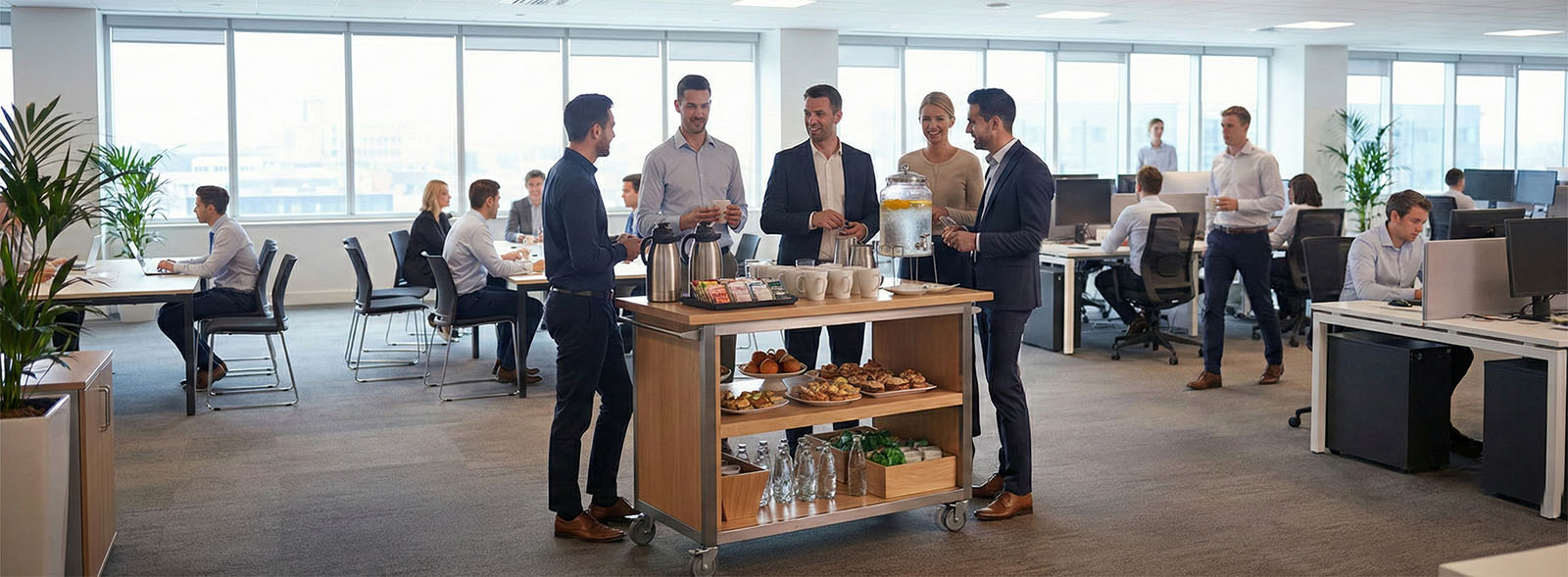
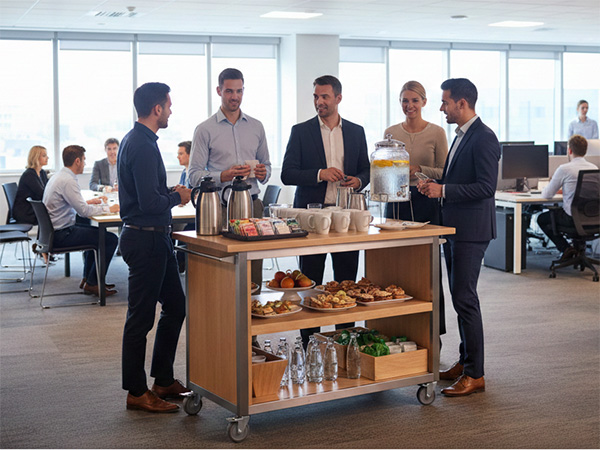
In offices with training sessions, events or large teams, peak moments are inevitable. A trolley or mobile support makes it possible to serve, tidy up or restock without congesting the kitchenette. It is a simple but highly strategic accessory: it increases the capacity of the space without modifying it and keeps flows more fluid during peak hours.
Comfort details: coat stands, bag holders and small “services”
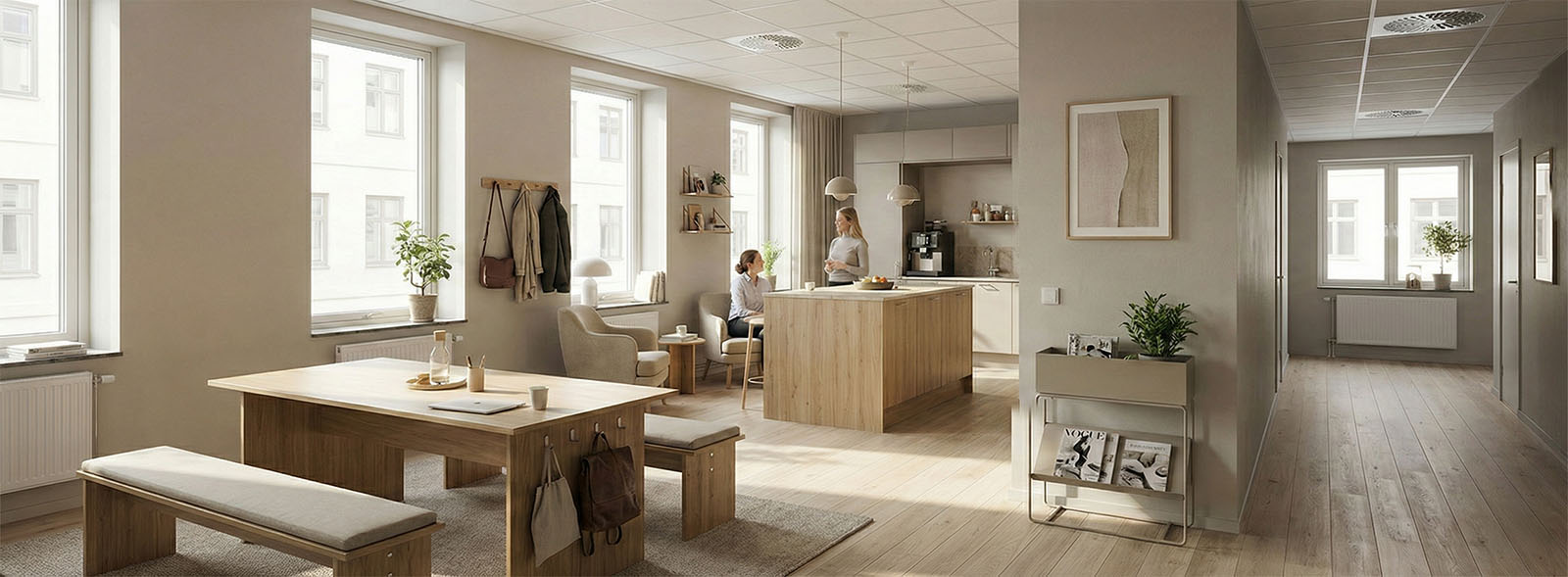
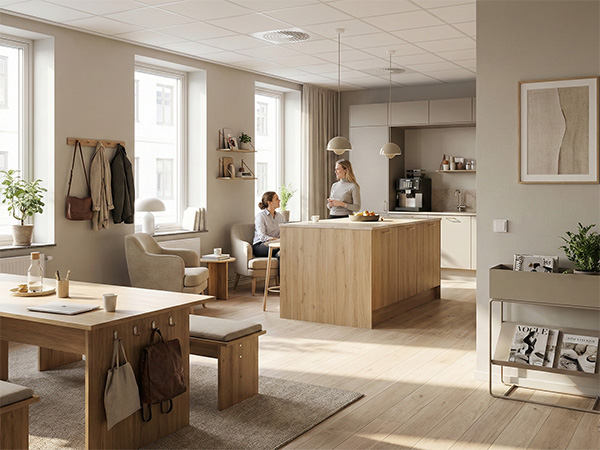
A break area works better when it welcomes people, not only when it “dispenses” coffee. Small accessories such as coat stands, support points for bags or discreet elements for organising personal items reduce clutter and improve the experience. These are details that convey care and attention, especially in offices with guests or shared spaces.
FAQ – break area accessories
Those that prevent clutter: coffee point organisation, waste management, cleaning points and dedicated supports. If these four “pillars” are solved, the space remains orderly even with intensive use.
Recurring objects, such as cups, snacks and accessories, need to be moved onto dedicated containers and supports, leaving the worktop free for real use. A few right accessories are worth more than many scattered elements.
Yes, when the break area experiences peak moments, such as events, training sessions or large teams. A trolley improves restocking and reset without creating congestion and without making an “event-style” setup permanent.
With discreet accessories and dedicated points: what is needed must be close and accessible, but not visible. The solution is to integrate micro-spaces and supports that keep everything tidy and “hidden” just enough.
Yes, because the break area is a high-visibility and high-use space: if it is orderly and well cared for, it communicates attention and organisation. If it is chaotic, it communicates the opposite, even if the furniture is high quality.