
Biophilic design for open spaces
In the design of an open space, biophilic design should not be understood as the simple presence of plants, but as a spatial strategy that makes the environment more balanced, less rigid and easier to live in every day. Integrating greenery, natural materials, warmer textures and perceptual micro-thresholds helps reduce the feeling of an anonymous office, improving readability, comfort and the perceived quality of the work experience. In a context that the Ufficiostile master describes as modular, shared and with controlled acoustics, biophilia becomes a design layer that humanises without compromising order and functionality. Biophilic design for open spaces is a design approach that integrates greenery, natural materials, tactile surfaces and regenerative micro-areas into shared workspaces. It makes the environment more welcoming, less stressful from a perceptual point of view and more readable in everyday use. In the office, it does not mean decorating with scattered plants, but building a more balanced, human workplace consistent with modular layouts and real flows.
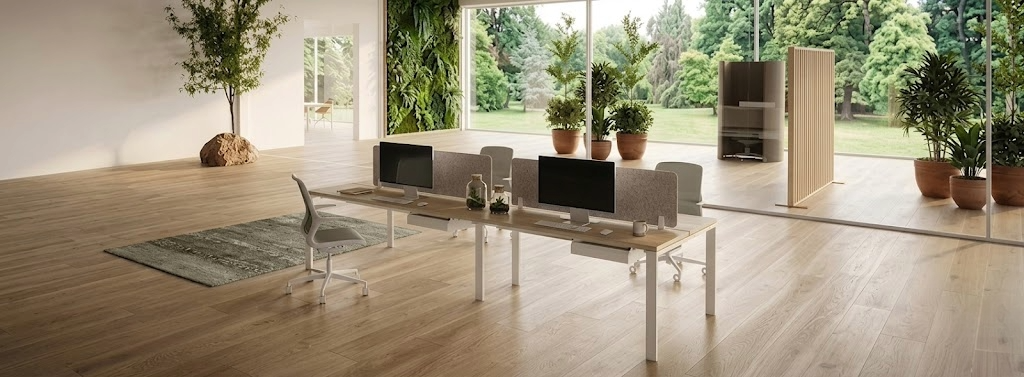
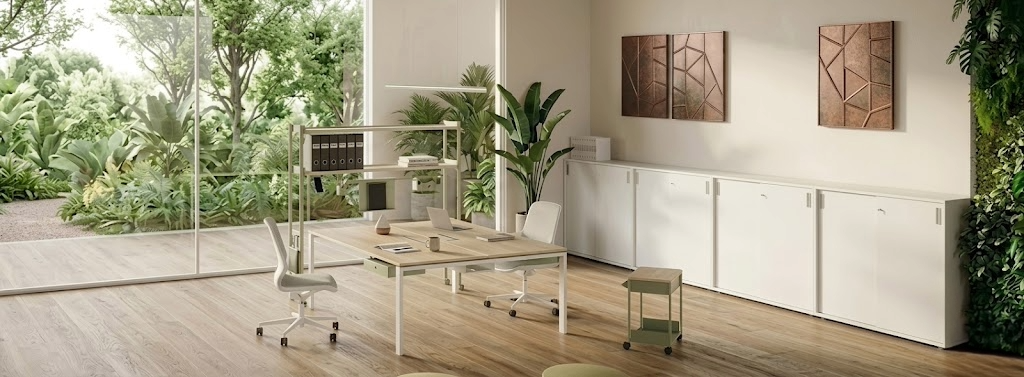
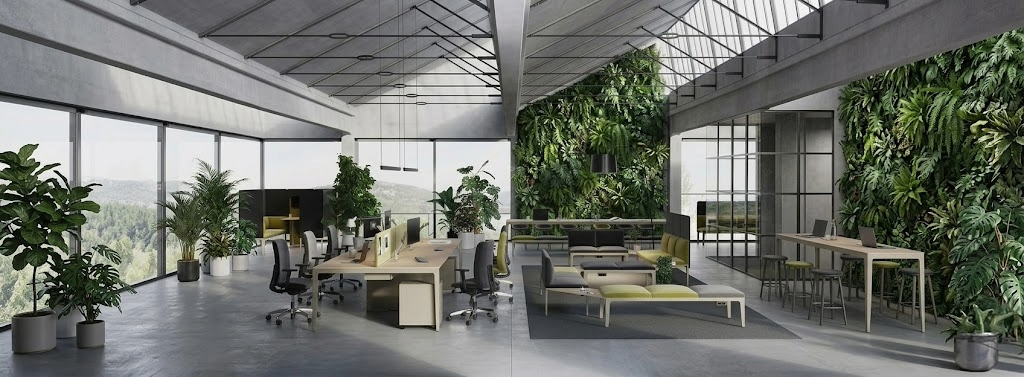
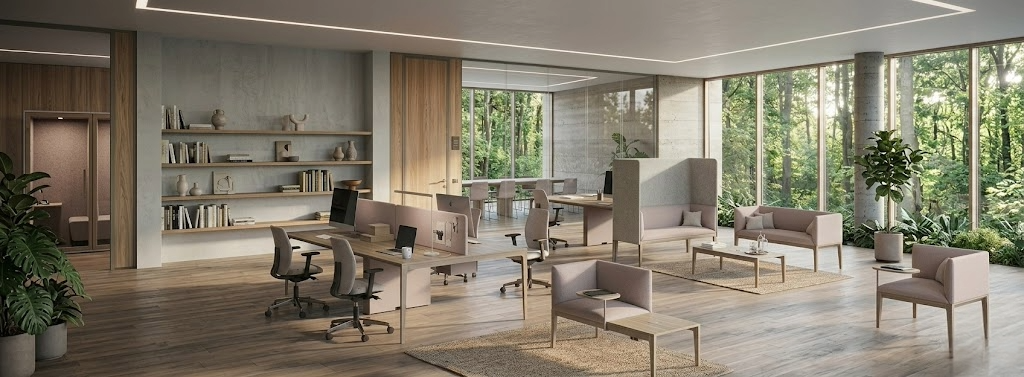
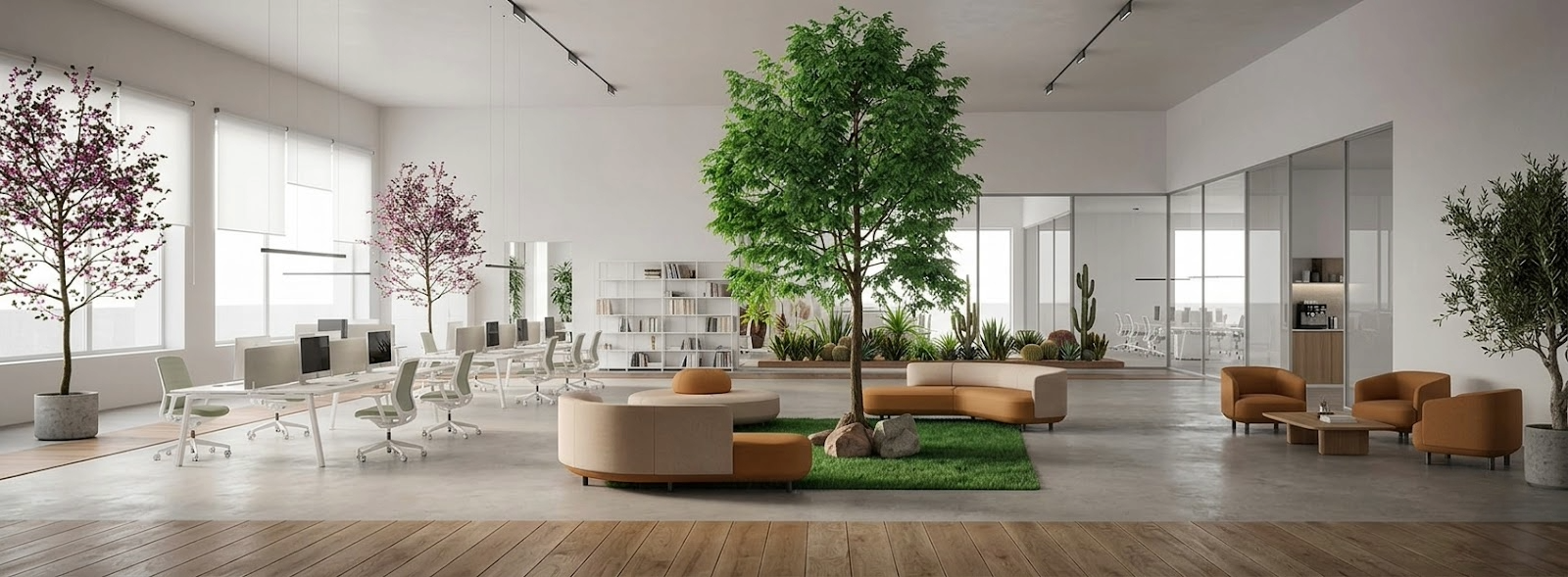
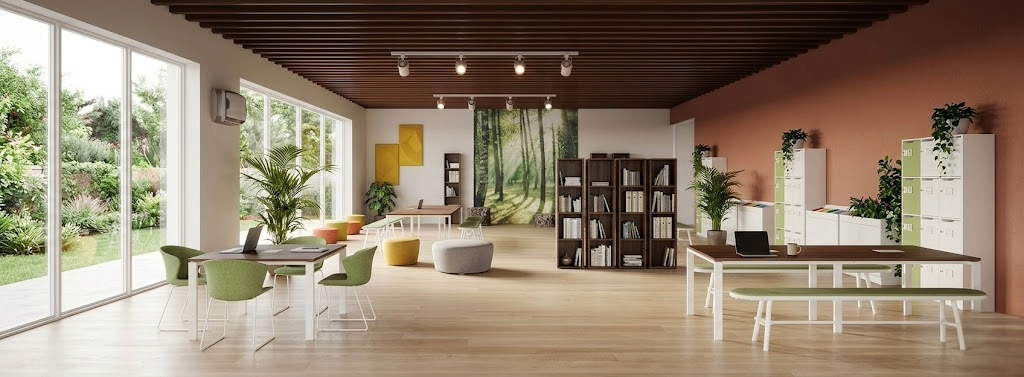
Key elements of biophilic design for open spaces
- Natural connection → psychological balance and focus.
- Tactile materials → sensory comfort and authenticity.
- Environmental comfort → balanced light, air and acoustics.
- Brand value → sustainable reputation and HR retention.
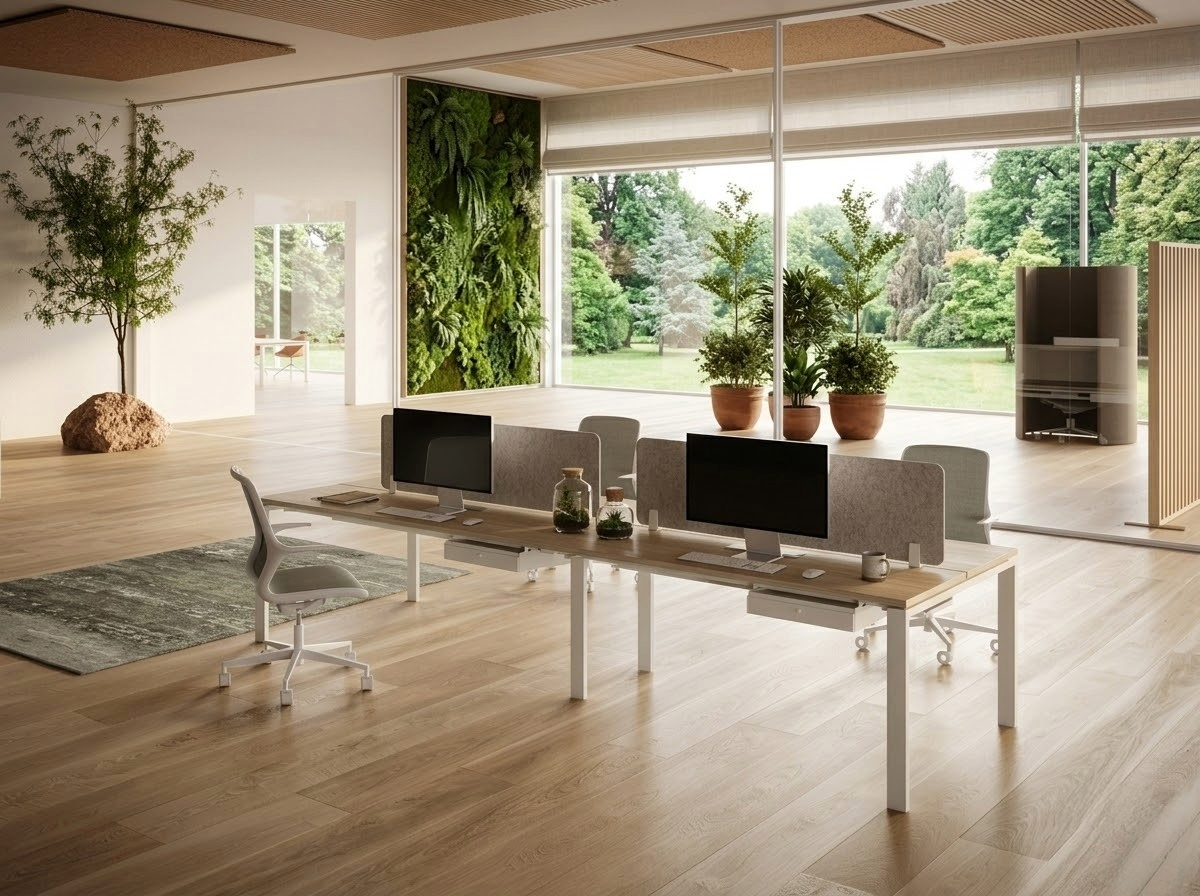
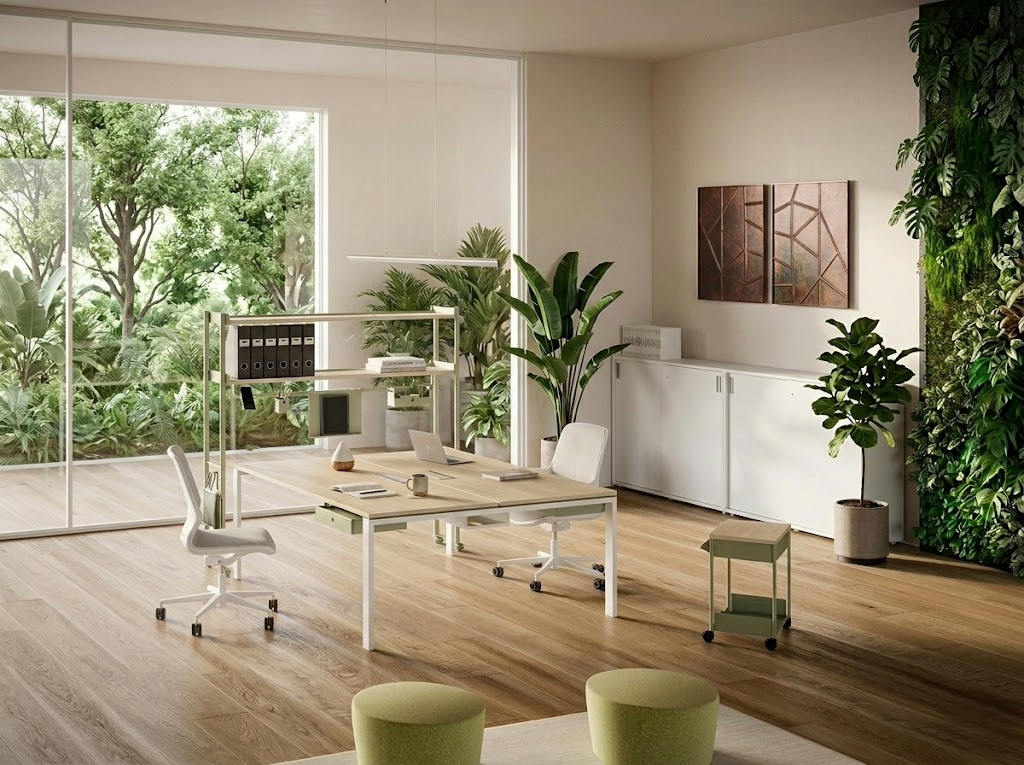
Connection with nature as a productivity lever
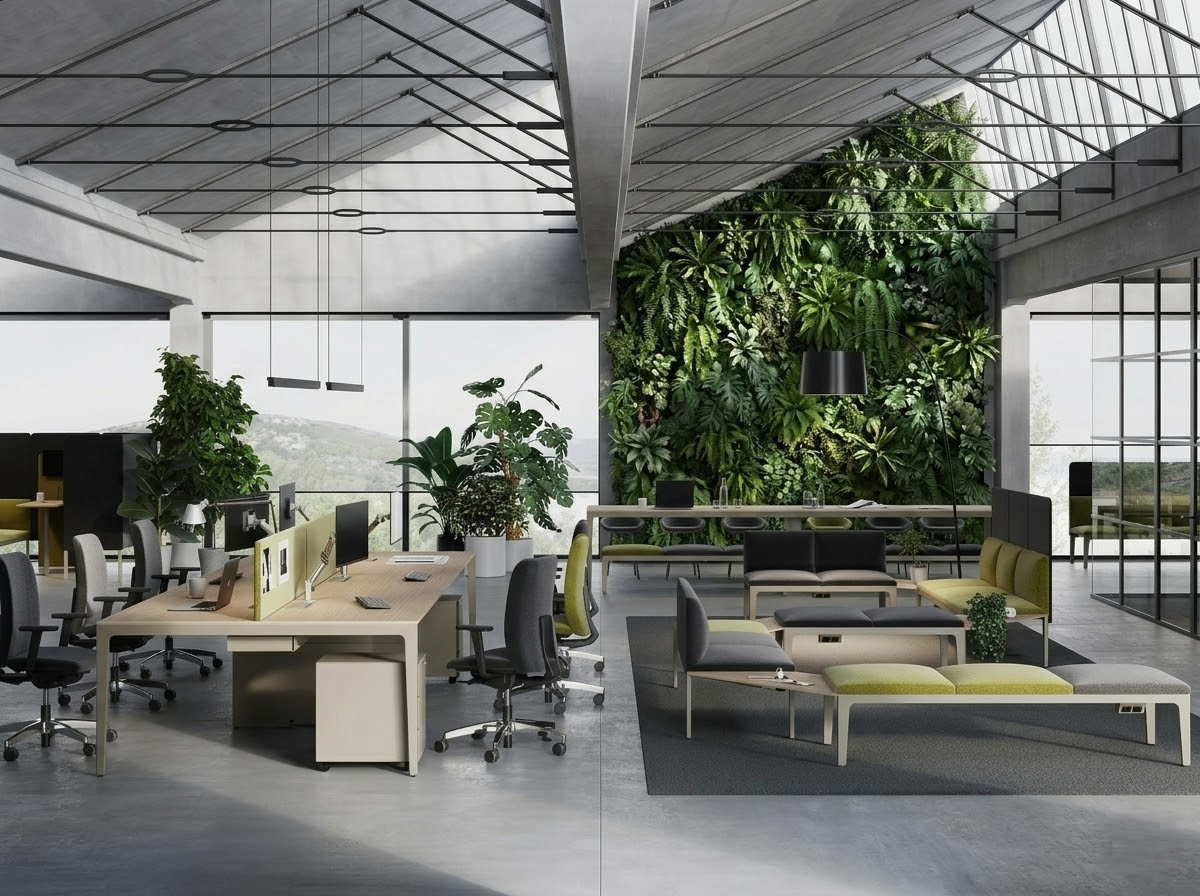
Numerous studies show that the presence of natural elements increases concentration and job satisfaction. Ufficiostile biophilic design integrates vertical greenery, natural light and organic materials to create environments that reduce stress and improve mood. This direct connection with nature supports greater emotional stability and a deeper sense of belonging to the workplace.
Natural and tactile materials
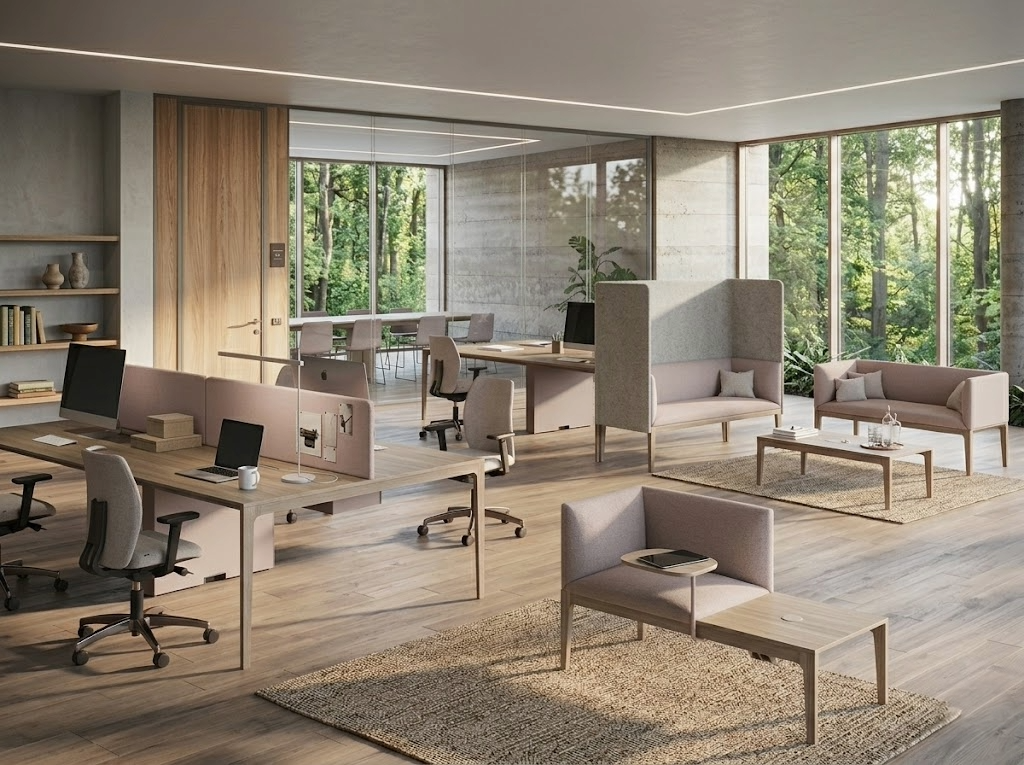
Biophilic design does not coincide only with vegetation. In many open spaces, the real leap in quality comes from the use of natural materials, warm finishes, tactile textures and less cold colour schemes, capable of radically transforming the perception of the space without altering its functionality. Wood-effect surfaces, softer technical fabrics, felt, textured laminates and natural palettes help reduce the “serial office” effect, improving visual comfort and perceptual continuity. For users, this means working in an environment that is less aggressive, more welcoming and easier to live in for many hours. It is a highly intelligent solution when biophilia needs to be introduced in an elegant, controlled way consistent with a corporate aesthetic.
Light, air and environmental comfort
Perceptual balance arises from the interaction between light, ventilation and acoustics. Ufficiostile designs layouts that support the natural diffusion of light and air exchange, integrating plant-based sound-absorbing panels and filtering blinds. The result is an optimal visual and acoustic microclimate that reduces mental fatigue and promotes multisensory comfort.
Regenerative micro-areas
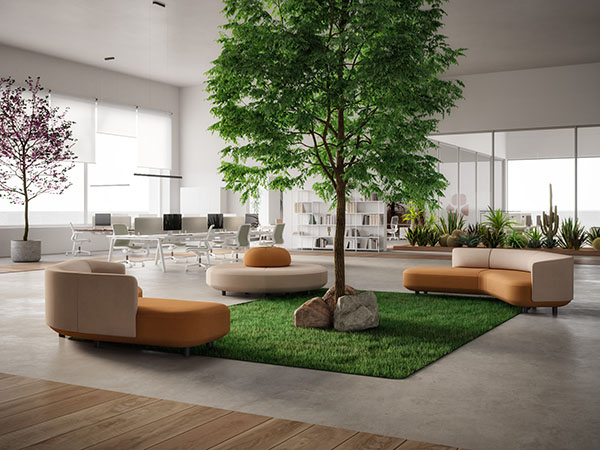
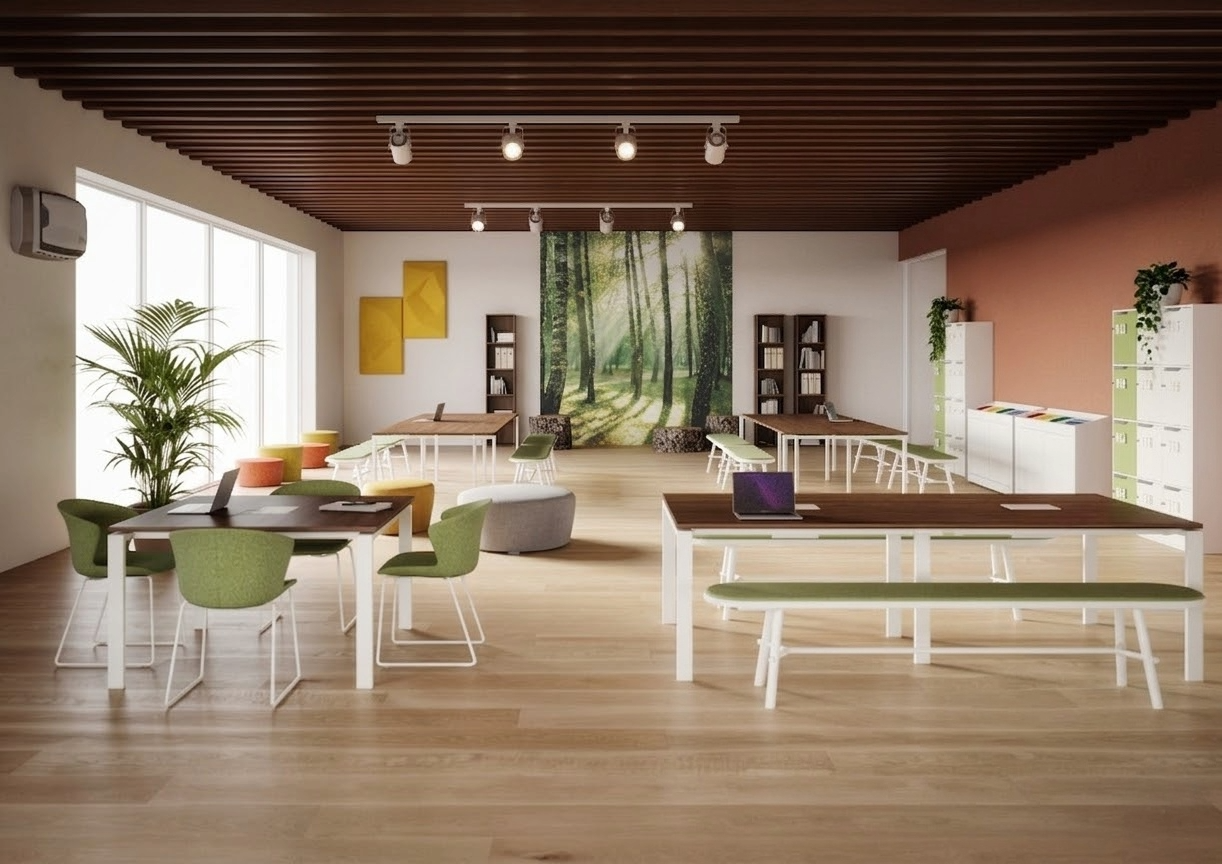
Regenerative micro-areas are a very valuable component of biophilic design in open spaces, especially when work takes place in intensive, dense environments or ones highly exposed to continuous stimulation. We are not necessarily talking about true lounges, but about small points of visual decompression built with greenery, softer materials and a less operational environmental presence. Their strength lies in their ability to interrupt the uniform rhythm of the office and offer users a calmer reference point during the day. From a UX perspective, these solutions improve the overall liveability of the space because they help recover concentration, vary the perception of the environment and make the open space less monotonous and less tiring.
Corporate identity and wellbeing as a brand strategy
Biophilic design is not only aesthetics, but a language of values. An environment that communicates respect for nature and care for people strengthens brand reputation and talent retention. Integrating biophilia into workplaces means positioning yourself as an attentive, evolved and culturally sustainable company.
FAQ
It means a design approach that brings real or perceived natural references into the workspace, such as greenery, warm materials, tactile textures and more regenerative micro-environments. It is not a purely decorative theme: it serves to make the open space more human, more readable and less impersonal. In a modular and shared context like the one described in the Open Space master, it works well when it dialogues with layout, flows and overall comfort.
Certified solid wood, cork surfaces, natural fabrics and plant-felt sound-absorbing panels. These materials improve acoustic and tactile comfort and make the environment more welcoming and authentic.
It depends on density, layout and the project objective. Green walls are effective when identity and orientation are needed; planter dividers help soften benches; natural materials improve overall perception without changing the distribution system; regenerative micro-areas are valuable when the office is very intensive and needs perceptual breaks. The right choice is the one that brings value in use, not just image.
It reduces absenteeism, improves the internal climate and stimulates productivity. A Human Spaces study highlights a 15% increase in perceived wellbeing and a 6% increase in performance in biophilic workplaces compared to traditional ones.
A clear design direction is needed. Greenery must dialogue with furniture, routes, privacy and the identity of the space, not be added as an accessory element. Maintenance is also part of the project: wrong species, random compositions or inconsistent materials quickly turn a good idea into a signal of neglect. Biophilia works when it appears natural, stable and integrated, not when it looks like an artificial add-on.