Acoustics and concentration in team spaces
In team working, collaboration is a value, but without acoustic control it becomes fatigue: overlapping calls, voices that travel, reverberation on hard surfaces and concentration that is constantly interrupted. Designing acoustics means making the space more sustainable: improving speech intelligibility where people talk, protecting focus zones where people work and reducing perceived stress without turning the open space into a sequence of closed rooms.Acoustics in team working concerns the management of noise and reverberation to increase concentration and comfort. Targeted interventions with sound-absorbing panels, screens between workstations, upholstered furniture, treated ceilings and walls and correct layouts improve conversation intelligibility and reduce distractions. The result is a more balanced open space, where collaboration zones and focus zones coexist.
Understanding the problem: “voice” noise and reverberation
In team working, the critical point is rarely a single loud noise: it is the continuous sum of voices, small movements and calls, amplified by rigid surfaces. When reverberation is high, the voice “stretches” and invades zones that should remain quiet; when the voice propagates, the number of involuntary interruptions increases. Intervening properly means distinguishing between what needs to be absorbed, reverberation, and what needs to be screened, propagation, so the solution is effective and non-invasive.
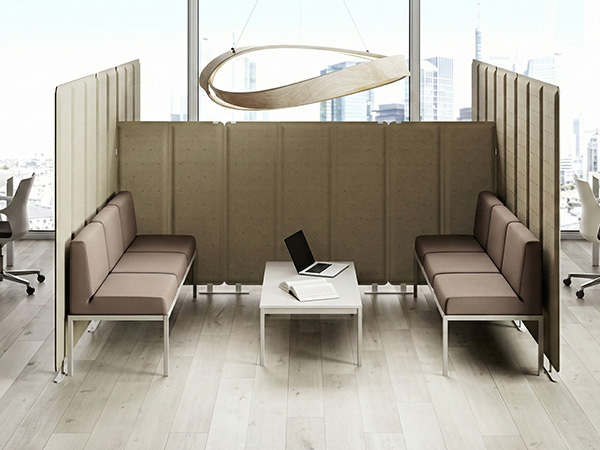
Collaboration zones and focus zones: two rules, not two offices
Concentration does not necessarily require total isolation: often, a clear layout strategy that separates “talking” areas from “quiet” areas is enough. In the layout, points where people discuss and make calls should be placed where disturbance is more tolerable, while focus areas must be protected from transit and noisy fronts. When this distinction is readable, people self-regulate and the office becomes calmer without impositions.
Acoustic absorption: ceilings, walls and furniture that really help
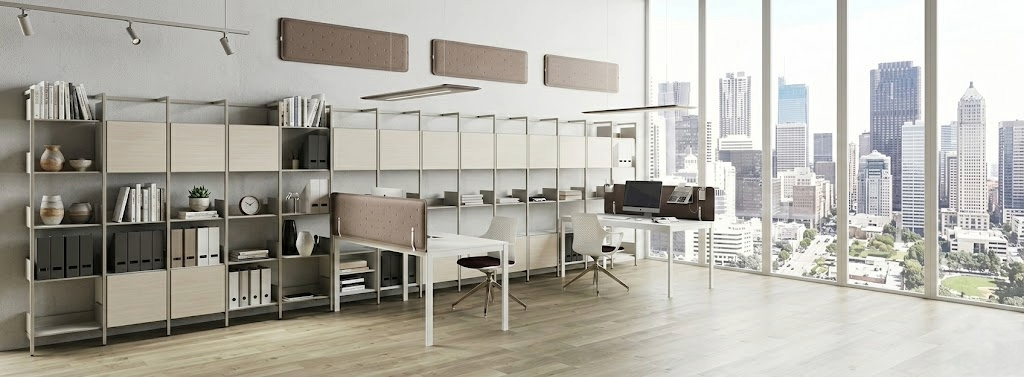
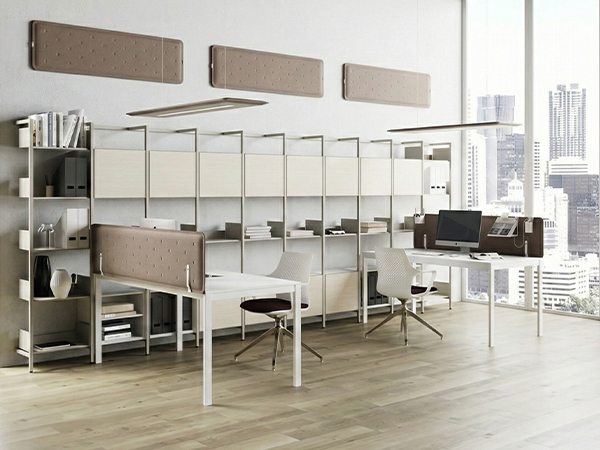
Absorption is what reduces fatigue: less echo, more clarity. Wall panels, suspended ceiling elements and upholstered furniture inserted with a clear logic reduce reverberation and improve speech intelligibility in the right points. The goal is not “library silence”, but an environment where the voice is understandable to those participating and less invasive for those working nearby.
Lightweight screens and separations: protecting without closing
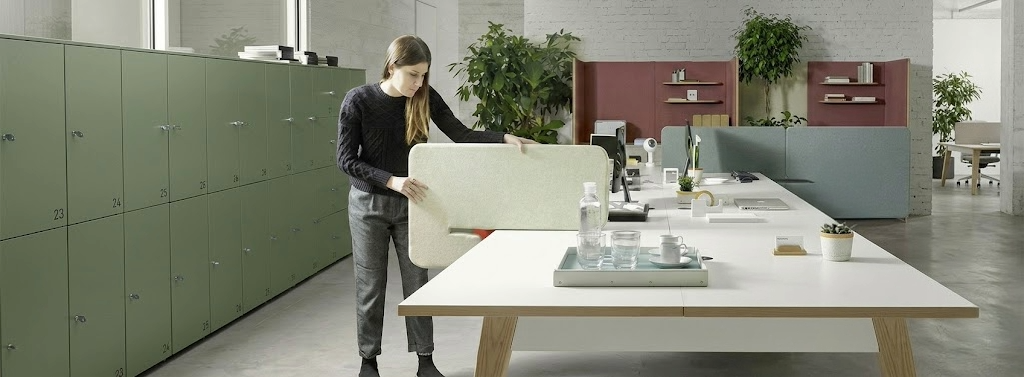
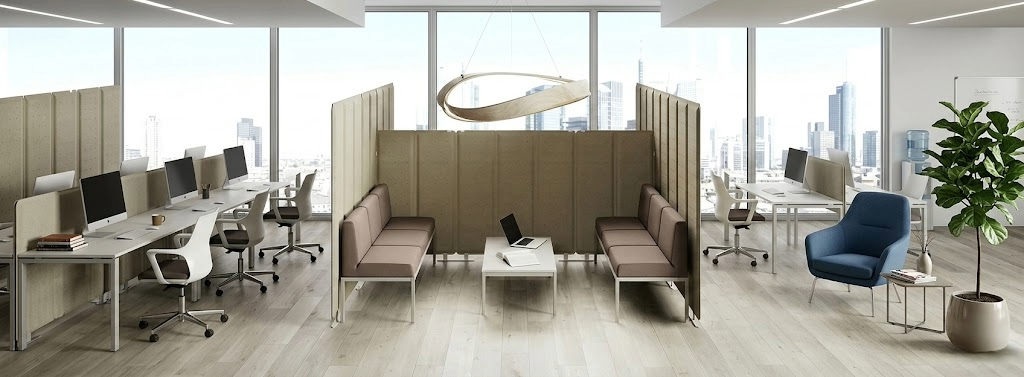
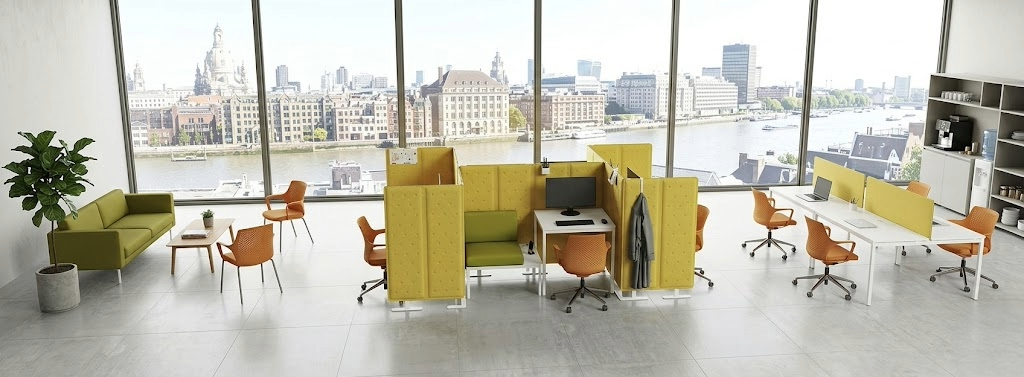
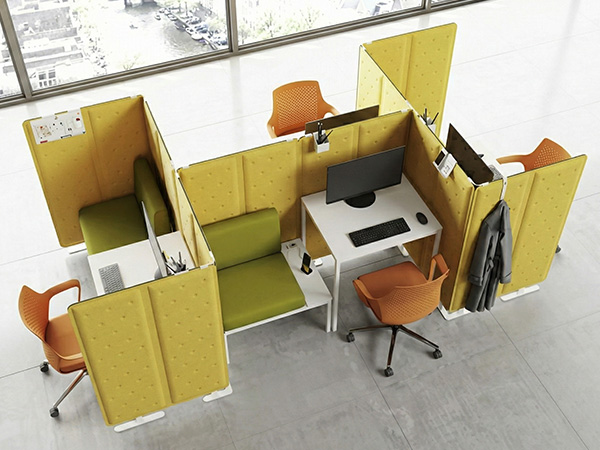
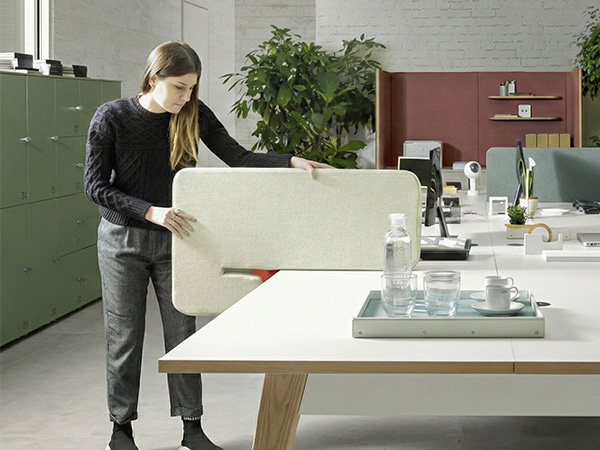
When the voice propagates too much, screens become decisive: sound-absorbing partition screens, lightweight screens and separations between groups of workstations reduce direct sound transmission and increase perceived privacy. These systems work well because they maintain light and continuity, while adding concrete protection in critical points, especially between teams that talk a lot and teams working in focus mode.
Spaces dedicated to calls: taking pressure off the open space
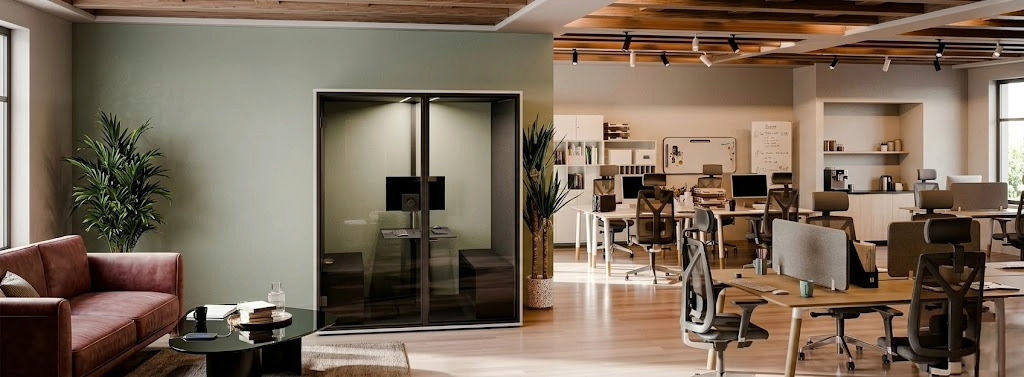
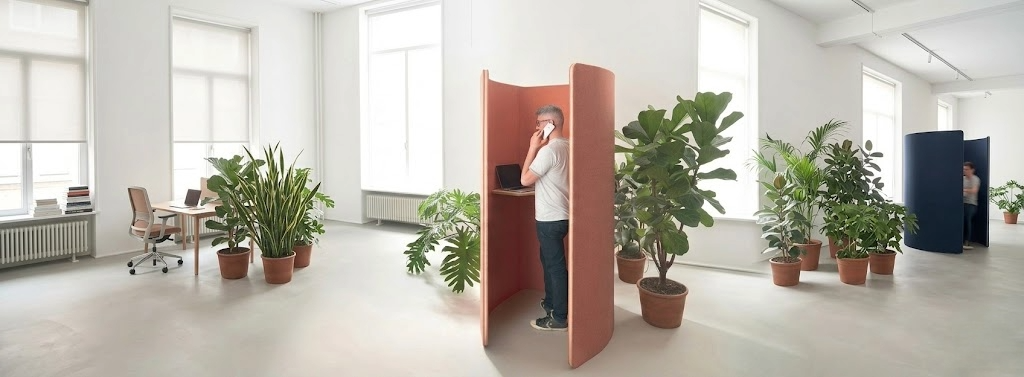
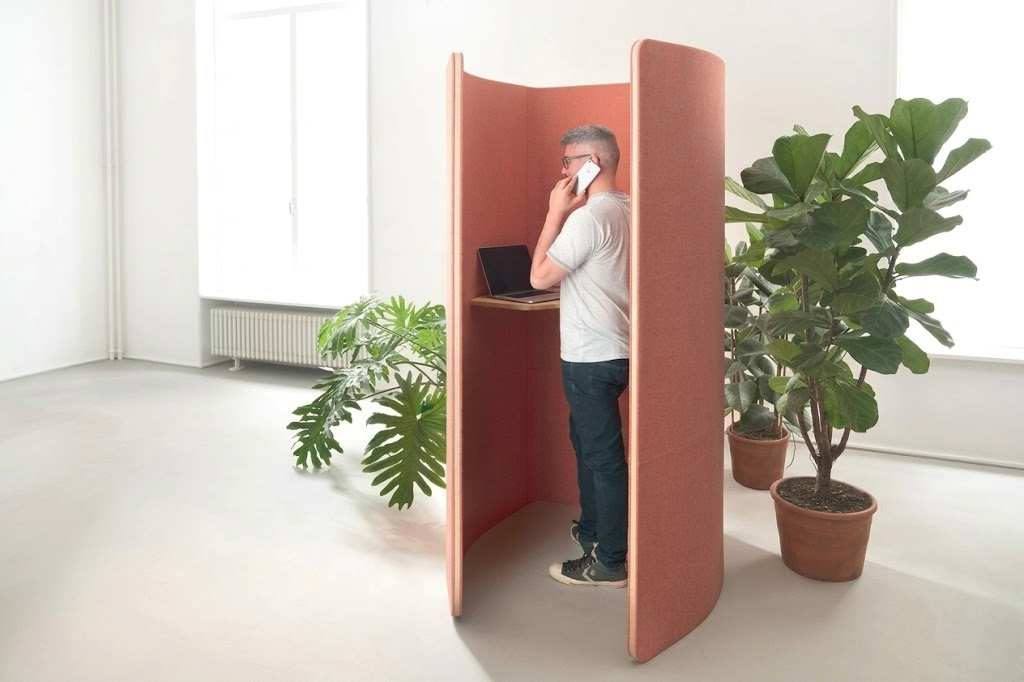
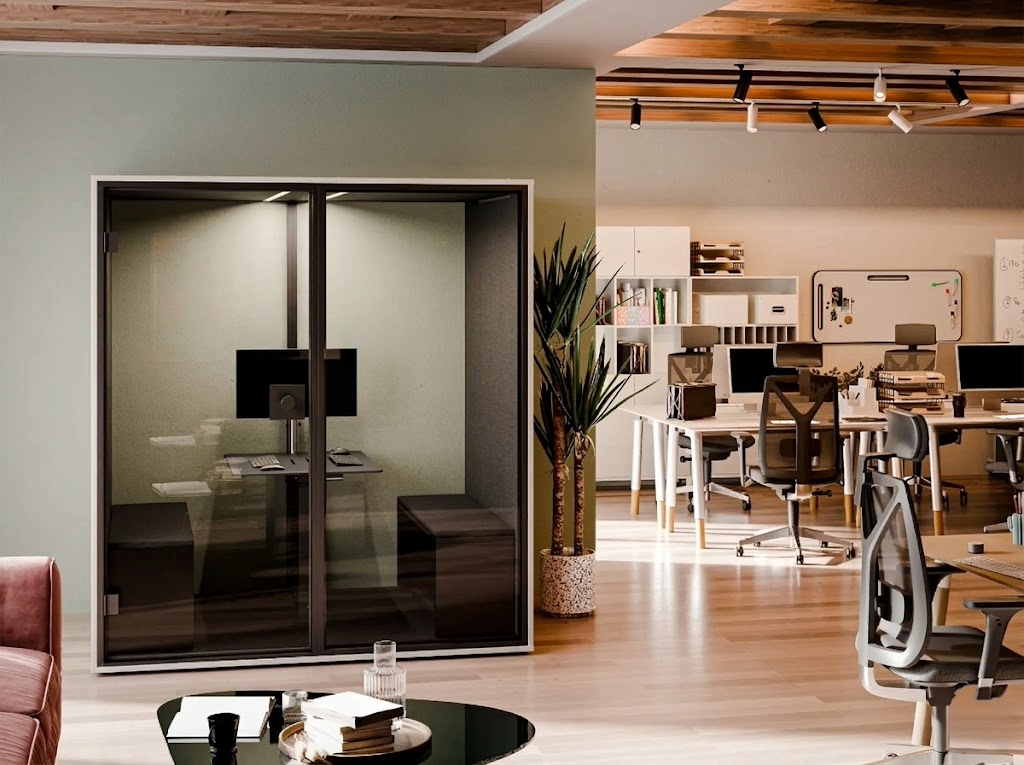
One of the most effective levers for improving acoustics is moving calls away from the concentrated work area. Phone booths, small pods or protected niches absorb the most invasive conversations and reduce voice overlap between workstations. When people have a convenient and nearby alternative, they use it: and the open space stops being an involuntary call centre.
Comfort that remains sustainable over time: simple rules and minimal maintenance
Acoustics is not only about materials: it is also about habits and management. Well-designed spaces support virtuous behaviours without having to “forbid” anything: clear indications on where to make calls, small layout measures and easy maintenance of sound-absorbing elements make comfort stable over time. The result is team working that withstands everyday use, not just a beautiful initial photo.
FAQ
The most effective interventions combine vertical sound-absorbing panels, suspended ceiling elements, technical rugs and furniture upholstered in acoustic fabrics. The logic is based on three levels: reverberation control, containment of diffuse noise and screening of critical points such as printer areas, passage corridors and call points. A multi-level approach ensures a balanced environment without sacrificing design and functionality.
Reducing reverberation and background noise can improve concentration by up to 40% and reduce errors by around 30%. Targeted absorption panels and layouts that minimise acoustic interference create an environment where teams can collaborate while maintaining high levels of attention, even with frequent phone calls and meetings.
There are many mobile and freestanding solutions, ideal for flexible or constantly evolving offices. Free-standing panels, dividers on castors, phone booths and furniture with integrated acoustic surfaces make it possible to intervene without building works, moving and reconfiguring elements according to layout changes and new work flows.
Absolutely. Modern acoustic panels and elements are designed to become part of the architecture: fabric, wood, fibre, recycled PET finishes and custom geometric forms make it possible to transform acoustics into a recognisable design element, coordinated with the brand’s colours and materials and with the other furniture lines present in the office.
The highest-performing and most sustainable materials include high-density recycled PET, low-VOC foams, ecological mineral fibres and FSC micro-perforated wood panels. These solutions combine reduced environmental impact, recyclability and excellent acoustic performance, making them ideal for companies following ESG strategies and wishing to certify their environmental commitment.
Yes. In open spaces, the main objective is to reduce diffuse noise and manage passage flows, while in team rooms the focus is on acoustic privacy, speech intelligibility and reduction of internal interference. The design approach is different but complementary: the result is an ecosystem of environments where every activity finds its ideal level of quiet.
Yes, thanks to plug-and-play solutions such as mobile dividers, lightweight panels and adhesive systems. Interventions can be carried out even while the office is operational, without stopping activity or generating significant dust or noise. In this way, it is possible to improve the acoustics of team spaces gradually and sustainably, following the organisation’s priorities.