Acoustic and visual privacy for open spaces
In a well-designed open space, acoustic and visual privacy does not serve to close off the space, but to make it more readable, more focused and less dispersive. Panels, dividers and screening solutions help build more balanced work micro-areas, reducing perceived noise, visual interference and cognitive fatigue without losing openness and architectural continuity.Acoustic and visual privacy solutions for open spaces include sound-absorbing panels, dividers, desk screens, booths and modular systems that help define micro-areas without completely closing the environment. They reduce distractions, reverberation and visual interference, improving concentration, perceived comfort and quality of use in shared spaces.
Sound-absorbing desk panels
More concentration, without isolating the team.
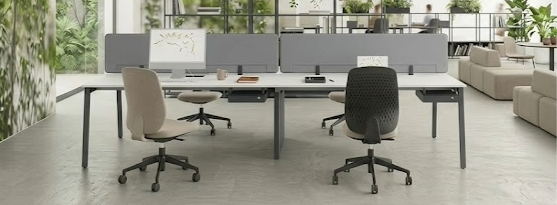
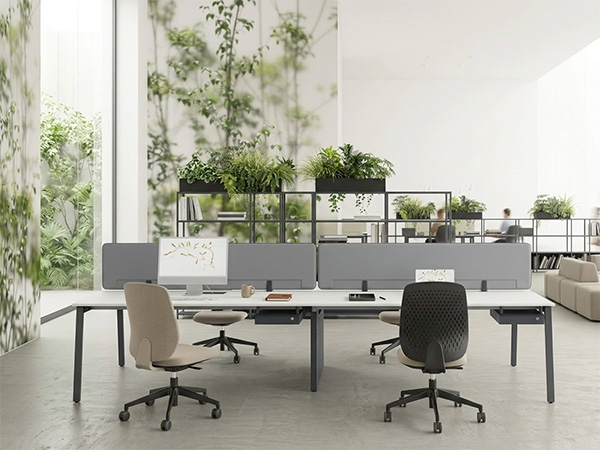
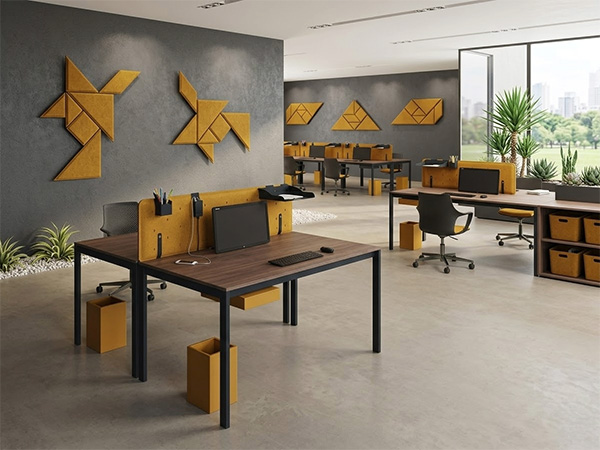
Sound-absorbing desk panels are the most immediate solution when you want to improve workstation quality in an open space without modifying the overall layout system. Installed between benches or on the sides of the desk, they help reduce close-range visual interference and contain part of the sound propagation in the operational zone. From a UX perspective, they work very well because they immediately give users a clearer perception of their own space, improve focus and keep collaboration possible, but less invasive.
Modular freestanding dividers
Separate well, without building walls.
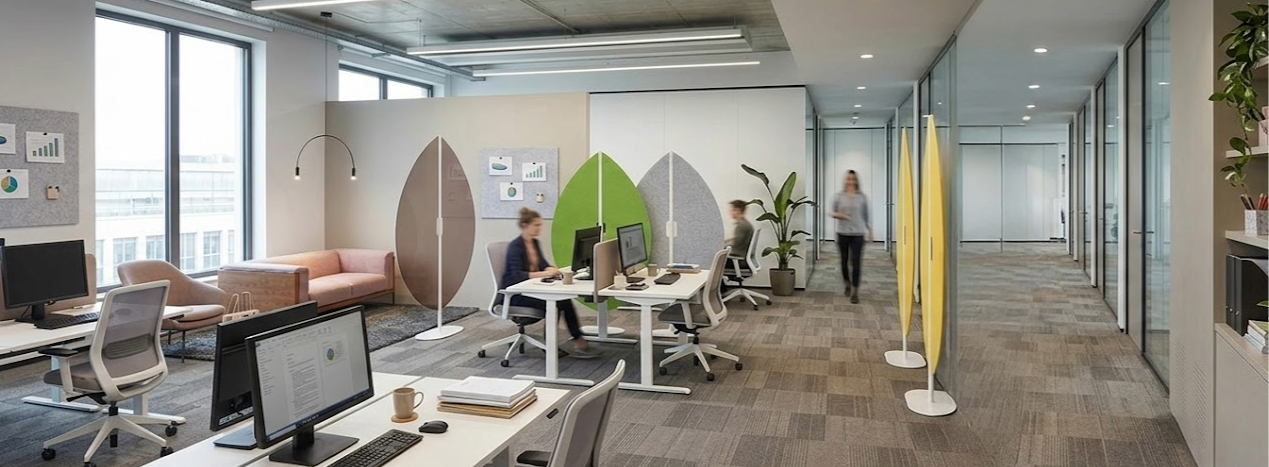
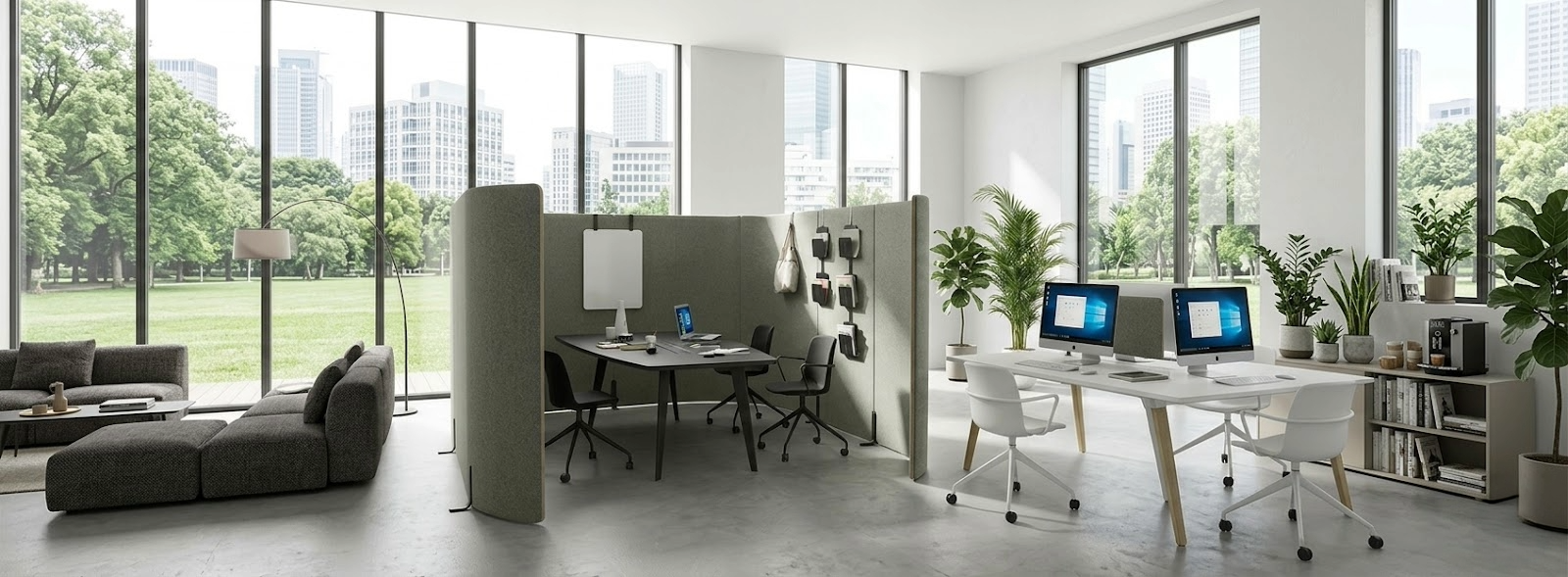
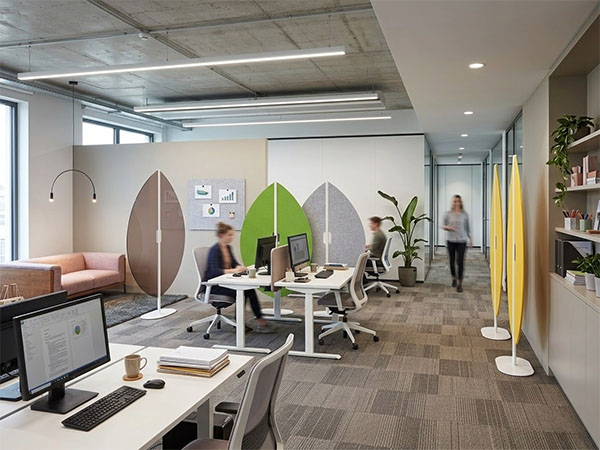
Modular freestanding dividers are ideal when the open space needs to be articulated into more readable zones, without losing flexibility or visual continuity. They make it possible to delimit departments, routes or work areas with a light threshold, easily repositionable and much more dynamic than a fixed partition. For the user, this translates into a less chaotic and more intuitive space to move through; for the project, it means being able to improve privacy and acoustic comfort progressively, adapting the setup to team evolution.
Decorative textile screens
Acoustic comfort and identity in the same gesture.
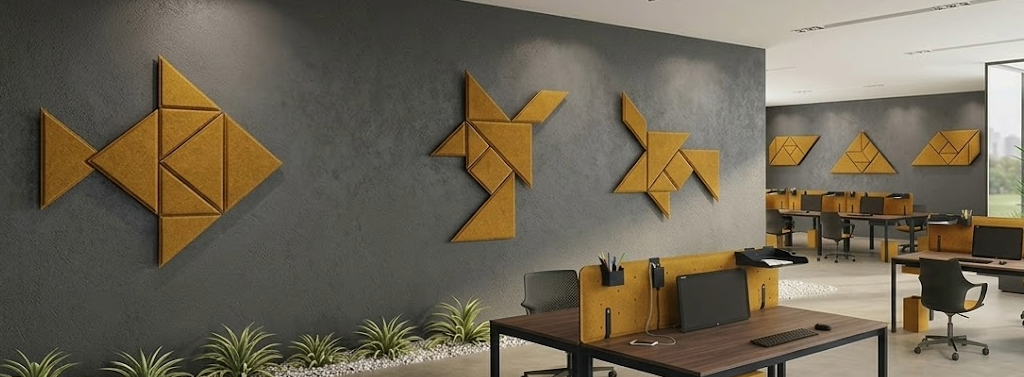
Decorative textile screens are a highly effective choice when privacy also needs to work on the perceptual quality of the space. In addition to mitigating reverberation and visual disturbance, they introduce softer materials, tactile surfaces and a less technical presence compared to purely operational panels. They are suitable for corporate open spaces, creative studios and environments where acoustics should not be treated only as a functional problem, but as part of the overall experience. Their UX value lies in making the office more welcoming, less hard and much more balanced to live in for many hours.
Acoustic booths for confidentiality
An immediate refuge inside the shared space.
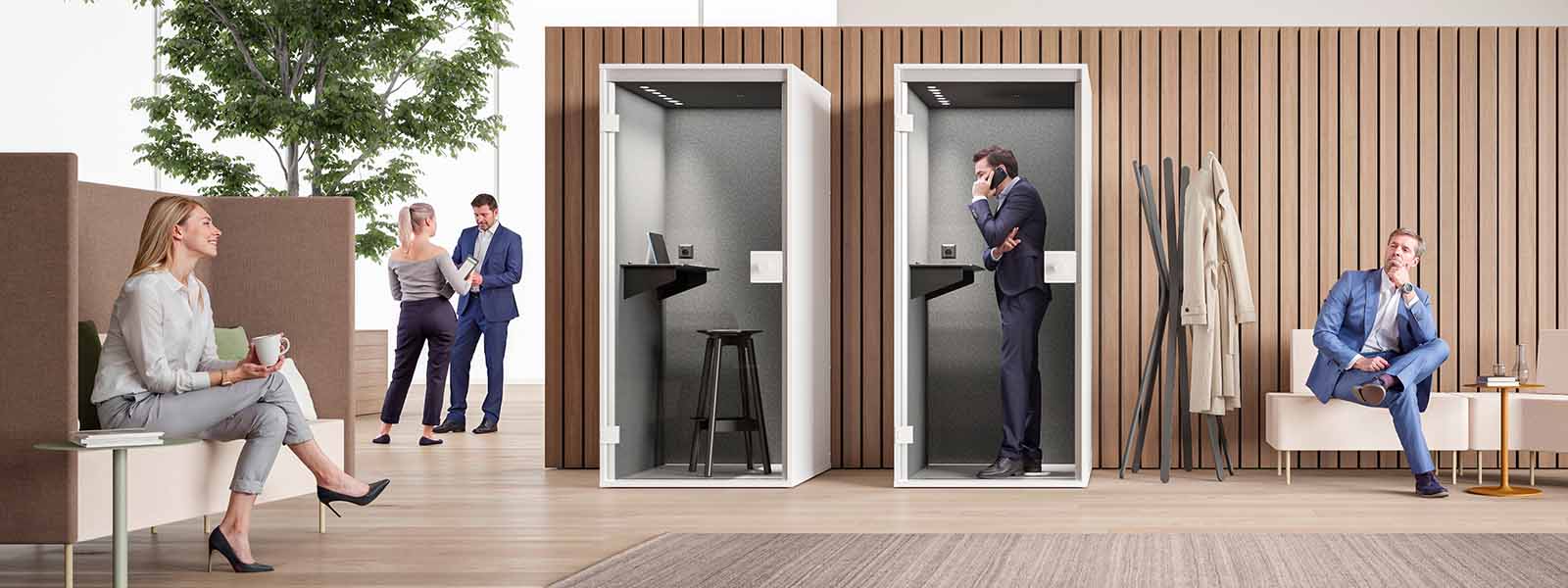
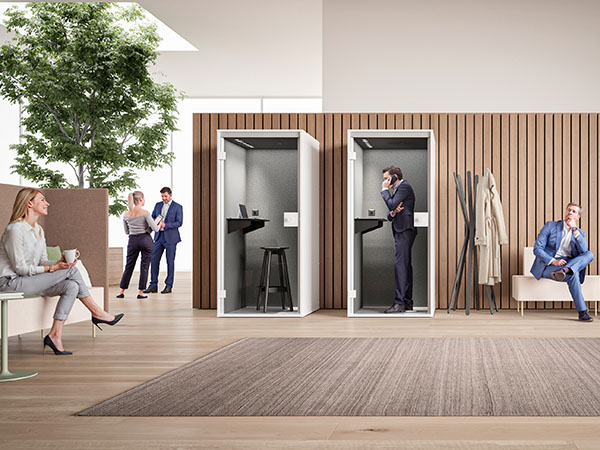
Acoustic booths are the correct response when the open space also needs to provide moments of real confidentiality, for calls, deep focus or conversations that cannot remain exposed to background noise. Unlike light screens, here the benefit is clearer: users find a place clearly dedicated to concentration or verbal privacy, without leaving the department or occupying a meeting room. In UX terms, they are valuable because they reduce frustration, improvisation and the constant search for alternative spaces when exposure really needs to be lowered.
Suspended anti-reverberation panels
Improving overall sound quality, not just the single workstation.
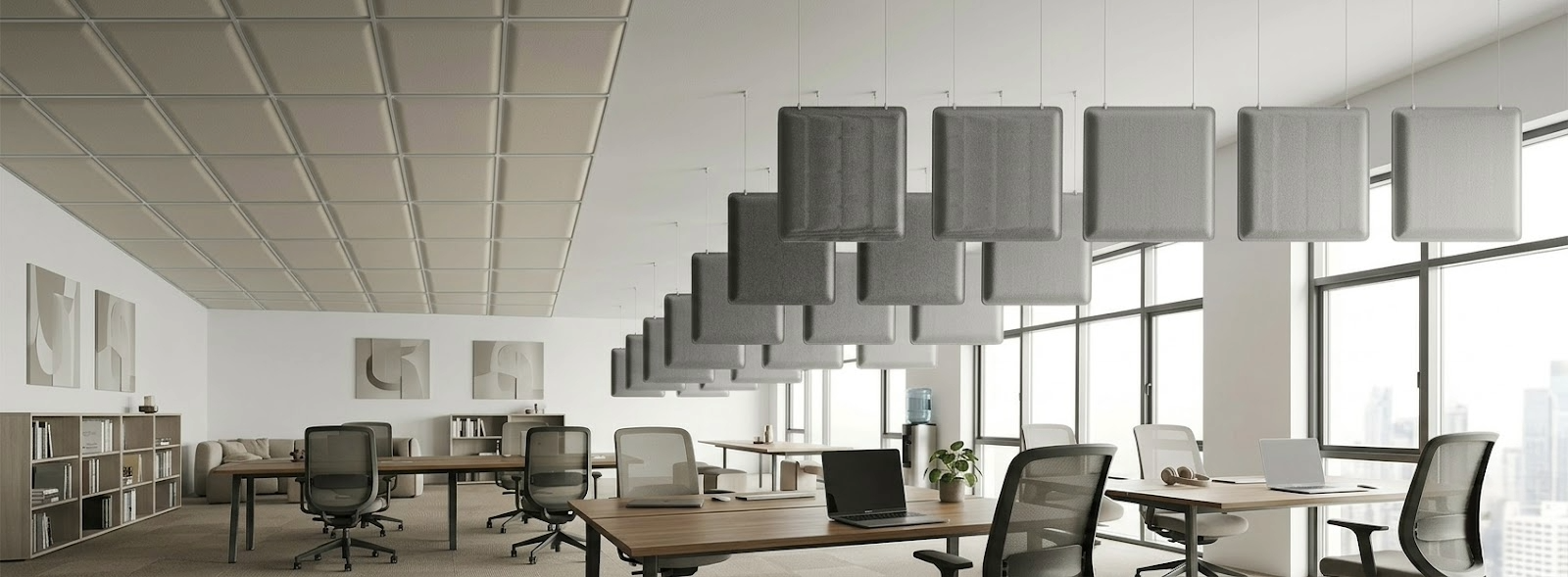
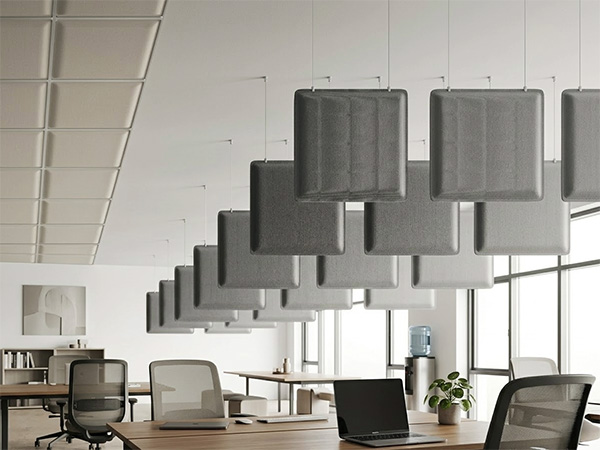
Suspended anti-reverberation panels work on a different scale compared to floor or desk dividers: they do not delimit, but improve the overall acoustic quality of the open-space volume. They are very useful in large, high or particularly reflective environments, where the main problem is not only the lack of privacy between two workstations, but diffuse noise that makes everything more tiring. From the user experience perspective, lowering reverberation means reducing the feeling of background confusion and making the entire environment more tolerable, even when the office is highly populated.
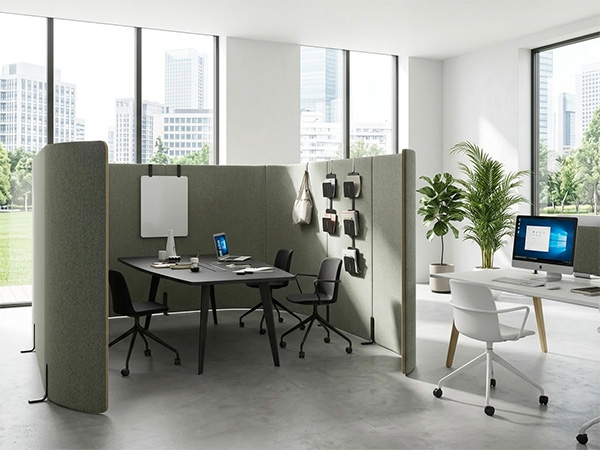
Hybrid dividers for micro-areas
Create readable zones without making the open space rigid.
Hybrid dividers for micro-areas combine visual privacy, acoustic mitigation and space organisation in a single solution, particularly useful when the goal is not only to screen, but to give structure to the open space. They can be used to distinguish project areas, concentration zones, team islands or more protected passageways, creating a clearer and less dispersive environment. The UX advantage is important: people better understand where to work, where to discuss and where to lower their tone, while the layout retains openness, modularity and a more evolved architectural reading.
FAQ – acoustic & visual privacy
It refers to the set of solutions that help reduce sound disturbance, reverberation and visual interference in shared spaces, without turning them into closed environments. In the Ufficiostile Open Space master, this theme is expressed precisely through acoustic screens and privacy solutions designed to define micro-areas without closing them, thus improving concentration and everyday quality of use.
It depends on the problem to be solved. Desk panels are more effective when the disturbance originates between nearby workstations and you want to intervene specifically on the desk. Freestanding dividers, on the other hand, work better when it is necessary to bring order to larger portions of open space, separating flows, teams or functional areas without using fixed walls.
Not if they are designed correctly. The best solutions do not serve to compartmentalise rigidly, but to define light thresholds and more readable micro-areas. This is precisely the logic recalled in the master material: building privacy and comfort without losing the open nature of the open space.
They are needed when open spaces lack suitable places for confidential calls, deep focus or conversations that should not interfere with other people’s work. They are particularly useful in highly collaborative or very dense environments, where light screening alone is not enough to guarantee real verbal privacy.
Yes, especially in large open spaces. Even though they do not create direct visual privacy, they reduce reverberation and improve the overall sound quality of the environment. For users, this means less listening fatigue, less feeling of diffuse confusion and a more sustainable stay throughout the day.